
Reality vs. Rhetoric: The Box Office Performance of ‘Melania’ and the Reality of Financial Metrics
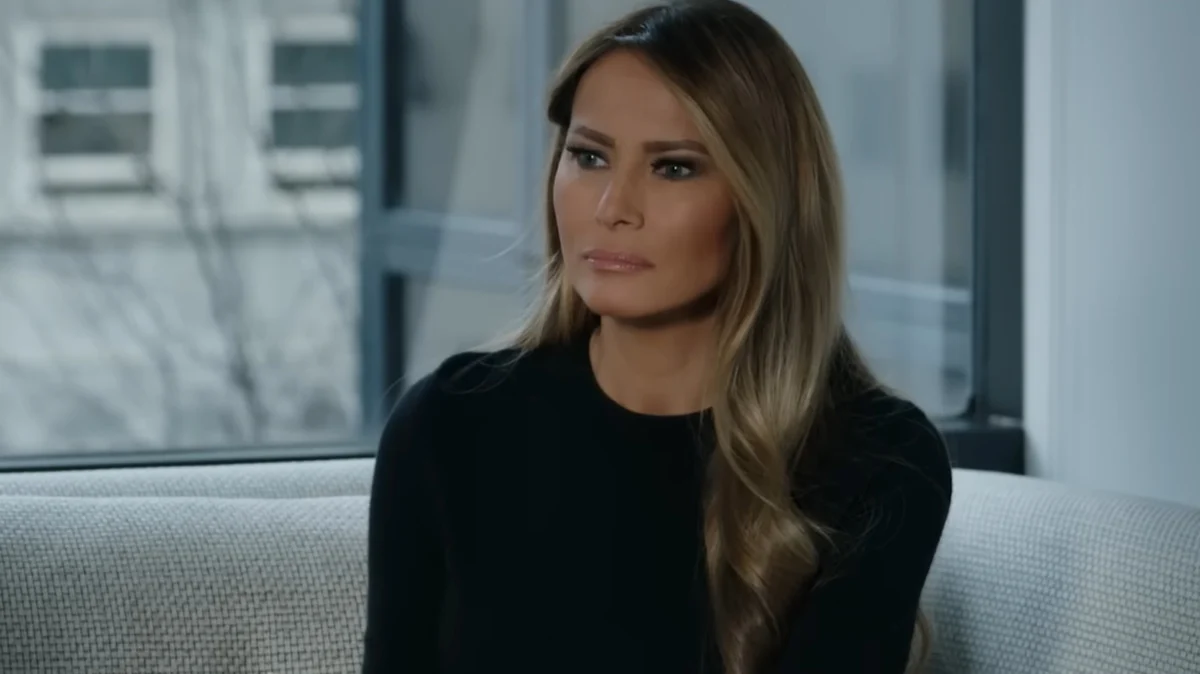
In the high-stakes world of Hollywood, success is rarely a matter of opinion. It is a quantifiable, cold-calculated intersection of ticket sales, marketing reach, and return on investment. Yet, in a recent appearance at the "Board of Peace" event in Washington D.C., former President Donald Trump attempted to reshape the narrative surrounding Melania, the high-profile documentary centered on his wife, First Lady Melania Trump.
Trump characterized the film as a "very successful" venture, even going so far as to suggest that the subject of the documentary has blossomed into a "big movie star." However, an examination of the industry data reveals a starkly different story. While the former President’s rhetoric suggests a cultural and commercial phenomenon, the objective financial metrics paint the picture of a significant theatrical disappointment.
The Chronology of a High-Stakes Bet
To understand the scope of the underperformance, one must first understand the ambition behind the project. Amazon MGM Studios—the entity created after Amazon’s massive $8.5 billion acquisition of MGM in 2022—invested heavily in the production. With a total outlay of $75 million, split between a $40 million acquisition cost and a $35 million marketing push, the studio signaled that they viewed the film as a marquee asset.
The release strategy for Melania was designed for maximum visibility, positioning it as a significant theatrical entry. However, the film failed to gain traction during its opening weekend. It debuted to a domestic haul of just $7.1 million, a figure that left it trailing significantly behind other new releases of that period, such as Send Help ($19.1 million) and Iron Lung ($17.8 million).
Following the lackluster opening, the film suffered a catastrophic 67% drop in its second weekend, pulling in a mere $2.3 million and sliding to tenth place on the box office charts. By every traditional metric, the momentum stalled almost immediately upon release.
Supporting Data: Why the Numbers Defy the Narrative
When Donald Trump claimed during his recent speech that the film was "number one," he was operating outside the reality of established industry charts. To date, Melania has grossed approximately $16.1 million globally. When measured against a $75 million investment, the deficit is glaring.
The international reception has been particularly tepid, with only $279,000 generated from overseas markets. This suggests that the film’s appeal was not only limited in the United States but virtually non-existent in the global theatrical market.
To provide further context, industry analysts look at comparable projects to gauge financial health. Consider A24’s The Smashing Machine, which, despite featuring a massive star in Dwayne "The Rock" Johnson, struggled to gain a foothold. With a $50 million budget, it finished with $21.1 million worldwide—a figure widely categorized by industry trade journals as a "bomb." Similarly, the project Caught Stealing earned $33.2 million against a $40 million budget. Despite earning roughly double what Melania has generated to date, Caught Stealing was still labeled a significant theatrical disappointment by studios and critics alike. If those films are failures, the math dictates that Melania—with its much higher cost and lower return—falls squarely into the same, if not more severe, category of financial loss.
The Critical and Audience Divide
Financial performance is one facet of a film’s legacy; critical reception is another. On the review aggregator Rotten Tomatoes, Melania currently holds an 11% critical approval rating. Critics have largely panned the documentary, citing narrative inconsistencies and a lack of depth as primary issues.
While the film does maintain a 98% audience score, this metric is often subject to the "review-bombing" or "brigading" phenomena, where political polarization influences user ratings on platforms like IMDb, where the film sits at a dismal 1.4/10. Even if one were to prioritize the audience score as a sign of "success," it does not translate into the commercial viability required to recoup a $75 million investment.
Official Responses and Industry Context
Amazon’s strategy with Melania was part of a larger, broader goal: to bolster the library of Prime Video and maintain competitive footing in the "streaming wars" against rivals like Netflix. It is common for streamers to release films theatrically with the understanding that they may not turn a profit in ticket sales, provided they drive enough subscriptions or long-term viewership.
However, even by those standards, the film falls short of the "prestige" bar set by other Amazon-backed projects. For example, Ben Affleck’s Air (2023) managed to gross $90 million against a $90 million budget, garnering immense critical acclaim and cultural relevance in the process. Air demonstrates what Amazon’s strategy is supposed to look like: a project that justifies its cost through a combination of critical prestige, awards-season buzz, and sustained interest. Melania has failed to achieve any of these benchmarks.
The Implications of Political Rhetoric in Entertainment
The disparity between Donald Trump’s claims and the reality of the box office raises broader questions about the intersection of politics and entertainment. When a public figure with the profile of a former President claims a project is a "number one" hit, it can create a "post-truth" environment where loyalists accept the narrative regardless of the data.
In the film industry, however, the "box office truth" is inherently resistant to spin. The ledger is a neutral arbiter. By positioning the film as a massive success, the former President may be attempting to curate a narrative of cultural dominance. Yet, such claims are easily dismantled by the transparent nature of modern box office reporting.
Furthermore, the statement about there being "no room in one family for two stars" adds a layer of personal complexity to his commentary. It suggests an attempt to frame the documentary’s existence—and its supposed success—as a milestone in Melania Trump’s public persona. However, by tethering this narrative to a verifiable financial failure, the rhetoric inadvertently draws more attention to the film’s shortcomings.
Conclusion: The Final Verdict
Ultimately, Melania serves as a case study in the danger of conflating political marketing with commercial reality. While the documentary may eventually find a niche audience on Prime Video, its theatrical run has been an unambiguous flop.
The film has never achieved the number-one spot on any major chart, it has failed to attract an international audience, and it has garnered overwhelmingly negative critical reviews. By any standard measure—whether it be profit-to-cost ratio, theatrical longevity, or critical consensus—the documentary is a disappointment.
Donald Trump’s insistence that the film is a "number one" success is not merely a hyperbolic exaggeration; it is a fundamental rejection of the objective, hard-data reality that governs the film industry. As the dust settles on the film’s theatrical run, the numbers will remain the final, unimpeachable story: a high-budget project that failed to convert its political subject matter into the box office gold the studio had envisioned.
