
Reclaiming the Concrete Jungle: How BlueBolt Built a Post-Pandemic Denver for Ridley Scott’s The Dog Stars
In the landscape of modern cinema, few directors command the visual scale of Ridley Scott. Known for his meticulous world-building and uncompromising attention to detail, Scott’s latest project, The Dog Stars, presented a unique challenge: how to visualize a world where humanity has been all but erased, leaving behind only the skeleton of a major American city. To bring this haunting vision to life, the production turned to the London-based visual effects powerhouse BlueBolt.
Led by VFX Supervisor Henry Badgett, the team at BlueBolt was tasked with transforming Italian filming locations into a derelict, overgrown, and atmospheric Denver. The studio’s contribution, spanning 92 shots, is not merely a technical achievement but a narrative one, grounding the film’s post-pandemic reality in a tangible, decaying environment that feels both eerily familiar and utterly alien.

The Mandate: Authenticity in Abandonment
The primary challenge for BlueBolt was to ensure that the "Denver" seen on screen was instantly recognizable as a real-world city, yet clearly defined by the passage of time. Unlike many post-apocalyptic films that rely on generic ruins, Scott and his team required a specific, lived-in aesthetic. The city had to tell a story of a gradual, encroaching reclamation by nature.
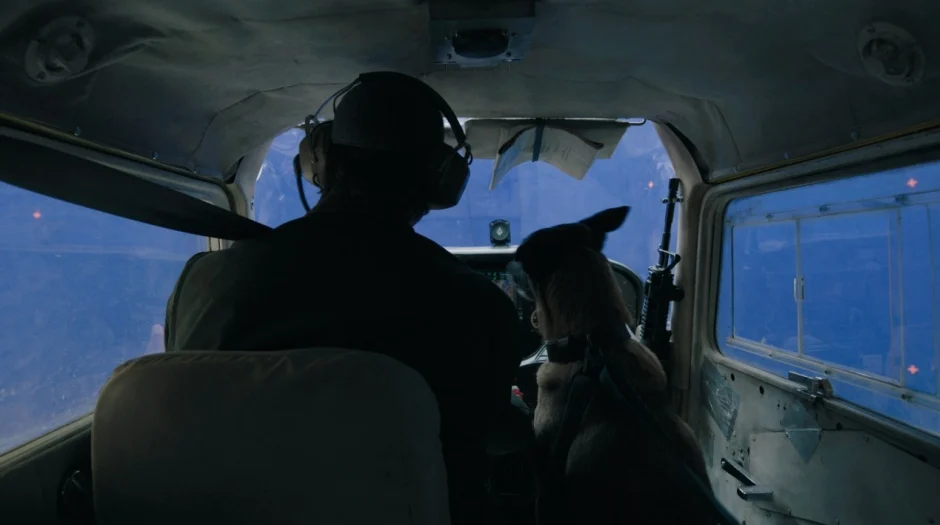
Under the guidance of production VFX supervisor Charley Henley, the BlueBolt team moved away from traditional 2D matte paintings. Instead, they opted for a full 3D environment build. This decision was driven by the necessity to support complex, dynamic camera movements, particularly the aerial sequences featuring Hig (played by Jacob Elordi) as he navigates his Cessna over the silent cityscape.

Technical Scope: A City in Numbers
The scale of the project was significant. BlueBolt constructed more than 180 individual digital assets, a library that included everything from monolithic skyscrapers to the minute detritus of daily life: rusted, abandoned cars, fractured street furniture, and decaying signage.
To achieve the necessary level of detail for wide shots, the studio’s environment artists created approximately 1,600 building variations. This ensured that even when the camera pulled back to reveal a sprawling panorama of the city, the sense of repetition was minimized, and the illusion of a vast, complex urban center remained intact.

Chronology: From Concept to Digital Reality
The process began with the bedrock of all Ridley Scott productions: the storyboard. Scott’s detailed sketches served as the initial blueprint, providing the lighting cues and composition requirements that BlueBolt would follow.
- Phase I: Asset Development and Reference Gathering. The team began by aggregating real-world architectural references of Denver. This was critical for maintaining the city’s identity. They then began the arduous process of "aging" these assets, layering in weather stains, broken windows, and structural damage.
- Phase II: The "Living City" Simulation. Recognizing that an empty city is never truly still, BlueBolt introduced subtle, organic animations. Traffic lights were programmed to flicker, shutters swayed in the wind, and plastic debris was animated to dance on telephone wires. This was essential to prevent the city from appearing like a static, dead model.
- Phase III: The Vegetation Overgrowth. Nature was treated as a character in its own right. The team drew inspiration from "living buildings"—actual architectural projects in Milan and Chengdu that incorporate vertical forests. By applying this logic to their 3D models, they simulated the slow, relentless creep of ivy, trees, and moss as they reclaimed the built environment.
- Phase IV: Aerial and Cockpit Integration. The final phase focused on the Cessna sequences. This required a hybrid approach: stitching together helicopter-shot aerial photography with digital environment extensions, and integrating bluescreen cockpit footage with CG elements like wings, tails, and instrument panels.
Supporting Data: The Art of the Detail
The effectiveness of BlueBolt’s work lies in the nuance. While the wide, panoramic shots of Denver establish the "horrific reality" of the film’s premise, it is the smaller, localized details that sell the immersion.

For instance, the team focused heavily on "glitching" digital displays and the specific erosion patterns caused by long-term exposure to the elements. By applying procedural shaders to the buildings, they were able to simulate how different materials—concrete, glass, and steel—would degrade over years of neglect. The result is a texture-rich environment that feels heavy and grounded, avoiding the "clean" look that often plagues digital environments.
The Cessna flying sequences required a different kind of precision. To capture the sensation of flight, the team implemented a CG cockpit that allowed for dynamic lighting, mimicking the shifting sun as the plane maneuvers. Furthermore, they introduced subtle, programmed vibrations and stabilization effects. These details were crucial in bridging the gap between the actor’s performance in a controlled bluescreen environment and the high-altitude reality of the scene.

Official Perspectives: The BlueBolt Philosophy
Henry Badgett, who previously collaborated with Ridley Scott on Napoleon—where he oversaw 126 VFX shots for the Siege of Toulon—has developed a specialized expertise in managing the scale and aesthetic expectations of a director like Scott.
In the case of The Dog Stars, the partnership between the production VFX team and BlueBolt was characterized by a shared emphasis on "the story behind the shot." The VFX work was never treated as an end in itself; rather, it was consistently treated as a narrative tool intended to heighten the emotional isolation of the protagonist. By focusing on the visual cues of a world left behind, the VFX team helped mirror the internal state of the characters who remain.

Implications: The Evolution of Digital Environments
The work on The Dog Stars serves as a case study for the current state of the VFX industry. As hardware capabilities improve, the industry is shifting away from 2.5D approaches (matte paintings combined with basic geometry) toward fully realized 3D environments that allow for total creative freedom in cinematography.
This project also highlights the importance of environmental storytelling. The ability to use "living architecture"—the intersection of nature and urban decay—demonstrates a growing maturity in how digital artists represent the "post-human" world. By focusing on the specific visual language of dereliction, BlueBolt has moved beyond the simple creation of "ruins" to create a world that feels as though it has its own, distinct history.

Looking Ahead
BlueBolt’s continued collaboration with Ridley Scott solidifies their position as one of the most reliable partners for high-end, visual-driven cinema. As the studio looks to future projects, the lessons learned during the construction of their digital Denver—particularly in the realm of procedural vegetation and complex aerial integration—will likely become part of their standard toolkit.
In the final assessment, the VFX for The Dog Stars succeeds because it is invisible. It does not call attention to its own technical complexity, but rather disappears into the narrative, providing the audience with a world that is as hauntingly beautiful as it is devastatingly empty. For audiences watching Hig fly over the ruins of downtown, the city is not a collection of 180 assets and 1,600 variations; it is a ghost of our own reality, captured in a moment of final, silent transition.
