
The Infinite Challenge: Zhang Yimou’s Quest to Bring ‘The Three-Body Problem’ to the Silver Screen
Introduction: A Master’s Heavy Burden
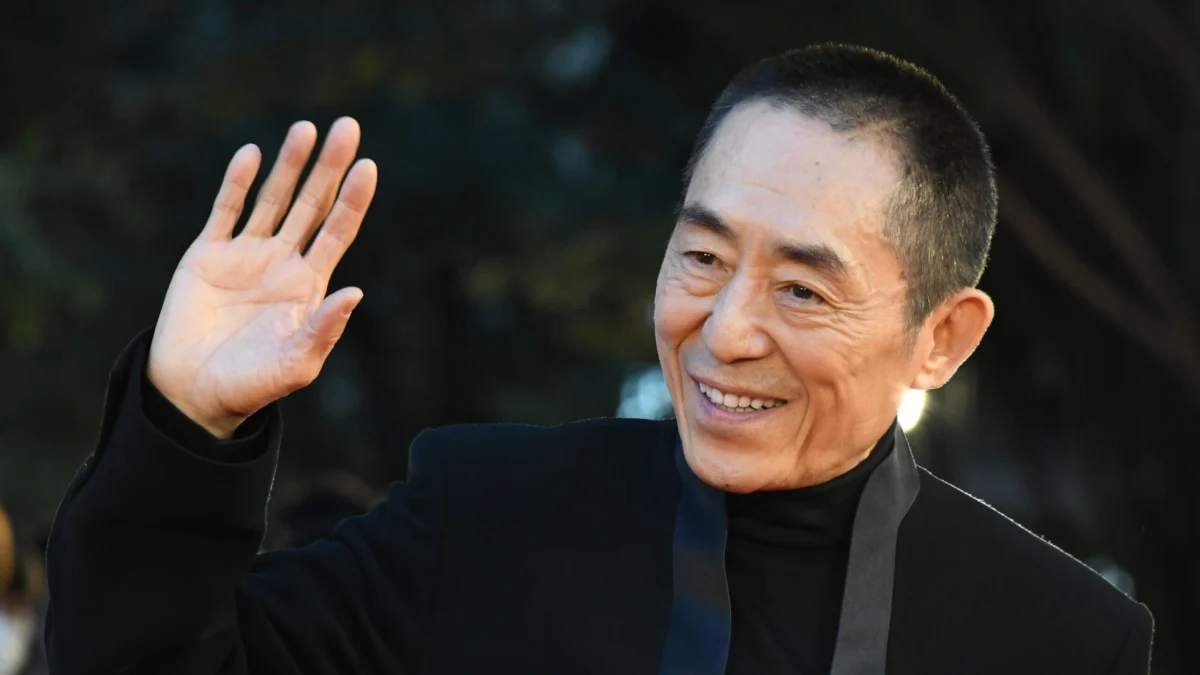
At the opening ceremony of the 29th Busan International Film Festival (BIFF), where legendary Chinese filmmaker Zhang Yimou stands as the president of this year’s competition jury, the conversation inevitably drifted toward the most ambitious project of his late-career renaissance: the film adaptation of Liu Cixin’s seminal sci-fi masterpiece, The Three-Body Problem.
Despite being a titan of global cinema for over four decades, with a filmography that spans from the stark, emotionally resonant Raise the Red Lantern to the grand, visually operatic Hero, Zhang remains deeply humble about his latest endeavor. Addressing the audience during a dialogue with festival director Jung Hanseok, the director revealed that the project is still firmly in the script-development phase, a testament to the immense complexity of adapting one of the most intellectually rigorous and narratively dense novels in modern science fiction.
The Chronology of an Adaptation
The journey of The Three-Body Problem from the printed page to the screen has been a saga of its own. Liu Cixin’s Remembrance of Earth’s Past trilogy, which began with the 2008 publication of The Three-Body Problem, fundamentally shifted the landscape of hard science fiction. The work garnered international acclaim when Ken Liu’s English translation won the Hugo Award for Best Novel in 2015—the first time a Chinese-language author had received the honor.
Following its literary success, the franchise became a hot commodity. In recent years, it has seen a flurry of screen iterations:
- 2022: Bilibili launched an ambitious animated series, attempting to capture the scale of the "Three-Body" universe.
- 2023: Tencent released its live-action series, Three-Body, which was praised by purists for its meticulous adherence to the source material.
- 2024: Netflix premiered its own high-budget adaptation, 3 Body Problem, which reached a global mainstream audience and sparked intense discourse about the limits of Westernized sci-fi storytelling.
Zhang Yimou’s entry into this crowded space is not a sprint, but a marathon. He emphasized that the years spent "polishing the script" are not an indication of stagnation, but of a deliberate, agonizing process to ensure that the film does not merely mimic its predecessors, but captures the soul of Liu Cixin’s vision in a way that is distinctly cinematic and globally resonant.
Supporting Data: The Weight of Expectation
The pressure surrounding Zhang’s adaptation is not merely speculative; it is quantifiable. Upon the initial announcement that Zhang would helm a new big-screen iteration of the saga, the production team took the unusual step of monitoring public sentiment. Within the span of a single week, his company compiled approximately 400,000 online comments from eager—and often skeptical—fans.
This massive volume of feedback highlights a critical shift in the relationship between filmmakers and their audience. As Zhang noted during his Busan address, the digital age has democratized visual media, and with it, the critical discernment of the audience has risen to unprecedented levels. "Audiences today have high expectations of us," Zhang remarked. "In the age of AI, where visual media has become so accessible, the viewer’s eye is sharper than ever before."
For a director who has spent 40 years navigating the shifting tides of the Chinese film industry, this represents a new frontier. The "Three-Body" project is no longer just a film; it is a cultural touchstone that millions feel a sense of ownership over. The director’s commitment to "looking closely at what viewers want" is a strategic pivot, acknowledging that in the modern era, the audience is an active participant in the creative process.
Official Responses and Philosophical Reflections
During the discussion at BIFF, Jung Hanseok probed the director on the palpable tension between the audience’s anticipation and their pervasive anxiety regarding the film. Zhang’s response was characteristically philosophical. He articulated a view of filmmaking that moves beyond mere technical execution, focusing instead on the elusive nature of a "truly great" film.
"Many people spend an entire lifetime wanting to make a truly great film, yet no one knows where that great film comes from," Zhang said. He suggested that, from a traditional Chinese perspective, the birth of a masterpiece is a confluence of intense, grueling effort and the unpredictable hand of luck. "But regardless of luck, the love and passion for cinema in our hearts will always keep burning."
This statement serves as a manifesto for his current phase of work. Despite having nothing left to prove in terms of his legacy, Zhang continues to release new projects almost annually. His dedication to The Three-Body Problem—a project that could easily be handed off to a younger, more "tech-native" director—demonstrates a continued desire to challenge himself against the highest possible bar.
The Implications: Cinema in the Age of AI
The implications of Zhang Yimou’s Three-Body project extend far beyond the film itself. It serves as a case study for the future of "prestige science fiction." In an industry increasingly dominated by AI-generated imagery and formulaic sequels, a filmmaker of Zhang’s stature taking years to refine a script is a radical act of defiance.
1. The Challenge of Hard Sci-Fi
The Three-Body Problem is notorious for its reliance on abstract physics, complex timelines, and deep philosophical queries regarding the Fermi Paradox. Adapting this requires more than just a massive budget; it requires a director who can translate mathematical concepts into human-centric drama. Zhang’s hesitation to rush the script suggests he is looking for the "emotional bridge" that connects the audience to the terrifying cosmic scale of the story.
2. The Cultural Translation
As the project moves forward, it will inevitably be scrutinized for how it balances its Chinese cultural roots with its global, universal themes. Having already seen how Tencent and Netflix handled the narrative, Zhang is in a unique position to synthesize these approaches, creating a version that is neither purely "local" nor aggressively "globalized," but rather something that transcends those labels.
3. The Institutional Role
Zhang’s leadership as the jury president at the 31st Busan International Film Festival reinforces his role as an elder statesman of Asian cinema. His presence at the festival, coupled with his openness about the "tremendous pressure" of his work, provides a rare look into the mind of an auteur who is still willing to learn. He is not resting on the laurels of Hero or House of Flying Daggers; he is in the trenches of the creative process, treating a sci-fi blockbuster with the same level of granular care as an intimate character drama.
Conclusion: A Burning Passion
As the Busan International Film Festival continues through October 15, the industry remains locked in anticipation of any further updates from the Three-Body production. Zhang Yimou’s message is clear: he is not interested in delivering a product; he is interested in delivering an experience that honors the intellectual rigor of Liu Cixin’s prose while meeting the high-definition standards of a modern, skeptical audience.
For now, the film remains in the shadows, a script being polished under the watchful eye of a master. While the wait may be long, the commitment to quality expressed by Zhang suggests that when the film finally hits the screen, it will be the result of a deliberate, exhaustive process—a cinematic event forged in the fires of both tradition and modern technological scrutiny. As Zhang himself put it, the love for cinema is a fire that never goes out; for the fans of The Three-Body Problem, that fire is currently burning brighter than ever.
