
The Telekinetic Terror Returns: Mike Flanagan’s ‘Carrie’ Reimagines Stephen King’s Masterpiece for the Digital Age
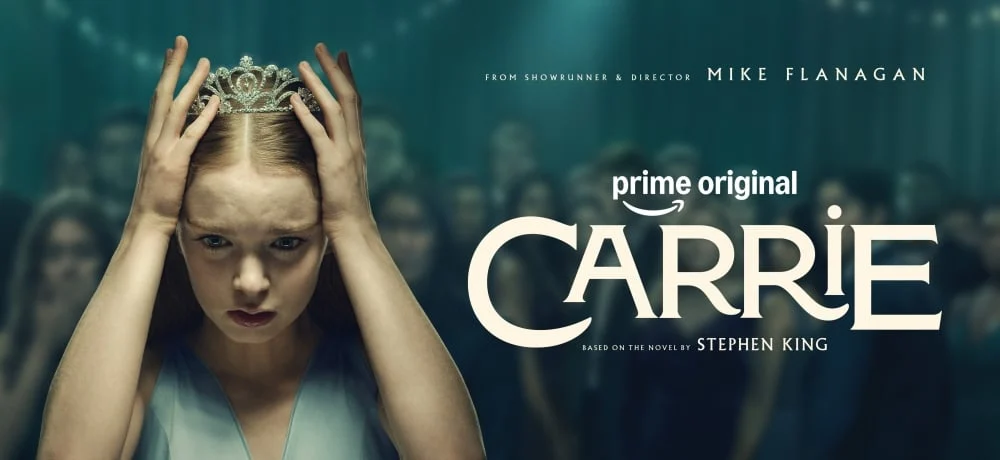
The wait is finally over. After months of fevered speculation and high-profile marketing, all eight episodes of Mike Flanagan’s highly anticipated television adaptation of Carrie have officially arrived on Prime Video. For fans of Stephen King’s seminal 1974 debut novel, this project represents the most ambitious attempt yet to translate the claustrophobic, heart-wrenching horror of Carrie White’s transformation from a sheltered outcast to a force of apocalyptic nature.
Under the visionary guidance of Mike Flanagan—a director whose work on The Haunting of Hill House and Midnight Mass has cemented his reputation as a master of character-driven genre storytelling—this series breathes new, terrifying life into a story long thought to be the exclusive domain of cinematic film adaptations. By expanding the narrative across eight episodes, the production offers a deep dive into the corrosive power of high school social hierarchies, the suffocating grip of religious fundamentalism, and the devastating consequences of unchecked cruelty in the age of social media.
The Core Narrative: A Modern Descent into Darkness
At the heart of the series lies a bold, contemporary reinvention of the source material. We are introduced to Carrie White, played with haunting vulnerability by Summer H. Howell. In this iteration, Carrie has spent her formative years sequestered from society, living under the intense, unstable protection of her mother, Margaret White (portrayed by Samantha Sloyan).
The catalyst for the drama is the sudden, untimely death of Carrie’s father, an event that forces the pair out of their domestic bunker and into the "unforgiving ecosystem" of the modern American public high school. For Carrie, the transition is not merely a social hurdle; it is a violent collision with a world she was never prepared to face.
The series diverges from previous adaptations by leaning heavily into the digital age. Flanagan explores the "viral bullying scandal" that follows Carrie’s initial public humiliation, illustrating how the casual cruelty of her peers is amplified by smartphones and instant social media access. As Carrie struggles to navigate these digital and physical battlegrounds, she begins to manifest mysterious, burgeoning telekinetic abilities—powers that serve as a visceral, externalized representation of her internal adolescence and repressed rage.
A Chronology of the Production and Release
The journey of this series from concept to screen has been one of the most closely watched developments in streaming television.
- Initial Announcement: Rumors of a new Carrie adaptation began swirling in late 2024, as Prime Video sought to bolster its prestige horror catalog.
- The Flanagan Factor: The project gained significant credibility when Mike Flanagan was announced as showrunner, marking his first foray into the King universe after a long history of professional admiration for the author’s work.
- Casting and Principal Photography: Casting announcements throughout early 2025 generated significant buzz, particularly regarding the choice of Summer H. Howell to lead the series. Filming took place over a grueling six-month schedule, aiming to capture the specific atmosphere of a modern, decaying small-town landscape.
- The Press Junket: In the weeks leading up to the premiere, the production team participated in an extensive press tour, emphasizing that this series was intended to be a "character study" rather than a mere remake of the 1976 Brian De Palma film.
- The Premiere: As of today, the full eight-episode arc is available on Prime Video, inviting viewers to witness the "small, everyday choices that build toward a single, shattering night."
Character Evolution and Supporting Data
One of the primary benefits of the eight-episode structure is the ability to flesh out the supporting cast. While the original novel focuses heavily on the "White" household, this adaptation utilizes the additional runtime to explore the psychology of the school’s student body.
The series posits a critical question: Are we witnessing the making of a hero, a monster, or something far more complicated? To answer this, Flanagan delves into the motivations of the secondary characters—the bullies, the complicit bystanders, and the teachers who feel helpless to intervene.
Data from the show’s production notes indicate that the writers’ room spent months analyzing the "sociology of high school" to ensure that the interactions felt authentic to a contemporary audience. By grounding the supernatural elements in realistic teenage anxieties—fear of rejection, the desire for agency, and the search for identity—the show creates a palpable tension that builds steadily until the finale.
Official Responses: The Creative Team Weighs In
During a recent press day, Mike Flanagan and the lead cast offered insights into the process of translating King’s landmark work.
"We didn’t want to just repeat what has been done," Flanagan noted during his roundtable interview. "The challenge was to take the DNA of Stephen King’s original debut and ask what it looks like if Carrie White is living in a world where everything she does is recorded, shared, and judged in real-time."
Summer H. Howell, discussing her role as the titular character, emphasized the emotional toll of the performance. "Stepping into Carrie’s shoes is an immense responsibility. She isn’t just a victim; she’s a person with a massive, untapped reservoir of power. I wanted to make sure that the audience feels her isolation, but also understands the moment that isolation turns into a demand to be heard."
Samantha Sloyan, who plays the volatile Margaret White, discussed the complexity of her character’s maternal instincts. "It’s not enough to call her a villain. She is a woman operating under a terrifying set of beliefs, and she truly thinks she is saving her daughter from the world. Playing that thin line between protective mother and radical zealot was the core of my performance."
(Viewers can find the full set of interviews with the cast and creators via the embedded video modules provided.)
Implications: The Legacy of a Horror Icon
The release of this Carrie series carries significant implications for the horror genre and the adaptation landscape.
1. The Power of Serialization
By choosing to adapt a novel that has previously been defined by feature films, the production demonstrates the efficacy of the "limited series" format for horror. Complex literary themes, such as the gradual erosion of a person’s sanity, are often lost in the 90-minute runtime of a movie. Here, the slow burn of the narrative provides a richer, more unsettling experience.
2. Modernizing the King Mythos
Stephen King’s work is notoriously difficult to adapt because the horror is so often tied to the specific emotional interiority of his characters. Flanagan’s success hinges on his ability to retain the "cultural landmark" status of the book while updating the environment. By highlighting the role of social media, the show effectively argues that the "Carrie" archetype is more relevant today than it was in the 1970s.
3. The Ethical Debate
The show also invites viewers to reflect on their own roles as observers. The "viral bullying" plotline forces the audience to consider how they consume, share, and potentially participate in the public shaming of others. It transforms the audience from passive viewers of a horror story into participants in the social dynamics of the show.
Conclusion: A Shattering Conclusion
As viewers begin their journey through these eight episodes, they will find that the series refuses to offer easy answers. It is a deeply human, if horrific, story about the binary of kindness versus cruelty.
Whether the viewer identifies with the outcast searching for connection or the community terrified by the power rising in their midst, the series serves as a stark reminder of the consequences of neglect and prejudice. Mike Flanagan has successfully taken a piece of literary history and molded it into a modern, propulsive, and deeply unsettling reflection of our own society.
Carrie is now streaming on Prime Video. Prepare yourself for a night that, once witnessed, will be impossible to forget. The telekinetic terror has returned, and it is more human—and more heartbreaking—than ever before.
