
The Social Reckoning vs. The Social Network: Aaron Sorkin’s Oscar Uphill Battle
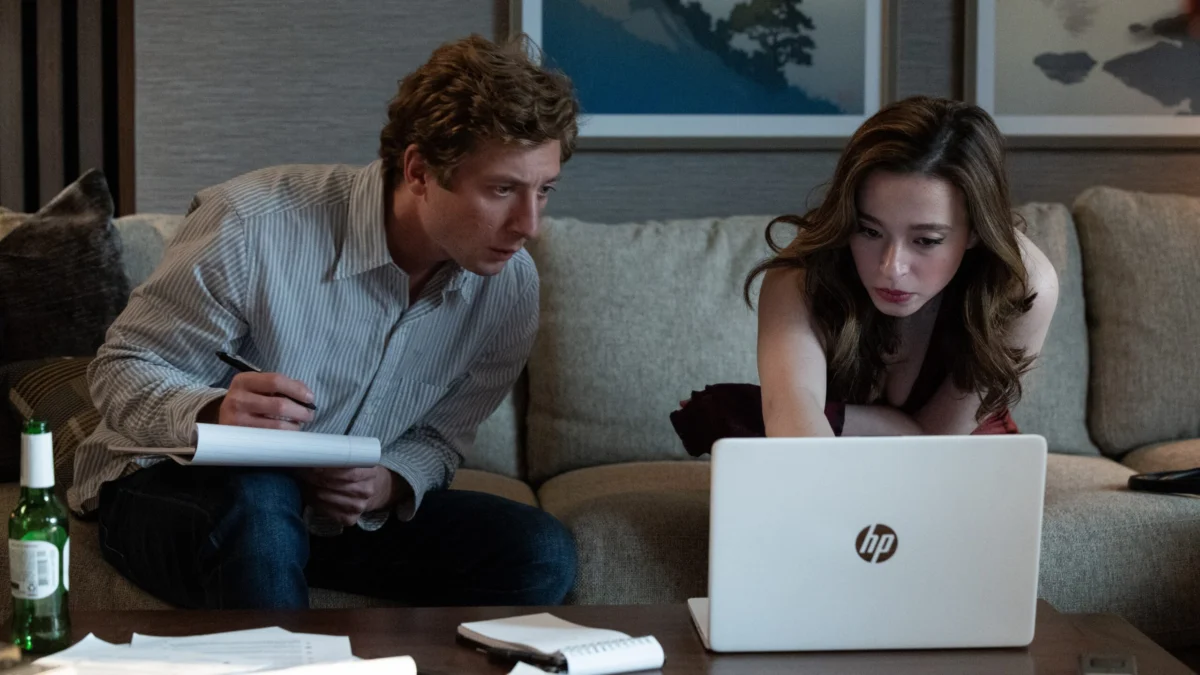
All together now: The Social Reckoning is NOT The Social Network.
More than a decade after David Fincher and writer Aaron Sorkin redefined the modern cinematic lexicon with their blistering 2010 masterpiece about the genesis of Facebook, the creative forces behind that contemporary classic have attempted to revisit the digital landscape. Yet, as the critical consensus hardens and early box office tracking materializes, it has become abundantly clear that lightning rarely strikes twice in the exact same silicon valley.

Critics have not embraced writer-director Aaron Sorkin’s thematic follow-up nearly as much as they did its predecessor. Reviews have been mixed at best, with the film struggling to maintain a fragile standing above 60% on Rotten Tomatoes. Compounding these critical headwinds, early predictions for the commercial box office pale in comparison to expectations for a major studio release. Current tracking indicates a projected opening weekend of roughly $7 million—a stark contrast to the $22 million domestic launch that The Social Network achieved on its way to becoming a cultural touchstone and a major player during the 2011 Academy Awards season.
This invites an unavoidable, high-stakes question for the upcoming awards cycle: Does Aaron Sorkin’s new film stand any realistic chance with the Academy of Motion Picture Arts and Sciences?

To understand the magnitude of the hurdle facing The Social Reckoning, one need only look back at the staggering Oscar footprint of The Social Network. That 2010 film earned eight Academy Award nominations overall, including Best Picture, Best Director for David Fincher, Best Actor for Jesse Eisenberg, Best Adapted Screenplay, Best Cinematography, Best Film Editing, Best Original Score, and Best Sound Mixing. It ultimately converted three of those bids into wins: Sorkin’s razor-sharp adapted screenplay, Kirk Baxter and Angus Wall’s brisk editing, and Trent Reznor and Atticus Ross’ revolutionary, atmospheric score.
That is an extraordinarily high bar to clear. An early look at the Gold Derby leaderboards paints a drastically different, far more humbling picture for The Social Reckoning. However, all is not lost for the production. While a sweep of major categories is entirely out of the question, there are key technical and writing fields where the film remains a plausible, if long-shot, contender.

Main Facts: The Commercial and Critical Reality of the Film
The commercial and artistic trajectory of The Social Reckoning highlights the unpredictable nature of topical filmmaking. While The Social Network captured the primordial soup of internet culture, exploring ambition, betrayal, and the birth of social media during a time of institutional naivety, The Social Reckoning dives headfirst into the modern era of algorithmic fallout, regulatory hearings, and corporate whistleblower revelations.
The narrative heavily draws from the real-world trials of Facebook whistleblower Frances Haugen and the exhaustive investigative reporting of Wall Street Journal reporter Jeff Horwitz. Yet, translating these dense, ongoing contemporary tech crises into a cohesive cinematic narrative has proven polarizing for reviewers. Sorkin’s trademark staccato dialogue and rhythmic walk-and-talk pacing—once hailed as the gold standard of modern cinematic screenwriting—have met accusations of fatigue and didacticism from contemporary critics.

At the box office, the signs are similarly troubling. Industry analysts note that adult-skewing dramas about corporate malfeasance and tech policy struggle to capture multiplex audiences without massive star-driven hype or universal critical acclaim. With a projected $7 million opening weekend, the film lacks the commercial momentum that typically propels "late-breaker" Oscar contenders into the conversation during the final stretch of the calendar year.
Chronology of Production and the Shadow of a Modern Classic
To contextualize where The Social Reckoning stands in the 2026–2027 awards race, it is helpful to trace its development and the immense expectations that have shadowed it from conception:

- October 2010: The Social Network is released by Sony Pictures, dominating the autumn box office and immediately establishing itself as the frontrunner for the Academy Awards. It secures three Oscars and cements its legacy.
- Late 2021–2023: Real-world events shift public perception of social media giants. Whistleblower Frances Haugen leaks internal documents to the U.S. Securities and Exchange Commission and testifies before Congress, while journalists like Jeff Horwitz publish groundbreaking exposés for the Wall Street Journal.
- 2024–2025: Aaron Sorkin announces his intention to write a project addressing the fallout of modern social media monopolies, casting a wide net for talent and drawing immediate comparisons to his prior work with Facebook lore. Casting announcements follow, notably featuring Mikey Madison as Haugen, Jeremy Allen White as Horwitz, and Jeremy Strong stepping in to portray the tech executive leadership.
- Late 2025–Early 2026: Principal photography wraps, and early promotional material begins framing the film as an original screenplay, despite its reliance on published source material and journalistic investigations—sparking early industry debates regarding its eventual WGA and Academy classification.
- Fall 2026: The film premieres to a polarized critical reception, landing a mediocre Rotten Tomatoes score hovering just above the threshold of positivity. Box office tracking emerges, forecasting a modest $7 million opening weekend.
- Present: Gold Derby’s combined odds board reflects the film’s diminished Oscar prospects, though specific categories like Screenplay and Score maintain open windows for potential nominations.
Supporting Data: Category-by-Category Oscar Breakdown
Despite the uphill battle, awards prognosticators are closely monitoring The Social Reckoning across several individual categories. Here is how the film currently fares on the Gold Derby leaderboards:
Best Picture
The Top 10 of the Best Picture race is heavily congested with celebrated festival darlings, massive international blockbusters, and audience-approved crowd-pleasers that have captured the global imagination. Consequently, The Social Reckoning is currently tracking down at No. 21 in the combined odds. Barring an unforeseen, miraculous surge in late-season box office legs and a dramatic course-correction in industry sentiment, a Best Picture breakthrough remains statistically improbable.

Best Actress
On paper, stepping into The Social Reckoning must have felt like an ideal career move for Mikey Madison. Fresh off her critically acclaimed, Oscar-winning triumph in Anora, taking on the role of whistleblower Frances Haugen offered Madison another golden opportunity to showcase her preternatural skill with rapid-fire, high-stakes dramatic dialogue.
What a difference a year makes. Securing back-to-back Best Actress wins has historically been a profound rarity within the Academy’s voting history. While this year’s Best Actress field is perceived by pundits as comparatively wide-open and lacking a monolithic frontrunner, Madison’s performance has inexplicably languished, currently sitting at No. 11 in the odds.

Best Actor and Supporting Actor
The male acting categories present an equally brutal landscape for the film’s ensemble. Jeremy Allen White finds himself facing back-to-back disappointments following last year’s biographical drama Deliver Me From Nowhere, which failed to make a major splash with voters. Portraying Wall Street Journal reporter Jeff Horwitz, White’s performance has been critiqued for lacking the showstopping, transformative "aha" moment that traditionally secures actors an Oscar nomination clip. As a result, he is buried deep in the odds at No. 39.
Meanwhile, the casting shift behind the central tech mogul character has also generated discussion. Jesse Eisenberg famously declined to return or be typecast, leading to the casting of famously intense Method actor Jeremy Strong. Unfortunately, Strong’s chilly portrayal of the Meta CEO has elicited mixed notices from critics.

Strong faces an exceptionally steep climb in the Best Supporting Actor category against a formidable slate of more broadly popular contenders. Most notably, Andrew Garfield is currently surging at No. 7 for his acclaimed work in Artificial. In the unofficial face-off of prestige tech-thriller performances, Garfield appears far more likely to secure the Academy’s favor.
Best Screenplay
If there is a legitimate silver lining for The Social Reckoning, it lies in the writing branch. Whenever Aaron Sorkin puts pen to paper, he commands the attention of the Writers Guild of America and the Academy. Four of his previous screenplays have earned Oscar nominations: The Social Network (Adapted), Moneyball (Adapted), Molly’s Game (Adapted), and The Trial of the Chicago 7 (Original).

Because of this illustrious track record, the screenplay category represents the film’s absolute best chance at an Academy Award nomination. It is currently positioned at No. 8 in the combined odds for Best Adapted Screenplay.
However, a fascinating administrative wrinkle hangs over the campaign: industry insiders report that the studio may submit the script under the Original Screenplay category, a framing that has been mirrored in the film’s marketing materials. Given that the story draws directly from Frances Haugen’s published accounts, Jeff Horwitz’s book, and extensive journalistic reporting by the Wall Street Journal, the final determination ultimately rests with the Writers Guild of America (WGA) branch rulings. Awards analysts will closely monitor how this classification resolves.

Best Original Score
Looking to the sonic landscape of the film, Sorkin enlisted legendary composer Alexandre Desplat—a staggering 12-time Oscar nominee and two-time winner for The Grand Budapest Hotel and The Shape of Water. This marks Desplat’s very first creative collaboration with Sorkin.
Given Desplat’s immense prestige and consistent reverence within the music branch, he remains a persistent threat to land a nomination regardless of the film’s broader narrative struggles. While his odds currently sit at No. 25, expect that number to tick upward as Academy members receive screeners and the score receives wider appreciation during the voting window.

Official Responses and Industry Reactions
The muted reception of The Social Reckoning has sparked conversations across Hollywood about the limitations of dramatizing contemporary history while it is still unfolding. Studio executives at Amazon MGM have defended the project as a necessary, urgent examination of modern institutional accountability, emphasizing that the film’s artistic ambitions transcend simple weekend box office metrics.
Industry insiders note that biographical drama and corporate exposé films often suffer from "documentary fatigue." With real-world congressional hearings, news programs, and exhaustive investigative documentaries readily available to the public, audiences and critics may feel they have already lived through the events portrayed on screen.

Despite these challenges, Sorkin’s defenders argue that the film’s stylistic choices—favoring intellectual debate and moral cross-examination over simple cinematic escapism—will ultimately find their defenders within the artisan and writing branches of the Academy.
Implications for the 2027 Awards Season
As the 2027 Oscar race takes its final shape, the trajectory of The Social Reckoning serves as a cautionary tale for prestige filmmaking attempting to bottle lightning twice. While The Social Network arrived at a moment of cultural curiosity regarding the dawn of social media, its spiritual successor arrives during an era of deep cultural exhaustion regarding the consequences of digital saturation.

For Aaron Sorkin, a nomination in the screenplay category remains entirely within reach, safeguarding his standing as one of Hollywood’s premier dramatists. Yet, the film’s broader inability to capture the hearts of critics and mainstream ticket-buyers alike ensures that it will not replicate the eight-nomination glory of its 2010 predecessor. Instead, The Social Reckoning will likely be remembered not as a dominant awards juggernaut, but as a sobering, fiercely debated footnote in the ongoing cinematic conversation about the digital age.
