
Delving into the Darkhold: Wizards of the Coast Unveils Marvel’s Arcane Crossover at NYCC 2026
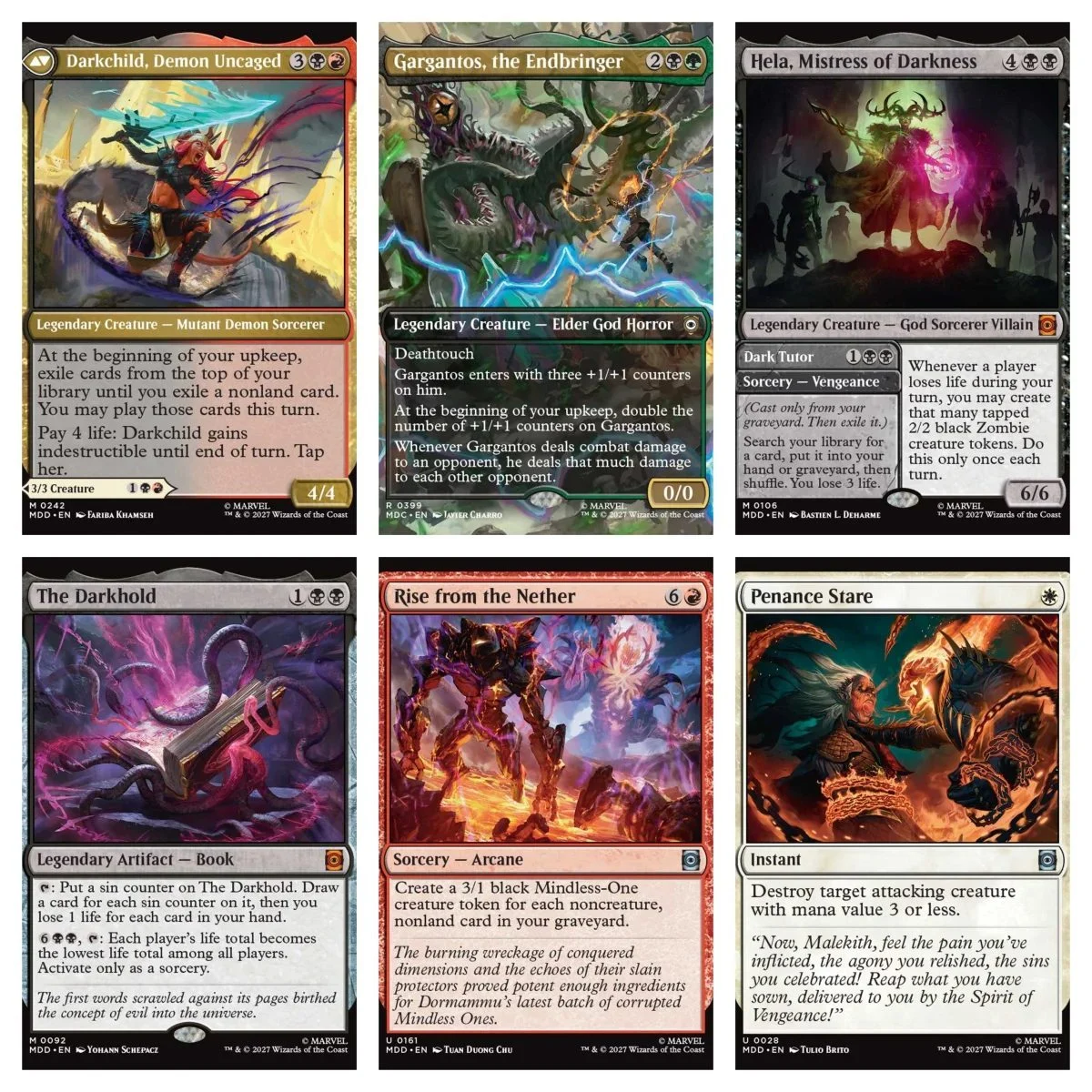
NEW YORK — The intersection of pop culture’s most iconic superhero universe and the world’s premier trading card game just took a distinctly shadowy turn. During a high-profile panel at New York Comic Con (NYCC) 2026, Wizards of the Coast officially pulled back the curtain on Marvel: Darkhold Destiny, the third installment in their ongoing Universes Beyond collaboration with Marvel following Marvel: Superheroes and Marvel: Zombies.
Unlike traditional crossover sets that rely heavily on replicating standard superhero tropes, Darkhold Destiny introduces a radical design philosophy: crafting a dedicated, original narrative where Magic: the Gathering mechanical integrity and dark fantasy aesthetics take absolute precedence, with Marvel’s rich tapestry of mystical characters woven seamlessly around them.
Main Facts: What is Marvel: Darkhold Destiny?
Darkhold Destiny is an upcoming, lore-heavy expansion set within the Magic: the Gathering Universes Beyond product line. Scheduled for release following previous Marvel-themed sets, the expansion shifts the spotlight away from street-level heroics and cosmic brawls, diving headfirst into the supernatural, arcane, and occult underbelly of the Marvel multiverse.
The core parameters of the set include:

- Design Philosophy: "Magic cards first, Marvel cards second." The Wizards of the Coast design team was given unprecedented creative latitude to interpret Marvel’s mystical lore through the established mechanical and narrative lenses of Magic: the Gathering.
- The Protagonists: The overarching narrative is anchored by an unexpected pairing: Thor, the God of Thunder, and Doctor Strange, the Sorcerer Supreme.
- The Antagonists: The forces of darkness are spearheaded by Hela, Goddess of Death, and Dormammu, ruler of the Dark Dimension.
- Scope: A sweeping, multi-dimensional story spanning across two-dozen different dimensions within the Marvel multiverse, exploring corrupted versions of iconic planes and realms.
- Mechanical Focus: Heavy emphasis on Instant and Sorcery spells, the return and prominent use of the "Arcane" subtype, the introduction of the "Book" subtype for grimoires and tomes, and a brand-new keyword mechanic known as "Vengeance."
Chronology: The Road to NYCC 2026 and Beyond
The evolution of the Universes Beyond product line has been marked by a steady escalation of major intellectual property partnerships, moving from fantasy mainstays like The Lord of the Rings and video game franchises like Fallout into the cinematic and comic realms of superheroes.
- Phase One of the Partnership: The collaborative effort between Wizards of the Coast and Marvel began with foundational exploratory sets, introducing general superhero concepts (Marvel: Superheroes) and a genre-specific horror-comedy spin (Marvel: Zombies). These sets established that the card game mechanical framework could support blockbuster comic book properties.
- The Creative Shift: Following the initial wave, Wizards of the Coast recognized a desire among hardcore Magic purists for deeper world-building and a tighter adherence to traditional Magic fantasy tones. This feedback directly influenced the pitch for Darkhold Destiny.
- NYCC 2026 Reveal: Wizards of the Coast formally announced the set at New York Comic Con, providing attendees and global streaming audiences with their first look at card renders, basic lands, tokens, and overarching story beats.
- Future Rollout: Following the NYCC showcase, fans can anticipate a prolonged preview season in the coming months, detailing the complete card list, draft archetypes, and serialized collector variants ahead of the set’s official market release.
Supporting Data: Mechanics, Realms, and the Roster
The presentation at NYCC offered a treasure trove of data for competitive players, collectors, and Vorthoses (lore enthusiasts) alike. By prioritizing a darker aesthetic, the set touches every aspect of the game from basic lands to new token types.
A Multiverse Corrupted: Basic Lands
One of the most striking visual elements revealed at the convention was the treatment of basic lands. To emphasize the narrative tension between light and dark, land cards will depict two distinct states: idyllic versions of specific planes, contrasted with the same realms after being ravaged or warped by the set’s primary villains, Hela and Dormammu.
- White Mana: Represented by the celestial halls of Asgard.
- Green Mana: Represented by a mystical, overgrown interpretation of Great Britain (anchored in Captain Britain lore).
- Blue Mana: Represented by the mind-bending vistas of the Dream Dimension.
- Black Mana: Represented by the bleak, subterranean realms of Svartalfheim.
- Red Mana: Represented by Limbo, the chaotic, hell-adjacent dimension ruled by Magik.
Token Ecosystem
To support the spell-slinging and creature-heavy nature of the set, six new token types were confirmed:

- Elf Warrior
- Giant
- Mindless One
- Angel
- Zombie
- Spirit Sorcerer
An Expanded Roster of Characters
Because Darkhold Destiny unfolds across a multi-dimensional narrative, players will encounter completely reimagined iterations of classic and obscure Marvel icons. Alongside Thor, Doctor Strange, Hela, and Dormammu, the panel name-dropped an extensive lineup of mystical and horror-adjacent figures:
- Midnight Sons and Supernatural Heroes: Moon Knight, Blade, Man-Thing, and Werewolf by Night.
- Arcane Powerhouses: Scarlet Witch, Agatha Harkness, Magik (depicted as "Darkchild"), and Gargantos ("the Endbringer").
- British Isles Lore: Captain Britain and his historical nemesis, Morgan le Fay.
New Mechanical Innovations
The heavy focus on magic-users required a mechanical overhaul of how spells interact on the stack:
- The Arcane and Book Subtypes: While the "Arcane" subtype has historically seen sporadic use on specific card types, Darkhold Destiny brings it to the forefront of Instant and Sorcery spells. Furthermore, the introduction of the "Book" subtype highlights magical tomes, grimoires, and cursed manuscripts.
- The "Vengeance" Mechanic: Showcased prominently on the new Hela card (Hela, Mistress of Darkness), the Vengeance mechanic asks players to pay a steep resource cost—such as sacrificing life totals—in exchange for devastating in-game benefits. This mechanically mirrors the lore of the Darkhold itself: a book of ultimate, world-shaking power that slowly drains the life force and corrupts the soul of its wielder.
Official Responses and Creative Vision
The creative team behind Universes Beyond emphasized that Darkhold Destiny is an exercise in translation rather than mere replication. The goal was not simply to slap a Marvel logo onto an existing Magic frame, but to filter the comic publisher’s extensive lore through the artistic and narrative sensibilities of Wizards of the Coast.
Merideth Mulroney, Art Director for Universes Beyond, encapsulated this design philosophy during the panel with a definitive statement:

“We’re going to show you what Marvel is through our eyes.”
This sentiment addresses a long-standing critique from segments of the Magic: the Gathering community who worry that external intellectual properties dilute the proprietary lore of the game’s native planes, such as Dominaria, Ravnica, or Innistrad. By taking Marvel’s occult characters—traditionally associated with modern cityscapes or cosmic void—and forcing them into the archaic, grimoire-heavy, planar-shifting framework of high fantasy, Wizards of the Coast is attempting to bridge the gap between franchise crossovers and native Magic world-building.
Implications: What Darkhold Destiny Means for the Future of Magic
The announcement of Marvel: Darkhold Destiny carries significant implications for both the trajectory of the Universes Beyond initiative and the broader identity of Magic: the Gathering as a platform.
- Genre-Specific Crossovers: Previous Universes Beyond releases often struggled to encapsulate entire multi-media franchises into single, cohesive card sets. By narrowing the geographic and thematic focus of the Marvel partnership down to the supernatural and arcane, Wizards of the Coast has proven that future crossovers do not need to be generic "best-of" highlight reels. Instead, they can function as targeted genre explorations—in this case, treating Marvel essentially as a dedicated Gothic-horror and high-fantasy plane.
- Reassuring the Traditionalist Fanbase: Many long-time players who felt alienated by the rapid influx of external IPs (Fallout, Assassin’s Creed, Doctor Who) have expressed fatigue over the loss of native Magic narrative identity. While Darkhold Destiny still features Marvel characters, the heavy emphasis on Magic design-first philosophies—such as complex spell mechanics, grimoires, world-warped lands, and dark fantasy art direction—serves as an olive branch to traditionalists. It offers the aesthetic depth of a classic Innistrad or Shadowmoor expansion while leveraging mainstream intellectual property.
- Setting a High Bar for Mechanics: The introduction of the Vengeance mechanic and the mainstreaming of the Arcane/Book subtypes suggest that Universes Beyond sets are no longer content with simply recycling evergreen mechanics. Wizards of the Coast is utilizing these crossovers as testing grounds for mechanical innovation that feels organically tied to the source material—a trend that will likely influence upcoming expansions like the heavily anticipated Star Trek and Avatar: the Last Airbender sets.
As Marvel: Darkhold Destiny moves closer to its eventual release, it stands as a testament to the shifting landscape of collectible card gaming—where proprietary worlds and mega-franchises no longer merely coexist, but actively merge to forge entirely new, darker mythologies.
