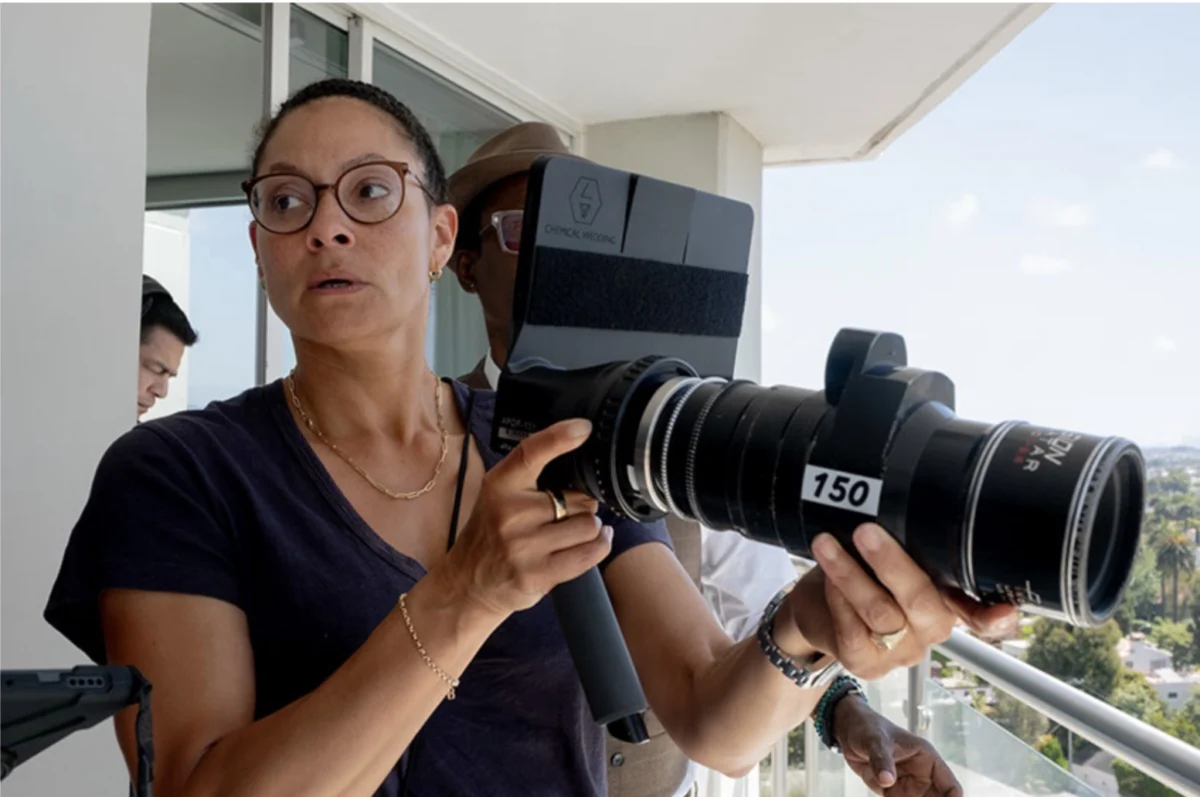
Inside the Glass and Sensors: Cinematographers Reveal the Gear and Craft Behind Fall’s Biggest Festival Hits
For film enthusiasts and industry professionals alike, the true anatomy of a movie is rarely exposed until the dust settles on the festival circuit. Year after year, IndieWire’s exhaustive camera and lens surveys pull back the curtain on the technical wizardry that brings cinematic visions to life. The latest installment stands as one of the most comprehensive deep-dives ever conducted by the publication.
To compile this massive data set, IndieWire surveyed 58 distinct directors of photography (DPs) whose feature films debuted at the prestigious Telluride, Toronto (TIFF), and New York (NYFF) film festivals. These cinematographers were asked three foundational questions: What format did they shoot on? What specific cameras and lenses did they employ? And, most importantly, why did they make those technical choices?
The resulting mosaic of responses illustrates how modern cinematographers navigate unique physical, budgetary, and aesthetic challenges. While the data confirms that all roads in contemporary digital cinematography seem to inevitably cross at the doorstep of the industry-favorite ARRI ALEXA 35, the real magic lies in the detours. From low-tech optical trickery and uncompromising black-and-white palettes to strict stylistic restraint, this season’s survey proves that the human element of filmmaking remains paramount.
Main Facts: The Scope and Scale of the 2026 Fall Festival Survey
The sheer breadth of this year’s survey underscores the evolving landscape of feature filmmaking. Capturing the insights of 58 cinematographers across three of the world’s most influential autumn film festivals yields a panoramic view of where visual storytelling stands today.
At its core, the survey highlights a tension between ubiquitous industry standards and idiosyncratic, project-specific problem-solving. The ARRI ALEXA 35 continues to dominate the conversation, functioning as a reliable workhorse for filmmakers tackling everything from intimate character studies to sweeping action sequences. Yet, the choice of camera body is merely the opening gambit.
The real storytelling happens further down the signal path—in the glass, the filtration, the lighting packages, and the fundamental decision of whether to embrace or reject color. The survey reveals that DPs are increasingly willing to marry cutting-edge digital sensors with lo-fi, tactile, and analog techniques. Whether dealing with compressed shooting schedules, archival footage integration, or the unforgiving realities of monochrome production, these 58 cinematographers demonstrated that technical constraints often breed the most striking creative breakthroughs.
Chronology: From Prep to Projection—How Vision Becomes Reality
The journey of crafting a film’s visual identity is a meticulous, chronological process that begins long before the cameras roll. It starts in the pre-production phase, where directors and cinematographers lock horns over the emotional core of the narrative, translating abstract scripts into concrete technical specifications.
The Planning Stage: Choosing Your Weapons
In the early days of prep, DPs like Sean Price Williams (Vintage Violence) and Gerald Kerkletz (Rose) face a barrage of choices. For Williams, lens selection is often driven by gut instinct rather than rigid academic strategy. Working alongside director Eugene Kotlyarenko in Japan, Williams initially toyed with the local heritage of Kowa glass and debated the merits of anamorphic shooting. However, through a process of elimination and self-restraint, he realized that chasing gear for its own sake—what he terms a "choice of fetish"—would distract from the movie’s raw, punk-rock character.
Similarly, for Rose cinematographer Gerald Kerkletz and director Markus Schleinzer, the prep phase involved stripping away conventional cinematic comforts. Rejecting the safety net of color, they mapped out a visual strategy that would rely entirely on the condensing power of black-and-white cinematography to challenge both themselves and their audience.
Production: Practical Problem-Solving on Set
Once principal photography commences, the theoretical meets the physical. Alexandre Lampron faced a relentless ticking clock while shooting Ladies and Gentlemen, Bryan Mulroney with director Matthew Rankin. Forced to move at breakneck speed over just a couple of days while matching against a heavy backdrop of archive photography, Lampron had to find fast, effective ways to carve out a distinct aesthetic.
Rather than relying solely on post-production tricks or complex lighting setups, Lampron turned to tactile, old-school analog solutions. His on-set strategy involved heavy diffusion and a surprisingly effective tool: the star filter.
Post-Production and Festival Premieres: The Final Look
The final link in the chronological chain sees these carefully crafted images graded, finalized, and projected for critical audiences at Telluride, Toronto, and New York. It is here, in the dark of the theater, that the gambles pay off—whether it’s the sparkling rhinestone-reflected light captured by Lampron’s star filters or the stark, high-contrast truths exposed by Kerkletz’s monochrome sensor.
Supporting Data: Behind the Lens with IndieWire’s Featured DPs
While the overarching survey data points to equipment preferences, the qualitative heart of IndieWire’s report lies in the specific anecdotes shared by the cinematographers. Their stories illuminate the exact mechanics of modern filmmaking.
Alexandre Lampron on Ladies and Gentlemen, Bryan Mulroney
Working under extreme time constraints and alongside extensive archival material is a recipe for visual disjointedness. Lampron combated this by leaning heavily into practical filtration.
"I’ve shot a couple of projects with [director Matthew Rankin], and on each of them we used special diffusion filters, even great quantities of Vaseline, but mainly the now infamous star filter (10 spikes), which is, to my surprise, so underrated," Lampron told IndieWire.
Beyond delivering a striking shine effect, the star filter actively lifted contrast and softened the digital sharpness of the image. This optical choice proved vital in harmonizing the modern footage with historical archive material, while also creating a magical dialogue with Patricia McNeil’s custom-made costume, which was drenched in thousands of sparkling rhinestones.
Gerald Kerkletz on Rose
For Rose, Kerkletz and director Markus Schleinzer deliberately avoided the trap of pastiche. They sought a look that felt vital rather than nostalgic.
"[Director] Markus Schleinzer and I weren’t interested in a ‘historical’ or a ‘period’ look. For me, the first is an illusion, while the second usually says more about the era a film was made in than the one it is set in," Kerkletz explained.
By committing to black-and-white, Kerkletz discovered that visual information does not disappear; it concentrates. Without the emotional crutch of color, every shadow, texture, and composition had to work harder. This elevated the material, creating an unforgiving aesthetic that forced viewers to confront the raw truths of the narrative head-on.
Sean Price Williams on Vintage Violence
Restraint is often the hardest discipline for a cinematographer. When shooting in Japan for Vintage Violence, Sean Price Williams had to consciously talk himself out of gear acquisition syndrome.
"It’s usually a whim, not a strategy. I knew our leads are pretty people, so I picked pretty lenses. I am sure I was tempted to use Kowa lenses since we were in Japan, and [Director Eugene Kotlyarenko] and I definitely considered anamorphic, but I think it would have been a choice of fetish," Williams admitted.
By keeping his glass selection straightforward, Williams allowed the natural energy of the locations and the magnetism of the cast to anchor the film’s punk-rock character portraits, proving that sometimes the best lens choice is the one you decide not to use.
Official Responses and Industry Insights
The collective feedback from the 58 cinematographers surveyed by IndieWire highlights a broader cultural shift within the industry. While camera manufacturers continue to push sensor resolutions higher and dynamic range wider, working cinematographers are actively seeking ways to reintroduce character, imperfection, and tactile humanity into their frames.
Industry veterans note that the dominance of high-end digital bodies like the ARRI ALEXA 35 has paradoxically freed DPs to experiment more wildly with what happens in front of the lens. Because the underlying digital capture is so clean and reliable, filmmakers feel emboldened to abuse the image with heavy diffusion, unconventional filtration, vintage glass adaptations, and radical color grading choices.
Furthermore, the festival reception of these films validates the approach. Critics and audiences at Telluride, TIFF, and NYFF consistently praised the visual audacity of this year’s slate, proving that technical innovation is most potent when it serves a distinct, uncompromising artistic vision.
Implications: What This Means for the Future of Cinematography
The revelations from IndieWire’s Fall Festival camera survey carry significant implications for the future of filmmaking, touching on technological development, stylistic trends, and indie production workflows.
1. The Renaissance of Optical Imperfection
As digital sensors achieve near-perfection in capturing light, color, and shadow, the pendulum is swinging hard in the opposite direction. Cinematographers are placing a premium on optical "flaws"—flare, distortion, softness, and artifacting. The widespread use of star filters, Vaseline, vintage glass, and custom diffusion points to an industry-wide hunger for organic texture in an increasingly digital world.
2. The Death of the Fake "Period Look"
Gerald Kerkletz’s rejection of the traditional "period look" signals a maturation in how historical and biographical films are visualized. Instead of leaning on tired color-grading clichés (such as the ubiquitous teal-and-orange or sepia tones), modern DPs are finding that radical formal choices—like shooting in sharp, unforgiving black-and-white—communicate historical truth and psychological weight far more effectively than nostalgic pastiche.
3. Workflow Efficiency Meets Creative Freedom
Lampron’s work on Ladies and Gentlemen, Bryan Mulroney demonstrates that high-end aesthetic results do not always require massive lighting packages or bloated schedules. By utilizing clever, practical front-of-lens solutions on compact digital setups, indie filmmakers can achieve rich, layered looks that hold their own against Hollywood blockbusters—even when working against the clock and mixing disparate source media like archive photography.
4. Gear Agnosticism and Intentional Restraint
Sean Price Williams’ philosophy on Vintage Violence serves as a vital reminder to emerging filmmakers: gear does not make art; choices do. In an era where rental houses offer an overwhelming array of exotic lenses and specialty camera bodies, the ability to exercise restraint and prioritize narrative clarity over technical flexing remains the mark of a true master of the craft.
Ultimately, IndieWire’s comprehensive survey does more than just catalogue the cameras and lenses of the 2026 festival season. It serves as a masterclass in problem-solving, reminding us that behind every memorable frame is a cinematographer actively wrestling with limitations, technology, and imagination to capture lightning in a bottle.