
"Remember, Remember": The Cultural Resilience of V for Vendetta at 20
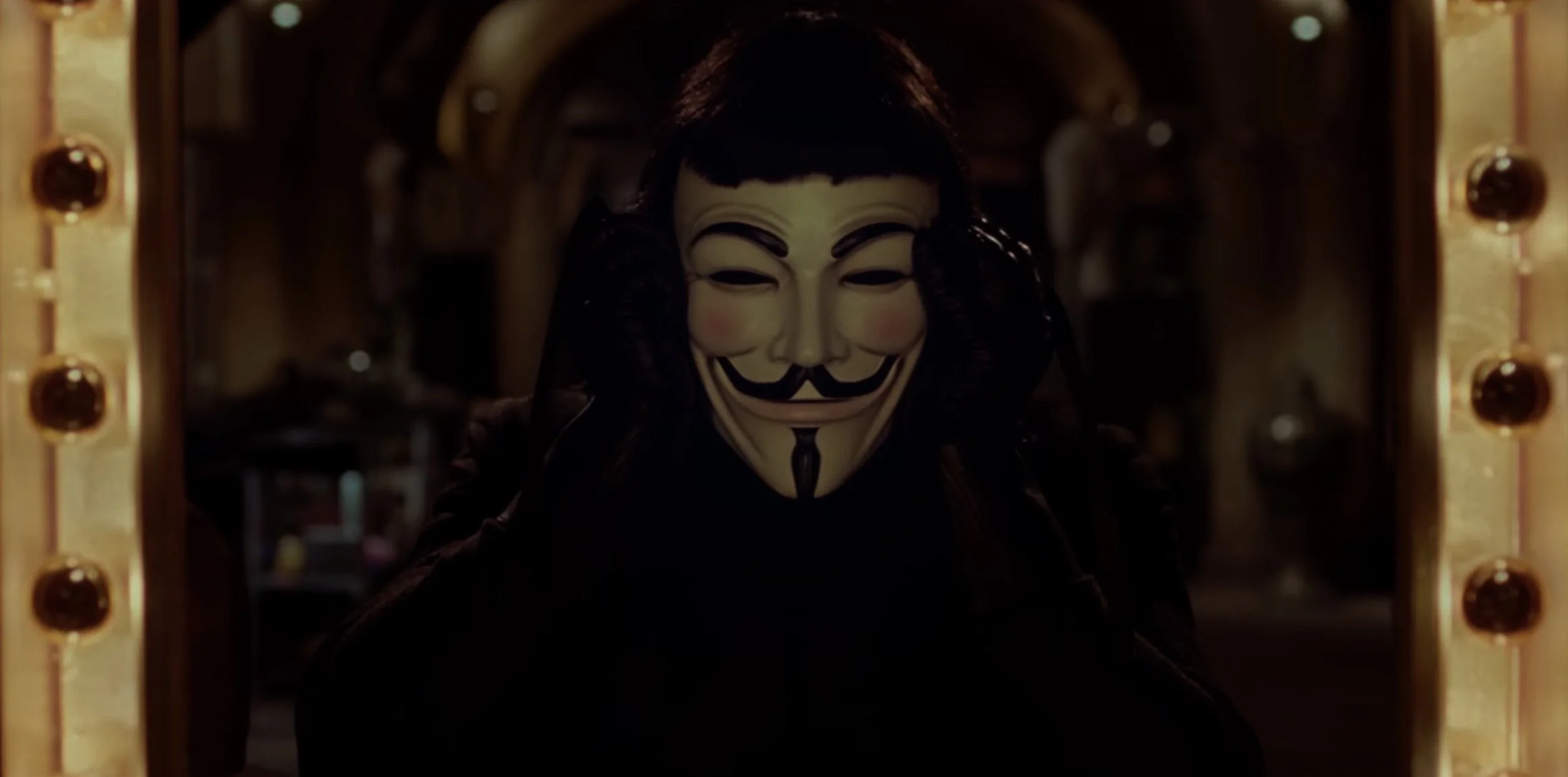
"Remember, remember, the fifth of November." It is a mantra that has echoed through the corridors of pop culture for two decades, transcending its origins in 17th-century English history to become a global shorthand for defiance, anarchy, and the fight against systemic oppression. Now, twenty years after its original release, the Wachowskis’ dystopian masterpiece V for Vendetta is set to return to the silver screen, inviting a new generation—and a nostalgic older one—to revisit the masked revolutionary’s crusade against the Norsefire Party.
Fathom Entertainment has announced that the film will return to theaters for a special 20th-anniversary celebration. Scheduled for November 1 and November 5, 2026, the re-release serves as a cinematic pilgrimage for those who recognize the film not just as an action-packed thriller, but as a prescient, politically charged manifesto that has only grown more relevant with the passage of time.
Main Facts: The Return of the Mask
The 2006 film, directed by James McTeigue and produced by the creative powerhouse of Lana and Lilly Wachowski, redefined the dystopian genre. Its return to theaters is not merely a nostalgia play; it is a recognition of the film’s enduring impact on the public consciousness.
The screenings will take place across select theaters nationwide, providing fans the rare opportunity to experience the film’s iconic score, sweeping cinematography, and pyrotechnic climaxes on the scale for which they were intended. The film’s narrative—a near-future, fascist Britain controlled by the iron-fisted Norsefire Party—centers on the enigmatic, Guy Fawkes-masked revolutionary known only as "V" (Hugo Weaving) and his unlikely protégé, Evey Hammond (Natalie Portman). As V embarks on a violent campaign to dismantle the state, the film forces the audience to confront uncomfortable questions regarding the ethics of terrorism, the necessity of rebellion, and the fragility of democracy.
A Chronology of a Cultural Phenomenon
The Origins (1982–2005)
The roots of the film lie in the seminal 1982 graphic novel written by Alan Moore and illustrated by David Lloyd. Published during a time of significant political turmoil in the United Kingdom, the graphic novel served as a biting critique of Thatcherism. Its transition to the screen was a long, arduous process. While the Wachowskis had long been fans of the source material, the film adaptation underwent significant tonal shifts to adapt to the 2006 political climate, focusing more heavily on the dangers of fear-based governance and the influence of media propaganda.
The Theatrical Debut (2006)
When V for Vendetta premiered on March 17, 2006, the world was in the throes of post-9/11 anxieties. The film’s themes of government surveillance, torture, and the erosion of civil liberties struck a nerve. It earned approximately $70 million at the U.S. box office—a respectable sum for a R-rated, politically dense adaptation—but its true success was found in its afterlife. The Guy Fawkes mask, designed for the film, quickly escaped the screen to become a genuine real-world symbol of resistance, adopted by protest groups and activists worldwide.
The Legacy (2007–2025)
In the two decades since its release, the film has remained a fixture of university film studies, political science discussions, and pop-culture debates. It has survived the departure of its creator’s blessing; Alan Moore, notoriously protective of his work, famously requested his name be removed from the credits, distancing himself from what he viewed as a "Hollywood-ized" version of his narrative. Yet, the film thrived, cementing itself as a quintessential piece of 21st-century cinema.
Supporting Data: Behind the Lens
The longevity of V for Vendetta is no accident. It is a result of a perfect convergence of talent, vision, and timing.
- Directorial Debut: V for Vendetta marked the feature directorial debut of James McTeigue. Having served as the first assistant director on The Matrix trilogy, McTeigue brought a polished, visual flair to the project that allowed the film to balance its philosophical weight with visceral, high-stakes action.
- The Cast: The film’s success relies heavily on its performances. Hugo Weaving’s ability to convey profound emotion, malice, and charisma while his face remained completely obscured by a rigid plastic mask is widely regarded as a masterclass in physical acting. Natalie Portman, conversely, provided the film’s moral compass, shaving her head on-screen in a sequence that remains one of the most powerful character transitions in cinema history.
- The Supporting Architecture: The film’s secondary cast read like a who’s-who of British acting royalty: Stephen Rea as the conflicted Inspector Finch, Stephen Fry as the subversive broadcaster Gordon Deitrich, and the late, legendary John Hurt as the chilling High Chancellor Sutler. These performances provided the necessary weight to turn a "superhero-adjacent" story into a grounded, frighteningly plausible drama.
Official Responses and Creative Tensions
The creative tension between the original graphic novel and the film adaptation has been a point of contention for twenty years. Alan Moore’s refusal to participate in the film’s promotion or accept royalties highlighted a fundamental divide: Moore saw his work as a specific critique of a specific time, while the Wachowskis saw it as an evolving, universal cautionary tale.
Despite this, the production team—including producers Joel Silver and Grant Hill—maintained that the film was intended to be an exploration of the human spirit. In recent retrospective interviews, members of the crew have noted that the film was never intended to be a documentary of the future, but rather a "mirror held up to the present." By focusing on the universality of the struggle against totalitarianism, the team ensured the film would not age out of relevance.
Implications: Why We Still Need V
As we approach the 20-year anniversary, the implications of V for Vendetta are more profound than they were in 2006. We live in an era of "post-truth," where the manipulation of information—a central plot point in the film—has moved from the realm of fiction to our daily digital existence.
1. The Weaponization of Fear
The film’s central thesis—that fear is the most effective tool for social control—is a recurring theme in modern political discourse. The government of Norsefire maintains power by manufacturing crises, a tactic that the film critiques with unflinching directness. Re-watching the film in 2026 allows audiences to analyze how media consolidation and state-sponsored fear-mongering affect the psyche of the citizenry.
2. The Ethics of Anarchy
Perhaps the most enduring question the film poses is one of method. Is V a hero or a terrorist? By refusing to provide a simple answer, the film forces the viewer to engage with the moral ambiguity of revolution. As the world faces various forms of authoritarianism, the film’s exploration of what happens when a society is pushed to its breaking point serves as a potent reminder of the importance of dissent.
3. A Call to Civic Engagement
At its core, V for Vendetta is an argument for individual agency. Evey’s journey from a terrified bystander to a woman who understands the cost of her own freedom is the heartbeat of the story. The anniversary screenings provide more than just entertainment; they offer a communal space to reflect on the value of democratic institutions and the courage required to stand up against injustice.
Conclusion: A Date with Destiny
As the trailer for the anniversary re-release begins to circulate, it serves as a stark reminder of the power of well-crafted fiction. The visuals—the stark red of the Norsefire banners, the silhouette of the Guy Fawkes mask against the backdrop of a burning Parliament, and the haunting, melodic echoes of Beethoven’s 5th Symphony—have lost none of their intensity.
For those who have only experienced the film on streaming services or Blu-ray, the theatrical experience is essential. The roar of the theater, the shared tension of the audience, and the sheer scale of the cinematography bring an added layer of gravitas to the viewing experience.
Whether you view the film as a blueprint for resistance, a cautionary tale of overreach, or simply a top-tier piece of dystopian action cinema, the return of V for Vendetta to the big screen is an event of significant cultural weight. On November 1 and November 5, 2026, theaters will once again become chambers of discourse, reminding us that while ideas are bulletproof, they require people to carry them forward.
Will you be there to witness the fire? The fifth of November is coming, and it promises to be a date that, twenty years later, still resonates with the thunder of change.
