
A Visionary of Time and Flesh: Remembering the Cinematic Alchemy of Nicolas Roeg
Main Facts: The Passing of a Master and His Lasting Imprint
The passing of legendary British filmmaker Nicolas Roeg at the age of 90 marks the twilight of an era when cinema was driven by tactile experimentation, fractured chronologies, and a fearless exploration of human eroticism and psychology. Roeg, who transitioned from a master cinematographer to one of the most daring writer-directors of the 20th century, redefined the grammar of visual storytelling.
Operating at the height of his powers during the 1970s and early 1980s, Roeg crafted a distinct cinematic language characterized by disorienting jump cuts, fluid temporal logic, and an almost hypnotic obsession with desire, memory, and fate. While he helmed a diverse catalog spanning psychological thrillers, Australian survival dramas, and existential science fiction, he is perhaps best remembered for Don’t Look Now (1973). Anchored by Donald Sutherland and Julie Christie, the film featured a notoriously graphic, highly celebrated love scene that remains a watershed moment in mainstream cinematic intimacy.
However, Roeg’s contributions extend far beyond a single epoch-defining sequence. Across masterpieces such as Performance (1970), Walkabout (1971), The Man Who Fell to Earth (1976), and Bad Timing (1980), he established a singular artistic signature: a belief that the past is inextricably bound to the present, that climaxes are mere preludes, and that cinema could capture the visceral anxieties of the human subconscious more accurately than linear narrative ever could.
Chronology: From the Camera Lens to the Director’s Chair
To understand Nicolas Roeg’s revolutionary directorial vision, one must examine his foundational decades within the British film industry—a long apprenticeship that sharpened his eye before he ever stepped behind the camera as an auteur.
The Cinematographic Genesis (1950s–1960s)
Born in London, Roeg spent over two decades mastering the technical mechanics of filmmaking as a cinematographer. His lens captured the grand landscapes and sweeping movements of epics like David Lean’s Lawrence of Arabia, though his creative friction with Lean during Doctor Zhivago signaled an artist straining against conventional parameters.
Roeg’s distinct visual voice truly began to crystallize with his evocative, gauze-textured work on Far from the Madding Crowd (1967) and the fashion-forward, Godard-meets-Carnaby-Street aesthetic of Petulia (1968). These projects laid the groundwork for a transition from capturing someone else’s vision to engineering his own.
The Collaborative Breakthrough: Performance (1970)
In 1968, Roeg finally secured the director’s chair, co-directing Performance alongside Donald Cammell. A London-set psychodrama centering on a gangster hiding out in the bohemian lair of a reclusive rock star—played with lurid, magnetic intensity by Mick Jagger—the film proved too radically elliptical for Warner Bros.
The studio famously panicked, shelving and subsequently recutting the picture until its eventual 1970 release. Despite the studio interference, Performance retained a menacing, underworld cult griminess. The film culminated in Jagger’s hypnotic rendition of "Memo from Turner," a sequence that suggested what Stanley Kubrick’s A Clockwork Orange might have looked like had Alex been played by the Rolling Stones frontman.
The Triumvirate of Masterpieces (1971–1976)
Following Performance, Roeg embarked on a blistering creative run that produced his most enduring works:
- Walkabout (1971): Roeg’s idiosyncratic take on a survival film, set in the Australian outback. It chronicled the cross-cultural bond between a wandering Aborigine (David Gulpilil) and two stranded siblings, one of whom was played by Roeg’s own son, Luc.
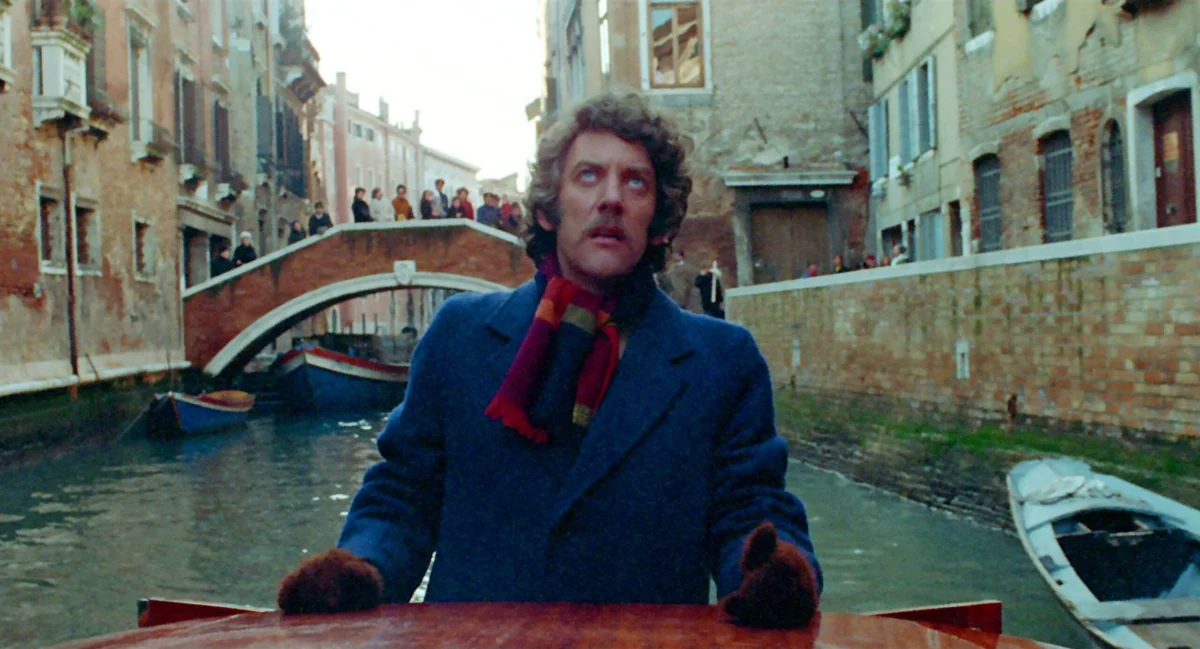
- Don’t Look Now (1973): Adapted from a Daphne du Maurier short story, this modern gothic masterpiece immersed audiences in the labyrinthine canals of Venice. It tracked a grieving couple (Sutherland and Christie) grappling with the accidental drowning of their daughter amid a backdrop of sinister portents and structural temporal shifts.
- The Man Who Fell to Earth (1976): Released just before Star Wars transformed the sci-fi landscape, Roeg utilized futuristic imagery to tell a deeply terrestrial tragedy. Casting David Bowie as an alien searching for water, Roeg tapped into the musician’s otherworldly mystique to craft a prophetic vision of corporate greed, media saturation, and isolation.
The Descent and Later Career (1980–1990s)
Roeg’s commercial and critical zenith plateaued sharply after Bad Timing (1980), a harrowing exploration of male toxicity starring Art Garfunkel and Theresa Russell. While subsequent efforts like the celebrity-studded intellectual comedy Insignificance (1985) and the Roald Dahl adaptation The Witches (1990) maintained traces of his stylistic flair, his career never regained its former cultural dominance, eventually settling into a respected but underappreciated footnote in film history.
Supporting Data: The Anatomy of Roeg’s Aesthetic
Roeg’s films were rarely simple narratives; they were sensory environments engineered to evoke psychological states. Analyzing his signature techniques reveals why his work continues to hold audiences in thrall:
- The Editing Gambit of Intimacy: In Don’t Look Now, Roeg famously intercut Sutherland and Christie’s passionate, orgasmic lovemaking with shots of the couple quietly getting dressed afterward. This structural sleight-of-hand—partially designed to appease nervous censors—transformed the scene’s meaning. It asserted that even the wildest heights of human ecstasy are immediately swallowed by the humdrum reality of daily existence.
- Temporal Collapsibility: Roeg treated time not as a straight line, but as a prismatic web. Through jarring flash-forwards and associative flashbacks, films like Don’t Look Now and The Man Who Fell to Earth made viewers experience grief and memory as active, living forces operating concurrently with the present.
- Prophetic Cultural Imagery: Long before the ubiquity of multi-screen monitoring and digital saturation, The Man Who Fell to Earth depicted Bowie’s alien protagonist listlessly watching several television sets simultaneously. This sequence stands as one of the most prescient visual metaphors for modern media consumption ever committed to celluloid.
Official Responses and Industry Legacy
Following his passing, film critics, historians, and contemporaries alike flooded cultural platforms with tributes, mourning the loss of a director who operated completely on his own terms.
Industry retrospectives frequently highlight how Roeg paved the way for modern psychological horror and non-linear storytelling. Contemporary directors and cinematographers often cite Don’t Look Now as a masterclass in atmosphere, proving that dread does not require cheap jump scares, but rather a pervasive erosion of logic and safety.
While major studios occasionally balked at his elliptical styles—evidenced by the prolonged post-production battles over Performance—critics have increasingly championed Roeg as a visionary who refused to pander to commercial expectations. His marriage of high art sensibilities with visceral genre mechanics earned him the enduring reverence of cinephiles worldwide, cementing his status as an architect of cinematic dreams and nightmares.
Implications: The Road Not Traveled
The ultimate tragedy of Nicolas Roeg’s career is not merely that his later films failed to capture a wide audience, but that the machinery of mainstream escapism rarely found a way to accommodate his genius.
One is left to ponder an alternative cinematic universe—one that is remarkably easy to visualize—wherein Roeg’s radical techniques were successfully fused with major studio machinery. Had Hollywood embraced his visual pyrotechnics for high-concept espionage, elevated horror, or philosophical science fiction on a larger scale, the landscape of blockbuster cinema might have evolved with far more structural daring.
Instead, Roeg stands as a rare, untamed anomaly: a filmmaker who made a total of four or five foundational masterpieces that genuinely mattered, leaving behind a legacy built on wide-awake sensuality, snaking temporal logic, and indelible imagery. From Mick Jagger’s slicked-back swagger to the haunting figure in the red hood, and from David Bowie’s melancholic alien gaze to Donald Sutherland dangling desperately from a Venetian scaffold, Roeg’s films invite us back into a liminal space where humanity simultaneously seeks to escape the confines of earth and desperately tries to understand what it means to fall upon it.
