
The Battle of the Airwaves: Lawmakers Revive Long-Stalled Legislative Fight Over Terrestrial Radio Performance Rights
Main Facts
Washington — A decades-long legislative and economic war between the American music industry and traditional terrestrial broadcasters is once again exploding onto the national political stage. At the heart of this renewed conflict is a fundamental question of copyright equity: Should performing artists and record labels be compensated when their music is broadcast over traditional AM and FM radio stations?
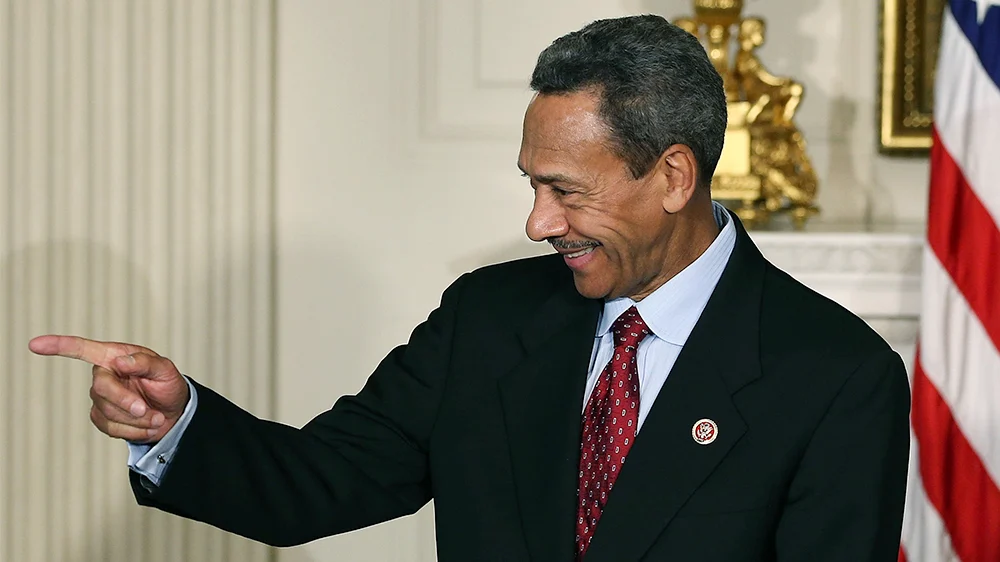
The latest catalyst for this high-stakes showdown comes from Capitol Hill, where Representative Mel Watt (D-N.C.), serving as the ranking member of the House Judiciary’s Subcommittee on Intellectual Property, Competition and the Internet, announced plans to introduce landmark legislation. Representative Watt’s forthcoming bill aims to establish a federal "performance right" for sound recordings. If enacted, the measure would require traditional broadcast radio stations to negotiate directly with artists and copyright holders for the legal right to transmit their music over the airwaves.
This legislative push represents the opening salvo in what is expected to be an intense, multi-million-dollar lobbying war. Supporters of the bill, including major record labels, independent artists, and industry advocacy groups, argue that terrestrial broadcasters represent a glaring loophole in modern intellectual property law. While songwriters and composers have historically collected public performance royalties when their compositions are played on the radio, the actual recording artists—the singers, session musicians, and featured performers—receive nothing for terrestrial airplay.
Conversely, the broadcast industry, spearheaded by the National Association of Broadcasters (NAB), has mobilized aggressively to halt the measure. Broadcasters have characterized the initiative as an economically destructive "performance tax" that would devastate local stations, eliminate jobs, and funnel revenue away from American workers and into the hands of multinational and foreign record conglomerates.
As Representative Watt prepares to drop the bill into the legislative hopper before the upcoming congressional recess, lawmakers, lobbyists, and entertainment industry executives are bracing for a bitter policy fight over the future of audio entertainment monetization.
Chronology of a Decades-Long Battle
The struggle over terrestrial performance rights is not a new phenomenon; rather, it is the latest chapter in a protracted legislative saga that spans nearly a century of broadcasting history.
The Historical Divide
When the U.S. Copyright Act of 1909 and its subsequent major revision in 1976 were crafted, lawmakers drew a sharp legal distinction between the musical composition (the underlying notes and lyrics written by the songwriter) and the sound recording (the specific recorded audio performance captured by the artist and label). Under these frameworks, radio stations were required to pay licensing fees to performing rights organizations (PROs) like ASCAP, BMI, and SESAC to compensate songwriters and publishers. However, terrestrial radio was explicitly exempted from paying public performance royalties to the creators of the sound recordings themselves.
The rationale at the time was rooted in mutual benefit: broadcasters argued that playing records on the radio served as invaluable, free promotional advertising that drove physical album sales, while the nascent recording industry largely accepted this arrangement.
The Digital Age Shift
The legal landscape began to fracture with the advent of digital media and the internet. Recognizing the shifting paradigm, Congress passed the Digital Performance Right in Sound Recordings Act of 1995, followed by the Digital Millennium Copyright Act (DMCA) of 1998. These legislative milestones established a performance right for digital and satellite radio platforms—such as SiriusXM, Pandora, and internet webcasters—requiring them to pay performance royalties for sound recordings.
However, traditional AM/FM terrestrial broadcasters successfully lobbied to maintain their historic exemption, leaving a stark dichotomy in federal law: digital audio platforms pay performance royalties to artists and labels, while traditional broadcast radio does not.
The 2009 Legislative Push
The most recent major legislative attempt to close this loophole occurred in 2009, when congressional allies introduced the Performance Rights Act. Backed by a coalition of artists and labels, the bill sought to establish mandatory royalty rates set by the Copyright Royalty Board for terrestrial broadcasts.
The 2009 effort successfully navigated through the House and Senate judiciary committees, marking the closest the music industry had ever come to securing terrestrial performance rights. Ultimately, however, the legislation stalled out on the chamber floors. Facing a well-organized and fiercely resistant broadcast lobby that marshaled hundreds of congressional co-sponsors in opposition, leadership chose not to bring the bills to a final vote.
The 2013 Resurgence
Fast-forwarding to the present juncture, Representative Watt’s 2013 announcement signals a strategic pivot. Recognizing that the prescriptive, government-set royalty structures of the 2009 bills alienated key free-market lawmakers, Watt’s new legislative framework avoids establishing a mandated royalty system. Instead, the bill focuses strictly on recognizing the legal right itself, thereby forcing both industries to negotiate terms in good faith—a tactical shift designed to break the legislative logjam that has paralyzed Congress for years.
Supporting Data and Economic Arguments
At the core of the debate are competing economic philosophies, conflicting data sets, and fundamentally different visions of the modern music and broadcasting ecosystems.
The Pro-Performance Right Perspective: Closing the Loophole
Proponents of the legislation, championed by organizations such as the musicFIRST Coalition, point to international norms and glaring domestic inequities to justify reform. According to data cited by music advocates, the United States stands virtually alone among developed nations in denying performance royalties to recording artists for terrestrial radio airplay. Major music markets including the United Kingdom, France, Germany, Canada, and Australia all recognize a terrestrial performance right.
Because the United States does not reciprocate this right, American artists and labels are routinely blocked from collecting millions of dollars in foreign performance royalties generated when their American-made music is played on radio stations abroad.
Furthermore, advocates argue that the traditional economic model—where radio airplay translates directly into record sales—has been fundamentally upended in the digital era. With physical CD sales diminished and streaming services yielding micro-pennies per stream, artists rely heavily on every potential revenue stream. Proponents emphasize that terrestrial radio remains a multi-billion-dollar advertising-driven industry that monetizes recorded music without compensating the primary talent responsible for creating the content.
The Broadcaster Perspective: The Value of Promotion and the "Performance Tax"
The National Association of Broadcasters and local station owners fiercely dispute these economic assertions, arguing that the relationship between radio and the recording industry remains symbiotic. Broadcasters contend that local radio continues to serve as the single most powerful promotional vehicle for launching new artists, breaking hit songs, and driving sales of concert tickets, merchandise, and digital streams.
NAB representatives frequently frame the proposed legislation as an unfair "performance tax" that would cripple local AM and FM stations, particularly smaller, independently owned community broadcasters operating on razor-thin profit margins in rural and suburban markets. According to broadcasting industry analyses, imposing an additional financial levy on top of existing music licensing fees, ASCAP/BMI payments, and operational overhead would force widespread station bankruptcies, staff layoffs, and a reduction in localized news, weather, and emergency broadcast coverage.
Highlighting an evolving private-market solution, broadcasters also point to recent commercial agreements as evidence that federal intervention is unnecessary. Notably, digital media giant and radio broadcaster Clear Channel (now iHeartMedia) struck direct licensing deals with independent record labels like Big Machine Records, voluntarily compensating those labels for terrestrial airplay without the need for an act of Congress. Broadcasters argue that such private marketplace negotiations are far superior to a heavy-handed federal mandate.
Official Responses and Political Dynamics
As Representative Watt prepares to officially introduce the legislation before the upcoming summer congressional recess, political fault lines are rapidly hardening across Capitol Hill.
Lawmaker Maneuvering and Bipartisan Hurdles
Securing passage in the House of Representatives will require Representative Watt to bridge deep partisan divides and navigate complex committee politics. When similar legislation was introduced in 2009, proponents successfully courted prominent conservative and progressive co-sponsors alike, including Representatives Darrell Issa (R-Calif.) and Marsha Blackburn (R-Tenn.), who recognized the property rights argument inherent in the issue.
However, the political landscape in 2013 presents unique complications. Questions loom regarding whether Representative Watt can assemble a sufficiently robust bipartisan coalition, particularly given potential distractions surrounding his own political future, including his pending nomination by the White House to serve as director of the Federal Housing Finance Agency (FHFA).
The Counter-Legislation: The Local Radio Freedom Act
Demonstrating their considerable political clout, opponents of the performance right have entrenched themselves behind a powerful preemptive legislative shield known as the Local Radio Freedom Act. This resolution expresses the sense of Congress that federal lawmakers should not impose any "performance fee, tax, royalty, or other charge" on local broadcast radio stations for playing musical works.
Rather than seeking to amend copyright law directly, the Local Radio Freedom Act acts as a political barometer and a rallying point for congressional opposition. The measure has already amassed substantial backing, boasting 143 co-sponsors in the House of Representatives and 11 in the Senate. This formidable show of force serves as a direct warning to congressional leadership regarding the depth of opposition awaiting any attempt to advance Representative Watt’s bill.
Industry Coalition Statements
The rhetoric from institutional stakeholders has reached a fever pitch. Ted Kalo, executive director of the musicFIRST Coalition, minced no words in condemning the current status quo during recent congressional hearings.
"AM/FM radio stands alone among all forms of radio in refusing to pay music creators for airing their performances," Kalo stated. He emphasized that the failure of U.S. law to recognize the performance right actively harms American creators abroad, depriving them of legitimate international earnings.
Conversely, Dennis Wharton, speaking on behalf of the National Association of Broadcasters, reiterated the industry’s uncompromising stance against the measure.
"This proposal is nothing more than a performance tax that would kill jobs at America’s hometown radio stations while diverting millions of dollars to offshore record labels," Wharton warned, underscoring the NAB’s narrative that the legislation primarily benefits massive foreign-owned corporate conglomerates at the expense of domestic local broadcasters.
Implications for the Future of Music and Broadcasting
The outcome of this legislative battle will carry profound, long-term implications for the entire entertainment and media landscape.
If Representative Watt and the music industry coalition succeed in pushing the performance right through Congress, it would fundamentally rewrite the financial architecture of the audio entertainment industry. Record labels and featured artists would unlock a massive, recurring revenue stream from terrestrial broadcast radio, fundamentally shifting millions of dollars in corporate revenue. For independent artists and legacy musicians alike, this could mean a vital new source of financial stability in an era marked by declining recorded music sales and complex streaming economics.
On the other hand, if the National Association of Broadcasters and its allies successfully defeat the legislation—bolstered by the continued momentum of the Local Radio Freedom Act—it will reaffirm the unique statutory exemptions that terrestrial radio has enjoyed for nearly a century. Such an outcome would preserve the operational status quo for thousands of local AM and FM stations, shielding them from increased financial liabilities while keeping the current promotional model intact.
However, a failure of federal legislation may not end the debate. As commercial partnerships between broadcasters and independent labels continue to evolve, market-driven solutions could increasingly bypass the legislative process entirely, leading to a patchwork of private agreements rather than a unified federal mandate.
Ultimately, as Congress weighs Representative Watt’s revised proposal, the clash between musicians and broadcasters highlights the enduring tension between intellectual property rights, technological evolution, and the economic realities of mass media dissemination in the 21st century.
