
Reading, Community, and Connection: Inside the Rise of the Great American Book Club
NEW YORK — In an era dominated by hyper-fast scrolling, algorithmically curated video feeds, and fragmented digital entertainment, traditional reading might seem like a solitary pursuit destined for the sidelines. Yet, television networks and media conglomerates are increasingly discovering that audiences are hungry for tactile, community-driven experiences that bridge the gap between screen time and page-turning.
Enter the Great American Book Club, an ambitious, community-focused initiative launched earlier this year by Great American Family. Designed to foster deeper connections between viewers and network executives, the monthly virtual book club has quickly evolved from a simple promotional exercise into a thriving literary community.
To understand the real-world impact and appeal of this initiative, Cablefax’s Senior Production Manager, Joann Fato, recently went behind the scenes to participate in her first-ever session. What she discovered was a masterclass in audience engagement, proving that linear networks and streaming-era platforms can successfully build meaningful, interactive communities around traditional print media.
Main Facts
- The Initiative: The Great American Book Club is a monthly virtual book club series launched earlier this year by the television network Great American Family (part of Great American Media).
- The Leadership: Monthly virtual meetings are actively hosted and led by prominent network executives, including Great American Media President & CEO Bill Abbott and Programming & Development Manager Sabrina Novacov.
- The Focus Selection: For the October session, the club featured Theo of Golden, a critically acclaimed novel written by author Allen Levi, which explores deep themes of community, kindness, generosity, and human belonging.
- The Format: Participants engage through a combination of structured Zoom discussions, active live-chat participation, and interactive trivia games hosted via Kahoot to test comprehension and reward engaged readers.
- The Impact: The initiative has successfully bridged the gap between passive television viewing and active, recreational reading, reigniting a passion for literature among viewers who had long stepped away from reading for pleasure.
Chronology: From Summer Commercials to Virtual Gatherings
The journey of the Great American Book Club—from a network concept to a vibrant virtual gathering space—reflects a carefully timed rollout designed to capture audiences during their leisure hours.
The Discovery (Summer 2026)
The origin story for many participants begins in the unlikeliest of places: seasonal television marathons. During the summer months, viewers who tuned into Great American Family and its sister channels for early seasonal movie blocks were greeted by striking promotional spots. Unlike standard commercial breaks advertising upcoming films or merchandise, these spots spotlighted an interactive monthly book club. The messaging was clear: Great American Family wanted to invite its audience not just to watch stories, but to share them.
The Literary Hunt (September 2026)
Intrigued by the broadcast commercials, potential participants began visiting the network’s dedicated digital hub. For the October selection, the network spotlighted Theo of Golden by Allen Levi. As interest surged, the book’s popularity became immediately apparent in the broader literary ecosystem.
For many readers, securing a copy proved to be an unexpected logistical challenge. Local libraries saw immediate spikes in holds, with waiting lists stretching into the thousands. For instance, when Joann Fato attempted to borrow the book through her local library system, she encountered a staggering queue with 1,195 people ahead of her. Undeterred, participants purchased copies directly, diving into a narrative that would soon become the focal point of a massive virtual conversation.
The Live Gathering (October 1, 2026)
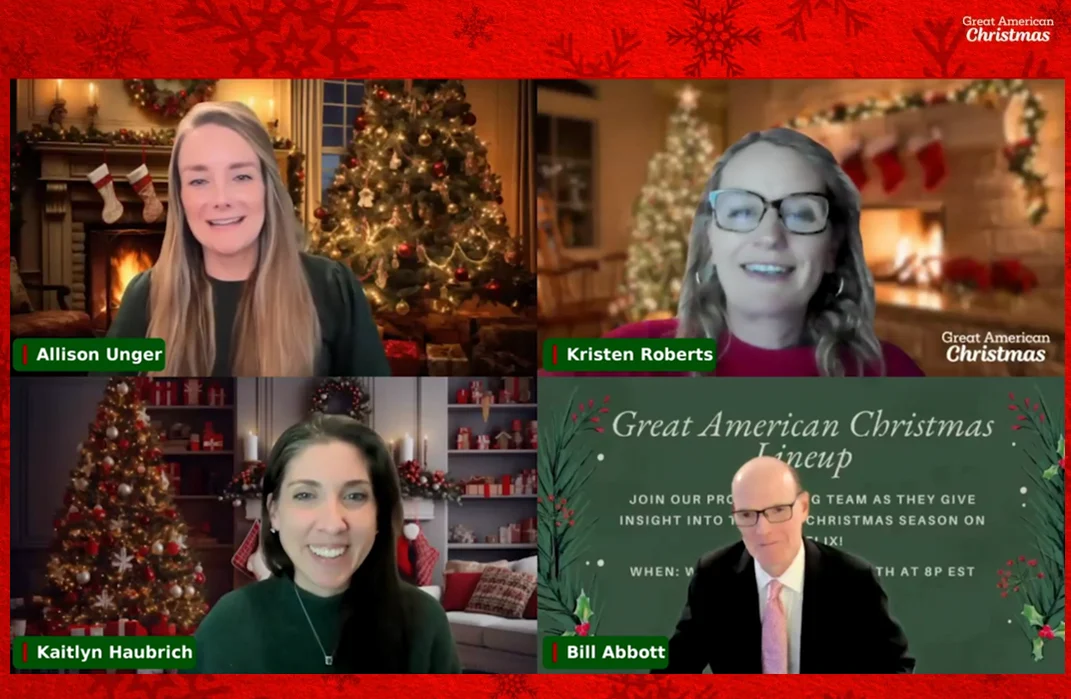
The culmination of the monthly cycle took place on October 1, when hundreds of readers logged into a scheduled Zoom room. Led directly from the top down by Great American Media President & CEO Bill Abbott and Programming & Development Manager Sabrina Novacov, the session moved at a brisk, engaging pace.
Rather than a stuffy academic lecture, the meeting functioned as a lively town hall. Attendees debated character motivations in the live chat, dissected the novel’s core themes, and participated in a high-energy Kahoot multiple-choice trivia game designed to test their knowledge of the book’s plot points and nuances.
Supporting Data & Industry Context
The success of the Great American Book Club does not happen in a vacuum. It taps into a massive, highly lucrative cultural resurgence of reading clubs popularized by digital platforms, daytime talk shows, and social media movements like "BookTok."
- The Digital Book Club Boom: Industry data indicates that book clubs organized by media personalities, television networks, and digital influencers routinely drive hundreds of thousands of book sales within weeks of selection. When a title receives a major network endorsement, its visibility on platforms like Amazon and Barnes & Noble spikes dramatically.
- Library Strain as a Quality Indicator: High waitlists at municipal libraries for network-selected books serve as a real-time proxy for consumer demand. When a book like Theo of Golden amasses a waiting list of nearly 1,200 people at a single local library branch system, it highlights the immense pulling power that faith-and-family television networks hold over their core demographic.
- Executive Engagement Metrics: Unlike traditional corporate book clubs where leadership delegates moderation to junior human resources personnel, the active, hands-on presence of CEO Bill Abbott signals to viewers that the network views community-building as a core business priority rather than a peripheral marketing gimmick.
Official Responses and Executive Vision
While the Great American Book Club is ostensibly about literature, its underlying architecture is built on fostering a deep, parasocial bond between a media brand and its loyal audience.
When Great American Media leadership conceptualized the book club, the goal was simple yet ambitious: create a digital third space where viewers could transition from passive consumers of entertainment to active participants in a shared cultural dialogue. By placing executives like Bill Abbott and Sabrina Novacov at the center of the Zoom grid, the network tears down the traditional corporate wall that separates media producers from consumers.
Participants have responded enthusiastically to this flattened hierarchy. In post-session feedback, members highlighted how refreshing it is to discuss high-minded concepts like generosity, kindness, and belonging directly with the individuals who steer the network’s programming strategy.
"It was a lively discussion with great participation from those in the chat, centering primarily on the book’s themes of generosity, kindness and belonging," noted Fato following her maiden voyage into the club. "I really enjoyed it—and look forward to participating again sometime in the near future."
Furthermore, the integration of gamification elements—such as the post-discussion Kahoot trivia challenge—demonstrates an acute understanding of modern digital engagement. By injecting a playful, competitive element into a literary discussion, the organizers ensure that the meetings remain dynamic, approachable, and entertaining for participants of all ages.
Implications: The Future of Media-Led Community Initiatives
The rapid traction gained by the Great American Book Club carries several significant implications for the broader media and television landscape:
1. The Power of "Off-Screen" Synergy
Linear and cable networks are increasingly pressured to justify their existence in an era dominated by on-demand streaming. Initiatives like the Great American Book Club prove that networks can successfully extend their brand equity beyond the television screen. By giving viewers a project to undertake during the weeks between seasonal movie releases, the network maintains year-round brand stickiness and loyalty.
2. Reviving Recreational Reading Habits
Perhaps the most profound implication is cultural rather than commercial. In a society where digital fatigue is ubiquitous, many adults struggle to find the motivation to read books for pleasure. As Fato noted of her own experience: "The best part is that the book club got me to read again. I haven’t read a book for fun in a very long time, so it awakened that curious part of me. Big win!"
If media companies can successfully leverage their massive marketing megaphones to turn viewers back into readers, they are providing a genuine public good that counteracts the atomizing effects of modern screen addiction.
3. A Blueprint for Audience Retention
For other networks and media properties watching from the sidelines, the Great American Book Club serves as a compelling case study. Building a community does not always require massive, expensive interactive virtual reality setups or high-budget metaverse activations. Sometimes, it simply requires a good book, a reliable video conferencing link, executives willing to show up and listen, and a shared desire to talk about values that matter.
As the Great American Book Club continues to roll out its monthly selections, it stands as a shining example of how traditional media companies can adapt to modern desires for connection, proving that the oldest technology in the world—the printed word—just might be the ultimate tool for building the television audiences of tomorrow.
