
The Definitive Ranking of Roy Scheider’s Five Greatest Cinematic Masterpieces

Main Facts: The Blueprint of a New Hollywood Icon
In the pantheon of 1970s American cinema, few actors captured the grit, anxiety, and unpretentious heroism of the era quite like Roy Scheider. Born in New Jersey, Scheider’s road to the silver screen was paved with life experience that most traditional leading men could only mimic. Before commanding the camera, he worked as a competitive boxer and served a tour of duty in the United States Air Force. Those formative years—which demanded a cool head in the face of imminent danger—imbued his screen presence with an unmistakable authenticity. He was a tough guy, yet possessed a mature confidence that required no external theatrics.
Scheider became the quintessential New Hollywood leading man. At a time when cinema was shifting away from the square-jawed, untouchable matinee idols of the past toward gritty naturalism, Scheider looked like an actual human being you might pass on the street. He possessed an unmatched ability to convey quiet, simmering alarm—a look of paralyzing dread that resonated deeply with audiences navigating the socio-political anxieties of the post-Watergate, Vietnam era.
Although he maintained a prolific career until his passing in 2008 at the age of 75—with his final thriller, Beautiful Blue Eyes, released posthumously in 2009—film historians and cinephiles generally agree that the 1970s served as the absolute zenith of his artistic output. Every entry on this definitive ranking hails from that decade, cementing Scheider’s enduring legacy as one of the most versatile and impactful actors in film history.
Chronology: Tracing the Ascent of a Cinematic Legend
Scheider’s cinematic journey is a masterclass in gradual ascension followed by an explosive run of culturally defining projects. His career trajectory showcases an actor who continuously elevated the material, transitioning from memorable supporting player to an undisputed, box-office-commanding anchor.

5. Marathon Man (1976)
A few years before Roy Scheider and Dustin Hoffman went head-to-head for the Best Actor Academy Award at the 52nd Oscars—Scheider for All That Jazz and Hoffman for Kramer vs. Kramer (with Hoffman taking home the prize)—the two powerhouse actors shared the screen as estranged brothers in John Schlesinger’s 1976 psychological thriller, Marathon Man.
In the film, Hoffman stars as Columbia University history graduate student Thomas "Babe" Levy. Scheider plays his older brother, Doc, who masquerades as a standard corporate businessman while secretly operating as a high-level government espionage agent. Doc’s dangerous covert activities inadvertently drag Babe into a brutal diamond-smuggling ring masterminded by Christian Szell (Laurence Olivier), a fugitive Nazi war criminal who remains one of the most chilling villains in cinematic history.
Structurally, Marathon Man employs a brilliant narrative rug-pull. Doc is brutally murdered early in the runtime by Szell, setting the actual plot into motion. Much like Janet Leigh’s shocking early demise in Alfred Hitchcock’s Psycho, the elimination of a major movie star—especially one riding high off the cultural phenomenon of Jaws and an earlier Oscar nod—instantly destabilizes the audience, plunging the narrative into a state of volatile unpredictability and forcing Babe into the role of a reluctant hero.
4. The French Connection (1971)
The year 1971 marked Scheider’s official arrival as a major cinematic force, highlighted by standout performances in the neo-noir classic Klute and William Friedkin’s gritty masterpiece, The French Connection. The latter earned Scheider his first Academy Award nomination, recognizing his stellar work in the Best Supporting Actor category.

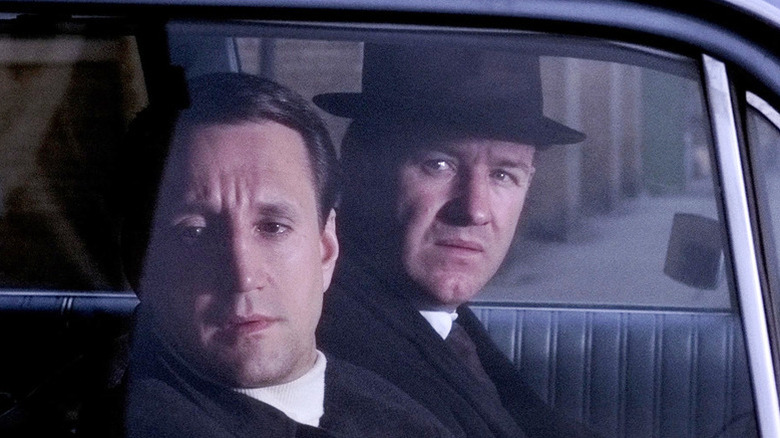
Scheider stars as Detective Buddy "Cloudy" Russo, partnering with Gene Hackman’s iconic, rule-breaking Jimmy "Popeye" Doyle. Together, these New York City police detectives navigate the brutal narcotics beat, attempting to bust an expansive French heroin-smuggling ring. Based on true events detailed in Robin Moore’s non-fiction book about real-life NYPD detectives Eddie Egan and Sonny Grasso, the film refuses to romanticize police work. Doyle and Russo are abrasive, foul-mouthed men who routinely abuse their authority and verbally demean suspects.
While Hackman commands the screen as the volatile Doyle, Scheider’s performance as the grounded, more level-headed Russo provides the crucial narrative balance necessary to anchor the volatile partnership.
3. Sorcerer (1977)
Following the immense success of The French Connection, Scheider reteamed with director William Friedkin for Sorcerer, an intense, sweat-drenched survival thriller. Released during the summer of 1977, Sorcerer suffered the worst possible box-office timing, opening directly opposite George Lucas’s culture-shifting Star Wars, which led to poor initial ticket sales and unenthusiastic reviews.
However, time has radically reevaluated Sorcerer. Today, it is widely recognized as a towering cinematic achievement—and famously cited by acclaimed author Stephen King as his all-time favorite film. Adapted from Georges Arnaud’s French novel The Wages of Fear, the story follows four international fugitives trapped in a desolate South American village. Desperate for enough cash to escape their grim realities, they accept a suicide mission from an oil company: driving two heavily battered trucks loaded with unstable, deteriorating dynamite across treacherous, rain-soaked jungle terrain.
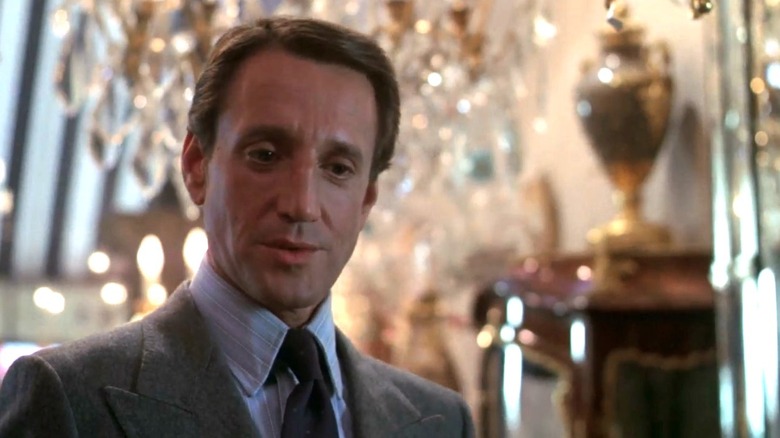
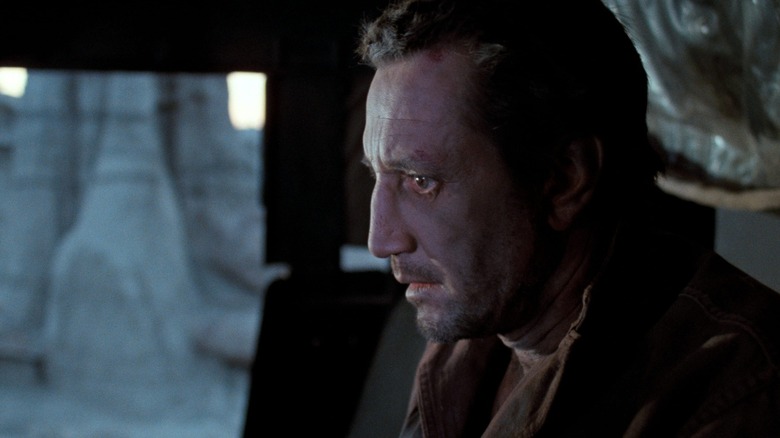
Scheider stars as Jackie Scanlon, an Irish-American criminal hiding under the alias "Juan Domínguez." Scheider channeled Humphrey Bogart’s iconic performance in The Treasure of Sierra Madre, bringing a weary, cynical, and deeply haunted grit to the role. His characteristic thousand-yard stare, previously utilized to convey panic in Jaws, is weaponized here to project a profound, inescapable despair.
2. All That Jazz (1979)
While Scheider frequently anchored his reputation on blue-collar, salt-of-the-earth everymen, Bob Fosse’s semi-autobiographical musical-drama All That Jazz demanded a vastly different register. Scheider stars as Joe Gideon, a frantic Broadway theater director and choreographer whose life is a whirlwind of creative brilliance and self-destructive excess.
Fosse’s film is an act of cinematic self-flagellation. Gideon is a relentless philanderer and amphetamine addict marching steadily toward an early grave, seemingly indifferent to the wreckage he leaves in his wake. Throughout the film, Gideon conducts imaginary flirtations with Death (portrayed by Jessica Lange), suggesting that his demise might ultimately be a mercy for those exhausted by his endless deceptions.
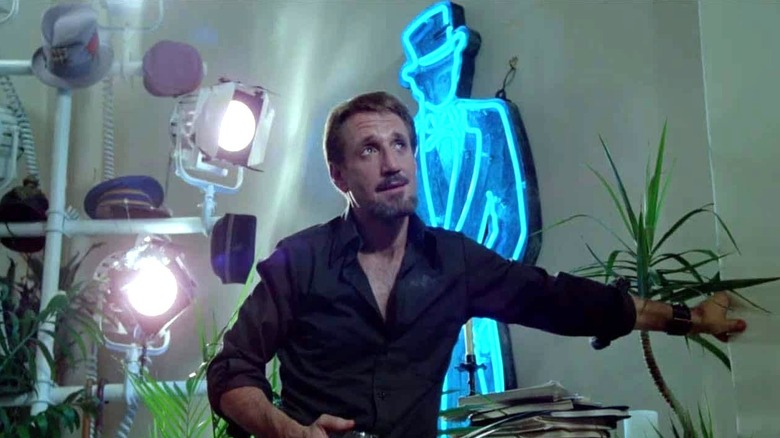
Scheider delivers a physical and psychological tour de force. His morning routine—swallowing a cocktail of pills before psyching himself up in the mirror with wide eyes, a raspy voice, and jazz hands to proclaim, "It’s showtime, folks!"—remains unforgettable. Following Gideon’s inevitable heart attack, the film’s harrowing hospital-bound second half showcases Scheider’s gaunt, exhausted transformation, culminating in his breathtaking, bittersweet musical swan song, "Bye Bye Life." The performance earned Scheider his second Oscar nomination for Best Actor.
1. Jaws (1975)
At the very apex of Roy Scheider’s filmography sits Steven Spielberg’s 1975 blockbuster Jaws, a masterclass in suspense that fundamentally altered the economic and cultural landscape of Hollywood. The film’s legendary second half relies almost entirely on the dynamic interplay between its three central leads: Scheider as Police Chief Martin Brody, Richard Dreyfuss as oceanographer Matt Hooper, and Robert Shaw as grizzled shark hunter Quint.
While Hooper provides intellectual charm and Quint commands the screen with his terrifying, history-defining USS Indianapolis monologue, Chief Brody is the emotional and moral center of the picture. Brody is an outsider—a former New York cop newly relocated to the coastal community of Amity Island, where he harbors a deeply ironic fear of the open water.
Unlike a traditional, invulnerable action hero, Brody reacts with genuine, paralyzing fear, yet steps up to the plate out of sheer moral obligation. Scheider expertly anchors the film’s tense first act, capturing the agonizing pressure applied by Mayor Vaughn to keep the beaches open during tourist season. The harrowing aftermath of the tragedy that claims young Alex Kintner’s life—culminating in a public slap from the grieving mother that Brody absorbs in crushing silence—establishes an emotional depth rarely seen in creature features. Without Scheider’s grounded, authentic humanity, cinematic history would have been robbed of its most iconic ad-libbed warning: "You’re gonna need a bigger boat."
Supporting Data: Critical Reception and Accolades
To truly understand the weight of Roy Scheider’s filmography, one must examine the critical and industrial metrics that validated his career choices:
- Academy Award Recognition: Scheider earned two career Oscar nominations—Best Supporting Actor for The French Connection (1971) and Best Actor for All That Jazz (1979).
- Box Office Dominance: Jaws (1975) became the highest-grossing film in motion picture history at the time of its release, fundamentally birthing the modern summer blockbuster model.
- Critical Reassessment: Sorcerer (1977), while initially a notorious box office bomb due to direct competition with Star Wars, underwent a massive critical renaissance in the 21st century, championed by master filmmakers and critics alike as one of the finest psychological thrillers of the 20th century.
- Genre Versatility: Across his five signature 1970s films, Scheider effortlessly bridged neo-noir (The French Connection), psychological crime dramas (Marathon Man), survival epics (Sorcerer), surrealist musical biographies (All That Jazz), and creature features (Jaws).
Official Responses and Industry Legacy
In the wake of his passing in February 2008, Hollywood directors, producers, and co-stars rushed to pay tribute to a performer whose work ethic and unpretentious dedication left an indelible mark on the industry.
Steven Spielberg, who directed Scheider to global superstardom in Jaws, released a statement emphasizing the actor’s profound integrity:
"Roy was a tough guy, a real New guy with a heart of gold. He gave ‘Jaws’ an anchor of relatability and truth that elevated a monster movie into a classic. He was a magnificent actor and a dear friend."
William Friedkin, who collaborated with Scheider on two of the most demanding physical productions of the decade (The French Connection and Sorcerer), frequently praised Scheider’s absolute fearlessness on set. Friedkin noted that Scheider possessed the rare capability to project raw, unvarnished intelligence and physical courage without ever resorting to the over-the-top posturing common among action stars of his generation.
Fellow New Hollywood contemporaries routinely cited Scheider as an actor’s actor—someone who made every scene partner better by virtue of his steady, unwavering focus and total commitment to psychological realism.
Implications: The Enduring Influence of Scheider’s Working-Class Heroism
The legacy of Roy Scheider extends far beyond his impressive box-office numbers and award nominations; his career established a new template for the modern cinematic protagonist. Before the 1970s, mainstream American cinema heavily favored idealized, invincible heroes who maintained total control over their environments. Scheider, alongside peers like Gene Hackman, Dustin Hoffman, and Elliott Gould, shattered that illusion.
By leaning into vulnerability, physical exhaustion, and moral compromise, Scheider proved that audiences could deeply connect with flawed, anxious characters struggling against overwhelming systems. Whether he was a terrified police chief battling a corporate-backed mayor and a giant great white shark, a worn-out choreographer dancing toward his own mortality, or a desperate fugitive driving a truckload of dynamite across a jungle, Scheider embodied the anxieties of modern life with unmatched precision.
Decades after his passing, his filmography remains mandatory viewing for anyone seeking to understand the golden age of American auteur cinema. Roy Scheider did not just play tough guys; he played real men caught in extraordinary nightmares, anchoring high-concept blockbusters and gritty independent dramas alike with the quiet dignity of a true Hollywood legend.
