
From Slimer to Terror: How ‘Resident Evil’s’ VFX Team Orchestrated a Last-Minute Creature Overhaul

In the high-stakes world of modern horror filmmaking, the balance between visceral dread and unintentional comedy is razor-thin. Zach Cregger’s Resident Evil—a cinematic reimagining that has garnered significant acclaim for its practical effects and high-octane tension—found itself staring into the abyss of this very problem during the final stages of post-production.
The film follows Bryan, played by Austin Abrams, a courier whose routine delivery in Raccoon City devolves into a desperate fight for survival against a host of viral monstrosities. While audiences have lauded the film’s stomach-churning creature designs, one particular antagonist—the acid-spewing "Puker"—underwent a dramatic transformation mere weeks before the film’s theatrical release.
The Anatomy of the Puker: A Practical Foundation
To understand the complexity of the final edit, one must first look at the foundation laid on set. The production relied heavily on practical effects to anchor the film in a tangible, decaying reality. Weta VFX supervisor Kevin Smith, who oversaw the visual effects for the project, emphasizes that the "Puker" was not merely a digital creation; it began as a grueling physical performance.
"They had the Puker practically," Smith explained in an exclusive interview. "There was a performer inside a specialized latex suit crafted by the team at Legacy Effects. It looked miserable for the actor, honestly. We built three stories of an elevator shaft on the soundstage, placed Bryan inside, and shot the plates practically. We even had a mechanical apparatus built into the suit with a tube near the neck to dispense liquid. Some of that puke you see hitting the screen? That’s for real, captured on the day."
This commitment to in-camera effects provided a baseline of grit that defined the Raccoon City aesthetic. However, as the film moved through the editorial process, the Puker’s aesthetic began to clash with the intended tone of the horror sequences.
The Chronology of a Crisis: Test Audiences and the "Slimer" Comparison
The turning point for the creature’s design occurred during a critical late-stage test screening. While the visual effects team had been busy enhancing the practical vomit and integrating it into the environment—specifically the acid-dissolving elevator floor—the audience response took the production by surprise.
According to Smith, the feedback was unanimous and devastatingly specific: the creature was too funny.
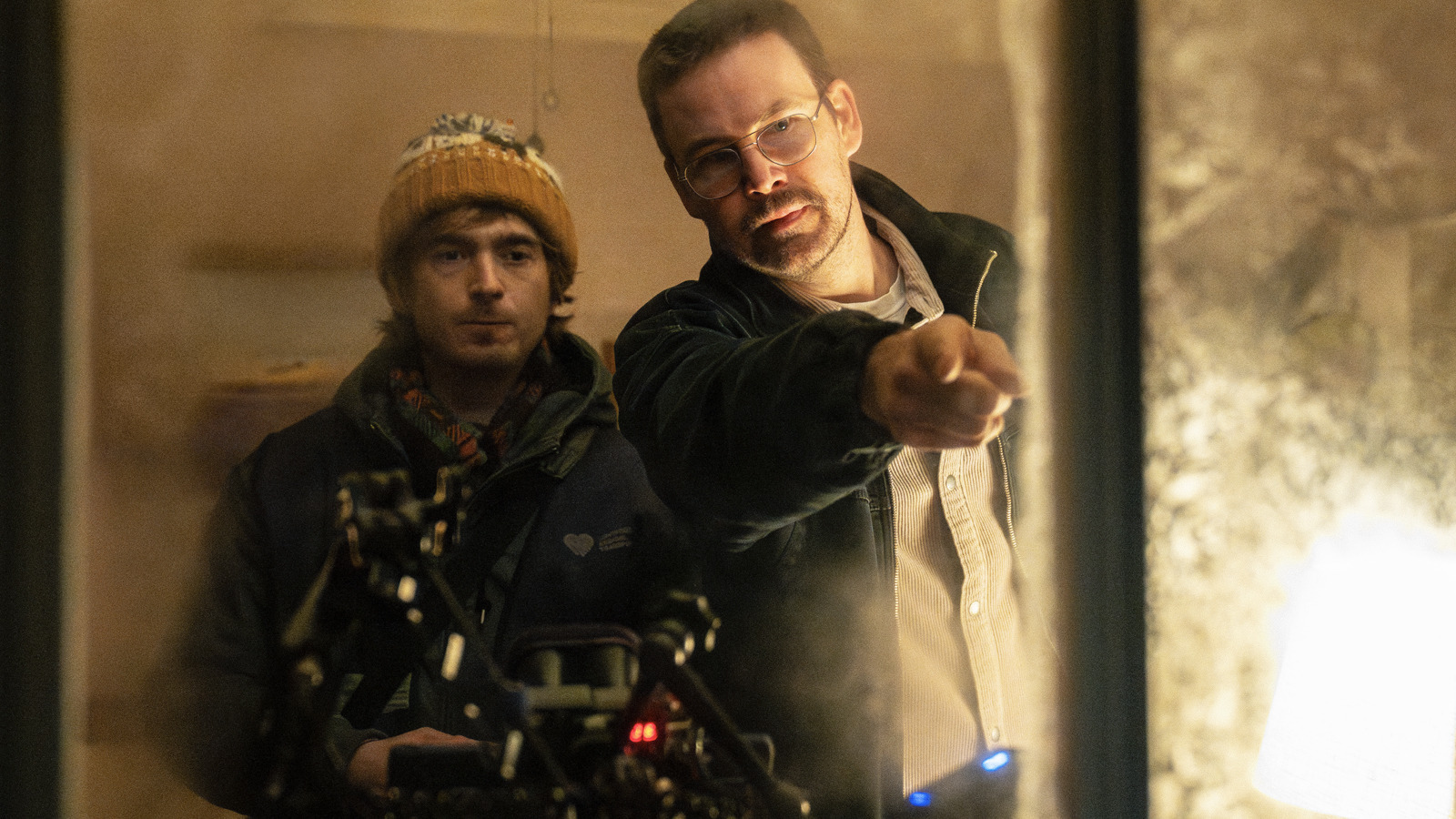
"There was a test screening at a certain point, pretty close to the end, where people thought the Puker was too comical," Smith recalled. "It looked a little too much like the guy from Ghostbusters, Slimer. It was very ‘Slimer’-esque. The tone was tipping from terrifying to farcical."
The realization created a logistical nightmare. The film was deep into the post-production schedule, and the visual effects department was already stretched thin. When the directive came down from the studio to "change what this guy looks like," the team had to pivot immediately. A full redesign was impossible, as replacing the creature in every single shot would have required months of labor they simply did not have.
The Art of the Last-Minute Pivot
Faced with a ticking clock, the VFX team opted for a sophisticated surgical approach. Rather than rebuilding the creature from the ground up, they decided to augment the existing performance using digital face replacements.
"We did a bit of a, not a redesign, but—without replacing him in every shot—we asked, ‘Can we put something over the top of him that helps it look less slimy and more monster-y?’" Smith noted. "We designed a new, scarier face for the creature and performed a series of digital face replacements. It was a race against time."
This process required a delicate balance of tracking, lighting, and texture work to ensure the new, more grotesque facial features sat perfectly on the physical latex body captured on set. The goal was to preserve the actor’s physical performance—his movements and the way he interacted with the elevator set—while stripping away the "Slimer" quality that had derailed the audience’s immersion.
Implications for Modern Horror Production
The Puker incident highlights a broader trend in contemporary filmmaking: the increasing reliance on "invisible" VFX to course-correct narrative and tonal issues. Zach Cregger, known for his meticulous approach to horror, has been vocal about his willingness to cut scenes or adjust elements based on test audience feedback.
While some purists argue that film should remain an unadulterated vision of the director, the Resident Evil case study suggests that modern blockbusters are living, breathing entities that evolve until the final frame is rendered.

The Puker’s transformation also serves as a testament to the agility of modern VFX houses like Weta. Smith’s attitude toward the request—a wry smile and an acknowledgement of the sheer scale of the task—reflects the quiet resilience of a department that often operates in the shadows. The success of the final edit is evidenced by the fact that most audience members are completely unaware that the monster they are watching is a hybrid of a latex suit, real-world fluids, and a last-minute digital facelift.
Beyond the Puker: The Invisible VFX of Raccoon City
It is a common misconception that the most impressive VFX are the ones that are most visible. In Resident Evil, the Puker represents a "loud" visual effect, but Smith is quick to remind audiences that the film is packed with more subtle digital artistry than is immediately apparent.
From the "Pedestrian"—the sprawling, body-horror amalgamation that haunts the landscape—to the "Fat Man," the sewer dweller whose stomach contents are a masterclass in particle physics, the film is a digital-practical hybrid. The total volume of work, including the background enhancements, the manipulation of the urban environment, and the subtle clean-ups required for the creature suits, places the film firmly in the upper echelon of modern visual effects achievements.
Conclusion: Lessons Learned
The journey of the Puker from a "Slimer" lookalike to a nightmarish, acid-spewing entity is a quintessential story of Hollywood’s "fix-it-in-post" reality. It illustrates that even with the best practical effects, the perception of an audience is the final arbiter of truth.
By listening to test audiences and tasking their VFX team with a near-impossible redesign, the producers of Resident Evil managed to safeguard the film’s tone, ensuring that Bryan’s harrowing ascent to the hospital’s top floor remained a sequence of genuine terror rather than an unintended punchline.
As Resident Evil continues its run in theaters, the Puker stands as a monument to the collaboration between physical craftsmanship and digital ingenuity. It is a reminder that in the world of monsters, the most important tool in a filmmaker’s arsenal isn’t just a camera or a computer—it’s the flexibility to change course when the audience tells you something just isn’t quite right.
