
Raising the Dead: Mike Flanagan’s The Exorcist: Martyrs and the High-Stakes Reinvention of a Horror Titan
Main Facts
The landscape of modern horror cinema is bracing for a seismic shift. Acclaimed writer-director Mike Flanagan—the mastermind behind Netflix’s atmospheric masterpieces The Haunting of Hill House and Midnight Mass—is stepping into the director’s chair for a brand-new take on one of the most sacred texts in cinema history: The Exorcist. Titled The Exorcist: Martyrs, the upcoming feature is scheduled to hit theaters in the United Kingdom and the United States on March 12, 2027, distributed by Universal Pictures.
Unlike previous iterations that focused on the terrifying ordeal of possessed children in domestic settings, Flanagan’s film initiates its grim narrative in a police precinct. The star-studded cast is anchored by Scarlett Johansson, who plays Julie Miller, an NYPD homicide detective grappling with a chilling resurrection of historical evil. She is joined by an elite ensemble featuring Chiwetel Ejiofor, Sasha Calle, Diane Lane, and breakout star Jacobi Jupe, alongside franchise veterans and recurring Flanagan collaborators.
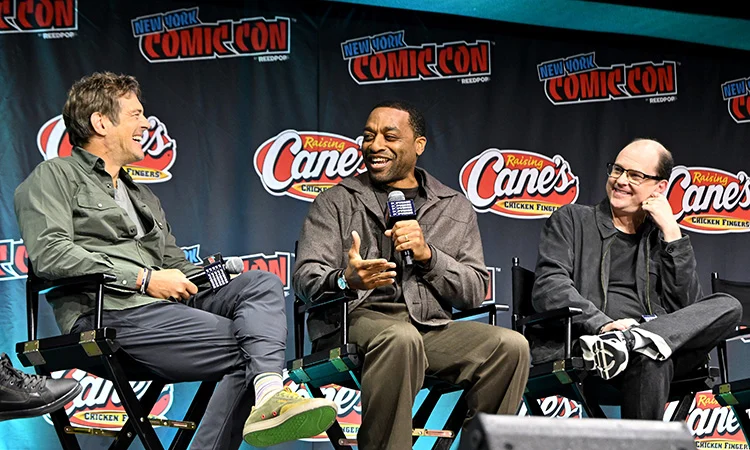
During a packed Blumhouse BlumFest panel at New York Comic Con (NYCC), Flanagan expressed supreme confidence in the project, telling the audience, "This movie is so goddamn scary! I really hoped this would be the scariest thing I ever got to work on, and it absolutely is."
Backed by producer Jason Blum and developed alongside Universal and Morgan Creek, The Exorcist: Martyrs sidesteps direct continuity with recent franchise misfires, instead aiming to deliver bone-chilling, generation-spanning terror that redefines what an Exorcist movie can be.
Chronology: From Friedkin’s Masterpiece to Flanagan’s Vision
To understand the weight of what Mike Flanagan is attempting with The Exorcist: Martyrs, one must trace the turbulent, half-century timeline of the franchise.
- October 1971: William Peter Blatty publishes The Exorcist, a bestselling theological horror novel that captures the public imagination and establishes a new benchmark for literary terror.
- December 1973: Director William Friedkin brings Blatty’s novel to the silver screen. Starring Linda Blair as Regan MacNeil and Ellen Burstyn as her desperate mother, the film becomes a cultural phenomenon. It earns ten Academy Award nominations—a historic first for a horror movie—and wins two, including Best Adapted Screenplay.
- June 1977: John Boorman directs Exorcist II: The Heretic, a sequel widely panned by critics and audiences alike, cementing its status as one of Hollywood’s most notorious franchise derailments.
- August 1990: William Blatty returns to direct The Exorcist III, adapting his own novel Legion with George C. Scott. Despite studio interference that forced unwanted reshoots (including a tacked-on exorcism), the film eventually achieves cult classic status, largely due to a legendary hospital corridor jump scare that remains a masterclass in tension.
- October 2023: David Gordon Green directs The Exorcist: Believer, intended as the launchpad for a lavish, multi-film trilogy backed by a $400 million rights acquisition deal by Universal and Peacock. While it clears $137 million worldwide at the box office, it suffers from brutal critical reviews and a lukewarm audience reception, prompting Universal to pull its planned 2025 sequel, The Exorcist: Deceiver, from the release calendar.
- October 2026: Mike Flanagan and producer Jason Blum take the stage at New York Comic Con to officially pull back the curtain on The Exorcist: Martyrs, setting a theatrical release date for March 12, 2027.
Supporting Data and Production Details
The production of The Exorcist: Martyrs brings together an unusually stacked creative team and cast, blending high-caliber dramatic talent with veteran horror craftsmanship.

Narrative Premise
Thirteen years prior to the events of the film, NYPD homicide detective Julie Miller (Scarlett Johansson) seemingly ended the reign of terror of Father Sunday, a satanic serial killer played by John Leguizamo, leading to his execution. However, when an altar boy is found murdered in a church crypt with Miller’s name scrawled in blood across the walls, the hardened skeptic is dragged back into the abyss.
Joined by rookie detective Gina Restrepo (Sasha Calle) and Father William (Chiwetel Ejiofor)—a former prison chaplain who heard Father Sunday’s final confession—the trio uncovers a terrifying web connecting historical serial murderers, including H.H. Holmes, the Night Stalker, and the Zodiac, across generations. The cast is further rounded out by Diane Lane as Julie’s mother Mary, Jacobi Jupe as her young son Max, alongside Laurence Fishburne, Scoot McNairy, and Gil Bellows.
Behind the Lens and Financial Stakes
The film represents a high-stakes financial and creative gamble for Universal Pictures, Morgan Creek, and Blumhouse Productions. Following the hefty investment in the aborted Believer trilogy, the studio needs a critical and commercial win. Jason Blum’s production house is leaning heavily into Flanagan’s auteur-driven vision, which deliberately breaks away from copycat formulas.
Flanagan’s own horror pedigree serves as the project’s strongest technical asset. Having successfully navigated the minefield of adapting Stephen King’s Doctor Sleep—a project that required him to simultaneously honor King’s novel and Stanley Kubrick’s iconic cinematic adaptation—Flanagan is no stranger to legacy properties. His recent success with The Life of Chuck, which claimed the People’s Choice Award at the 2024 Toronto International Film Festival, proves his range extends into emotionally resonant, genre-bending storytelling.
Official Responses and Creative Insights
The panel at New York Comic Con provided deep insight into the psychological toll the script has already taken on its creators and cast members alike.
Mike Flanagan was unequivocal about his intentions to strip away convention and focus purely on visceral dread.

"This movie is unlike any other Exorcist movie that’s ever been made, which was something that we were really determined, all of us, to do from the very beginning: take this franchise in a completely different direction," Flanagan told the crowd. "It had to just be goddamn scary, like to your bones scary."
When asked if there was a specific moment during production that convinced him he had captured lightning in a bottle, Flanagan offered a wry laugh:
"Oh yeah, there were about 100 of them. Every time we thought the scary part was over and we were safe for the day, we were very, very wrong."
Chiwetel Ejiofor, who previously collaborated with Flanagan on The Life of Chuck, admitted that the screenplay evoked a visceral, physical reaction before cameras even began rolling.
"What happened with this one was when I was reading it, I got scared," Ejiofor revealed on stage. "I was reading it thinking I’m alone in the house. Where are the exits?"
Producer Jason Blum emphasized the studio’s philosophy of empowering distinct directorial voices to revitalize legacy properties:

"Everybody has a different idea about what’s scary, and that is what I love about horror. We want to work with filmmakers who never stop surprising you."
Implications for the Horror Genre
The release of The Exorcist: Martyrs in March 2027 carries significant implications for both Universal’s horror division and the broader landscape of cinematic franchises.
For years, Hollywood has relied on legacy sequels that lean heavily on nostalgic callbacks, often resulting in diminishing creative returns—a trap that ensnared David Gordon Green’s The Exorcist: Believer. Flanagan’s approach rejects direct fan-service in favor of genre hybridization. By blending the procedural grit of a detective thriller with theological terror and historical serial-killer lore, Martyrs mirrors the DNA of William Blatty’s The Exorcist III—a film Flanagan openly praises as having "maybe the greatest jump scare in movies" and standing among the most underrated features in horror history.
Furthermore, Flanagan’s involvement signals a growing industry trend where prestige television auteurs are handed the reins of multi-million-dollar cinematic universes, allowing them to infuse elevated drama and complex character psychology into traditional genre filmmaking. If The Exorcist: Martyrs delivers on the terrifying promises made by its director and cast, it could finally exorcise the commercial ghosts of the franchise’s past and establish a bold, terrifying blueprint for how legacy horror properties can evolve in the 21st century.
