
The Night Hollywood’s Titans Took the Podium: Revisiting the 1963 Hollywood Bowl Masterclass
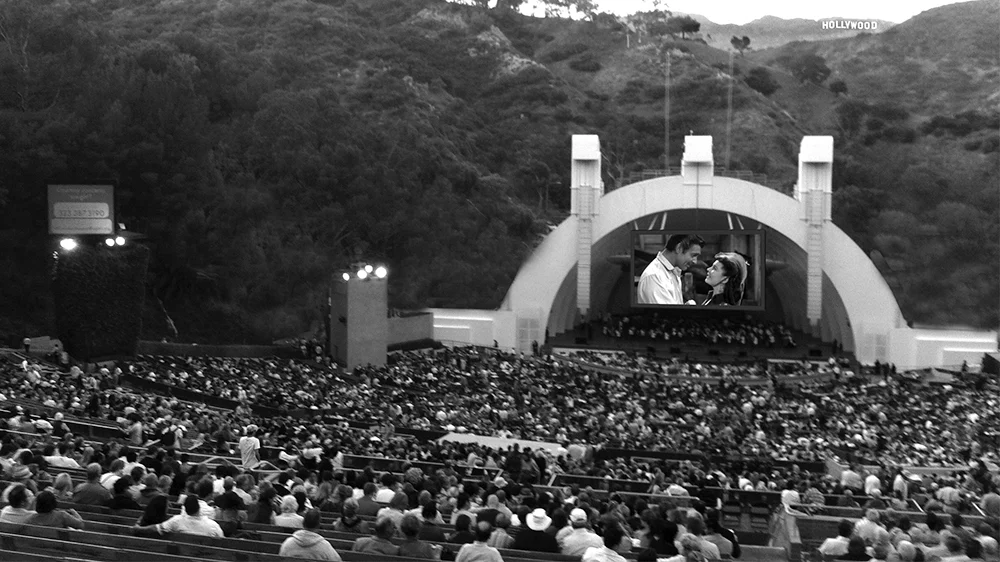
In the modern era of entertainment, the "live-to-picture" concert—where a symphony orchestra performs a film score in real-time while the movie plays on a massive screen—has become a cornerstone of cultural programming. From the manicured lawns of Tanglewood to the prestigious concert halls of London and Berlin, movie music has transcended its origins as "background noise" to become the main event. Yet, amidst the proliferation of these high-tech spectacles, it is easy to forget the humble, audacious genesis of this trend.
Fifty years ago, a singular, lightning-in-a-bottle event took place at the Hollywood Bowl that fundamentally altered the perception of cinematic composition. It was not a laser-show-enhanced multimedia experience, but rather a profound gathering of the architects of the Golden Age of cinema. On September 25, 1963, the greatest film composers of the 20th century stepped away from the anonymity of the recording booth and onto the world’s most famous bandstand, effectively legitimizing their craft as a high art form.
The Gathering of Giants: A Night of Cinematic History
The evening was sweltering, even by Southern California’s standards. A mid-week crowd of 10,000 spectators descended upon the Hollywood Bowl, drawn by a promise that seemed almost impossible: the music of the silver screen, conducted by the very men who had penned the notes.
The program was a "who’s who" of the industry’s elite. Elmer Bernstein, the man whose propulsive, brass-heavy score for The Magnificent Seven had redefined the sound of the American Western, took the stage first, signaling the commencement of a historic marathon. Henry Mancini, then cementing his reputation as a master of both jazz-inflected noir and melodic pop, made his second appearance at the venue, leading the audience through the smoky, melancholic strains of Days of Wine and Roses and the driving tension of Peter Gunn.
The emotional tenor of the night shifted from the nostalgic to the epic as Alfred Newman—a titan of the 20th Century Fox sound—led a rousing, floor-shaking performance of his overture for How the West Was Won. The audience, comprised of industry veterans and cinephiles alike, understood that they were witnessing a rare convergence of creative power that would never be replicated.
Chronology of an Unprecedented Program
The structure of the concert was designed to showcase the diversity and complexity of the Hollywood sound. It moved fluidly between intimate character studies and sweeping, orchestral landscapes:
- The Symphonic Reimagining: Composers David Raksin and Franz Waxman used the occasion to debut fresh, concert-hall arrangements of their legendary themes. Raksin’s Laura and Waxman’s A Place in the Sun were treated with the same reverence usually reserved for the works of Mahler or Strauss.
- The Heavy Hitters: Miklos Rozsa offered the sprawling, biblical intensity of Ben-Hur, while Bernard Herrmann—the architect of Hitchcockian suspense—brought the taut, rhythmic precision of the fandango from North by Northwest.
- The Modernity of the Moment: Dimitri Tiomkin’s iconic, ticking-clock theme from High Noon provided a masterclass in tension, while Alex North presented selections from Cleopatra, a film that was dominating the cultural conversation at the time.
- The Legends and the Interludes: In a poignant moment, 75-year-old Max Steiner, the man who essentially invented the language of film scoring with Gone With the Wind, was in attendance. Recognizing his impending retirement, he ceded the podium to arranger Percy Faith, whose chart-topping version of Steiner’s A Summer Place had introduced the composer to a new generation.
The evening was expertly helmed by longtime MGM music director Johnny Green, who performed his own Raintree County. The program also balanced the orchestral weight with vocal performances, including Andy Williams delivering a definitive rendition of "Moon River" and gospel icon Mahalia Jackson providing a soulful, transcendent interpretation of a theme from The Alamo. In a touch of levity, the famed violinist and comedian Jack Benny provided comic relief, bridging the gap between high-art performance and Hollywood entertainment.
Behind the Baton: The Purpose of the Showcase
While the event was a celebration of artistic achievement, its roots were grounded in professional advocacy. The concert served as a high-profile fundraiser for the Composers and Lyricists Guild of America (CLGA). At the time, the CLGA was the vital collective bargaining arm for Hollywood’s musical creators, fighting for royalties, residuals, and the recognition of intellectual property rights—battles that would define the economic status of composers through the 1980s.
The event was so successful that Columbia Records released a live LP titled Music From Hollywood. It was billed on the cover as the "first annual" event, a branding exercise that suggests the organizers had dreams of making this a permanent fixture on the Los Angeles cultural calendar. History, however, had other plans. The logistics of gathering such an illustrious group of ego-driven, incredibly busy, and geographically dispersed artists proved insurmountable. The concert remained a one-off, a singular meteor flash in the history of the Hollywood Bowl.
The Legacy: A New Paradigm for Film Music
Reflecting on the event decades later, the significance of the 1963 concert becomes even clearer. David Newman, a prolific composer in his own right and the son of Alfred Newman, has noted that the concert serves as a "Big Bang" moment for the appreciation of film music.
"I doubt there has ever been a larger, more concentrated collection of top-tier composers on one stage in the history of the medium," Newman says. "It wasn’t just a concert; it was a manifesto. It forced the world to acknowledge that what we were doing wasn’t just ‘movie music’—it was legitimate, sophisticated composition that could stand on its own outside the theater."
Indeed, the 1963 event acted as a catalyst. By demonstrating that 10,000 people would pay to hear film scores performed live, it proved the commercial viability of the genre. Before 1963, a film composer was often seen as a "hired hand" in the studio system. After 1963, the composer was increasingly viewed as an auteur—a status that would eventually lead to the superstar-composer era of John Williams, Hans Zimmer, and James Horner.
Implications for Modern Concert Culture
The implications of this historical night are evident in every sold-out performance of Star Wars or The Lord of the Rings in major cities today. The 1963 Hollywood Bowl concert paved the way for:
- The Professionalization of Film Concerts: It shifted the performance of movie scores from small studio orchestras to major, professional symphonies.
- Cultural Validation: By presenting themes from Ben-Hur or A Place in the Sun as symphonic suites, the composers forced a dialogue between the "serious" classical music establishment and the "commercial" Hollywood machine, eventually blurring the lines until they became indistinguishable.
- The Archival Movement: The desire to preserve these scores, highlighted by the 1963 concert, led directly to the modern preservation efforts of the Academy of Motion Picture Arts and Sciences and the Library of Congress.
In conclusion, the night of September 25, 1963, remains an unparalleled chapter in the history of American music. It was a fleeting, scorching, and brilliant moment where the people who composed the soundtracks of our lives stepped out of the shadows. While the "first annual" promise never came to fruition, the echo of that night still resonates in every concert hall where the lights dim, the baton rises, and the opening notes of a film score fill the air. It was the night that cinema music came of age, proving that while movies may be ephemeral, the music composed for them is built to last.
