
Illuminating the Frame: A Comprehensive Guide to Affordable Handheld LED Lighting for Modern Productions
The landscape of professional video production has undergone a seismic shift over the last decade. A decade ago, achieving cinematic lighting quality required bulky, power-hungry tungsten units, heavy stands, and complex electrical setups. Today, the rapid advancement of Light Emitting Diode (LED) technology has democratized high-end lighting, moving the industry standard toward portable, high-output, and color-accurate handheld units that fit comfortably in a camera bag.
As production workflows accelerate—demanding faster setup times and greater mobility—the reliance on compact, versatile lighting solutions has become paramount. Whether you are a solo run-and-gun creator, a documentary filmmaker, or a corporate videographer, the ability to control your environment with a pocket-sized light is no longer a luxury; it is a necessity.
The Evolution of Portable Illumination: Main Facts
The primary catalyst for this revolution is the miniaturization of high-CRI (Color Rendering Index) LEDs. In the past, small lights were often plagued by poor color reproduction, leading to greenish or magenta skin tones that required hours of post-production color grading to rectify. Modern manufacturers have bridged this gap, offering lights that maintain color accuracy (often CRI 95+ or higher) while providing immense control over color temperature and saturation.
The current market is defined by "all-in-one" functionality. Contemporary handheld lights now integrate:
- RGBWW Technology: Allowing for full-spectrum color control beyond simple daylight or tungsten balance.
- Wireless Connectivity: Integration with smartphone applications for remote dimming and effects triggering.
- Built-in Power: High-capacity lithium-ion batteries that negate the need for external power bricks.
- Versatile Mounting: Magnetic backings, 1/4"-20 threaded mounting points, and lightweight chassis that allow for rapid deployment in tight spaces.
A Chronology of Lighting Accessibility
To understand the current state of the market, one must look at the progression of portable lighting.
- 2010–2014: The "Early LED Era." Lights were primarily plastic, battery-hungry, and limited to static daylight or tungsten outputs. Color quality was often inconsistent.
- 2015–2018: The "Smart Integration Era." Brands like Aputure and Lume Cube began introducing app-controlled units. The focus shifted toward high-output-to-size ratios and durable, aircraft-grade aluminum builds.
- 2019–Present: The "Full-Color & Creative Era." The industry has moved toward RGBWW capabilities, allowing creators to match complex ambient lighting or add creative flares (like neon or fire light) directly in-camera.
Top Contenders: Analyzing the Best Handheld Lights
While the market is flooded with options, a few specific models have risen to the top, consistently proving their worth in professional environments.
1. Aputure MC: The Industry Benchmark
The Aputure MC remains the gold standard for compact, versatile lighting. Roughly the size of a credit card, this bi-color unit (3200K–6500K) features 100 levels of saturation adjustment and an intuitive app interface via Sidus Link. Its magnetic backing is perhaps its most underrated feature, allowing for near-instant mounting on metal surfaces, door frames, or camera rigs, eliminating the need for light stands in "run-and-gun" scenarios.
2. Lume Cube RGB Panel Pro: The Event Workhorse
Designed with the event videographer in mind, the Lume Cube RGB Panel Pro excels in durability and output. Boasting 263 LEDs and 1000 Lumens of brightness, it is a powerhouse for its size. Its battery life—offering 2.5 hours at full power—makes it a staple for long-form event coverage where changing batteries is not an option.
3. Nanlite LumiPad 11: Sleek Portability
Nanlite has carved a niche by providing reliable, lightweight, and cost-effective solutions. The LumiPad 11, at just 1.4 inches thick and weighing a mere 0.6 lbs, is designed for mobility. While it lacks the high-end creative effects of its competitors, it serves as an exceptional, soft-fill light that is unobtrusive on set.
4. Aputure MT Pro: The Hidden Creative
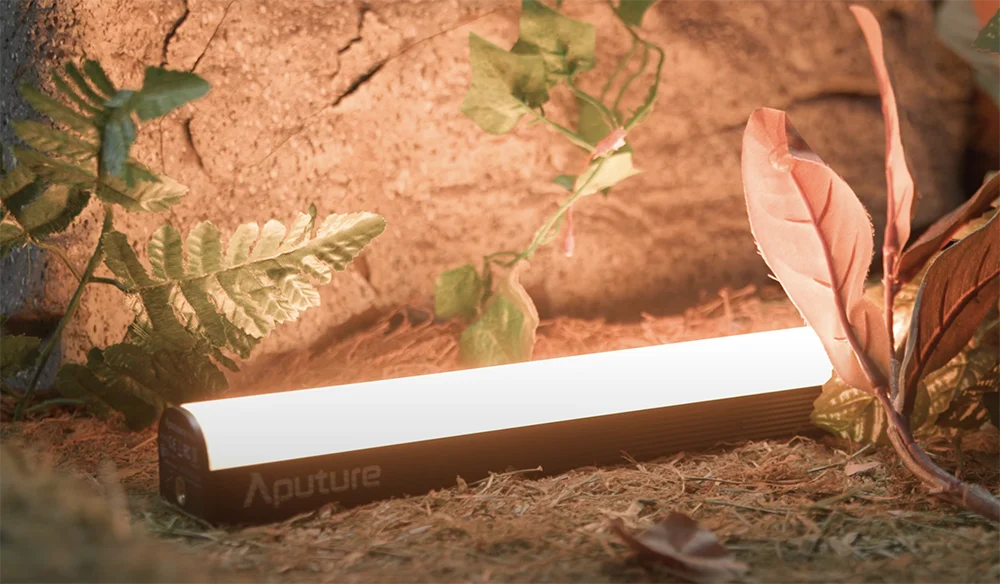
The MT Pro, a full-color mini LED tube, represents a departure from the "panel" form factor. By utilizing a tube shape, this light can be hidden in narrow gaps—behind bookshelves, under cabinets, or tucked behind subjects to create depth. It is an indispensable tool for interior design shots or complex interview lighting where space is at a premium.
5. Nanlite PavoTube II 6C: Speed and Precision
Specifically tailored for documentary work, the PavoTube II 6C offers a CRI of 98 and extensive color temperature range (2700K–7500K). Its built-in programmable effects—ranging from police sirens to lightning—allow filmmakers to simulate complex environments without additional gear. It is a favorite among corporate interviewers who need to set up "talking heads" in minutes.
6. Amaran AL-MX: The "Brick"
Often referred to as "the brick," the AL-MX is built for the rigors of field work. It offers a "Boost Mode" that provides a massive 1100 lux at 0.5m. It is ideal for photographers and filmmakers who need a durable, high-intensity light that can withstand harsh outdoor conditions or being tossed into a gear bag without delicate care.
Supporting Data: Why CRI and TLCI Matter
When selecting these lights, professional users should look beyond raw lumen output. The Color Rendering Index (CRI) and Television Lighting Consistency Index (TLCI) are the critical metrics for quality.
- CRI: Measures how accurately a light source renders colors compared to natural daylight. A score of 95 or higher is recommended for professional skin tones.
- TLCI: A more stringent standard developed for video, specifically focusing on how digital camera sensors perceive the light.
The lights listed above consistently hit high scores in both, ensuring that the light you see on set translates accurately to your final export.
Official Manufacturer Perspectives
Leading manufacturers like Aputure and Nanlite emphasize that their R&D focus has shifted from "making it bright" to "making it smarter."
"The goal is no longer just illumination; it is integration," noted an Aputure representative. "We want the light to be part of the camera system—communicating with apps, syncing with other lights, and adapting to the color science of modern high-dynamic-range (HDR) cameras."
Similarly, Nanlite has doubled down on their warranty and service infrastructure, recognizing that these lights are professional tools subject to heavy wear and tear. Their commitment to modular design and long-term firmware updates ensures that a purchase today remains relevant in the fast-paced ecosystem of video production.
Implications for the Future of Production
The proliferation of these high-quality, budget-friendly lights has profound implications for the industry:
- Lower Barrier to Entry: Aspiring filmmakers can now achieve high-end, multi-point lighting setups for under $500, a feat that would have cost thousands a decade ago.
- Increased Visual Complexity: Because these lights are small and battery-powered, cinematographers are no longer tethered to power outlets. We are seeing more dynamic, handheld, and "guerrilla-style" setups that look just as good as studio-lit productions.
- Post-Production Efficiency: With higher color accuracy, the time spent "fixing" footage in post-production is significantly reduced. This allows creators to focus on narrative and storytelling rather than technical correction.
- Creative Flexibility: The inclusion of RGB and programmable effects allows for "in-camera" creativity. Directors can now manipulate the mood of a scene on the fly, experimenting with colored backlights or flicking lights to simulate movement, without needing a full-scale grip and electric department.
As these technologies continue to evolve, the distinction between a "portable" light and a "studio" light will continue to blur. For the modern creator, the message is clear: the era of expensive, cumbersome lighting is over. By investing in a few well-chosen, high-quality handheld LED units, any filmmaker can bring cinematic polish to their projects, regardless of the size of their budget or the constraints of their location.
