
Tangles: An Animated Masterpiece Navigating the Complexities of Alzheimer’s Disease
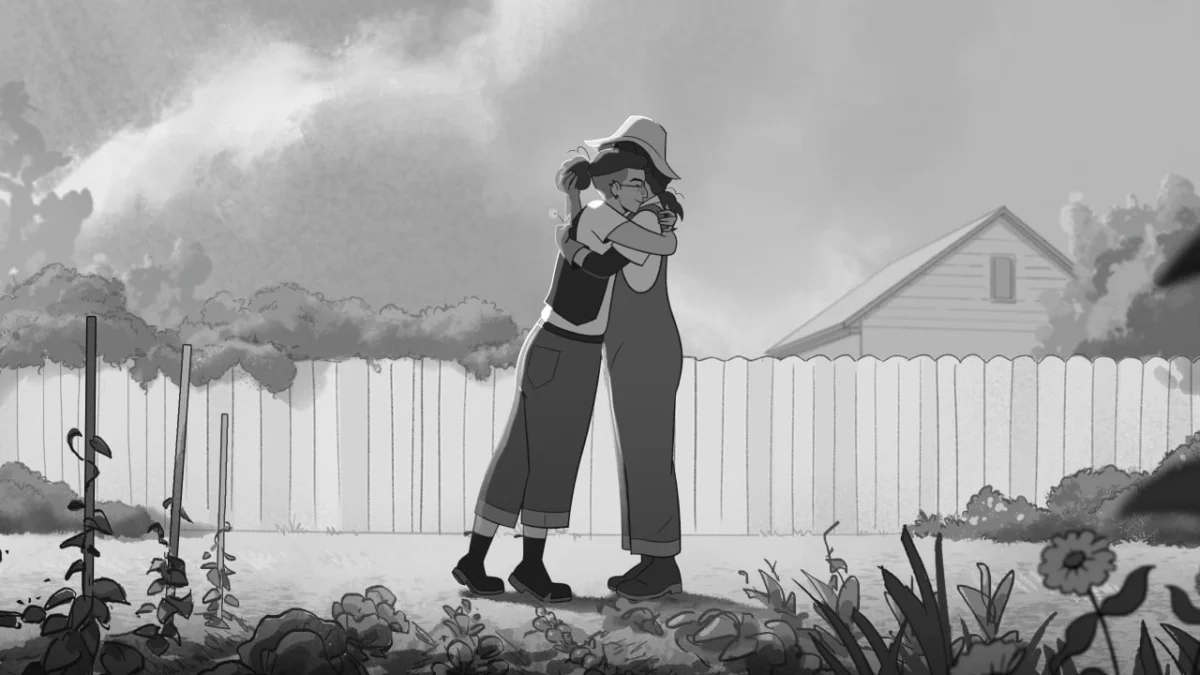
The landscape of modern animation has long been dominated by high-octane fantasy and whimsical escapism. However, a seismic shift is occurring in the industry, anchored by the critical and emotional success of Tangles, a hand-drawn animated feature that confronts one of the most painful human experiences: the slow, heartbreaking dissolution of memory caused by early-onset Alzheimer’s.
Produced by Seth Rogen and Lauren Miller Rogen, and directed by Leah Nelson, Tangles has emerged as a frontrunner in the 2026 awards circuit. Having recently secured the Grand Jury Prize at the prestigious Animation is Film festival, the film is poised for a significant theatrical run next month through Independent Film Company and Sapan Studio. Adapted from Sarah Leavitt’s acclaimed graphic memoir, Tangles: A Story About Alzheimer’s, My Mother and Me, the film is a stark, black-and-white meditation on family, caregiving, and the necessity of finding humor in the face of inevitable loss.
The Anatomy of a Decade-Long Journey
The road to the screen for Tangles was neither short nor simple. Director Leah Nelson, a co-founder of the renowned animation house Giant Ant, became attached to the project in September 2022. Yet, speaking on a panel at the Middleburg Film Festival, Nelson revealed that the genesis of the film actually spanned a full decade.
Translating Leavitt’s memoir into a cinematic language proved to be a formidable creative challenge. The source material, which relies heavily on Leavitt’s personal notes, scattered memories, and intimate drawings, required a delicate hand to structure into a cohesive, linear narrative. Nelson and her co-writers, Trev Renney and Sarah Leavitt, had to synthesize disparate, fragmented recollections into a screenplay that honored the chaotic nature of the disease while maintaining a narrative through-line that could hold an audience’s attention.
The result is a stylistic triumph. By utilizing a stark, monochromatic palette, the film visually mirrors the disorientation and "black-and-white" finality of the diagnosis. It eschews the vibrant colors typically associated with animation, forcing the viewer to focus entirely on the emotional resonance of the character interactions.
Chronology: From Cannes to Critical Acclaim
The film’s trajectory in 2026 has been nothing short of meteoric. The project first garnered international attention when it premiered this past May in the Special Screenings section at the Cannes Film Festival. There, it earned nominations for the Caméra d’Or and the Queer Palm, cementing its status as an "arthouse" animation project with profound crossover appeal.

Following its European debut, Tangles made its North American premiere as a Centrepiece selection at the Toronto International Film Festival (TIFF). The momentum continued through the autumn:
- September 2026: The film captured the prestigious Sebastiane Award at the San Sebastián International Film Festival.
- Autumn 2026: It was selected as one of only seven features to compete for the Grand Prize at the Ottawa International Animation Festival.
- October 2026: The film took home the Grand Jury Prize at the Animation is Film festival, solidifying its position as a major contender for the upcoming Academy Awards.
A Stellar Voice Cast and Visionary Production
The film’s emotional weight is bolstered by a formidable voice cast. Leading the project are Abbi Jacobson and Julia Louis-Dreyfus, whose nuanced performances bring a palpable, lived-in quality to the mother-daughter dynamic. They are supported by a powerhouse ensemble including Bryan Cranston, Samira Wiley, Beanie Feldstein, and Seth Rogen.
The production behind Tangles is equally robust, reflecting a massive collaborative effort across several production houses. Key players include:
- Point Grey Pictures: Represented by Seth Rogen, Evan Goldberg, Madeline Blair, James Weaver, and Alex McAtee.
- LYLAS Pictures: Bringing the personal expertise of Lauren Miller Rogen, alongside Jen W. Ray and Sophie Hoegh.
- Giant Ant: Led by Nelson, Ross Murray, Teresa Toews, and Jay Grandin.
- Monarch Media: Vicky Patel, Steve Barnett, and Alan Powell.
- Julia Louis-Dreyfus: Serving as a producer in addition to her vocal role.
The Personal Catalyst: Rogen and Miller Rogen’s Advocacy
For producers Seth Rogen and Lauren Miller Rogen, Tangles is not merely another production; it is a labor of love rooted in personal experience. Lauren Miller Rogen’s mother, Adele, was diagnosed with early-onset Alzheimer’s more than two decades ago—shortly after the couple began dating. Adele lived with the disease for 16 years, an experience that profoundly shaped the couple’s perspective on the disease and their subsequent advocacy work.
"Not only did I see my story very much in it," Miller Rogen shared during the Middleburg panel. "My mom was a teacher. My dad was a very devoted caregiver. It’s universal stuff."
Miller Rogen also noted the importance of the film’s aesthetic choices in conveying the gravity of the situation. "The stark black and white, I feel, held the space for how complicated this disease was," she explained.

Seth Rogen, who has become a prominent voice in Alzheimer’s awareness, spoke to the necessity of finding light in dark places. "I’ve personally been drawn to the challenge of taking something like this and finding ways to extract humor from it and beauty, poignancy and resonance in ways other than it just being sad," Rogen noted. This philosophy—that grief and joy can, and must, coexist—is the heartbeat of Tangles.
Implications for the Animation Industry
The success of Tangles signals a maturation of the medium. For decades, the industry has wrestled with the perception that animation is primarily for children. By tackling the harrowing reality of neurodegenerative disease, Tangles challenges this limitation, proving that the medium is uniquely suited to capture the abstract, the internal, and the deeply painful.
The film’s reliance on hand-drawn, black-and-white imagery is a bold rejection of the "realism-at-all-costs" trend driven by CGI and motion capture. By embracing the "drawn" nature of the medium, the film taps into the raw, emotive power of the graphic novel format. It suggests that animation is perhaps the most effective way to depict the loss of self, as the images themselves can shift, distort, and fade in ways that live-action cannot.
Furthermore, the film’s upcoming theatrical run through Independent Film Company and Sapan Studio highlights a strategic move to position the film as a prestige, adult-oriented animated feature. This strategy is vital for the continued growth of independent animation, proving that there is a significant, underserved audience for stories that deal with complex, adult themes.
Looking Ahead
As Tangles prepares for its wide release, the discourse surrounding it remains focused on its ability to bridge the gap between clinical reality and human connection. By stripping away the artifice and focusing on the "little notes, snippets, and drawings" of a life impacted by Alzheimer’s, the creative team has produced something that feels less like a movie and more like a shared experience.
For families currently navigating the Alzheimer’s journey, Tangles offers not just a mirror to their own struggles, but a testament to the resilience of the human spirit. It is a reminder that even when the threads of memory begin to fray, the bonds of love, however tangled, remain the most enduring part of the human experience. With the momentum of its festival wins and the backing of a passionate creative team, Tangles is poised to become one of the most significant cultural touchstones of the year, potentially changing how we view, discuss, and animate the realities of aging and memory.
