
The Magic and Missteps of Laika’s ‘Wildwood’: An Analytical Deep Dive Into the Studio’s Most Ambitious Stop-Motion Epic
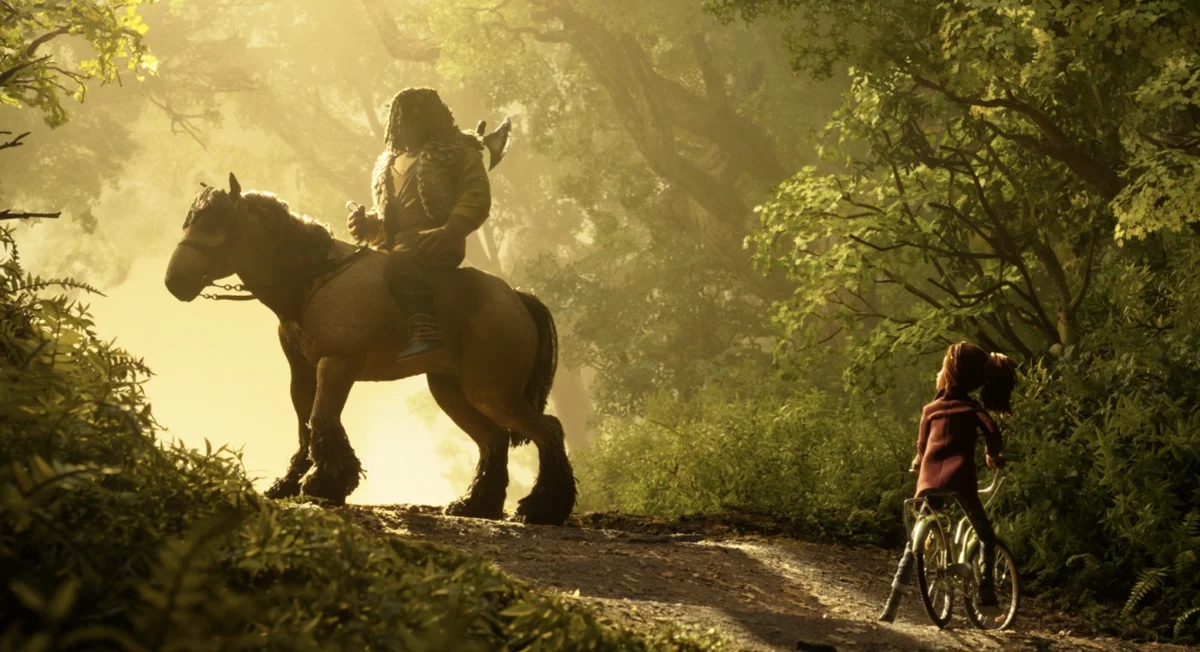
Main Facts: The Arrival of Laika’s Magnum Opus
Travis Knight’s Wildwood stands as a monumental achievement in the landscape of modern animation, representing both the absolute pinnacle of stop-motion craftsmanship and an intriguing narrative crossroads for Oregon-based studio Laika. Premiering at the 2026 London Film Festival before its theatrical rollout via Fathom Entertainment, the sweeping fantasy epic brings Colin Meloy’s 2011 novel—featuring illustrations by Carson Ellis—to vivid, painstaking life.
At its core, Wildwood follows Prue McKeel, a pragmatic Pacific Northwest teenager voiced by Peyton Elizabeth Lee, who must venture into a forbidden, enchanted ecosystem known as the Impassable Wilderness. Her mission: to rescue her toddler brother, Mac, after he is abducted by a massive, shadowy flock of crows. Alongside her earnest, tabletop-gaming friend Curtis Mehlberg (Jacob Tremblay), Prue navigates a treacherous, deeply dark world ruled by an eclectic array of talking animals, ruthless factions, and a grief-stricken dowager governess named Alexandra (Carey Mulligan).
Yet, for all its visual grandeur and staggering technical ambition, Wildwood arrives with a fascinating internal paradox. It is simultaneously the most visually arresting, technically complex film Laika has ever produced and its least emotionally enchanting. While it stumbles narratively in trying to bridge childhood wonder with adult disillusionment, it remains a rare, uncompromising cinematic spectacle financed by billionaire owner Phil Knight—a testament to physical animation artistry in an industry heavily reliant on digital shortcuts.

Chronology of Production and Release
The journey to bring Wildwood to the silver screen spans well over a decade of conceptualization, iterative design, and grueling physical labor.
- 2011: Colin Meloy publishes Wildwood, the first installment in his bestselling fantasy trilogy, featuring atmospheric illustrations by his wife, Carson Ellis. The book quickly captures the imagination of readers and industry insiders alike with its hyper-localized mythology centered around Portland’s geography.
- Mid-2010s: Laika acquires the rights to adapt the novel, envisioning it as the ultimate cinematic realization of the studio’s aesthetic identity, which is deeply rooted in the Pacific Northwest.
- The 1,155-Day Production Window: Principal photography and animation take place over an astonishing 1,155 days. Animators and craftspeople construct physical sets, hand-mold hundreds of miniature trees, and engineer massive, frame-by-frame battle sequences reminiscent of classic historical epics.
- October 11, 2026: Wildwood holds its world premiere at the 2026 London Film Festival, garnering critical acclaim for its visual audacity alongside notes regarding its sprawling narrative pacing.
- October 21, 2026: Fathom Entertainment releases the film in theaters nationwide, inviting general audiences to experience the longest and most complex stop-motion film ever attempted.
Supporting Data: The Scale of Wildwood
To comprehend the sheer magnitude of Wildwood, one must look at the numerical metrics of its production. Laika pushed the boundaries of physical stop-motion animation to staggering new extremes:
- 142,000: The number of distinct 3D-printed face models utilized to capture the nuanced expressions of the film’s characters.
- 728: The exact count of individual, hand-molded miniature trees built to populate the dense forests of the Impassable Wilderness.
- 715+ Miles: The cumulative length of brass wire utilized inside the armature structures of the puppets to ensure fluid, stable movement.
- 1,155: The total number of production days required to complete the stop-motion photography.
- 131 Minutes: The runtime of the feature, making it the longest major stop-motion animated film ever produced.
- 670 out of 2,804: The number of shots augmented by digital computer-generated effects (CGI) in collaboration with Wētā FX, accounting for roughly 24% of the film’s total shot count.
Economically, Wildwood also adheres to Laika’s historical trajectory: with minor exceptions, each successive Laika film has historically cost more to produce while grossing less than its predecessor. Backed by Nike co-founder Phil Knight, the studio operates outside traditional Hollywood profit-and-loss constraints, permitting an artistic freedom that few modern studios can sustain.

Official Responses and Creative Vision
The creative team behind Wildwood has been vocal about the unique challenges of adapting Meloy’s dense source material. Director Travis Knight, alongside screenwriter Chris Butler, sought to capture the melancholic, gothic undertones of the original text while expanding the cinematic scope to accommodate a sprawling, mythic war.
Voice actors brought distinct emotional gravity to the project. Carey Mulligan described her character, Alexandra, as a study in pathological grief—a woman whose love for her late son curdled into a desperate, destructive obsession with control. Meanwhile, Jake Johnson imbued Mr. McKeel with a sweetly pained paternal warmth, grounding the fantastical elements in authentic domestic friction.
Critical response following the London Film Festival premiere highlighted the film’s ambition. While reviewers universally praised the meticulous production design—including micro-replicas of Portland landmarks like Powell’s City of Books—many noted the narrative friction arising from the script’s dense world-building. Characters voiced by high-profile talent, such as Mahershala Ali (Brendan the bandit king) and Richard E. Grant (Owl Rex), were celebrated for their theatrical flair, even as some critics felt their narrative arcs were compressed to serve the overarching plot.

Implications for the Animation Industry
- The Battle Between Physical and Digital Craft: The heavy reliance on Wētā FX’s CGI for 670 shots introduces a compelling industry debate. While digital augmentation seamlessly blends with physical sets, it occasionally clashes with the tactile, handmade ethos that defines Laika’s brand. When digital ivy, explosions, and armies outpace what human hands can physically manipulate, it introduces a subtle uncanny valley effect that slightly undercuts the film’s handmade magic.
- Economic Sustainability of High-End Stop-Motion: Laika’s financial model remains an anomaly in modern cinema. By absorbing consistent box-office deficits in exchange for uncompromising artistic integrity, the studio acts as a crucial incubator for physical craft. Wildwood proves that while this model can yield breathtaking results, it also highlights the commercial limitations of pushing niche, complex fantasy narratives to mega-budget scales.
- Bridging Demographics: Wildwood grapples with the persistent challenge of appealing simultaneously to children and adults. Earning a PG-13 rating for its dark, sometimes harrowing thematic elements, the film pushes young audiences out of their comfort zones in a manner reminiscent of Studio Ghibli. However, this tonal duality occasionally dilutes the emotional clarity of its central journeys, leaving viewers to ponder the exact audience the film aims to capture.
Ultimately, Wildwood serves as a poignant cinematic mirror. Much like its young heroine, who must learn to see the magic hidden within an imperfect world, audiences viewing Laika’s latest masterwork are reminded that true artistry often survives—and is occasionally defined by—its flaws.
