
Mastering the Craft: How TV Writing Secrets and the Paradox of Hollywood Concepts Can Supercharge Your Feature Screenplays
Introduction: The Box Office Paradox and the Music Biopic Conundrum
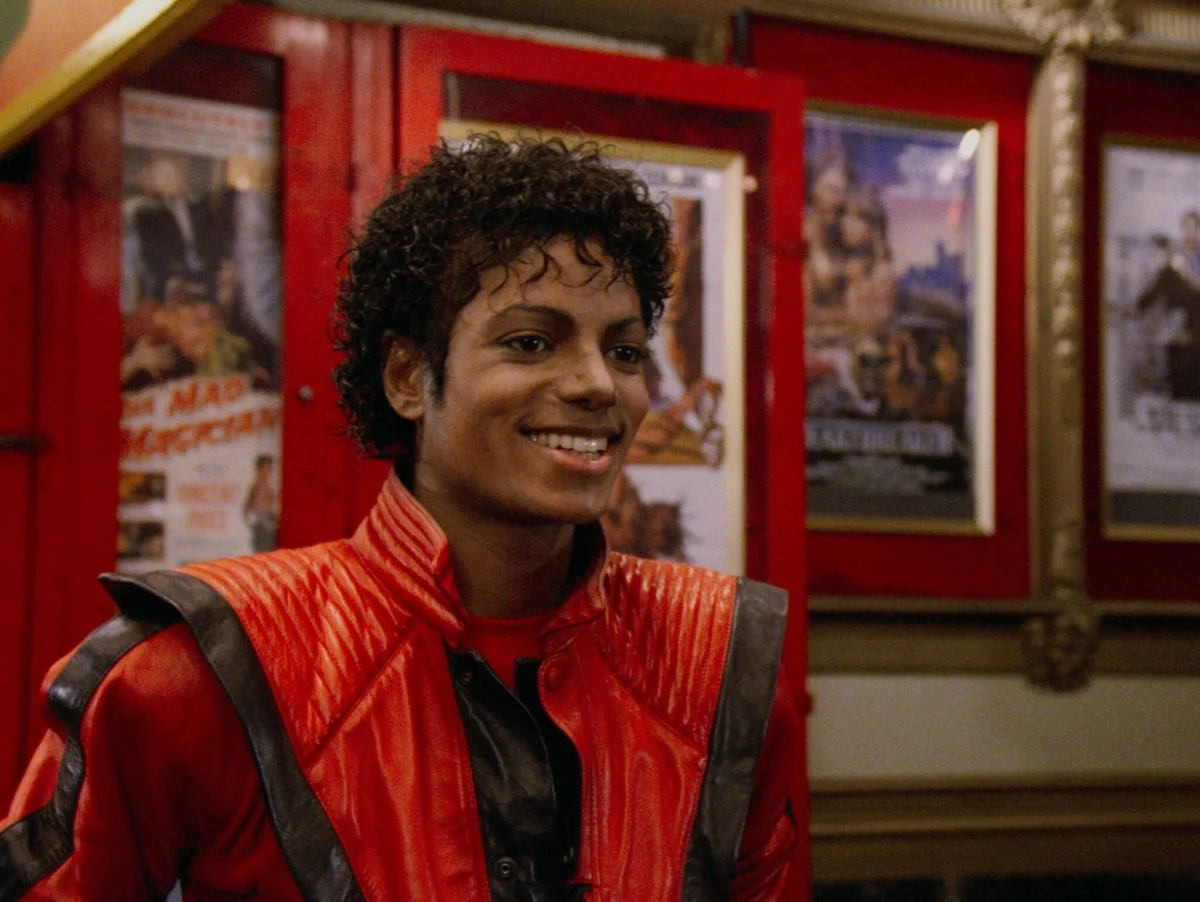
In the modern landscape of Hollywood entertainment, industry analysts and studio executives continually find themselves baffled by the enduring success of formulas they frequently dismiss as derivative. The recent box office triumph of Michael, the high-profile biographical film chronicling the extraordinary life of pop icon Michael Jackson, has reignited this bewilderment.
To many casual observers, the movie’s success should come as no surprise. Michael Jackson remains the most commercially successful and globally recognized pop star in history, possessing a cinematic life story coupled with an immortal catalog of music that practically guarantees baseline theatrical attendance. Yet, Hollywood continues to treat the triumph of such conventional projects as an anomaly.
Behind the scenes, the development of musical biopics represents a paradoxical tightrope walk. On paper, they are financial slam dunks—virtually guaranteed to turn a profit. In practice, however, they are notoriously difficult to get made.
Chronology of the Struggle: Why Music Biopics Rarely Reach the Screen
The journey of bringing a musical icon or a legendary band to the big screen is fraught with political, legal, and interpersonal minefields. Understanding this timeline highlights why cinematic representations of music history are so rare—and why those that do survive the gauntlet often feel heavily sanitized.
1. The Interpersonal Fractures
When a project focuses on a band rather than a solo artist, the hurdles multiply exponentially. Over time, bands often fracture, leaving behind a legacy of bitter feuds and lingering resentments. It is safe to assume that cinematic biopics for rock mainstays like The Police or Pink Floyd will not materialize anytime soon. Furthermore, individual band members frequently object to how their likenesses are utilized, demanding script changes to ensure they appear as sympathetic, heroic, or talented as possible.
2. The Estate and Heir Quagmire
When living subjects pass away, the development process transitions from dealing with former bandmates to navigating the complex demands of estates. If an estate is controlled by multiple heirs—such as a late singer’s five children—consensus becomes nearly impossible to achieve. Every stakeholder brings a different vision, a unique grievance, and a distinct set of demands regarding the artist’s legacy.
3. The Sanitization Process
Because living subjects and estate executors typically retain script-approval or veto power, biographical screenplays are systematically scrubbed of complexity, controversy, and grit. Any narrative element that casts a shadow on the subject is immediately excised. Critics pointing out that Michael feels overly sanitized miss the fundamental reality of studio biopics: without that sanitization, the film would never have been approved or financed in the first place. When a biographical picture finally hits theaters, it is nothing short of a Hollywood miracle.
Supporting Data: The Commercial Engine of Necessity
What ultimately breaks the deadlock for contentious or highly guarded musical properties? Financial desperation.
The Michael Jackson estate, for instance, has historically faced significant debt obligations—a reality that frequently forces estates to monetize intellectual property through high-yield cinematic ventures. When all key stakeholders face financial pressure, artistic objections are sidelined in favor of commercial viability.
This dynamic exposes a deep schism in the entertainment industry:
- The Professional Hollywood Side: Industry executives and screenwriting gurus constantly demand fresh, innovative, high-concept ideas. They are allergic to repetition.
- The Consumer Side: A massive segment of the global audience actively seeks out the familiar. They want to buy a ticket to see precisely what they expect to see.
This contradiction presents a professional dilemma for working writers. While audiences willingly reward formulaic comfort, writers must pitch fresh, original concepts to break through the gatekeepers on the professional side of Hollywood. To succeed, screenwriters must master both the art of the fresh pitch and the mechanics of compelling scene-level execution.
Official Insights: The Secret Weapon of TV Writing
Moving past feature film paradigms, valuable screenwriting lessons can be derived from contemporary television—specifically serialized dramas. Examining a masterclass in tension, such as the second season of the critically acclaimed series Beef, reveals structural techniques that give feature writers a massive strategic advantage.
The Anatomy of a Bottle Episode
In Beef, the narrative tracks Joshua, the manager of an upscale country club, and his strained relationship with his wife, Lindsay. It also follows Austin and Ashley, a naive young couple working at the club who leverage a secretly recorded violent argument to blackmail their way into better positions.
In Season 2, Episode 3, Ashley spirals into a panic upon discovering that Austin—whom she helped secure a physical therapy job—may be engaging in a flirtatious professional relationship with the attractive assistant of the club’s owner. In a manic state, Ashley charges down the street, falls down a steep, hidden embankment, and sustains severe injuries.
This sets up Episode 4, a classic "bottle episode."
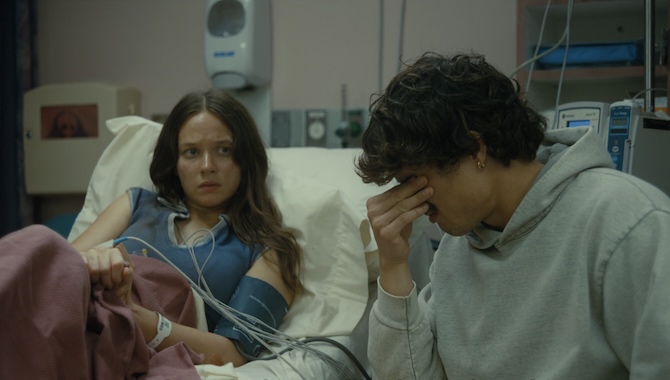
In television production parlance, a bottle episode is a cost-saving measure where an entire episode is confined to a single location—in this case, an Emergency Room waiting room as Austin and Ashley wait for a hospital bed.
[Traditional Feature Writing]   ---> Story moves forward in every scene (Goal-Oriented)
[Standard TV Writing]           ---> Do as well as you can (Balance of Plot and Character)
[Bottle Episode Writing]        ---> If plot doesn't move forward, rely entirely on CONFLICT & IMBALANCE
Implications: Translating TV Techniques to Feature Screenwriting
In traditional storytelling—particularly feature-length screenwriting—the golden rule is absolute: Every single scene must move the story forward. Characters must continually push closer to their objectives, just as Luke Skywalker edges closer to his goals in Star Wars.
In television writing, however, the mandate is more flexible: Do as well as you can. And in bottle episodes, the rule changes entirely: If you can push the story forward, great; if not, keep the audience utterly captivated anyway.
The Power of Interpersonal Imbalance
How do professional writers keep an audience riveted when the overarching plot is completely frozen?
The answer lies in Conflict and Imbalance.
When forward story momentum is paused, the writer must pivot to their second most dependable dramatic engine: emotional imbalance. Conflict does not merely mean characters screaming at each other; it encompasses any state of friction or unresolved tension between individuals.
Consider a simple, relatable scenario: A married couple, Dan and Shelly, attend a social gathering where Dan makes passive-aggressive remarks about Shelly’s drinking habits. Shelly is humiliated; Dan is resentful. Later that evening, we watch them complete their nightly routine getting ready for bed.
- Is Indiana Jones trying to find the Ark of the Covenant in this scene? No.
- Is the overarching plot advancing? No.
Yet, the scene can be deeply entertaining. Why? Because the characters are living in a state of imbalance. Shelly is nursing a grievance about public humiliation; Dan is nursing a grievance about private behavior. Their dynamic is tilted off its axis.
This creates pseudo-forward-momentum. As the characters interact during their mundane nightly routine, the audience experiences a strong psychological desire—and hope—that the characters will address the friction and bring their relationship back into balance.
Executing the Technique in Beef
Returning to Beef, Episode 4 harnesses this exact mechanism. The primary unresolved tension is Austin’s clandestine interactions with the club owner’s assistant. When Austin leaves his phone behind at the ER vending machines, Ashley seizes the device and begins texting the assistant as Austin, attempting to extract confessions of romantic interest.
The plot of the season has temporarily flatlined in a hospital waiting room, but the scene crackles with energy because of the underlying emotional imbalance. The audience stays engaged not because the plot is advancing, but because they desperately hope the emotional truth will finally be brought to light—even though, in great drama, permanent resolution is rarely achieved.
Conclusion: Actionable Takeaways for Writers
Mastering this television writing trick provides feature screenwriters with a massive competitive edge. If you find yourself writing a sequence where your characters cannot physically or narratively move toward their primary objective, do not panic.
Instead, rely on the mechanics of imbalance:
- Establish Early Friction: Plant the seeds of emotional or relational imbalance well before the scene takes place.
- Lean Into Conflict: Allow characters to interact while harboring unexpressed grievances, secrets, or divergent desires.
- Create the Illusion of Progress: Give the audience the psychological hope that the characters can resolve their tension—even if the resolution continually slips just out of reach.
By learning how to craft compelling, high-conflict scenes when plot momentum grinds to a halt, you transform yourself into a formidable force in the screenwriting industry.
Writers are reminded to keep pushing forward on their drafts, as upcoming industry deadlines—such as the Blood & Ink Showdown—approach rapidly.
