
The Master of Horror’s Genesis Gets the Royal Treatment: The Folio Society Unveils Stunning Collector’s Edition of Stephen King’s Carrie
Main Facts
More than half a century after it first terrified readers and cemented a literary legend, Stephen King’s debut novel, Carrie, is receiving a breathtaking new lease of life. The Folio Society—renowned worldwide for its exquisite, premium-grade collector’s editions of classic literature—has officially released a newly commissioned, lavishly illustrated version of the 1974 horror masterpiece.
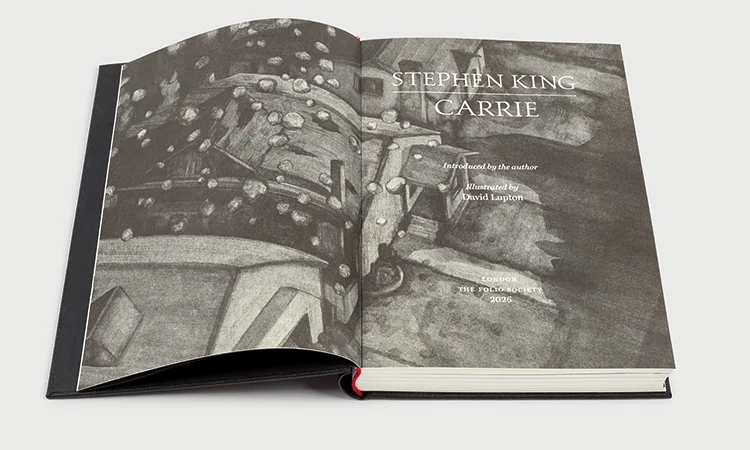
This meticulous release captures the dark essence of the telekinetic teenager whose catastrophic prom night traumatized generations. Bounded in high-quality cloth and featuring striking blocking designed by artist Edward Kinsella, the 216-page volume draws direct inspiration from the infamous pig’s blood sequence. Inside, readers are treated to a black-and-white illustrated title-page spread alongside six full-page color illustrations by artist David Lupton, which deeply amplify the novel’s unsettling atmosphere. Typeset in crisp Miller Text with Kingthings Trypewriter used for display headings, the book sits safely inside a minimalist, protective slipcase.
To celebrate the release, publishers and literary platforms have launched a high-profile giveaway, offering horror aficionados a chance to win a complimentary copy before the competition officially closes on November 5, 2026. For those unwilling to leave it to chance, the collector’s edition is currently available for purchase directly through The Folio Society’s catalog.
Chronology: The Journey of Carrie
To understand the cultural weight of The Folio Society’s new publication, one must look back at the rocky and remarkable timeline of how Carrie came to be:
- 1973–1974 (The Creation): Living in a cramped trailer in Maine, working as an English teacher, and struggling to make ends meet, Stephen King wrote Carrie on his wife Tabitha’s portable typewriter. Frustrated with the initial chapters, King threw the manuscript into the trash. Tabitha King rescued the pages from the wastebasket and urged her husband to finish the story of a bullied high school girl with latent telekinetic gifts.
- April 5, 1974 (Publication): Doubleday published Carrie with an initial hardcover print run of just 30,000 copies. While it was not an overnight blockbuster, it steadily generated word-of-mouth momentum.
- 1975 (The Paperback Breakthrough): The paperback rights were sold to New American Library for a staggering $400,000—half of which went to King. This windfall allowed King to quit teaching full-time and dedicate himself entirely to writing, effectively launching one of the most prolific literary careers in modern history.
- 1976 (The Cinematic Adaptation): Director Brian De Palma adapted the novel into a cinematic masterpiece starring Sissy Spacek as Carrie White and Piper Laurie as her fanatically abusive mother, Margaret. The film received Academy Award nominations and permanently burned the image of the blood-drenched prom queen into global pop-culture consciousness.
- 2026 (The Folio Society Collector’s Edition): Over fifty years after its genesis, Carrie remains a cornerstone of horror literature. The Folio Society immortalizes the milestone with a definitive, beautifully crafted physical artifact designed to endure for generations on collector bookshelves.
Supporting Data & Design Architecture
The Folio Society is recognized globally by bibliophiles for transforming classic texts into physical works of art. The production specifications for this edition of Carrie highlight an extraordinary attention to detail:
- Page Count: 216 pages of carefully curated layout and design.
- Binding: Premium cloth binding featuring custom-blocked artwork by Edward Kinsella. The design abstracts the haunting terror of the book’s climax.
- Interior Artwork: Six full-page color illustrations and a striking black-and-white title-page spread by David Lupton, capturing the claustrophobia of high school bullying and domestic religious fanaticism.
- Typography: Set in Miller Text, providing exceptional legibility and a classic literary feel, paired with Kingthings Trypewriter for display text—a subtle, brilliant nod to the mechanical typewriter upon which King originally battered out the manuscript.
- Housing: A durable, plain slipcase designed to protect the volume from environmental wear while offering a sleek, sophisticated aesthetic on the shelf.
Themes and Literary Implications
While Carrie is widely celebrated as a foundational text of modern horror and supernatural thrillers, its enduring brilliance lies outside the realm of mere monsters and ghosts. Beneath the telekinetic pyrotechnics and cinematic carnage is a profoundly human, deeply empathetic exploration of real-world suffering.

The Agony of Adolescence
At its core, Carrie is a story about the universal pain of growing up. High school is frequently described by survivors as a sort of psychological battleground, but King dialled this metaphor up to an eleven. Carrie White is an outcast not because she is inherently malicious, but because she is different. She lacks social currency, wears ill-fitting, homemade clothing, and is entirely unversed in the shifting social dynamics of her peers. The cruelty she faces in the girls’ locker room—sparked by her ignorance of her own body—turns a normal adolescent vulnerability into a waking nightmare.
Maternal Abuse and Fanaticism
Carrie’s home life is no sanctuary; it is an extension of the prison built by her mother, Margaret White. Representing a terrifying brand of religious extremism, Margaret twists scripture to justify physical abuse, psychological torment, and complete isolation from the outside world. This dynamic explores the tragic consequences of sheltering children through terror rather than love, illustrating how warped belief systems can deform a young mind.
The Psychology of Retribution
What makes Carrie so enduringly fascinating to psychological and literary analysts is the gray area of sympathy it creates. When Carrie finally snaps under the weight of unrelenting humiliation—culminating in the catastrophic bucket of pig’s blood dropped on her head at the prom—her subsequent rampage is horrific, yet framed with a tragic inevitability. King forces the reader to confront an uncomfortable question: At what point does a victim pushed too far become a monster, and who is truly to blame for the carnage that follows?
Cultural Legacy and Future Outlook
The release of The Folio Society edition arrives at a time when Stephen King’s cultural footprint is stronger than ever. Pop culture’s appetite for nostalgic, high-end horror and prestige physical media is experiencing an unprecedented boom. Vinyl records, steelbook Blu-rays, and luxury book publishers like The Folio Society, Centipede Press, and Subterranean Press have transformed reading and collecting into an immersive hobby.
For longtime fans who discovered King through dog-eared paperback editions passed down through generations, this new publication offers a chance to honor a beloved text with a permanent, museum-quality home on the shelf. For younger readers discovering Carrie via modern adaptations, audiobooks, or contemporary horror revivals, it provides a pristine introduction to the roots of contemporary horror.
As the literary world continues to evaluate the legacy of the master of horror, Carrie stands tall as the spark that started a wildfire. Through this striking new collector’s edition, Carrie White’s tragic, terrifying story ensures that her name will not be forgotten anytime soon.
