
Marvel’s Multiverse Gamble: Dissecting the "Avengers: Doomsday" Marketing Blitz
By Editorial Staff
October 24, 2026
As the clock ticks toward the December 18, 2026, release date for Avengers: Doomsday, the marketing apparatus behind Marvel Studios has shifted into an aggressive, albeit polarizing, gear. With the latest promotional push—a peculiar, baseball-themed teaser developed in partnership with Major League Baseball—the studio is attempting to bridge the gap between high-stakes multiversal warfare and the Americana aesthetic of the diamond. However, for many observers and long-time fans, this latest effort has only served to highlight a growing fatigue surrounding the franchise’s reliance on nostalgia, recycled footage, and a lack of narrative transparency.
The Main Facts: A Crossover of Unprecedented Scale
Avengers: Doomsday stands as the cornerstone of the Marvel Cinematic Universe’s (MCU) "Multiverse Saga." Directed by the returning duo Anthony and Joe Russo—the architects of Infinity War and Endgame—the film is positioned as the most significant assembly of characters in the history of the franchise.
The core premise, as vague as it remains, involves the collision of distinct universes, forcing beloved heroes from across two decades of cinematic history to unite against the formidable Doctor Doom, portrayed by Robert Downey Jr. in a controversial return to the studio that launched his career. The ensemble cast is staggering in its breadth, featuring Chris Evans, Vanessa Kirby, Anthony Mackie, Sebastian Stan, Paul Rudd, Florence Pugh, and a host of legacy actors including Patrick Stewart, Ian McKellen, and Kelsey Grammer, signaling a massive integration of the Fox-era X-Men canon into the MCU.
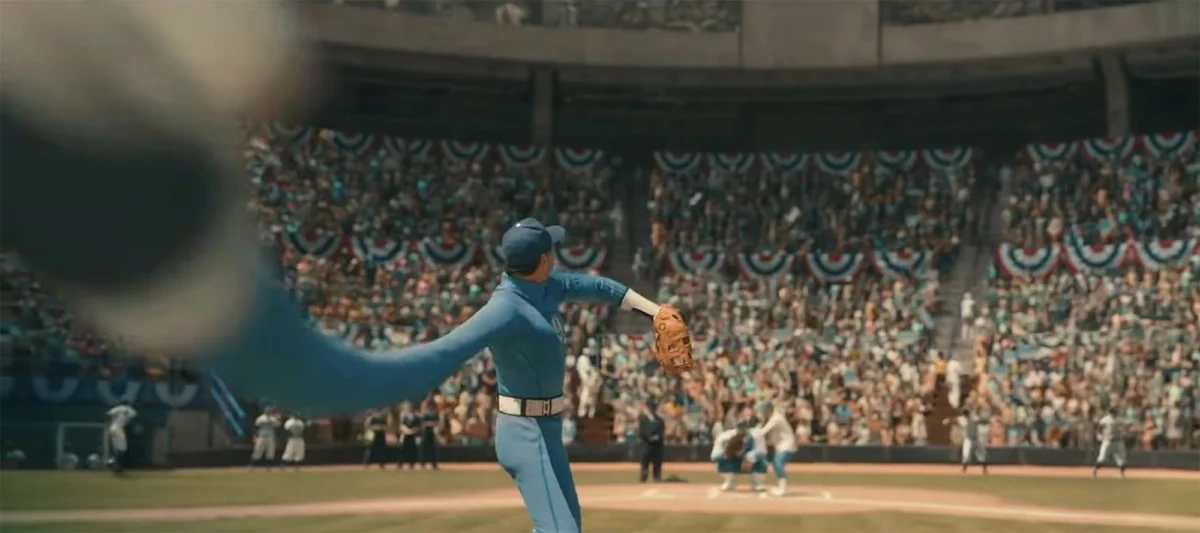
Despite this star power, the marketing has been criticized for its repetitive nature. The new MLB-themed teaser, which features the Fantastic Four attending a game, has been met with confusion rather than anticipation. Critics point out that the footage is largely indistinguishable from previous trailers, raising questions about whether the studio is withholding actual plot details due to a lack of a cohesive narrative or simply to preserve "mystery" for a franchise that has already exhausted much of its goodwill.

A Chronological Look at the Promotional Strategy
The promotional journey of Avengers: Doomsday has been a series of fits and starts.
- Early 2025: The initial teasers surfaced, focusing on individual legacy characters like Captain America and Thor to stoke immediate, visceral nostalgia.
- Mid-2026: Following the release of *Thunderbolts* (2025), the studio began pushing the narrative that Doomsday* would serve as the definitive conclusion to the current era.
- August 2026 (D23 Expo): A "Special" teaser was released, which failed to move the needle for skeptical audiences, with many citing the visual effects as "unfinished" or "uninspired."
- October 2026: The current MLB collaboration represents a shift toward mainstream, non-genre marketing. By integrating the Fantastic Four into a baseball setting, Disney is clearly attempting to humanize characters who have struggled to find a foothold in previous iterations, though the execution has been described as "dull" and "exceptionally unexciting."
Supporting Data: The Fatigue Factor
When analyzing the reception of the Doomsday marketing campaign, one must look at the data points regarding "franchise fatigue." Surveys conducted throughout 2026 suggest a cooling of interest among casual viewers. While the hardcore fanbase remains engaged, the broader audience that propelled Endgame to record-breaking heights is expressing exhaustion at the constant cycle of "rehashing and retconning."
The reliance on the Multiverse as a storytelling crutch has created a "stakes deficit." When every film is a multiversal crossover, the impact of individual character arcs is diminished. The inclusion of the original X-Men cast alongside the Fantastic Four and the New Avengers suggests a film that is more interested in "eventizing" cameos than in providing a coherent, character-driven story.
Furthermore, the competition is fierce. The same week Avengers: Doomsday hits theaters, Denis Villeneuve’s Dune: Part Three will arrive. While Marvel is banking on the sheer weight of its intellectual property, industry analysts note that Dune represents a level of auteur-driven prestige that is increasingly becoming the preferred alternative for audiences tired of the "Marvel formula."
Official Responses and Creative Vision
The creative team, led by the Russos and writers Stephen McFeely and Michael Waldron, has maintained a disciplined silence regarding the specific plot beats of Doomsday. In brief statements, Kevin Feige has reiterated that the film is "the foundation for the future of the Marvel Cinematic Universe," implying that the end of this saga is merely the prologue for the next.

However, behind the scenes, there is undeniable pressure. The budget for Doomsday is rumored to be among the highest in film history, and with Marvel’s recent box-office volatility, the studio cannot afford a critical or commercial dud. The decision to bring back Robert Downey Jr. is viewed by many as a "break-glass-in-case-of-emergency" strategy—a move that prioritizes short-term excitement over long-term narrative integrity.
The Russo Brothers, speaking to their return, have emphasized the logistical challenge of coordinating such a massive cast. "It’s not just about the spectacle," Joe Russo noted in a recent interview. "It’s about the emotional weight of two decades of cinema coming to a head." Yet, the promotional materials released to date have failed to communicate that emotional weight, opting instead for quick-cut action sequences and superficial jokes, such as the 30-second Ant-Man spot that accompanied the MLB teaser.
Implications: The Future of the Superhero Genre
The implications of Avengers: Doomsday reach far beyond the film itself. Should the movie fail to capture the cultural zeitgeist, it could signal the end of the "event film" era as we know it. The studio’s reliance on the Multiverse is a direct response to the lack of a singular, driving narrative since the defeat of Thanos, but it is a strategy that is rapidly reaching its point of diminishing returns.
1. The Death of the "Slow Burn"
By constantly relying on cameos and crossover events, Marvel has effectively killed the "slow burn" approach to world-building. Audiences are now trained to expect a spectacle every time a Marvel logo appears, making it increasingly difficult to launch new, smaller-scale stories.
2. The Nostalgia Trap
The reliance on Fox-era X-Men and legacy characters like Robert Downey Jr. indicates a studio that is scared to move forward. By looking backward, Marvel risks alienating a younger generation of viewers who do not possess the same emotional attachment to these iterations of the characters.

3. The Prestige Conflict
The head-to-head release with Dune: Part Three is a litmus test for the industry. It pits a studio-driven, IP-heavy franchise against a director-driven, epic-scale vision. If Dune outperforms Doomsday in both critical reception and cultural discourse, it may force Disney to rethink their entire strategy for the next decade of production.
Conclusion: Play Ball or Fumble?
As December 18th approaches, the question remains: Who is this movie for? Is it for the die-hard fans who want to see every character they’ve ever loved in one frame, regardless of the quality of the script? Or is it for the general audience that is looking for a compelling story?
If the current marketing campaign is any indication, Marvel is betting on the former. They are treating Avengers: Doomsday as a commodity, a "must-watch" event that doesn’t need to be good, only big. But in a marketplace that is becoming increasingly sophisticated, "big" may no longer be enough.
The baseball-themed teaser, with its jarring mix of high-stakes superheroics and local stadium energy, feels like a metaphor for the film itself: a desperate attempt to catch the attention of a crowd that is slowly heading for the exits. Whether Avengers: Doomsday manages to hit a home run or strikes out swinging, one thing is certain: the era of blind, unquestioning loyalty to the Marvel brand is officially over. The studio has its work cut out for it, and as they prepare to take the field this December, the entire industry is watching to see if they can still deliver the magic, or if the lights have simply grown too bright.
