
The Crucifix and the Raincoat: Re-evaluating the Catholic Dread of ‘Alice, Sweet Alice’
Main Facts: A Landmark of Religious Horror
In the annals of 1970s American horror, few films occupy a space as unsettling and aesthetically distinct as Alfred Sole’s 1976 masterpiece, Alice, Sweet Alice. Originally released under the title Communion—and later rebranded as Holy Terror—the film is a harrowing exploration of religious fanaticism, sibling rivalry, and the crumbling social fabric of early 1960s New Jersey. Set in Paterson in 1961, the film serves as both a proto-slasher and a deeply layered psychological character study that interrogates the "lurid imagery" of Roman Catholicism.
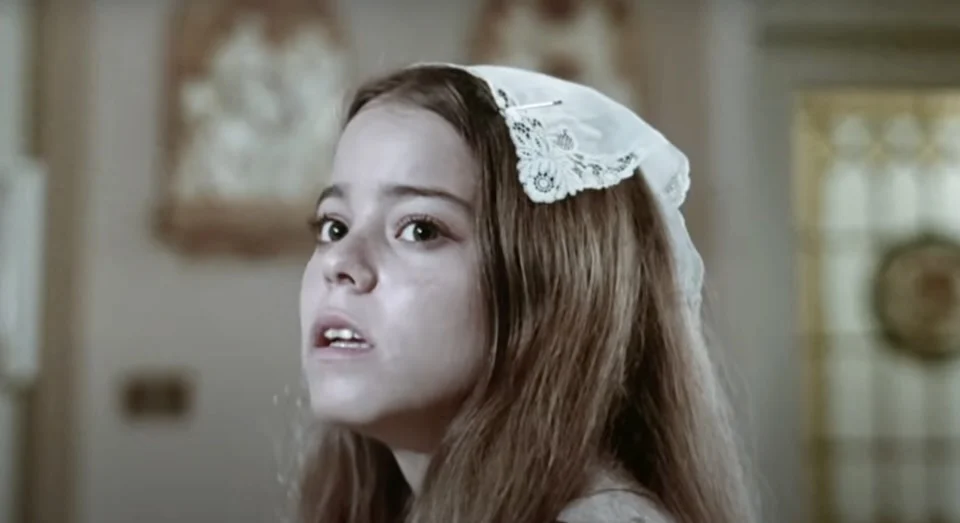
The film is perhaps most famous for being the cinematic debut of a young Brooke Shields, who plays Karen Spages, a child whose brutal murder at the altar of her First Holy Communion sets the narrative in motion. However, the true heart of the film lies in the performance of Paula Sheppard, who portrays the titular Alice. Though Sheppard was 18 at the time of filming, her portrayal of a troubled, jealous 12-year-old creates a sense of "inscrutable intonations" and "juvenile temperament" that keeps the audience in a state of perpetual unease. Director Alfred Sole, an auteur who never achieved the mainstream heights of contemporaries like John Carpenter or Wes Craven, crafted a film that Melville might have admired for its audit of color and Dante might have recognized for its vocabulary of pain.
Chronology: From Purity to Profanity
The narrative structure of Alice, Sweet Alice is a deliberate descent from the sacred to the profane. The film opens with an atmosphere of hushed, solemn piety. We see a young girl in a virginal white confirmation dress, her face shrouded in anonymity by a veil. She holds a crucifix—a symbol of ultimate sacrifice—which is soon revealed to be a concealed blade. This "crucifix-as-knife" reveal acts as the film’s thesis statement: in the world of Alfred Sole, the tools of salvation are indistinguishable from the instruments of slaughter.
The chronology of the film’s central tragedy unfolds during a high-stakes moment in the Catholic liturgical calendar: the First Holy Communion. As the community gathers in a Paterson church, Karen Spages is lured into the shadows and strangled with a candle by a figure wearing a translucent, "cheap dime-store plastic mask" and a vibrant yellow rain slicker. The choice of the yellow slicker is significant; it is a "childish pasquinade of a human face" that betrays the ungodly cruelty of the act.
Following the murder, the film shifts into a detective procedural tinged with giallo-esque flair. Suspicion immediately falls on Alice, Karen’s older sister, whose "petty, pedantic anger" and "splenetic outbursts" make her an easy scapegoat for a community desperate for a villain. As the body count rises—including the brutal stabbing of a vindictive aunt and the defenestration of a neighbor—the film moves toward a climax that moves "like the Bible as you approach Revelations," ultimately revealing that the killer is not the "bad seed" child, but a pillar of the religious community itself.
Supporting Data: The Aesthetics of Decay and Devotion
To understand the impact of Alice, Sweet Alice, one must look at the specific socio-political and aesthetic data points that Sole utilizes.
The Paterson Setting
Paterson, New Jersey, in 1961 is depicted as a "vicinage of rot and hopelessness." The film captures a city rife with poverty and crumbling infrastructure. This environment provides the perfect breeding ground for "reactionary social ideologies." The film’s "low-budget aesthetic beauty" is derived from these real-world ruins—abandoned buildings guarded by modern Cerberus-like patrol dogs—which Sole uses to mirror the internal decay of his characters.
Technical Craft and Color Theory
Sole’s use of color is meticulously planned. The "red like blood stains" of the opening credits contrasts with the "unsullied pallor" of the white dresses. The recurring motif of the yellow raincoat serves as a perversion of a "vibrant, cheery color" typically associated with sunny days. This color theory reinforces the film’s central theme: that violence skulks innately in the "lighted, pretty parts" of existence, not just the shadows.
The Giallo Influence
While American in setting, the film draws heavily from the Italian giallo tradition. The use of a masked killer, the focus on "reddest red" blood flowing in runnels, and the elaborate, almost operatic death scenes suggest a director deeply influenced by Mario Bava and Dario Argento. This stylistic choice elevates the film from a standard exploitation flick to a piece of "lyrical and economic" storytelling.
Official Responses: Critical Reception and Cultural Context
Upon its initial release, Alice, Sweet Alice faced a turbulent path. The film was caught in a web of title changes and distribution hurdles. Initially titled Communion, the film drew the ire of certain religious groups who found its juxtaposition of sacred rites and slasher violence to be "comminatory blasphemy."
Critical Re-evaluation
While it was not a blockbuster upon its 1976 debut, the film has undergone a massive critical re-evaluation in the decades since. Modern critics often cite Sole’s "singular feeling for mysterious dread" and his ability to "suffocatingly suffuse the film with a tainted air of distinctly human menace." Unlike the supernatural horror of The Exorcist (1973), Alice, Sweet Alice was praised for its grounding in human psychology. As the source text notes, "There are no monsters… it’s a person, flesh and blood, who kills."
The "Brooke Shields" Factor
In 1981, following the massive success of The Blue Lagoon, the film was re-released under the title Holy Terror to capitalize on Shields’ newfound stardom. This "official response" from distributors highlighted the film’s transition from an indie horror experiment to a cult classic. However, contemporary scholars argue that focusing on Shields does a disservice to Paula Sheppard’s "wise beyond her years" performance, which anchors the film’s ambiguity.
Implications: The Legacy of Religious Trauma in Cinema
The implications of Alice, Sweet Alice extend far beyond the horror genre. The film serves as a profound meditation on the "mysteries of life" and the "perils of free will." It posits that a community’s need for a "designated villain" can be as destructive as the crimes they seek to punish.
The Architecture of Faith
Sole uses the architecture of the church and the "narrow halls of stalwart belief" to create a sense of claustrophobia. The film implies that Catholicism, with its "tangled tales of sin and redemption," provides a vocabulary for both great beauty and great violence. The "transmutation of bread and wine to literal flesh and blood" is presented not just as a miracle, but as a precursor to the "blasphemous spilling of innocent blood."
The Subversion of the "Final Girl"
Long before the slasher genre codified the "Final Girl" trope, Alice, Sweet Alice offered a subversion. Alice is not the virginal, pure protagonist; she is a "troublemaker" and a "brat." By making her the primary suspect and the victim of community scorn, Sole forces the audience to confront their own prejudices. The film’s conclusion—where the true killer, Mrs. Tredoni, is revealed to be acting out of a twisted sense of "divine justice"—suggests that the greatest threat to a community is often the person "on her knees, yellow rubber gloves scrubbing the floor" in the name of the Lord.
A Lasting Flame
The film ends with an image of candles in the church, "shrinking slowly but doggedly symbolic." This serves as a metaphor for the persistence of faith and the cycle of human tragedy. Alice, Sweet Alice remains a vital text because it refuses to offer easy answers. It acknowledges that "togetherness gives strength," but warns that it is "up to us how we flex."
In the end, Alfred Sole’s work stands as a testament to the power of genre film to explore the "lacuna between Fall and Winter" in the human soul. It is a movie "pregnant with the possibility of redemptive beauty as much as it is danger," ensuring that the name Alice Spages will continue to be whispered in the pews of horror cinema for generations to come.
