
The Analog Alchemy of Boots Riley: How ‘I Love Boosters’ Defies the Digital Status Quo
[Editor’s Note: This article contains major spoilers for "I Love Boosters."]
In the landscape of modern cinema, where the "uncanny valley" of CGI has become an inescapable horizon, Boots Riley’s second feature film, I Love Boosters, stands as a defiant act of tactile rebellion. Riley, a filmmaker known for infusing high-concept social critiques with surrealist flourishes, has once again pushed the boundaries of what is possible on screen. From a luxe San Francisco apartment tilted at a dizzying 17 degrees to a reality-altering innertube that functions on the principles of dialectical materialism, the film is a dense, imaginative tapestry. Yet, it is in the film’s gritty, hand-crafted production methods—specifically its use of stop-motion animation and old-school miniatures—that the film truly finds its soul.
Main Facts: A Production Defined by Tangibility
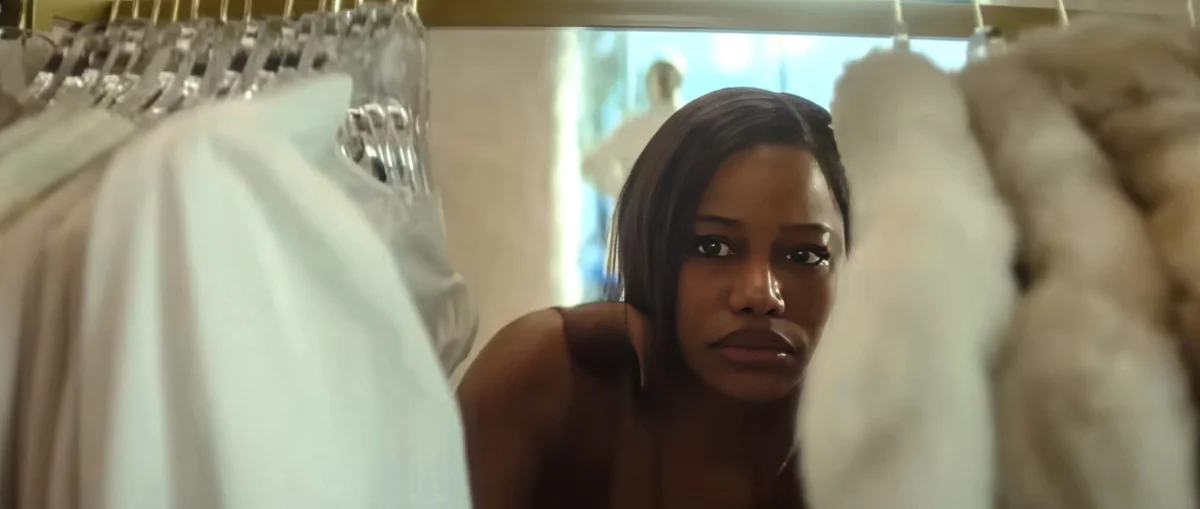
At its core, I Love Boosters is a story about the fight against the commodification of the human experience. The film follows Corvette (Keke Palmer), a designer-clothes "booster," as she leads her crew in a desperate attempt to expose the exploitative practices of Christie Smith (Demi Moore). Standing in their way is the enigmatic Dr. Jack (Don Cheadle), a pyramid schemer whose "willing instruments of capital" wear literal skin suits to destabilize the community.
While the narrative is rooted in class struggle, the visual language is defined by a refusal to rely on the glossy, artificial finish of standard CGI. Riley, an avowed fan of legendary special effects pioneer Ray Harryhausen, sought to capture the "living sense of movement" that characterized stop-motion classics like Jason and the Argonauts and Clash of the Titans. By blending live-action performances with stop-motion antagonists and intricate miniature work, Riley has crafted a film that feels both hyper-real and deliberately, beautifully "off."

Chronology of Craft: From Script to Screen
The path to the screen for I Love Boosters was one of constant negotiation between logistical reality and creative ambition. The production design, led by Christopher Glass, initially aimed for a 25-degree tilt in the protagonist’s apartment—a visual metaphor for the imbalance of their world. After testing, this was dialed back to 15 degrees, eventually settling at a 17-degree compromise that maintained the intended disorientation without compromising the physical movement of the actors.
As the production moved toward the film’s high-octane finale, the team faced a pivotal decision: how to depict the "skin suit" antagonists chasing Corvette across Oakland. The filmmaking team seriously debated utilizing the aesthetic of the "Bodies: The Exhibition" for these creatures. The idea was to bring these manifestations of corporate greed to life through stop-motion animation. However, the sheer labor-intensive nature of stop-motion forced a tactical pivot. Recognizing that the larger the object, the longer it takes to animate, the team scaled back the scope of the stop-motion, opting for a more precise, focused application that allowed the VFX team to maintain quality while ensuring the creatures felt genuinely threatening rather than merely cartoonish.
Supporting Data: The Philosophy of the "Unreal"
Boots Riley’s philosophy on special effects is one of intentionality. During a recent episode of the Filmmaker Toolkit Podcast, he articulated a critique of modern CGI that underpins his entire directorial approach.
"I often say that with CGI, you could have a skyscraper stand up, walk over, and take a shit, and it wouldn’t be amazing, you know?" Riley explained. "There’s something about the way we know the light is hitting it—it feels less tangible, too smooth in the wrong ways."

For Riley, stop-motion provides an "in-built sense of humanity." Because the audience subconsciously recognizes the human touch behind the movement—the slight imperfections, the physical weight—it creates a unique resonance. This is not about convincing the viewer that the image is "real"; rather, it is about creating a sense of the "unreal" that feels grounded and tactile. By pairing stop-motion sequences directly against the work of live actors and intercutting between them, Riley forces the audience to engage with the frame in a way that is rarely seen in modern blockbusters.
Animators Ri Crawford and David Lauer were tasked with the herculean effort of ensuring the stop-motion characters matched the facial structures and movements of the live-action performers. This required an extreme level of precision to ensure that when the film cuts between reality and animation, the transition feels like a stylistic choice rather than a technical limitation.
Official Responses: The Legacy of Miniature Magic
The film’s complex chase sequences were further elevated by the work of Blind Beagle VFX lead Chris Warren. Recommended by producer Roman Coppola, Warren brought a lineage of Hollywood history to the project. His team’s expertise stems from a tradition of practical effects that stretches back to his grandfather’s Academy Award-winning work on The Time Machine.
Riley was particularly struck by the pedigree of the team Warren assembled. "Chris Warren is the kid poking the Pillsbury Doughboy," Riley noted, highlighting the deep-seated history the crew had with the very medium they were utilizing. He explained how Warren’s father, an Oscar winner for Terminator 2, had historically recruited marginalized workers—including "LA skater punks" and those blacklisted in the 1950s—to master these craft-based effects. This history of defiance and labor advocacy mirrors the themes within I Love Boosters itself.

The use of miniatures wasn’t just a nostalgic choice; it was a logistical masterstroke. As the team struggled to find a way to film the car chase sequence, the constraints of the budget made traditional on-location filming difficult.
"We had to get the cost down," Riley admitted. "Then it was like, ‘OK, maybe we could find a really interesting way to make 90 percent of it happen within the car.’ But it was just getting not good."
It was Chris Warren who suggested the solution: miniatures. By building a miniature cityscape on a slanted board, the team was able to execute complex camera maneuvers—cars jumping over hills and weaving through traffic—that would have been prohibitively expensive or physically impossible in a full-scale shoot.
Implications: The Future of Filmmaking
The implications of Riley’s approach in I Love Boosters are profound for the industry. In an era where many directors are content to outsource their visual world-building to massive server farms rendering millions of polygons, Riley’s insistence on "the human touch" is a radical statement.

By prioritizing practical, stop-motion, and miniature work, Riley isn’t just saving money or paying homage to Ray Harryhausen; he is actively preserving the language of cinema as a craft. The success of these sequences suggests that audiences are starving for the "imperfections" that digital technology seeks to erase. The film proves that when VFX is used to serve the story—rather than to simply replace the effort of physical filmmaking—the results are significantly more immersive.
Furthermore, the film’s meta-commentary on the exploitation of workers is mirrored by the behind-the-scenes labor of the VFX and miniature teams. By highlighting the history of his crew—people who have been historically overlooked or "blacklisted"—Riley reinforces the idea that the process of making a movie is, in itself, a reflection of the society we live in.
I Love Boosters does more than just tell a story about theft and corporate greed; it functions as a blueprint for how to reclaim the cinematic image from the sterile perfection of the digital age. Whether it is the 17-degree tilt of a room or a miniature car jumping a hill, every frame of the film serves as a reminder that the most compelling visual effects are the ones that carry the weight of human effort. As the industry continues to grapple with the rise of AI and algorithmic content, Boots Riley’s commitment to the analog and the handmade stands as a beacon for what is still possible when a director dares to build a world with their own hands.
I Love Boosters is currently playing in theaters nationwide.
