
Beyond the Indoor Jacket: The Professional Guide to Outdoor Ethernet Installations
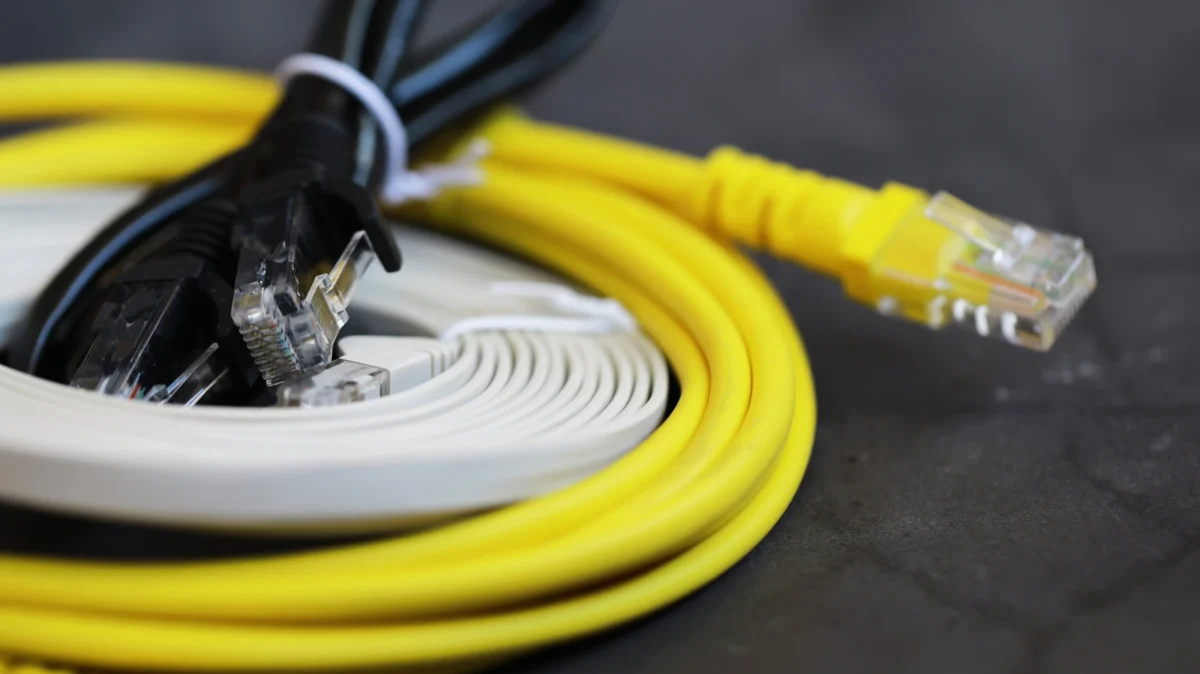
Just because you can do something doesn’t mean you should. In the world of networking, this adage is nowhere more applicable than when extending a local area network (LAN) beyond the climate-controlled confines of a home or office. While the temptation to run a standard Ethernet cable through a window or across a patio is high—especially when installing security cameras or outdoor Wi-Fi access points—the technical reality is far more punishing than a quick DIY job would suggest.
The Reality of Environmental Degradation
To the casual observer, an Ethernet cable is simply a collection of copper wires wrapped in plastic. However, the engineering behind these cables is highly specific to the environment they occupy. Standard indoor Ethernet cables—the kind found snaking behind your router or gaming console—are encased in a polyvinyl chloride (PVC) jacket. While flexible and cost-effective, PVC is fundamentally ill-equipped for the "great outdoors."
When exposed to direct sunlight, the ultraviolet (UV) radiation breaks down the molecular bonds in the PVC jacket. This process, known as photo-degradation, causes the plastic to become brittle, fade in color, and eventually crack. Once the outer protective layer is compromised, the internal twisted pairs are exposed to moisture, humidity, and atmospheric pollutants. Moisture acts as a catalyst for corrosion on the copper conductors, leading to increased signal attenuation, packet loss, and, eventually, complete connection failure.
Furthermore, outdoor temperature fluctuations introduce mechanical stress. As temperatures swing from freezing winter nights to sweltering summer afternoons, the materials within a standard cable expand and contract at different rates. Without the specialized shielding and jacket materials found in outdoor-rated cabling, the internal geometry of the twisted pairs—which is vital for maintaining high-speed data transmission—is distorted, leading to significant performance drops.
Chronology of an Outdoor Failure
Understanding how a standard cable fails over time helps in appreciating why specific engineering choices are made for outdoor products.
- Installation (Month 0): The cable is installed. It looks identical to indoor cable and provides excellent signal integrity. The user assumes the job is finished.
- Initial Weathering (Months 1-6): The UV rays begin the "bleaching" process. The flexible PVC starts to lose its plasticizers, becoming slightly stiff to the touch.
- Environmental Stress (Months 6-18): Rain, humidity, and extreme temperature cycles introduce micro-fissures in the jacket. While the connection remains stable, the interior of the cable is no longer airtight.
- Degradation (Months 18-36): Oxidation sets in on the copper pins and wire surfaces. The internal components begin to "creep," losing their precise configuration. The user begins to experience intermittent network drops, especially during heavy rain or wind.
- Failure (Month 36+): The jacket is brittle enough to snap under the weight of wind or ice. The copper has corroded to the point where the signal can no longer propagate. The network is offline, and the cable must be entirely replaced.
Technical Distinctions: Direct-Burial vs. Outdoor-Rated
Not all "outdoor" cables are created equal. Professionals distinguish between cables designed for aerial or surface mounting and those intended for direct burial.
Outdoor-Rated (Aerial/Surface)
These cables are designed to withstand UV exposure and temperature swings. They typically employ a more durable polyethylene (PE) or linear low-density polyethylene (LLDPE) jacket. These materials are chemically resistant to the breakdown caused by solar radiation. If you are mounting a camera on the side of your house or running a cable along a fence line, these are the appropriate choice.
Direct-Burial Rated
If your project requires running a cable from the house to a detached garage or a garden shed, you must use a cable specifically labeled for "Direct Burial." These cables are engineered to withstand the crushing pressure of soil and the constant presence of ground moisture. Many of these cables include internal water-blocking mechanisms, such as gel-filled chambers, powder-impregnated tapes, or specialized aramid yarns that swell when exposed to water, sealing any potential punctures in the jacket.
Supporting Data and Best Practices
The National Electrical Code (NEC) and organizations like Underwriters Laboratories (UL) provide the regulatory framework for these installations. According to industry standards, communication cables used outdoors must be explicitly marked.
- Identification: Look for markings such as "CMX," "Outdoor," "Sunlight Resistant," or "Direct Burial" printed directly on the cable sheath. If it isn’t marked, assume it is for indoor use only.
- The 50-Foot Rule: One of the most critical safety concerns is fire propagation. Most outdoor-rated cables have jackets that are not flame-retardant in the same way indoor (Plenum or Riser rated) cables are. Running a significant length of outdoor cable inside a wall cavity is a fire code violation. The standard industry practice dictates that you should not run more than 50 feet of non-fire-rated cable inside a structure before transitioning to an indoor-rated cable via a junction box.
- Surge Protection: Copper is an excellent conductor—not just for data, but for electricity. An outdoor cable run acts as an antenna for lightning-induced surges. Even with the best cable, you should install high-quality Ethernet surge protectors at the entry point of the building to safeguard your network equipment (switches, routers, and PCs) from voltage spikes.
Official Guidance and Regulatory Implications
Local building authorities and the National Fire Protection Association (NFPA) emphasize that safety compliance is not optional. When installing infrastructure, homeowners must consider the "Code Authority" in their jurisdiction.
In many municipalities, burying a cable requires the use of conduit (pipe) to protect the cable from accidental damage (e.g., a shovel strike) and to allow for future upgrades. Failure to adhere to these local ordinances can result in fines, or worse, the invalidation of home insurance policies in the event of a fire or electrical fault. Always consult your local planning office before breaking ground.
The Fiber Optic Alternative
For those concerned about the inherent risks of copper—lightning strikes, electromagnetic interference (EMI), and ground loops—the industry has a clear alternative: fiber optic cabling.
Fiber optics use light pulses instead of electrical currents to transmit data. Because the signal medium is glass or plastic, it is completely immune to lightning-induced surges and EMI. Furthermore, outdoor-rated fiber optic cables are generally more compact and durable than their copper counterparts. While the initial investment in SFP modules and media converters may be higher, the reliability and safety advantages for long-distance outdoor runs are significant.
Conclusion: The Cost of Cutting Corners
The impulse to use "whatever is in the box" is a common pitfall in residential networking. However, as the evidence suggests, the cost of replacing a compromised cable—or the potential risk of an electrical hazard—far outweighs the initial savings.
By selecting the correct jacket material, ensuring proper direct-burial protection, respecting the 50-foot indoor transition rule, and installing appropriate surge suppression, you can build an outdoor network that is as robust as your indoor infrastructure. When it comes to outdoor networking, the rule remains simple: prioritize durability and safety, or be prepared to pull the cable again in two years. Choose the right material today, and your network will remain connected, regardless of the forecast.
