
Box Office Shockwave: Anne Hathaway’s ‘Verity’ Dominates While Tom Cruise’s ‘Digger’ Suffers a Historic Misfire

Main Facts
The North American box office played host to one of the most stunning narrative reversals in recent cinematic history this past weekend. While Hollywood heavyweights Tom Cruise and Anne Hathaway are slated to join forces for the high-octane legacy sequel Days of Thunder 2 in the summer of 2028, their solo cinematic outings yielded starkly contrasting fortunes.
Anne Hathaway continued an extraordinary career renaissance, capturing the domestic box office crown with Verity. The Amazon MGM Studios adaptation of Colleen Hoover’s explosive best-selling novel pulled in a formidable $32.6 million domestically. Co-starring Dakota Johnson and Josh Hartnett, and directed by Michael Showalter (The Big Sick), the erotic mystery matched its domestic haul internationally, translating to a robust $62.5 million global opening weekend.
Conversely, Tom Cruise experienced a rare and sobering misfire. Digger, a high-profile climate-change satire directed by Academy Award-winning filmmaker Alejandro González Iñárritu (Birdman, The Revenant), crashed upon arrival. Released by Warner Bros. with a production budget exceeding $160 million, the comedy limped to a dismal $8 million from 3,321 North American theaters. Even overseas, where Cruise typically commands infallible drawing power, the film managed a meager $12 million, bringing its cumulative global opening to a paltry $20 million.
Meanwhile, Sony Pictures’ Resident Evil, directed by Zach Cregger, continued to show healthy legs in its third frame, adding $12.5 million to cross the coveted $250 million worldwide milestone. In historical box office milestones, Marvel Studios’ re-release of Avengers: Endgame added another $126 million to its coffers, catapulting its lifetime global gross to $2.925 billion and once again reclaiming the title of highest-grossing film in cinema history from James Cameron’s Avatar ($2.923 billion).
Chronology of the Weekend Race
To fully appreciate the magnitude of this weekend’s box office shakeup, industry analysts have charted how the momentum shifted in the weeks leading up to the theatrical rollouts.

Pre-Release Expectations
- Two Months Prior: Warner Bros. ramps up marketing for Alejandro González Iñárritu’s Digger. Industry forecasters widely project that Tom Cruise’s star wattage, combined with the prestige of an Oscar-winning auteur taking on a bold climate-change satire, would easily overshadow a literary adaptation geared toward a specific demographic.
- Three Weeks Prior: Advance ticket sales for Verity begin to surge organically across digital platforms, fueled by an intensely dedicated fan base native to Colleen Hoover’s literary universe and social media anticipation surrounding Anne Hathaway’s career momentum.
- One Week Prior: Social media sentiment tracking signals trouble for Digger. Early, middling review embargoes drop, pointing toward a tonal disconnect that leaves test audiences divided. Simultaneously, tracking metrics for Verity project an opening well above initial studio expectations.
Opening Weekend Unfolding
- Friday Night: Opening night grosses confirm the worst fears for Warner Bros. as Digger registers soft walk-up ticket sales. Conversely, Verity packs late-night screenings across suburban and urban multiplexes alike, driven by strong demographic turnout.
- Saturday Matinee: Word-of-mouth toxicity rapidly accelerates for Digger, compounding its low initial footprint. Meanwhile, Verity experiences strong Saturday hold rates, bolstered by group viewings and robust digital discourse.
- Sunday Estimates: Final weekend tallies solidify the upset. Verity secures the number-one spot with $32.6 million domestically, while Digger is left stranded at the bottom of the podium with a disastrous $8 million domestic take.
Supporting Data and Financial Metrics
A closer examination of the financial parameters surrounding the weekend’s major releases highlights the severe risks and rewards inherent in modern theatrical distribution.
Verity (Amazon MGM Studios)
- Domestic Opening Weekend: $32.6 million
- International Opening Weekend: $32.6 million
- Global Cume (Opening): $62.5 million
- Key Creative Talent: Directed by Michael Showalter; starring Anne Hathaway, Dakota Johnson, and Josh Hartnett.
- Context: Continues a banner year for Hathaway, following successful theatrical and streaming rollouts for The Devil Wears Prada 2 and The Odyssey.
Digger (Warner Bros. Pictures)
- Production Budget: Estimated in excess of $160 million (excluding global marketing and distribution overhead).
- Domestic Opening Weekend: $8 million (from 3,321 theaters)
- International Opening Weekend: $12 million
- Global Cume (Opening): $20 million
- Key Creative Talent: Directed by Alejandro González Iñárritu; starring Tom Cruise.
- Context: Represented a rare departure into avant-garde, satirical comedy for Cruise, coupled with Iñárritu’s distinct auteur style. The severe gap between budget and return establishes it as one of the most significant high-profile box office bombs of the post-pandemic era.
Holdovers and Historical Milestones
- Resident Evil (Sony Pictures): Added $12.5 million in its third frame; crossed $250 million globally.
- Avengers: Endgame (Marvel Studios / Disney): Added $126 million via its targeted theatrical re-release, bringing its historic lifetime global gross to $2.925 billion, narrowly edging past Avatar’s $2.923 billion benchmark.
Official Responses and Industry Reactions
The unprecedented nature of the weekend’s box office results has prompted swift internal assessments from studio executives, talent agencies, and independent analysts alike.
Warner Bros. distribution executives have reportedly entered crisis management mode regarding the underperformance of Digger. While studio insiders initially praised the bold pairing of Tom Cruise and Alejandro González Iñárritu as a stroke of artistic ambition, the commercial rejection of the film’s satirical tone has raised immediate questions about greenlighting high-budget, non-franchise studio comedies.
"When you invest north of $160 million into an original concept dealing with complex, polarizing themes like climate change, you rely heavily on universal audience embrace," noted a veteran distribution analyst who spoke on the condition of anonymity. "Unfortunately, the messaging failed to translate, and the ticket-buying public simply rejected the tonal framework."
On the other end of the spectrum, Amazon MGM Studios is celebrating a watershed moment for its theatrical division. Executives noted that Verity proves the enduring commercial viability of well-executed literary adaptations aimed at female-skewing audiences—a market segment Hollywood has occasionally underestimated on the big screen.
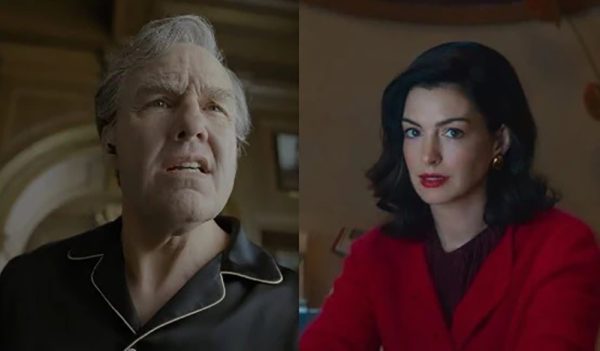
Anne Hathaway’s representatives have pointed to the actor’s diverse slate—ranging from high-concept mythological epics like The Odyssey to the long-awaited legacy sequel The Devil Wears Prada 2 and now Verity—as a masterclass in modern career navigation.
Meanwhile, representatives for Tom Cruise have offered no official comment on Digger’s opening numbers, though industry insiders emphasize that Cruise’s overarching brand remains entirely secure, particularly with major franchise commitments on the horizon.
Implications for the Future of Hollywood
This weekend’s box office juxtaposition carries far-reaching consequences for how major studios will greenlight projects, allocate marketing budgets, and manage star talent over the remainder of the decade.
1. The Death of Mid-to-High Budget Auteur Satire?
The financial collapse of Digger serves as a cautionary tale for studios tempted to combine massive movie-star salaries with uncompromising, avant-garde directorial visions. While audiences have historically rewarded auteurs like Alejandro González Iñárritu in prestige drama spaces (The Revenant), blending that sensibilities with a $160+ million comedy platform on climate change proved to be an uphill battle that modern audiences were unwilling to climb. Studios may become increasingly hesitant to fund original, high-concept satires at scale, retreating further into safe, algorithmic intellectual property.
2. The Unstoppable Rise of Female-Led Literary Adaptations
Verity‘s triumph cements a broader industry shift: the cinematic adaptation of contemporary best-selling fiction, particularly stories driven by complex female protagonists and genre-bending suspense, represents one of the most reliable profit centers in contemporary cinema. Following successes seen across various streaming and theatrical hybrid models, Amazon MGM’s theatrical gamble on Colleen Hoover’s work proves that adult-skewing, high-drama thrillers can command the box office just as effectively as traditional superhero spectacles.

3. The Countdown to Days of Thunder 2 (2028)
Despite their vastly divergent fortunes this weekend, Tom Cruise and Anne Hathaway remain inextricably linked on Hollywood’s medium-term horizon. Their scheduled pairing in Paramount’s Days of Thunder 2, slated for release in the summer of 2028, suddenly carries an entirely new layer of industry intrigue. Far from dampening enthusiasm, the juxtaposition of Cruise’s current box office vulnerability and Hathaway’s relentless winning streak adds a fascinating dynamic to what is already shaping up to be one of the most anticipated legacy sequels of the decade.
As the industry processes these numbers, studio boardrooms from Culver City to Burbank are rewriting their playbooks. One truth remains immutable: in the volatile landscape of modern cinema, past successes guarantee nothing, and audiences retain the ultimate veto power at the box office.
