
Brewing Up Confusion: A Critical Deep Dive into Kat Sandler’s New Supernatural Detective Series, ‘Yaga’
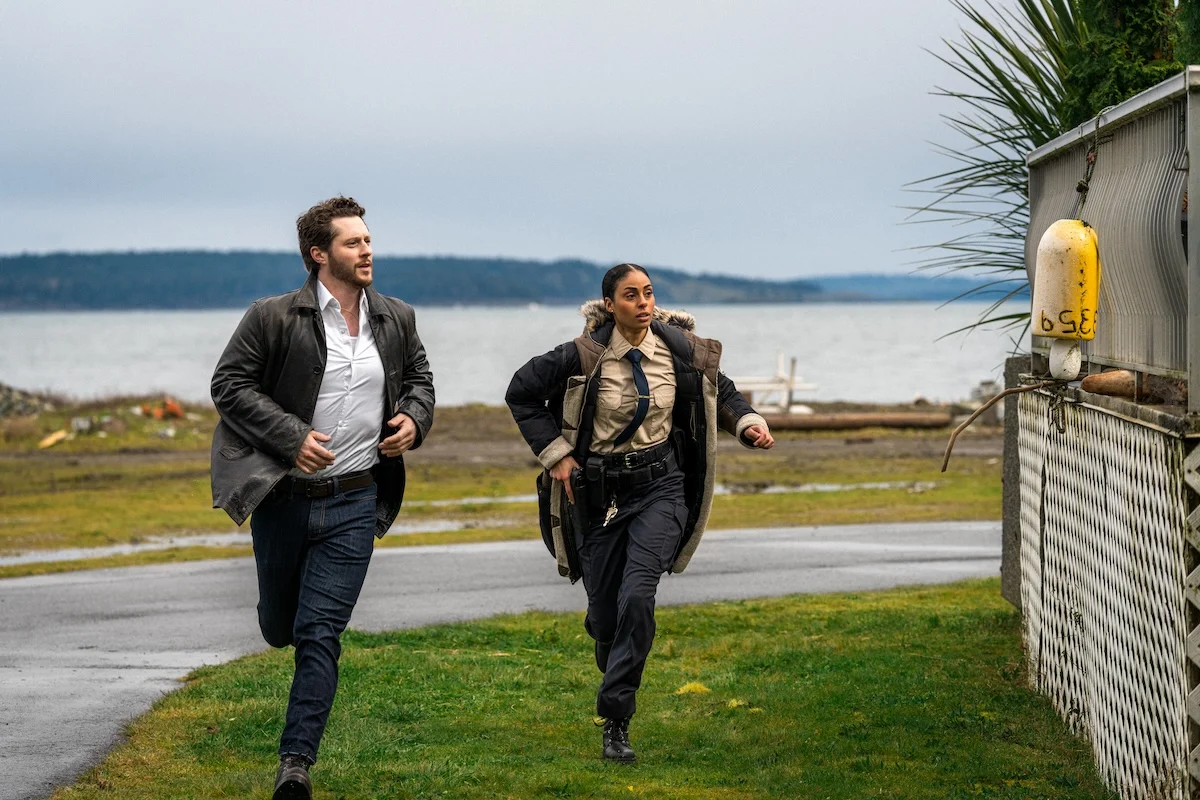
Main Facts: The Setup, the Cast, and the Premise
When the name Baba Yaga is first invoked in Kat Sandler’s new television series, the reaction from anyone roughly thirty-something in the mid-2020s is practically instantaneous and universally predictable.
"Wait, the one from John Wick?"
This meta-textual acknowledgement serves as an immediate explanation for a title that, on its own, feels strangely truncated. The production team couldn’t simply name the project Baba Yaga without millions of viewers expecting Keanu Reeves to show up in a bespoke suit, dispatching local ne’er-do-wells with a pencil. Instead, the project is simply titled Yaga—a clear indicator that the focus here is not on cinematic gun-fu, but on ancient, folkloric witchcraft.
Adapted by Kat Sandler from her own acclaimed stage play of the same name, Yaga is an eight-episode series that reimagines the legendary Slavic myth through the lens of a gritty detective-driven mystery. In traditional Slavic folklore, Baba Yaga is a deeply complex, morally ambiguous figure who oscillates depending on the storyteller: sometimes she is depicted as a benevolent, accommodating old crone living deep in the woods, and other times as a terrifying, child-eating monster who dwells in a hut perched on giant chicken legs.
Sandler’s small-screen adaptation relishes the tension between these two interpretations. The mysterious women populating the series are presented as simultaneously suspicious and helpful, maintaining a deliberate ambiguity to ensure that viewers remain guessing. Are they predatory figures preying on the vulnerable townsfolk, or are they mystical allies assisting the local authorities in cracking a difficult case? Or, perhaps, is the truth a complicated blend of both?
Unfortunately, despite a clever premise and a talented cast led by Clark Backo, Noah Reid, and Carrie-Anne Moss, Yaga struggles in its execution. The series ultimately fails to lean fully into its horror elements or its investigative plotting. It balances precariously between genres, resulting in a narrative that feels strangely diluted when it should be intoxicating.

Chronology: From Stage to Screen and the Weekly Rollout
The trajectory of Yaga began in the theater, where Kat Sandler’s original stage play earned critical praise for its sharp wit, feminist subtext, and fresh deconstruction of old folklore. Transitioning that intimate theatrical energy into an eight-episode television format required expanding the scope of the narrative, transforming a contained character study into a sprawling small-town mystery.
The production journey saw the project land a home on Crave in Canada before securing an international platform via AMC+. The promotional rollout established a firm release schedule designed to build steady engagement:
- October 23: Yaga officially premieres on AMC+ with a two-episode drop, setting up the central mystery of Henry Park’s disappearance.
- Late October – November: Weekly episodic releases follow, tracking the uneasy partnership between detective Carson and private investigator Rapp as they wade through local folklore and suspect lists.
- November 27: The series concludes with a two-episode finale, resolving the central whodunit and the overarching supernatural questions.
Reviewers were provided with the first seven of the eight total episodes prior to premiere, leaving the ultimate payoff of the finale shrouded in mystery—a structural reality that left critics weighing the slow-burn buildup against the delayed gratification of the storytelling.
Supporting Data: Production Details and Character Dynamics
To understand why Yaga occasionally trips over its own narrative feet, it helps to examine the specific moving parts introduced in the opening episodes.
The inciting incident is the sudden disappearance of Henry Park, an heir to a local family fishing empire. Played by Hudson Williams—fresh off his work in the Crave production Heated Rivalry—Henry is less a pillar of the community and more a classic coastal bro known primarily for throwing lavish parties. Henry resides in an oversized modern mansion alongside a single roommate, Logan. In a neat stylistic quirk, both roles are played by Williams, who manages to successfully differentiate the entitled playboy from his quiet, fawning companion despite limited screen time.
The investigation falls into the hands of two very different law enforcement figures:

- Carson (Clark Backo): A grounded, by-the-book beat cop in the Whittock police department whose personal life and internal motivations remain frustratingly underdeveloped throughout the first seven episodes.
- Rapp (Noah Reid): A cocksure, aggressively self-assured private investigator flown in via helicopter directly by the Park family.
Rapp’s introduction establishes his character immediately. Stepping out of a chopper wearing a black skinny tie, a black leather jacket, and carrying a brown leather duffel bag, he looks entirely unequipped for the muddy, rainy Canadian countryside. When Carson mocks his impractical attire, another local officer swoops in to voice the exact validation Rapp craves: "I think he looks pretty cool."
Rapp quickly proves to be an insufferable cliché. He plays by his own rules, flouts departmental protocol, conducts unlawful searches, and casually romances suspects whenever the mood strikes. Yet, the show struggles with how long it tolerates his toxic swagger without offering immediate, satisfying pushback.
On the other side of the investigative spectrum lies the show’s secret weapon: Katherine, played with delicious poise by Carrie-Anne Moss. Katherine is a university professor whose obsession with osteology runs so deep that she has authored a book literally titled Sexy Bones. Moss brings a commanding, seductive energy to the screen, anchoring the show’s feminist underpinnings even as the surrounding narrative gets bogged down in atmospheric fog and slow-moving procedural tropes.
Official Responses and Critical Reception
Early critical reception for Yaga has been generally mixed, culminating in a Grade: C evaluation from major television critics. While reviewers have consistently praised the atmosphere, the casting of Carrie-Anne Moss, and the inherent ambition of blending Slavic mythology with modern small-town noir, the consensus points to a severe pacing issue.
Industry observers have noted that Yaga attempts to juggle too many thematic balls at once. It wants to be a feminist reckoning with historical misogyny, a supernatural horror series steeped in folk terror, and a straightforward mystery thriller. By spreading its roughly 30-minute episodes thin across these competing genres, it frequently stalls.
Furthermore, critics have highlighted the imbalance between the two lead characters. While Noah Reid’s Rapp sucks up an immense amount of screen time with his abrasive, bad-boy antics, Clark Backo’s Carson is left stranded with a narrative arc that lacks emotional resonance. Without a strong, anchoring perspective from Carson to counterbalance Rapp’s obnoxious energy, the central dynamic wobbles.

AMC+ and the creative team have heavily leaned into the atmospheric horror elements in their marketing, emphasizing the eerie wooded backdrops and the ominous, unseen witch narrator who haunts the edges of the frame. Yet, reviewers note that these psychological trimmings often feel like window dressing pasted over a fairly conventional, slow-moving criminal investigation.
Implications: Where Modern Folk-Horror Television Goes From Here
The arrival of Yaga highlights a broader, ongoing trend in contemporary television: the adaptation of folkloric traditions and theatrical plays into serialized mystery formats. As streaming platforms hungrily search for intellectual property that bridges the gap between prestige drama and high-concept genre fiction, ancient myths—from Midsommar-esque paganism to Slavic witchcraft—have become prime real estate.
However, Yaga also serves as a cautionary tale for creators attempting this crossover. When a series relies on the promise of the supernatural, withholding the full weight of that supernatural payoff for the sake of drawing out a standard crime procedural can frustrate viewers. Audiences tuning in for witchcraft, hexes, and feminist vengeance do not want to spend the majority of their viewing time wading through generic "bad boy" detective tropes and drawn-out interrogations.
For AMC+ and Crave, Yaga represents a swing toward niche, atmospheric genre storytelling. Whether the final episode delivers the spellbinding climax that the preceding seven episodes hint at will ultimately determine how the series is remembered in an increasingly crowded television landscape. For now, Yaga remains an intriguing cauldron of ideas—one packed with fascinating ingredients, but ultimately lacking the heat required to bring everything to a boil.
