
Echoes of Ancestry: How Robert Aiki Aubrey Lowe Engineered the Visceral Soundscape of ‘Candyman’
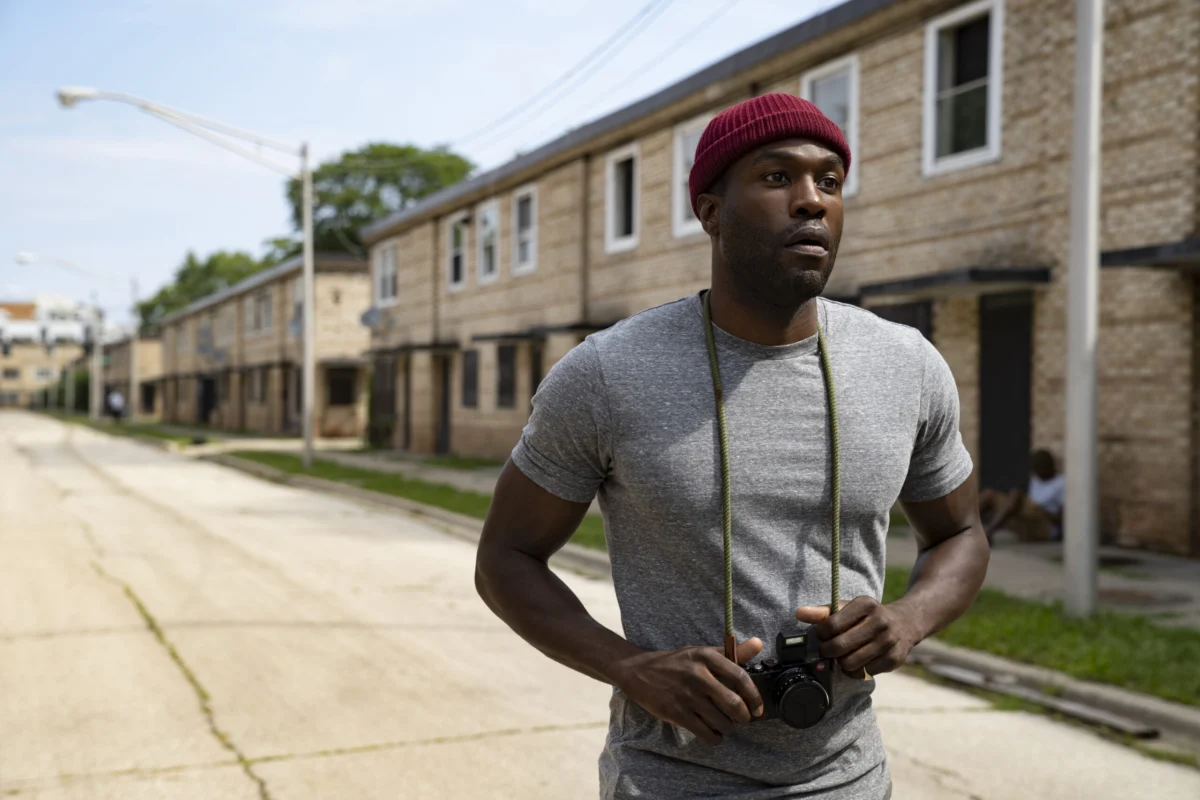
In the landscape of modern horror, few films have managed to blend social commentary with supernatural dread as effectively as Nia DaCosta’s 2021 reimagining of Candyman. While the film is visually striking, its true power lies in its auditory DNA. Composer and co-sound designer Robert Aiki Aubrey Lowe crafted a score that functions not merely as background music, but as a living, breathing character—an atmospheric manifestation of historical trauma, urban decay, and the cyclical nature of violence in Black America.
By moving away from traditional orchestral tropes and embracing a methodology rooted in field recording, vocal manipulation, and industrial synthesis, Lowe created a soundscape that feels both ancient and deeply contemporary. His work on the film serves as a masterclass in world-building, where the line between music and sound design is intentionally blurred, mirroring the film’s own exploration of the porous border between reality and myth.
The Genesis of a Sound: Conceptualizing the Urban Legend
At the heart of the Candyman legacy is the story of Anthony McCoy (Yahya Abdul-Mateen II), an artist who finds himself consumed by the legend of the titular ghost haunting the gentrified remnants of Chicago’s Cabrini-Green. The challenge for Lowe was monumental: how to honor the iconic, hauntingly beautiful score of Philip Glass from the 1992 original while forging a distinct, modern identity that speaks to the contemporary sociopolitical climate.
"The work that I created needed to live in the world of this new film, while still understanding that there was a legacy that needed to be addressed," Lowe explained. He did not seek to replace the past but to evolve it. By reimagining Glass’s seminal composition, "The Music Box"—which appears during moments of critical exposition and over the film’s end credits—Lowe anchored the new narrative in the weight of the original, all while introducing a sonic texture that felt increasingly jagged and unsettling.

Chronology of a Score: From Field Recordings to Post-Production
The composition process for Candyman began long before the final edit was locked. Lowe’s commitment to authenticity led him to the streets of Chicago early in the production cycle. During the casting and location scouting phases, he immersed himself in the atmosphere of the film’s setting.
"There are a couple of streets that were abandoned," Lowe recounted. "I walked through those row houses, I recorded natural sounds, sticking the field recorder inside an old electrical box, letting it record the wind beating the outside of the box, or the door to the electrical box creaking."
These field recordings were not mere ambient noise; they became the raw material for the score. By capturing the physical decay of the environment, Lowe imbued the music with the literal ghost of the location. These textures were then brought into the studio, where they were transformed into what Lowe describes as "psychic energy." By manipulating voltage, electricity, and the natural resonance of derelict spaces, he created sounds that mimic acoustic instruments, resulting in a surreal, uncanny audio experience.
As the production moved into filming, Lowe took a highly collaborative approach to sound design. He actively involved the cast—including Yahya Abdul-Mateen II, Colman Domingo, and Teyonah Parris—prompting them to recite the name "Candyman." He would then take these recordings and subject them to extreme digital processing—stretching, bending, and crushing the syllables until the name became unrecognizable, turning the human voice into an instrument of terror.

Supporting Data: The Architecture of the "Timbral Choir"
Lowe’s signature technique for the Candyman score is the "timbral choir." This is a method of recording his own voice multiple times and processing the layers until they sound like a string section, a woodwind ensemble, or an array of metallic percussion.
This choice was profoundly thematic. Lowe viewed the creation of these phantom choirs as a direct connection to the character of Daniel Robitaille, the original Candyman. The layers of voices symbolize the multiplicity of the trauma inherent in the narrative—connecting the character to the history of the slave trade and the West African storytelling traditions that address the spirits of the ancestors.
"So much of the film deals with reality and fantasy," Lowe noted, "and I wanted to create these unrealities in which you had a lot of texture and the multiplicity of voices."
To further expand the soundscape, Lowe enlisted the help of Hildur Guðnadóttir, the visionary composer behind Chernobyl and Joker. Guðnadóttir’s involvement added another layer of emotional depth. She contributed cello performances and vocal tracks that were woven into the score in ways that defied traditional recognition. By manipulating these inputs, Lowe ensured that even the most "human" sounds in the film remained alien, contributing to the feeling that the score was an integral part of the landscape rather than an external imposition.

Official Perspectives: The Philosophy of World-Building
In the world of film scoring, there is often a distinct separation between the music composer and the sound design team. For Candyman, that wall was intentionally demolished. Lowe’s background, bolstered by his earlier collaborations with the late Jóhann Jóhannsson on films like Arrival and Sicario, taught him that the most effective scores are those that exist as "world-building."
"If I’m making a score, I want to have the sounds inside of the score be an integral part," Lowe said. This philosophy extends to his use of insect sounds—specifically the buzzing and skittering of bees—which are inextricably linked to the Candyman mythos. In tracks like "Rows and Towers," the score is entirely composed of Lowe’s voice and the organic, terrifyingly rhythmic buzzing of insects. It is a testament to his ability to find musicality in the grotesque.
Implications: The Legacy of a Sonic Revolution
The work of Robert Aiki Aubrey Lowe on Candyman signifies a shift in how horror cinema approaches auditory storytelling. By treating sound as a physical manifestation of trauma, he has pushed the boundaries of the genre.
The implications of his work are twofold. First, it demonstrates that horror, when grounded in the specific, harsh realities of history, requires a score that is equally grounded and specific. The reliance on synthesizers and digital manipulation, when combined with authentic field recordings of locations tied to Black history, creates a resonance that traditional orchestral scores simply cannot achieve.

Second, the success of the Candyman soundscape suggests a future where the composer’s role is increasingly intertwined with the sound department. In an era where audiences are increasingly attuned to immersive audio experiences, the "blurring of the lines" that Lowe championed offers a roadmap for filmmakers looking to create truly visceral experiences.
By grounding his work in the humanity of the ancestors and the cold, mechanical reality of the urban environment, Lowe didn’t just score a movie; he built an auditory monument. Candyman stands as a reminder that the most terrifying sounds are often those that feel as if they have been pulled directly from the earth, the wind, and the collective memory of the people who inhabited those spaces long before the cameras began to roll.
In the final assessment, Robert Aiki Aubrey Lowe’s contribution to the Candyman franchise is not just a collection of tracks, but a profound sonic essay on the endurance of history and the haunting power of the past. As the credits roll, the audience is left with the lingering, distorted echoes of the film’s central myth—a fittingly chilling conclusion to a masterpiece of modern sound design.
