
Mother of All Reboots: Deconstructing the Cinematic Reign of Pamela Voorhees in Peacock’s Crystal Lake
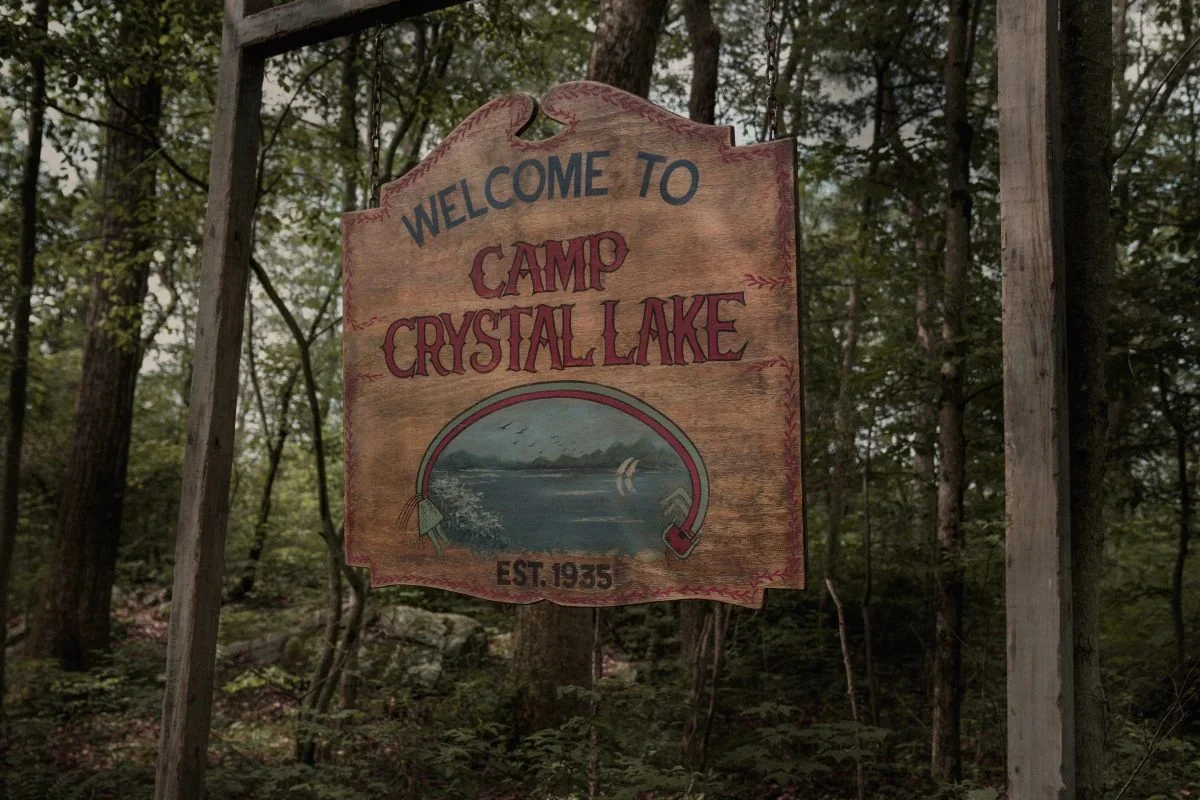
Just in time for the spooky season, horror’s most dedicated matriarch has returned to the cultural zeitgeist. While the realm of psychological torment boasts various iconic maternal figures, none quite match the terrifying, grief-stricken resolve of the great Pamela Voorhees. First introduced to audiences in Sean S. Cunningham’s original 1980 slasher classic Friday the 13th as the vengeance-driven force behind the Camp Crystal Lake massacres, Mrs. Voorhees was traditionally understood through the lens of a singular, devastating trauma: the drowning of her young son, Jason.
For decades, the narrative remained linear and binary—a grieving mother driven mad by negligence. However, Peacock’s expanding horror prequel series, Crystal Lake, peels back the decades to reveal a far more complex, blood-soaked history. Portrayed with chilling nuance by Linda Cardellini, this iteration of Pamela Voorhees proves that her penchant for skull-smashing and throat-slashing was well-established long before she ever set foot on the infamous New Jersey campgrounds. Armed with a maternal instinct that bends the definitions of both fierce protection and outright psychosis, Cardellini’s Voorhees is a revelation.
To fully understand the terrifying depth of this new television chapter, we must examine the ledger of her deeds. Here is the definitive, spoiler-laden chronological ranking of Pamela Voorhees’s most brutal, calculated, and cinematic kills throughout Crystal Lake.
Main Facts: The Evolution of a Slasher Icon
The rollout of Crystal Lake on Peacock has fundamentally reshaped the lore of the Friday the 13th franchise. Rather than treating Pamela Voorhees as a one-off antagonist driven to sudden hysteria, the series reimagines her as a deeply troubled woman navigating a predatory medical system, social isolation, and an all-consuming need to shield her son, Jason.
- The Core Premise: Crystal Lake explores the pre-1980 timeline, uncovering the institutional failures and personal tragedies that forged Pamela into a lethal operative.
- The Performance: Linda Cardellini steps into the role previously immortalized by Betsy Palmer, delivering a masterclass in duality—seamlessly transitioning from a sympathetic, marginalized mother to a calculated, remorseless killer.
- The Scale of Violence: The series ups the ante on practical gore, utilizing 1970s period aesthetics, creative weaponry, and a distinct lack of modern forensic technology to allow Pamela to execute her brand of vigilante justice with impunity.
Chronology of Carnage: Ranking Pamela Voorhees’s Kills
5. A Final Blow of Revenge (Claudette’s Kill in Crystal Lake Episode 5)
Ranking at the bottom of our list for one glaring reason—Pamela simply didn’t do enough of the heavy lifting—this sequence takes place in the tense fifth episode of the series. Prior to this confrontation, Pamela’s rage toward camp counselor Claudette is palpable. Claudette’s confession that she abandoned her post watching young Jason because she was engaged in a tryst with Barry serves as the catalyst for the historic drowning accident.

Viewers expected Pamela to execute a solo masterclass in vengeance. Instead, the heavy-lifting of the initial assault falls to Grace, who plunges a blade into both of their stomachs. Pamela does eventually step in to deliver the final, definitive stabs, but the shared nature of the kill diminishes its individual potency. Furthermore, Pamela enters the barn seemingly unarmed, suggesting a spontaneity that contrasts with her usual meticulous nature. Still, this narrative beat successfully functions as a springboard for the frantic, blood-soaked stabbing sprees that define the subsequent episodes.
4. The First Blood (Dr. Valentine in Crystal Lake Episode 7)
Episode 7 provides a staggering revelation: Pamela was operating as a killer long before her arrival at Camp Crystal Lake. Yet, paradoxically, this murder stands out as arguably the most morally justified in her terrifying catalog.
The narrative context is agonizing. Coerced into experimental medical treatments to carry her pregnancy to term, Pamela watches her son born with severe medical anomalies, only to be subjected to dazed states via heavy pharmaceutical intervention. When she finally tracks Jason down, she discovers he is the captive subject of unethical, cruel experimentation.
When a corrupt physician stands directly between a mother and the liberation of her child, the outcome is inevitable. The framing of this scene is a triumph of horror cinematography; the screen practically soaks in crimson as Pamela delivers a swift, creative, and remarkably efficient execution. It serves as a hauntingly poetic introduction to her early career as an apex predator.
3. A Horrifying Hunt of Hippies (Several Hippies in Crystal Lake Episode 6)
Episode 6 marks the narrative tipping point where Pamela’s psyche completely fractures. Following psychological manipulation via hallucinations of her young son—who encourages her to project the blame for Grace’s violent actions onto a local counterculture commune—Pamela embarks on a rapid, highly stylized extermination campaign.

This sequence leans heavily into classic 1970s horror tropes, most notably the puritanical slasher rule of punishing hedonism. Throat slashes, back stabs, panicked sprints through the underbrush, and an abundance of fake blood make this a deeply entertaining watch for genre purists. While this collective of free-spirited youths didn’t strictly deserve death—they were merely eccentric, harmless young adults acting as a poor influence on Grace—Pamela’s methodical execution of the hippie crew showcases her escalating detachment from reality. Notably, at least one target (Harmony) manages to evade the carnage, leaving narrative breadcrumbs for a potential second season.
2. Double Homicide at House Voorhees (Two Imposter Officers in Crystal Lake Episode 1)
Kicking off the series with immediate, high-octane dread, the pilot episode establishes that Pamela is not to be underestimated. Months after Jason’s tragic drowning, two men posing as New Jersey State Police officers arrive at the Voorhees homestead under the guise of investigating a sensitive matter. Pamela’s immediate wariness proves justified when their true, sinister intentions are revealed.
A violent struggle in the bathroom leaves the first intruder, Bennie, pinned down before Pamela delivers a vicious hip wound with a pair of scissors, followed by a definitive throat slash. However, it is the execution of the second intruder that cements this sequence as iconic. Before he can administer a chemical sedative, Pamela reaches for the machete tucked inside Jason’s childhood survival kit. She slices a section of the man’s face clean off—reminiscent of cold cuts at a deli counter—before burying the blade directly into his skull.
The macabre artistry doesn’t end there. Her disposal method—utilizing a combination of honey, canned tuna, and an apex predator bear—demonstrates a chillingly pragmatic, tactical mind. This double homicide not only sets a high bar for the series’ gore quotient but successfully establishes the overarching mystery behind the Voorhees family’s tragic past.
1. Fried Head and Fire (Valerie, Grace’s Mother, in Crystal Lake Episode 3)
Claiming the number one spot is a kill that combines uncompromising maternal rage with jaw-dropping, practical-effects body horror. Pamela’s protective fixation on Grace—who serves as Jason’s sole childhood friend—reaches a homicidal boiling point after she witnesses the severe emotional and physical abuse inflicted upon Grace by her tyrannical mother, Valerie. Clearly, filing a report with 1970s-era child protective services was deemed insufficient.

Valerie commits a fatal tactical error when she sneers at Pamela, asserting that Jason would still be alive if Pamela had been a "better mother." Pamela’s response is immediate and apocalyptic: she retrieves a meat tenderizer of colossal proportions. The resulting gore is breathtakingly visceral, leaving Valerie’s shredded jaw hanging on by a thread. The coup de grâce—shoving Valerie’s head directly into a commercial deep fryer while casually smoking a cigarette—is nothing short of diabolical.
What elevates this to the series’ finest kill is the period-accurate fallout. Operating in the 1970s means Pamela bypasses modern forensic hurdles: she simply burns the diner to the ground, crafts a rock-solid alibi by seducing Chief Brooks, and walks away scot-free. In an era devoid of ubiquitous surveillance cameras and advanced DNA profiling, Pamela Voorhees was truly untouchable.
Supporting Data: Production and Reception Metrics
- Platform: Peacock (NBCUniversal)
- Lead Cast: Linda Cardellini (Pamela Voorhees)
- Showrunner/Creators: Developed alongside the core Friday the 13th rights holders, blending legacy lore with modern prestige television sensibilities.
- Viewer Engagement: Premiering ahead of the Halloween season, the series achieved record streaming numbers for Peacock’s horror catalog, signaling a robust appetite for legacy-horror television extensions.
Official Responses and Creative Direction
The decision to humanize—and simultaneously brutalize—Pamela Voorhees through a prequel format was not made lightly. Speaking on the creative direction of the series, the production team noted the importance of expanding the Friday the 13th universe beyond the silent, masked figure of adult Jason.
"We didn’t want to just retell the 1980 film," production insiders noted during early press rollouts. "Pamela Voorhees is one of the most tragic and fascinating villains in horror history. Giving Linda Cardellini the space to explore why the mother became the monster allows us to subvert expectations while honoring the blood-soaked legacy fans expect."
Critics have largely praised Cardellini’s performance, highlighting how the series successfully marries elevated drama with the visceral, tongue-in-cheek slasher tropes that defined the golden era of 1980s horror cinema.

Implications: What Crystal Lake Means for the Future of Slasher Franchises
The breakout success of Crystal Lake and the cultural re-evaluation of Pamela Voorhees carry significant implications for the horror genre at large:
- The Prequel Renaissance: The series proves that iconic villains benefit from deep, character-driven origin stories, shifting the focus from simple jump-scares to psychological descent.
- Deconstructing the "Final Girl" vs. "Mother" Dynamic: By framing Pamela as a maternal protector pushed past the brink of sanity, the show challenges traditional horror archetypes, forcing audiences to grapple with sympathetic monster narratives.
- Franchise Longevity: As networks look for ways to revitalize dormant cinematic properties, Crystal Lake serves as a blueprint for how to translate a feature-film slasher franchise into episodic, prestige-television formats without sacrificing gore, atmosphere, or fan service.
As Peacock weighs a prospective second season, one thing remains abundantly clear: you should never, under any circumstances, get between a mother and her son.
