
Navigating the Cacophony: Nicolás Pereda’s Everything Else is Noise Deconstructs Patriarchy, Art, and Urban Chaos
Main Facts
Following its recent critical reception at the 64th New York Film Festival, Mexican filmmaker Nicolás Pereda’s latest feature, Everything Else is Noise, is slated for official distribution via Pragda. The film, clocking in at a brisk yet densely packed 70 minutes, marks another inventive entry in Pereda’s celebrated filmography—which frequently blurs the lines between cinematic reality and conceptual artifice.
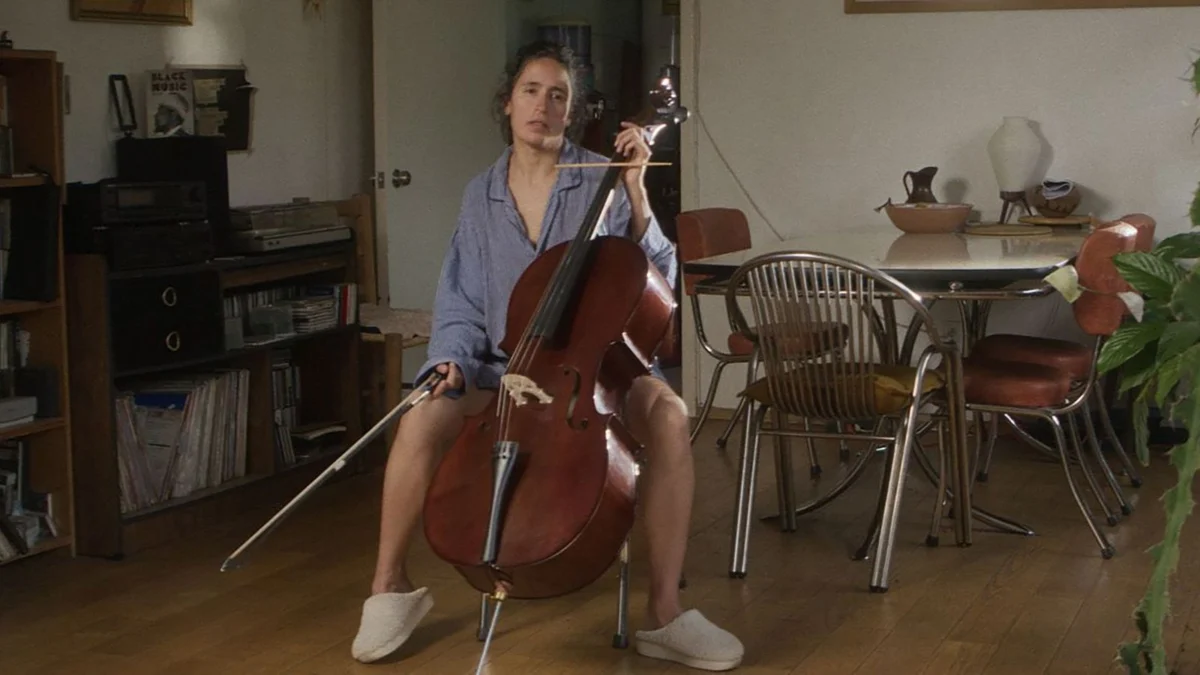
Set almost entirely within a single, plant-filled Mexico City apartment, the minimalist comedy of manners stars Teresita Sanchez as Tere, a seasoned cellist whose daily life is continuously disrupted by the whims, schedules, and selective hearing of the men around her. The narrative engine ignites when Tere lends her living space to her friend and fellow composer, Rosa (Rosa Estela Juárez Vargas), for a cable-television interview. What follows is a cascading series of technical failures, logistical nightmares, and micro-aggressions that transform a simple media shoot into a satirical, observational showcase of systemic sexism, generational tension, and the inescapable chaos of contemporary urban life.
Alongside Sanchez and Juárez Vargas, the film features Pereda’s frequent collaborators Lázaro G. Rodríguez and Francisco Barreiro, who play the interviewer and cameraman, respectively. Through fixed frames, wry deadpan dialogue, and a profound understanding of domestic claustrophobia, Pereda examines how artistic spaces are historically and systematically dominated by male legacies, often at the direct expense of the women creating the actual art.
Chronology
Act I: The Urban Overture and the Cursed Production
The film opens with an extended, static shot gazing out a window onto a bustling Mexico City intersection. A heavy construction-induced traffic jam blocks the box, triggering a chaotic symphony of blaring horns, shouting drivers, and urban sirens. Inside the apartment, this external cacophony is counterpointed by the sustained, resonant notes of a cello played by Tere.
The juxtaposition immediately establishes the film’s thematic friction: internal artistic expression versus external infrastructural madness. The noise proves too much for a newly minted father living downstairs, who knocks on Tere’s door to demand quiet. Though Tere has already navigated a similar pact with another disgruntled neighbor, the request is rendered absurd by the roaring pandemonium outside.
Soon, the apartment transforms into a makeshift television studio. Rosa arrives to record a cable-television segment about her career as a composer, accompanied by Lázaro, the interviewer, and Paco, the cameraman. Almost instantly, Murphy’s Law takes full effect: the power grid fails, the camera’s audio system malfunctions, and a neighbor’s dog launches into an unceasing, rhythmic barking fit.
Act II: The Stilted Interview and Intergenerational Incursions
As the crew navigates these technological fits and starts, Lázaro and Paco subject Rosa to a rigid, perfunctory line of questioning. Rosa responds with short, guarded answers, cultivating a stuffy, awkward atmosphere that feels less like a dynamic artistic exchange and more like a poorly executed group school project.
Sensing the sterility of the interview, Tere—and eventually her daughter, Luisa (Luisa Pardo), who is lurking in the corner—begins to interject. Tere forces Paco to mic her up, steering the conversation toward the realities of operating as a female artist in a heavily male-dominated industry. In a deadpan masterclass of performance, Tere launches into a completely fabricated, highly whimsical origin story about how the olfactory scent of a rat inspired her to become a composer. Lázaro, entirely unequipped for nuance or genuine inquiry, swallows the fib whole, treating it with solemn gravity while utterly failing to ask any meaningful follow-up questions. He is simply harvesting raw material to check off his production boxes.
Act III: The Absent Maestro and the Climax of Absurdity
At roughly the halfway mark, Pereda introduces a striking stylistic shift. When Lázaro and Paco step out onto the landing to wait for the power grid to restore itself, Pereda keeps his camera fixed firmly on the three women inside. The audience is left to eavesdrop on the men’s casual conversation through the open door, creating an eerie, effective acoustic framing device.
During this chat, Lázaro casually drops the justification for this grueling, messy day of shooting: Luisa’s father and Tere’s former romantic partner is Estevez (José Rodríguez López), a legendary, canonized classical composer.
Upon re-entering the apartment, Lázaro immediately shifts his questioning to center on the maestro, asking Rosa how Estevez influenced her work—completely ignoring the fact that actual living artists are sitting in the room with their own distinct sources of inspiration. The film culminates in a nocturnal visit from the patriarch himself. As Estevez holds court under candlelight, regaling the room with a self-congratulatory list of past accolades and predictable talking points, Tere and Luisa can only retreat into a shared, wry recognition of the absurdity of their secondary existence.
Supporting Data
- Runtime: 70 minutes, a purposefully compact timeframe that emphasizes the claustrophobic nature of the environment while intentionally bypassing overly exhaustive expositions.
- Festival Pedigree: Everything Else is Noise held its prominent screening at the 64th New York Film Festival, cementing Pereda’s status as a fixture of modern international arthouse cinema.
- Distribution: Acquired by Pragda for specialized theatrical and institutional circulation.
- Key Cast & Crew: Directed and written by Nicolás Pereda; co-written by Juan Francisco Maldonado; starring Teresita Sanchez (Tere), Rosa Estela Juárez Vargas (Rosa), Luisa Pardo (Luisa), Lázaro G. Rodríguez (Lázaro), Francisco Barreiro (Paco), and José Rodríguez López (Estevez).
- Cinematic Style: Employs static, long-take framing, minimalist mise-en-scène, acoustic juxtaposition, and deadpan comedic pacing to critique institutional sexism.
Official Responses and Critical Reception
While narrative fiction films do not typically feature corporate or political press releases, the critical consensus emerging from the festival circuit frames Everything Else is Noise as one of Pereda’s sharpest and most accessible satires to date.
Film critics have widely praised the picture for its structural economy. Pragda and festival programmers have highlighted Pereda’s unique ability to merge sociological observation with deadpan, almost theatrical minimalism. Reviewers note that the film’s deliberate restraint acts as a mirror to the artistic establishment, holding up a lens to how cultural gatekeepers—embodied by Lázaro—routinely validate male historical figures while rendering contemporary female creators invisible, even when those women are sitting inches away.
Furthermore, performances by Teresita Sanchez and Luisa Pardo have drawn critical acclaim for grounding the film’s high-concept framing in authentic, weary domestic realism. The unspoken communication between mother and daughter serves as the emotional bedrock of the project, countering the artificial pomposity of the male artists who drift in and out of their living space.
Implications
Everything Else is Noise resonates far beyond the confines of its single-location apartment set, offering deep implications for the broader cultural and cinematic landscapes:
1. Deconstructing the Male Canon
The film serves as a micro-level critique of how art history is curated and preserved. By fixating on the off-screen mythos of the maestro Estevez, the male characters in the film actively erase the living, breathing creativity of Tere, Rosa, and Luisa. Pereda uses this dynamic to expose a systemic cultural flaw: society’s pathological obsession with patriarchs and institutional figures, which consistently overshadows the innovative labor performed by women in the shadows of domestic spaces.
2. The Intersection of Art and Urban Infrastructure
By opening the film with an overwhelming, gridlocked traffic scene in Mexico City, Pereda connects external societal pressures with internal domestic friction. The cacophony of the city—punctuated by construction, horns, and barking dogs—acts as a persistent weight on the characters’ shoulders. It suggests that artistic creation in the modern metropolis does not happen in a serene vacuum; rather, it is perpetually fighting for survival against an onslaught of modern chaos.
3. Generational Resilience Through Humor
At its core, the film explores the complex, often fraught relationship between mothers and daughters, particularly within artistic households. Luisa’s critique of her mother—noting that Tere had her at 18 and subsequently surrendered her independence—lays bare the generational cost of female self-sacrifice. Yet, rather than descending into melodramatic tragedy, Pereda steers the narrative toward dark, wry comedy.
As Luisa tells her mother during the film’s closing movements, "You’ve spent your whole life doing what other people want. Stop caring so much." In a world dominated by structural sexism, patriarchal legacies, and infrastructural noise, the ultimate act of resistance for Everything Else is Noise is not rage or despair, but the liberating, shared catharsis of laughter.
