
Pure Cinema and the "Life Out of Balance": Christopher Nolan’s Praise for Godfrey Reggio’s Masterpiece
In the landscape of contemporary filmmaking, few directors carry the cultural weight and critical authority of Christopher Nolan. Known for his complex narratives, practical-effect-heavy spectacles, and meticulous structural engineering, Nolan is often viewed as a master of the "puzzle film." However, his recent visit to the legendary Criterion Closet—a rite of passage for cinephiles and directors alike—revealed a deeper, more meditative appreciation for the foundations of the medium.
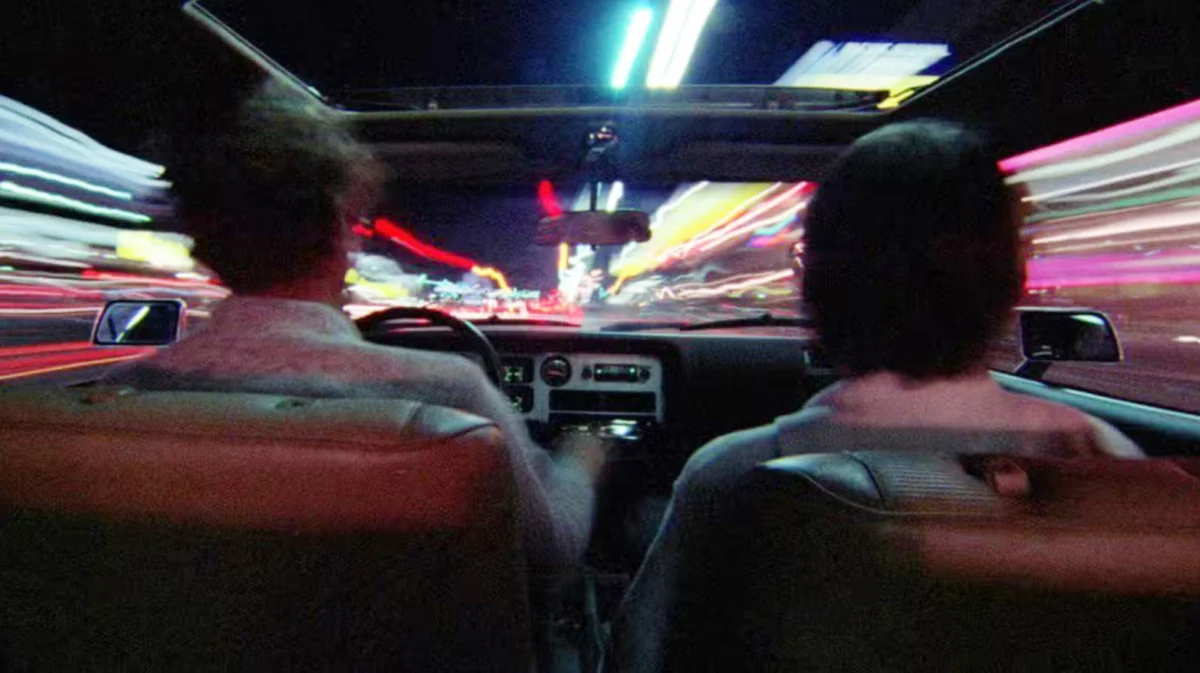
Among his eclectic haul of physical media, one selection stood out as a testament to his artistic philosophy: the Qatsi trilogy by Godfrey Reggio. Specifically, Nolan highlighted the 1982 experimental documentary Koyaanisqatsi as "one of the great pieces of pure cinema." This endorsement offers a fascinating glimpse into the mind of a blockbuster visionary and shines a light on a landmark work of avant-garde documentary filmmaking that remains as provocative today as it was over four decades ago.
The Criterion Closet: A Peek into a Director’s Library
For those unfamiliar with the cultural phenomenon, the "Criterion Closet" is a physical storage space at the headquarters of The Criterion Collection, a distribution company dedicated to preserving and celebrating "important classic and contemporary films." When prominent filmmakers are invited to visit, they are encouraged to select any titles from the collection that they wish to take home.
Nolan’s selections were a masterclass in taste, spanning the breadth of cinema history. Beyond the Qatsi trilogy, he collected Don Siegel’s 1964 noir The Killers, the complete works of John Cassavetes, and Al Reinert’s For All Mankind. His choices reflect a fascination with the mechanics of tension, the raw human element, and the experimental boundaries of the documentary form. By choosing Koyaanisqatsi, Nolan underscored a respect for films that abandon the traditional "literary" crutches of dialogue, character arc, and linear plotting in favor of visceral, rhythmic visual storytelling.
Defining "Pure Cinema": A Chronology of the Avant-Garde
To understand why Nolan categorizes Koyaanisqatsi as "pure cinema," one must look back to the early 20th-century French surrealists. The term refers to a style of filmmaking that strips away theatrical and literary pretenses—specifically, the reliance on scripts and character-driven drama—to focus on the unique properties of the camera lens: movement, rhythm, light, and montage.
The Origins of the Movement
The concept finds its roots in the "City Symphony" films of the 1920s. The most iconic example remains Dziga Vertov’s 1929 masterpiece, Man with a Movie Camera. Vertov utilized experimental techniques—double exposure, fast motion, and non-linear editing—to capture the pulse of a city. He was not telling a story about a person; he was telling a story about existence.
The Qatsi Trilogy: A Modern Evolution
Godfrey Reggio, building upon this foundation, elevated the genre in the 1980s. The Qatsi trilogy is not merely a collection of footage; it is a meticulously scored essay on the human condition.
- 1982 – Koyaanisqatsi ("Life Out of Balance"): The inaugural film, set to a haunting, minimalist score by Philip Glass, serves as a visual bridge between the natural world and the frantic, technological acceleration of modern urban life.
- 1988 – Powaqqatsi ("Life in Transition"): Reggio shifted his focus to the global impact of industrialization. By contrasting remote, traditional cultures with the onset of globalized consumerism, the film explored the loss of communal identity.
- 2002 – Naqoyqatsi ("Life as War"): Released in the shadow of the 9/11 attacks, this final installment serves as a bleak commentary on the digital age. Reggio posited that we have moved from a world of physical reality to one of digital code, where human life is measured in binary victories and systemic violence.
Thematic Analysis: The Tragedy of Progress
The power of Koyaanisqatsi lies in its lack of didactic narration. By refusing to tell the audience what to think, Reggio forces the viewer to engage with the images on a subconscious level.
Juxtaposition as Argument
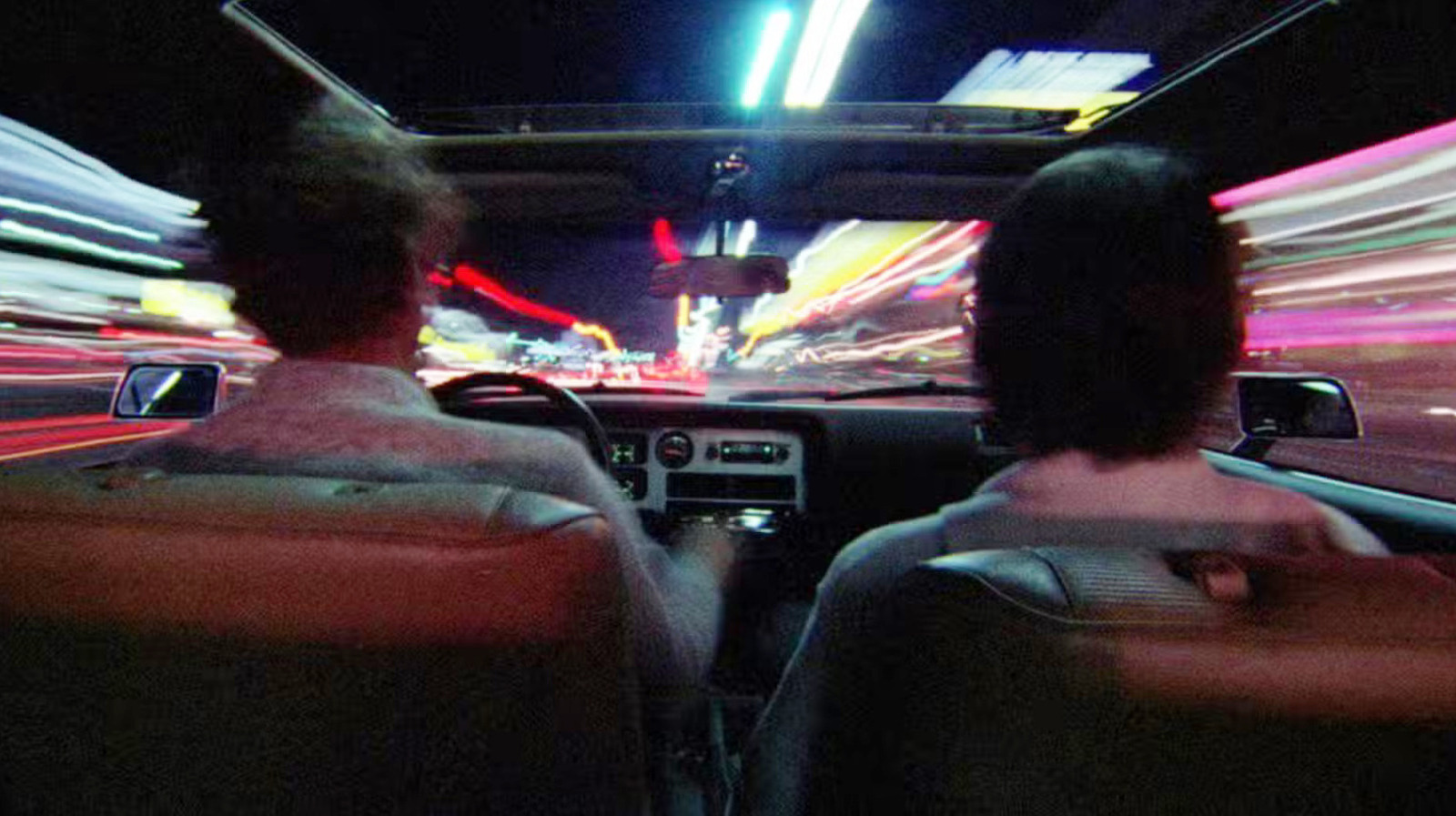
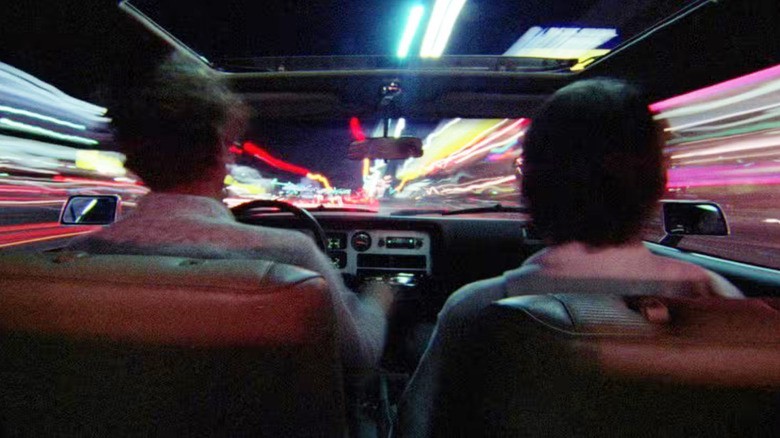
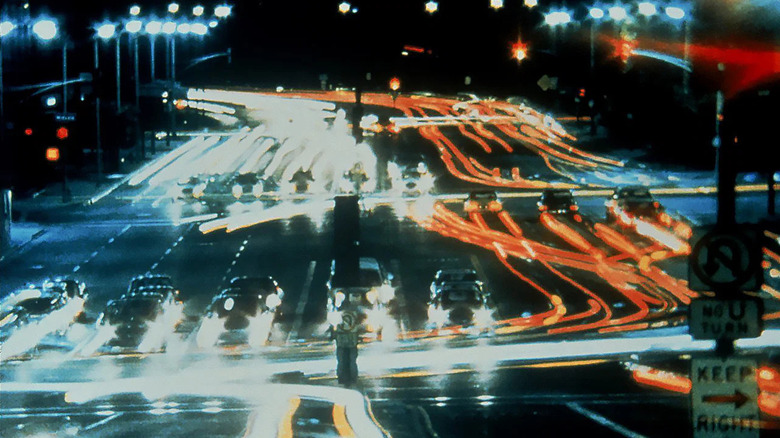
The film utilizes a specific editing technique—the juxtaposition of scale and speed. Slow-motion shots of pristine canyons and rolling ocean waves are abruptly interrupted by time-lapse photography of city traffic, conveyor belts, and nuclear test explosions. This binary opposition is not accidental; it is a structural argument. The film posits that humanity has decoupled itself from the natural cycles of the Earth, opting instead for a frenetic, synthetic existence that consumes the very resources that sustain it.
The Role of the Score
Philip Glass’s score is not merely background music; it is the heartbeat of the film. The "basso profundo" chants of the title "Koyaanisqatsi" provide a sense of liturgical gravity. As the film progresses from nature to machine, the music shifts from ethereal, expansive chords to the repetitive, anxiety-inducing arpeggios that have become synonymous with Glass’s work. This marriage of sound and image is the hallmark of "pure cinema."
Official Perspectives and Critical Reception
Critics have long debated the efficacy of the Qatsi trilogy. Some early reviewers in the 1980s found the film’s lack of a traditional narrative structure to be indulgent or inaccessible. However, as the environmental crisis has moved to the forefront of global discourse, Koyaanisqatsi has been reclaimed as a prophetic work of art.
Reggio himself has often been reticent to label his work strictly as "documentary." He has described his process as "documenting the atmosphere of the time." In various interviews, Reggio noted that his films are meant to be an experience, not a history lesson. He believed that by removing the "narrative filter," he could force the audience to see the world as it actually is, rather than how we are told to perceive it through the lens of mainstream media.
Christopher Nolan’s inclusion of the trilogy in his collection serves as a significant institutional validation. It signals to a younger generation of filmmakers that the most profound cinematic statements often occur in the silences between the plot points.
The Implications for Modern Filmmaking
What does it mean that a director like Nolan, who orchestrates massive, dialogue-heavy, logic-defying epics like Oppenheimer or Tenet, draws inspiration from a non-narrative, experimental documentary?
The Importance of Visual Language
Nolan is a director who champions the "theatrical experience." By praising Koyaanisqatsi, he reinforces the idea that cinema is, at its core, a visual medium. In an age where streaming services and social media have prioritized content—short-form, dialogue-heavy, and easily digestible—Nolan’s advocacy for Koyaanisqatsi is a call to return to the roots of the art form. It is an invitation to value the "shot" over the "soundbite."
A Blueprint for Future Storytelling
The Qatsi trilogy proves that documentaries can possess the emotional weight of an opera. For modern documentarians, the trilogy serves as a reminder that imagery can be just as potent as an interview. Reggio’s ability to turn a nuclear explosion or a bustling street into a profound statement on morality provides a template for future filmmakers looking to address complex global issues without relying on talking heads.
Conclusion: The Endurance of Pure Cinema
The legacy of Godfrey Reggio’s work is cemented by its refusal to age. While the technology featured in the films—the 80s skyscrapers, the early computing systems, the analog machinery—may look dated to a modern eye, the philosophical questions they pose remain strikingly relevant.
Christopher Nolan’s decision to bag the Qatsi trilogy is more than just a nod to a cult classic; it is a statement on the necessity of "pure cinema." In a world increasingly dominated by noise and frantic, fragmented storytelling, the stillness of a canyon captured in 70mm, or the haunting repetition of a Philip Glass score, offers a necessary counterweight.
As we look toward the future of film, the influence of works like Koyaanisqatsi serves as a reminder that the most enduring stories are often those that do not need to be told in words at all. By stripping away the narrative, Reggio—and by extension, the filmmakers who champion his work—allows the audience to simply see. And in the act of seeing, we find the balance that we so often lose in the rush of daily life.
