
Tarantino Returns to the Fold: A Surprise Preview of ‘The Further Mis-Adventures of Cliff Booth’ Electrifies AFI Fest
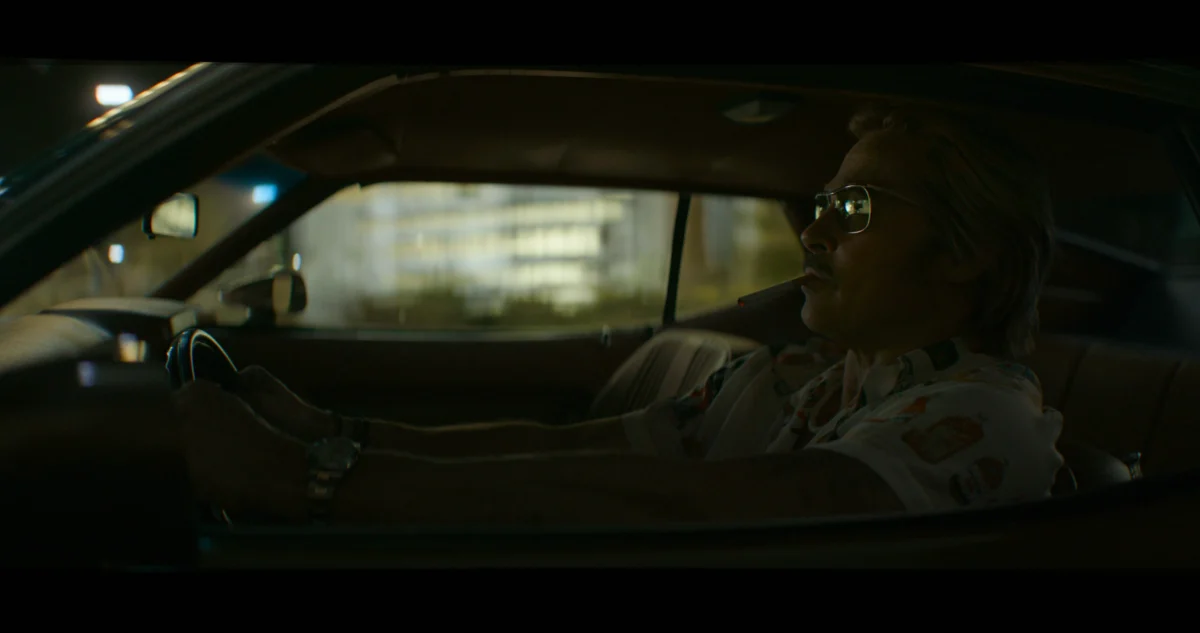
The 40th annual AFI Fest reached a fever pitch of cinematic fervor last night at the iconic TCL Chinese Theatre. While the evening was ostensibly dedicated to a retrospective screening of Quentin Tarantino’s 2019 magnum opus, Once Upon a Time… in Hollywood, the event transformed into a landmark moment for film history when the director himself took the stage to offer a world-exclusive, unannounced preview of his latest creative endeavor.
For the 900-strong audience of devoted cinephiles, the opportunity to revisit Tarantino’s love letter to 1969 Los Angeles on the hallowed ground of the Chinese Theatre would have been sufficient. Yet, as the credits rolled and the post-screening Q&A with moderator Jacqueline Coley neared its conclusion, the atmosphere shifted from nostalgic appreciation to palpable, electric anticipation. When Coley broached the subject of The Further Mis-Adventures of Cliff Booth—the holiday-season powerhouse arriving via Netflix this November—Tarantino delivered a surprise that left the theater in a state of rapturous disbelief.
The Reveal: A New Direction for a Familiar Anti-Hero
"I could talk a little bit about The Further Mis-Adventures of Cliff Booth," Tarantino teased, his trademark enthusiasm filling the room. "Or… I could show you the first 17 minutes."
The lights dimmed instantly, and the crowd erupted. For the next seventeen minutes, the audience bore witness to a new, grittier chapter in the life of Cliff Booth, played by Brad Pitt. The footage confirmed a significant creative departure for the franchise: while the script is pure Tarantino, the director has stepped behind the scenes, handing the directorial reins to David Fincher. The result is a stylistic fusion that feels both distinct and inherently tied to the DNA of the original film.
This shift in leadership is notable. Fincher, a master of clinical precision and psychological tension, seems to have leaned into the colder, more detached aspects of Booth’s character. The preview revealed a protagonist who is less the charming, laconic stuntman of 1969 and more the calculating, potentially sociopathic fixer described in Tarantino’s 2021 novelization of Once Upon a Time.
Chronology: From the Hills of Hollywood to the Streets of 1977
The narrative of The Further Mis-Adventures of Cliff Booth picks up in June 1977, marking an eight-year leap from the events of the original film. The world has changed; the free-love idealism of the late sixties has calcified into the cynical, drug-fueled malaise of the late seventies.

In the opening sequence, we find Booth in a state of professional flux. His career as a stunt double has largely dried up, and his association with Rick Dalton (Leonardo DiCaprio) is now a memory of a more vibrant era. In a meta-commentary that drew raucous laughter from the audience, it is revealed that Booth is currently working as a projectionist at the New Beverly Cinema—a nod to Tarantino’s real-life stewardship of the historic Los Angeles venue.
However, the projection booth is merely a cover. The footage suggests that the bulk of Booth’s income is derived from his work as an illicit "fixer" and bag man in the dark underbelly of a rapidly evolving Hollywood. The tone is markedly noir-adjacent, drawing heavy stylistic and thematic inspiration from the works of Elmore Leonard and Raymond Chandler. Unlike the sunny, Technicolor vistas of the 1969 film, the 1977 landscape is bathed in the harsh, artificial glow of neon and streetlights, signaling a tonal shift toward the hard-boiled crime dramas that defined much of the seventies.
Supporting Data: The Craft of the "Film-Within-a-Film"
Tarantino’s commitment to world-building remains unmatched. One of the most intriguing elements of the preview was a sequence featuring a fictional Blaxploitation film titled Soul Brothers Die Hard. The film-within-a-film stars Yahya Abdul-Mateen II, and its inclusion serves as a masterclass in period-accurate production design.
The dialogue in these scenes is razor-sharp, echoing the rhythmic, biting wit of Tarantino’s early work in Reservoir Dogs and Pulp Fiction. Furthermore, the footage introduced a complex, strained relationship between Cliff and his father, a pawn shop owner portrayed by Peter Weller. This subplot promises to provide a rare glimpse into the formative years and psychological makeup of the enigmatic stuntman, grounding the film’s broader criminal plot in personal stakes.
The production design, from the muted color palette of the late-seventies wardrobe to the decaying architectural aesthetic of mid-decade Los Angeles, assures the audience that the film will serve as an equally potent vessel for historical nostalgia as its predecessor.
Official Responses and Behind-the-Scenes Reflections
Following the screening, the Q&A session provided a window into the director’s mind, even if the information regarding the plot remained guarded. Tarantino, ever the orator, reflected on the immense labor of love that Once Upon a Time… in Hollywood represented.

One of the most poignant moments of the discussion involved the late Burt Reynolds. Tarantino revealed that Reynolds had originally been cast as the infamous ranch owner George Spahn. "The casting that to me was the most meaningful ended up not being in the movie," Tarantino said. "He said yes, and we became friendly, but he passed away before we could make the film. But we did get to rehearse with him and do the script reading with him, so actually, the last performance Burt Reynolds ever gave was as George Spahn in the script reading."
Tarantino also delighted fans by deconstructing the "Easter eggs" that define his work. He clarified the origins of the iconic "Canadian tuxedo" worn by Brad Pitt, which fans had long speculated was a tribute to Billy Jack. Tarantino revealed the truth was more granular: the costume actually is the one used in the 1967 film The Born Losers. In the backstory Tarantino constructed, Cliff Booth had served as a stunt double for actor Jeff Cooper, taking over for Tom Laughlin’s double during the final week of production. As a token of his labor, he walked away with the outfit and twenty-five dollars.
"The thing is, I’ve got nothing to do but invest in this mythology," Tarantino admitted. "I invested in it before I did the movie, and I’ve invested in it in the years since I’ve done the movie. The audience doesn’t need to know everything. But it’s nice if I know everything."
Implications: A New Era for a Franchise
The preview at the TCL Chinese Theatre signals that while The Further Mis-Adventures of Cliff Booth may be a stylistic evolution, it remains tethered to the meticulous attention to detail that has become the hallmark of the "Tarantino-verse."
By handing the directorial chair to David Fincher, Tarantino has effectively curated a collaborative experiment. The result appears to be a film that retains the scriptwriting soul of its creator while benefiting from the surgical tension of its director. For Netflix, the film represents a massive investment in prestige cinema, arriving on November 25 as a major contender for the end-of-year awards circuit.
As the industry looks toward the release, the implications are clear: the "Cliff Booth" franchise is evolving from a standalone character study into a sprawling, multi-decade exploration of American pop culture and its shadows. For the audience at AFI Fest, the 17-minute window into 1977 was more than a teaser—it was a reminder that in the hands of creators like Tarantino and Fincher, the past is never truly buried; it is merely waiting to be re-envisioned.
