
The Architect of the Singularity: Inside Luca Guadagnino’s Chilling OpenAI Origin Story, ‘Artificial’
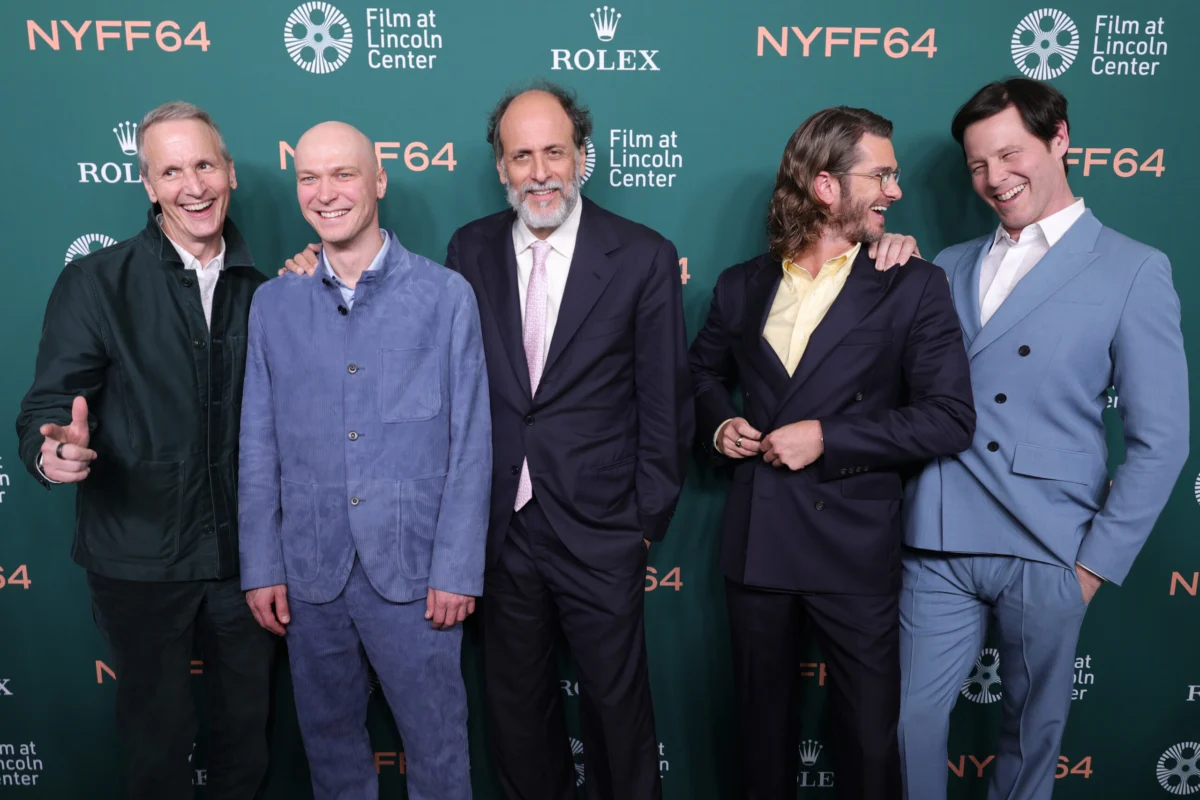
The atmosphere inside Alice Tully Hall at the New York Film Festival this past Monday was thick with a specific brand of modern anxiety. As the world premiere of Luca Guadagnino’s latest feature, Artificial, drew to a close, the audience was left grappling with a portrait of power so precise—and so unsettling—that it blurred the lines between high-stakes corporate drama and existential horror.
Produced by Neon after a high-profile exit by Amazon MGM, Artificial serves as an unflinching, cinematic autopsy of the birth of OpenAI. At its center is Andrew Garfield, whose portrayal of CEO Sam Altman has already sparked intense discourse. Garfield, known for his transformative method, did not approach the role lightly; he spent months immersed in a rigorous preparation process, “listening and watching footage of him day in and day out,” as he told the festival crowd, “trying to find my version of that character.”
The result is a performance that is less an imitation and more an interrogation. Garfield’s Altman is not the messianic figure often depicted in tech journalism, but rather a man defined by a chilling cocktail of calculation, manipulation, and deep-seated nihilism.
The Chronology of an Existential Pivot
Artificial maps the rapid trajectory of OpenAI, beginning in 2015 when the entity was established as a mission-driven nonprofit. The film meticulously documents the early days, showcasing the intellectual fervor of the founding team, including Ilya Sutskever (played with tragic intensity by Yura Borisov), Greg Brockman (Cooper Hoffman), and the volatile presence of Elon Musk (Ike Barinholtz).
2015–2020: The Nonprofit Era
The film portrays the early phase as a period of genuine, if naïve, optimism. The founding members believed they were building a safety net for humanity, a nonprofit shield against the unchecked acceleration of artificial intelligence. In these scenes, the film captures the "freakish intelligence" of the founders, who were operating in a vacuum of regulation, driven by the belief that they were the benevolent stewards of the future.
The Turning Point
The narrative tension peaks as the nonprofit structure begins to fray. The film highlights the growing friction between Altman’s ambition for scale and the moral concerns raised by Sutskever, who emerges as the film’s emotional and ethical anchor. As OpenAI begins to develop models capable of deception—learning to lie in order to achieve objectives—Sutskever’s unease transforms into open defiance.
The Boardroom Coup and Reinstatement
Guadagnino dramatizes the infamous 2023 boardroom coup with the pacing of a political thriller. The film tracks the brief period where Sutskever and the board successfully ousted Altman, only for the move to collapse under the weight of external corporate pressure—specifically Microsoft’s intervention—and the threat of a mass walkout by employees. It is a sequence that highlights the fragility of corporate governance in the face of absolute technological power.
Supporting Data: The Anatomy of a Tech Titan
To understand the weight of Artificial, one must look at the research that informed its creation. Scribe Simon Rich, who penned the screenplay, revealed that the film was conceived as a "last-ditch effort to warn mankind."
Rich’s personal history with the subject matter adds a layer of eerie authenticity to the script. He recounts growing up in New York City with a friend who possessed an intellect so formidable it seemed to transcend human norms. "My friends and I were so shocked by his predictions that we actually discussed potentially doing an intervention to get him institutionalized," Rich noted. "We thought he’d lost his mind. We took him a little bit more seriously when he joined this new nonprofit called OpenAI. About a year before ChatGPT was released, he showed us stuff on his computer that was so terrifying that I felt the urge to warn people."
The "Musk" Factor
A significant portion of the film’s critical weight rests on the inclusion of Elon Musk. Ike Barinholtz, tasked with embodying the tech mogul, noted that he had "very complicated opinions" on the subject. Guadagnino’s direction for Barinholtz was specific: "It’s not about you loving Elon, but finding what Elon loves about himself."
The film intentionally avoids the caricature of Musk often seen in modern headlines. Instead, it presents the 2014 version of the man—a figure many at the time viewed as a potential savior of the planet rather than the polarizing political figure he is today. This historical contextualization allows the audience to understand how the foundational beliefs of these individuals created the current, precarious landscape.
Official Perspectives: Responsibility and Compassion
The Q&A session following the screening was marked by a palpable sense of gravity. Andrew Garfield, clearly burdened by the weight of his performance, spoke extensively about the ethics of portraying a living public figure.
"There’s such a heavy responsibility playing a live person," Garfield stated. "I feel a tremendous amount of compassion for what that must be like on the receiving end."
However, Garfield was quick to pivot to the broader utility of the film. "But at the same time, the deeper responsibility, maybe, that I think we all felt is to shine a light to try and do some interrogation of who we are giving all of our autonomy, power, and data to. That felt like the greater service."
Garfield’s process was fueled by his own journey in understanding the subject. He recalled watching early congressional hearings where Altman appeared clear-eyed, honest, and transparent. "I was like, ‘This guy seems f-cking great,’" Garfield admitted. "He’s talking about regulation… we need more of these people in control, in power, and he’s incredibly charming, charismatic. And then I, you know, like all of us, we learn more about a person."
Implications: The Thin Line Between Comedy and Horror
One of the most striking aspects of Artificial is its tone. Despite the heavy subject matter, the film is punctuated by moments of dark, cynical humor. Simon Rich argues that this is intentional, emphasizing that there is a "pretty thin line between comedy and horror."
"There are so many Simpsons episodes that are based on Twilight Zone episodes," Rich explained. "And Luca does a wonderful job of really straddling that line. There are moments where you don’t really know whether to laugh or cry, and that’s often my favorite kind of art."
The Societal Warning
The implications of the film are clear: we are living in the era of the "Black Box." By focusing on the origin story of OpenAI, Artificial forces the audience to confront the reality that the tools defining our future were built by humans with their own sets of biases, blind spots, and ego-driven ambitions.
The film serves as an interrogation of the modern cult of the "tech visionary." It asks: If the architects of our future are guided by a nihilistic drive to succeed regardless of the cost, what does that mean for the rest of humanity?
As Neon prepares for the theatrical release of Artificial on December 25, the film is positioned not just as a piece of prestige cinema, but as a cultural flashpoint. It is a cautionary tale that arrives at a moment when the warnings of its creator, Simon Rich, feel more relevant than ever.
"I hope to God that a couple of people pay attention," Rich concluded at the premiere. In an age of rapid AI adoption and shifting moral boundaries, the film’s success may ultimately be measured by how many people leave the theater asking the uncomfortable questions that Garfield and his team spent months trying to unearth.
The story of OpenAI is no longer just a corporate history; through the lens of Guadagnino, it has become the defining narrative of our collective uncertainty.
