
The Cinematic Masterpiece and Dangerous Illusion: Re-Evaluating Orson Welles’ The Lady from Shanghai (1948)
Main Facts: The Triumph and Legacy of a Noir Landmark
Released in 1948 by Columbia Pictures, The Lady from Shanghai stands as one of the most visually daring, narratively complex, and troubled productions in the history of American cinema. Written, produced, and directed by cinematic titan and American Film Institute (AFI) Life Achievement Award honoree Orson Welles, the film is a masterclass in film noir style and psychological tension. At its core, the picture pairs Welles—playing the naive, poetic Irish sailor Michael O’Hara—with the legendary Rita Hayworth, recognized by the AFI as one of the greatest screen legends of all time.
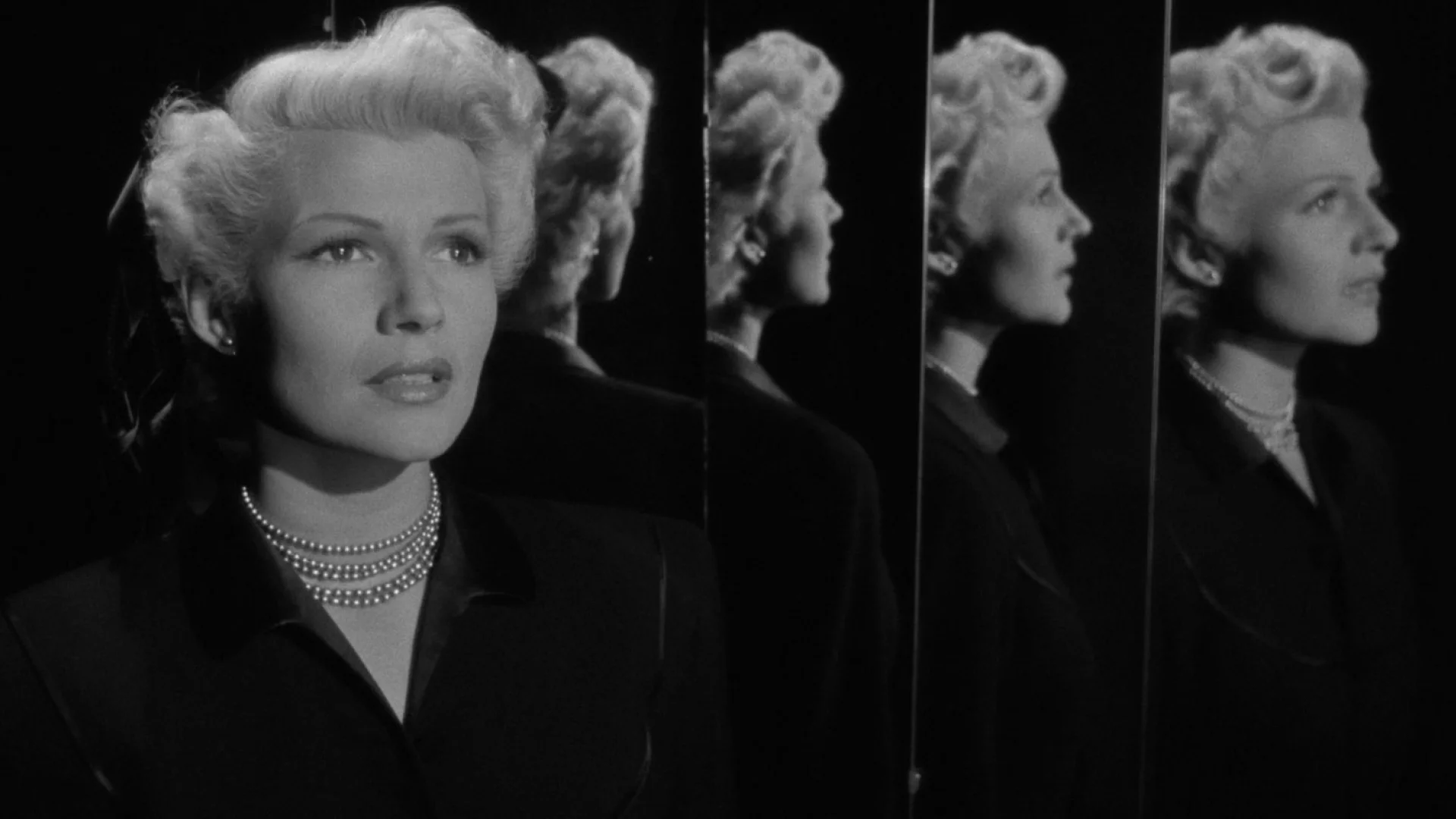
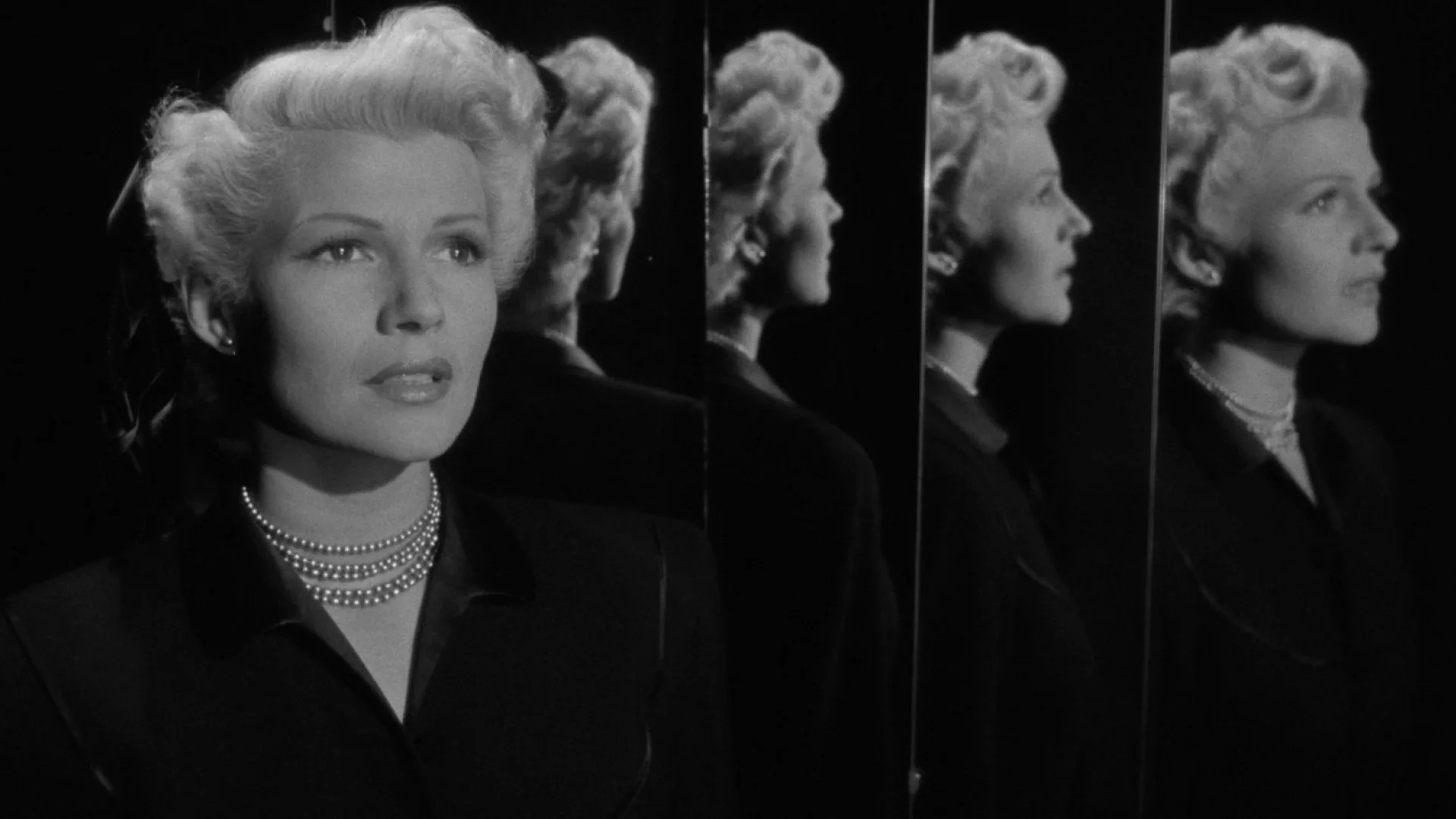
Hayworth’s casting in the film was revolutionary, both for her career and for Hollywood iconography. Famously shedding her signature red locks, the actress sheared her hair short and dyed it a platinum blonde to embody the treacherous, alluring femme fatale, Elsa Bannister. This dramatic transformation sent shockwaves through the studio system and dismayed studio executives, but it cemented her performance as an eerie, captivating anchor of the production.
Beneath its surface as a slick pulp thriller, The Lady from Shanghai operates as a scathing indictment of wealth, corruption, and systemic deceit. The narrative follows O’Hara as he is helplessly drawn into a web of murder, greed, and legal chicanery orchestrated by a wealthy criminal lawyer, Arthur Bannister (played by Everett Sloane), and his cunning partner, George Grisby (played by Glenn Anders). The film culminates in one of the most famous cinematic sequences ever captured on celluloid: the legendary shootout inside a crumbling San Francisco funhouse hall of mirrors, a brilliant visual metaphor for the fractured identities and illusions permeating the story.
Chronology: From Troubled Production to Cinematic Immortality
The timeline of The Lady from Shanghai is a cautionary tale of studio interference, escalating budgets, and the volatile personal dynamics between its principal creators.
1945–1946: Conception and Acquisition
Orson Welles, reeling from previous battles with Hollywood studios over creative control (most notably The Magnificent Ambersons), found himself in desperate need of cash while mounting his extravagant Broadway musical stage adaptation around Around the World in 80 Days. To secure financing from Harry Cohn, the formidable head of Columbia Pictures, Welles famously pitched a movie he hadn’t yet read or written. Relying on Sherwood King’s pulpy 1938 novel If I Die Before I Wake while walking down a New York street, Welles called Cohn and promised to deliver a sensational noir thriller starring Columbia’s biggest asset: Rita Hayworth, who was then Welles’ estranged wife.
1946: Production and On-Set Friction
Principal photography began in the fall of 1946. The production took the cast and crew on an ambitious location shoot, moving from New York to the turbulent waters of the Caribbean aboard a yacht owned by Errol Flynn, and later wrapping up on studio soundstages in Hollywood. During production, tensions ran high. Welles and Hayworth were in the process of divorcing, a reality that added genuine, palpable friction to the romantic and adversarial scenes between Michael O’Hara and Elsa Bannister. Furthermore, Welles’ penchant for artistic improvisation and soaring budgets deeply unsettled Harry Cohn.
1947: The Editing Nightmare and Studio Interference
Once filming wrapped, Welles delivered a sprawling rough cut that ran well over two hours and featured unconventional narrative pacing and avant-garde editing choices. Panicked by the unorthodox structure and eager to salvage a commercial product, Harry Cohn wrested control of the film away from Welles. Columbia excised nearly an hour of footage, reshot key explanatory scenes, altered the musical score, and fundamentally reshaped the narrative arc. Welles was effectively exiled from the editing room, watching helplessly as his sprawling deconstruction of American greed was chopped down to a brisk, albeit disjointed, 87-minute theatrical runtime.
1948: Theatrical Release and Initial Reception
The Lady from Shanghai premiered to mixed reviews and a lukewarm box-office reception in the United States. Contemporary critics were often baffled by its cynical tone, convoluted plot mechanics, and Welles’ thick, inconsistent Irish brogue. However, European audiences and critics—particularly in France, where it was championed by the critics-turned-filmmakers of the Cahiers du Cinéma circle—immediately recognized its brilliance, praising its revolutionary cinematography and existential dread.
Decades Later: Critical Reappraisal
In the decades following its release, The Lady from Shanghai underwent a massive critical reassessment. Film historians and preservationists began viewing it not as a flawed studio picture, but as a misunderstood masterpiece. Today, it is celebrated as a cornerstone of film noir, heavily influencing generations of filmmakers through its breathtaking camera angles, deep-focus compositions, and nihilistic worldview.
Supporting Data: Production Metrics and Cultural Impact
To understand the magnitude of The Lady from Shanghai, one must look at the quantitative and qualitative data surrounding its creation and subsequent historical standing:
- Box Office and Budget: Initially budgeted at a standard noir rate, Welles’ grand ambitions and location shooting ballooned costs. The film ultimately cost approximately $2 million to produce—a staggering sum for a crime melodrama in 1946. Its domestic box office returns failed to immediately recoup these costs, contributing to Columbia’s initial dissatisfaction.
- The Hall of Mirrors Climax: The climactic sequence remains one of the most mathematically and technically complex set designs in mid-century cinema. Utilizing dozens of interlocking, custom-built mirrors, the scene required meticulous choreography of lighting, camera placement, and stunt work to avoid capturing the reflection of the camera crew, setting a new technical benchmark for optical illusions on screen.
- AFI Accolades: The American Film Institute has continually elevated the film’s key figures within cinematic history. Orson Welles received the prestigious AFI Life Achievement Award in 1975, cementing his status as an architectural pillar of American cinema. Rita Hayworth was honored by the AFI on their definitive "100 Years…100 Stars" list, with her performance in The Lady from Shanghai cited as a primary example of her dynamic range away from traditional musical comedies.
- Preservation Efforts: Recognizing its historical value, major film archives—including the UCLA Film & Television Archive and the Library of Congress—have dedicated significant resources to preserving surviving elements of the film, ensuring that Welles’ original visual composition remains accessible via resources like the comprehensive AFI Catalog.
Official Responses: Studio Friction and Welles’ Defiance
The relationship between Orson Welles and Columbia Pictures head Harry Cohn remains one of the most legendary executive-artist clashes in Hollywood lore.
When Harry Cohn viewed Welles’ initial assembly cut, he was famously furious. According to studio lore, Cohn offered a $1,000 reward to anyone who could succinctly explain the movie’s labyrinthine plot to him. Believing that Welles had indulged in highbrow artistic experiments at the expense of commercial viability, Cohn asserted his contractual dominance to re-edit the film.
Welles, for his part, was characteristically vocal about the studio’s butchery of his vision. In interviews later in life, he lamented the removal of his original transitions and narrative framing. However, Welles also acknowledged the paradoxical beauty of the film’s survival despite studio interference. In a 1958 interview with filmmaker and critic André Bazin, Welles noted that The Lady from Shanghai was structurally damaged by studio cuts, yet conceded that the remaining pieces—particularly the poetic voiceover and the explosive climax—retained an unyielding vitality.
Columbia Pictures defended their intervention at the time by pointing to commercial realities. Studio executives maintained that a tighter, faster-paced narrative was essential to appeal to mainstream postwar audiences seeking escapism rather than bleak existentialism. Nevertheless, history has largely vindicated Welles, viewing Cohn’s heavy-handed editorial scissors as an act of cultural vandalism against a visionary auteur.

Implications: The Enduring Blueprint of Modern Noir
The legacy of The Lady from Shanghai extends far beyond its 1948 release window, leaving deep, lasting implications for the evolution of the crime genre, celebrity culture, and auteur theory.
1. Redefining the Femme Fatale
Before The Lady from Shanghai, the femme fatale of American cinema was typically a dark-haired siren whose dangerous nature was telegraphed by traditional Hollywood coding. Rita Hayworth’s platinum-blonde transformation shattered this mold. By stripping away her natural warmth and casting her as a cold, calculating predator hiding behind a mask of ethereal beauty, the film helped redefine how female power and danger were depicted on screen. It paved the way for the psychologically fractured heroines of modern neo-noir.
2. The Triumph of Style Over Plot
One of the most profound implications of the film’s critical rehabilitation is its validation of style as substance. The plot of The Lady from Shanghai is notoriously convoluted—so much so that viewers often struggle to track every twist of the embezzlement and murder scheme. Yet, film scholars argue that the plot’s mechanics are secondary to the atmospheric dread, moral ambiguity, and visual poetry engineered by Welles. This prioritization of mood, deep-focus cinematography, and expressionistic set design laid the intellectual groundwork for the French New Wave and modern auteur-driven thrillers.
3. A Testament to Independent Resilience
Finally, the film serves as an enduring symbol of the eternal struggle between creative freedom and corporate control in Hollywood. Welles’ battle with Harry Cohn foreshadowed decades of studio-versus-director conflicts. For contemporary independent filmmakers, The Lady from Shanghai remains a touchstone—a reminder that true artistic vision can pierce through the corporate machinery, leaving behind an immortal work of art that outlives the executives who tried to suppress it.
As audiences continue to explore titles like The Lady from Shanghai via archival platforms and streaming retrospectives curated by organizations like the American Film Institute, Welles’ dark, hallucinatory vision of America continues to captivate, challenge, and terrify.
