
The Compromise Machine: How Ego, Hollywood, and 1995’s Judge Dredd Erased a Satirical Masterpiece
By Adam Page
Main Facts: The Anatomy of a Cinematic Misunderstanding
Some motion picture failures announce themselves with the fiery grace of a crashing aircraft. Others are far more insidious, dismantling a creative vision quietly, incrementally, over the course of eighteen months and several hundred script revisions. They swap out the intended project for something else entirely, leaving behind a film that wears the original’s skin, smiling for the cameras at the premiere, while the corpse of the initial concept sits zipped into a body bag in post-production.
That is the definitive legacy of 1995’s Judge Dredd.

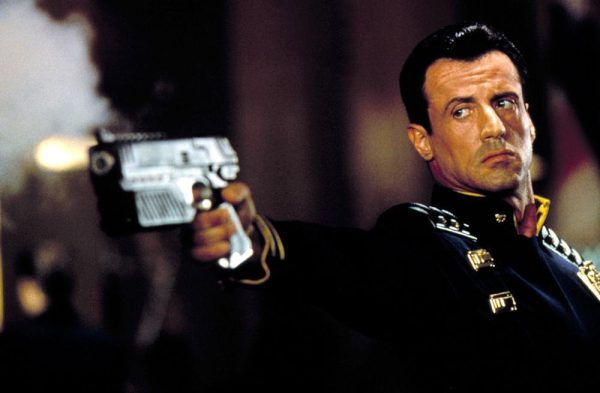
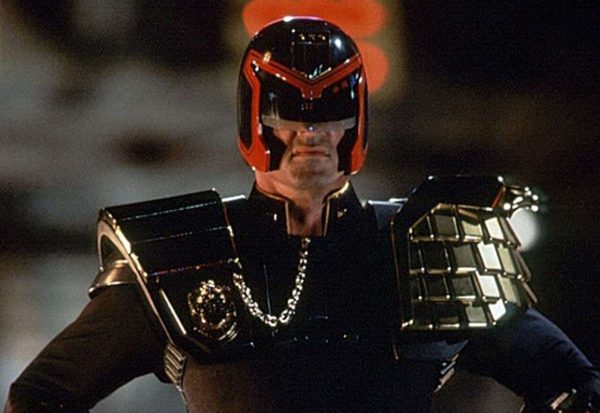
Directed by Danny Cannon and starring Sylvester Stallone, the film remains an artifact of a Hollywood system consuming its own children in real time. Stallone swaggered through the dystopian concrete canyons of Mega-City One with a jawline resembling a longshoreman’s fist, clad in a costume that reportedly cost more than most residential properties. Yet, the core conflict of the film—and its ultimate undoing—lies in a profound thematic contradiction. Judge Dredd is fundamentally a story about the systematic erosion of individual identity under a fascist bureaucracy. Yet, the production achieved this critique by systematically erasing the identity of every single element that did not serve the fifty-year-old action star holding the lead-role checkbook.
It is a level of dramatic irony so thick that any screenwriter pitching it in a professional room would be laughed out of the building. Instead, the resulting picture occupies a shelf in the second-hand DVD graveyard, wedged between Tank Girl and Waterworld. To understand how a multi-million-dollar adaptation went so fundamentally wrong, one must examine the origins of the character, the chronology of the production breakdown, the financial and creative data surrounding its release, and the ultimate industry-wide reckoning that followed.
Chronology: From British Counter-Culture to Hollywood Vehicle
To fully appreciate what was destroyed in 1995, one must look back at the origins of the character on the printed page.
1977: The Birth of a Satire
Carlos Ezquerra and John Wagner did not create Judge Dredd in the pages of British sci-fi anthology 2000 AD in 1977 to give action-figure manufacturers a blueprint for plastic toys. They conceived him as an extreme extrapolation of the Dirty Harry archetype—a biting satire of Nixon-era law-and-order politics filtered through the chaotic visual language of British punk rock and American superhero comics.
Dredd was deliberately designed to be terrifying. Within his own fictional totalitarian universe, he is correct one hundred percent of the time, not because he is inherently cool or morally righteous, but because the dystopian legal structure leaves no room for error. He is judge, jury, and executioner rolled into one armored mannequin who never steps out of his uniform. The reader is never granted the luxury of a glimpse at the human being beneath the badge.
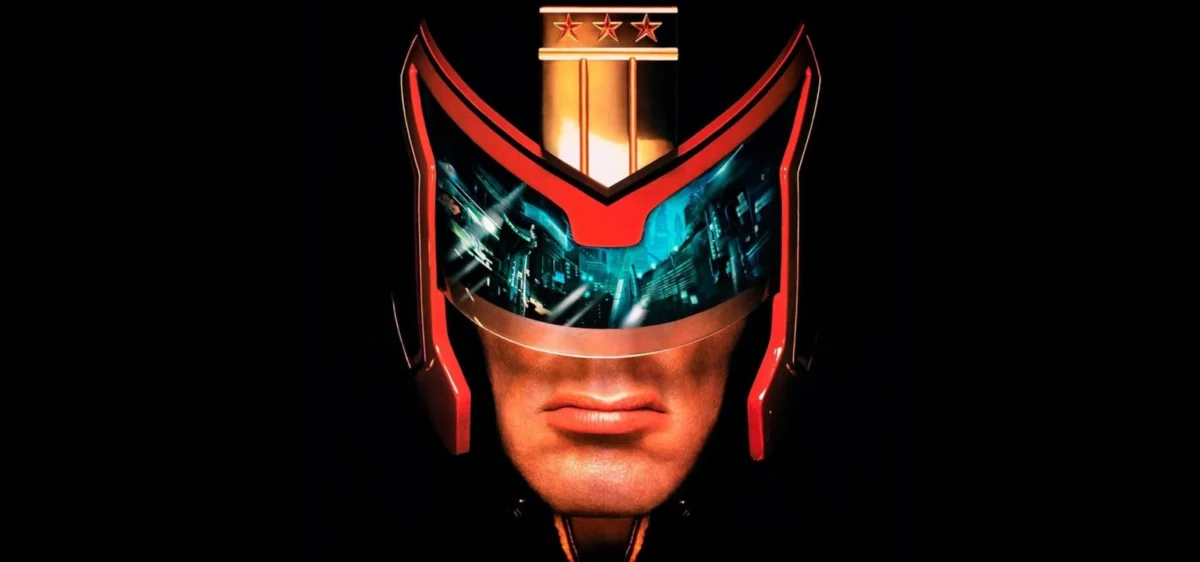
The helmet is not merely a costume choice; it is the entire political and narrative argument. Dredd has no face because Dredd is not supposed to have an inner life. The moment a fascist enforcer is given a wink, a soft spot, or a sympathetic smile, the storyteller commits the ultimate sin of authoritarian apologia: telling the audience that the system "isn’t really that bad once you get to know it." Wagner’s dark joke was that readers were never allowed to know him. Strip that away, and the satire evaporates, inadvertently turning an indictment of fascism into a recruitment video for it.
Early 1990s: Hollywood Rings the Bell
Fascinated by the property’s visceral aesthetic, Hollywood executives in the early 1990s decided that this bleak, Kafkaesque nightmare with a big gun and a bigger motorcycle would make a fantastic vehicle for an A-list movie star.
Enter Danny Cannon, a young British director who had grown up reading 2000 AD. Cannon signed on intending to helm a faithful adaptation: satirical, grim, slightly cruel, and entirely true to the strip’s DNA. What he received instead was Sylvester Stallone.
By 1994, Stallone had spent nearly two decades building a cinematic persona running on fuel diametrically opposed to Dredd’s ethos. From Rocky to Rambo, Stallone’s career-long project championed the underdog—the little guy fighting against an oppressive machine, utilizing his raw face, voice, and wounded eyes to guide the audience’s empathy. While this yielded an impressive body of work, it was structurally incompatible with a character whose entire narrative purpose hinges on having no face, no emotional arc, and no personal vulnerability.
Production and the "Compromise Machine" (1994–1995)
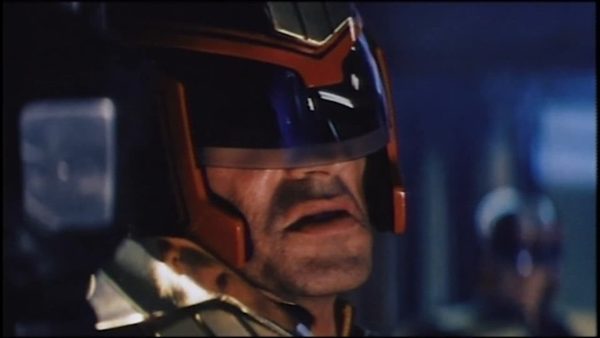
As filming commenced, Stallone’s contractual leverage began to reshape the production. Seeking a more accessible action-comedy tone that allowed room for Stallone-the-person to shine through Stallone-the-Judge, the star pushed for major script adjustments.
What followed was a slow-motion institutional collapse. Writers and directors later hinted at the miserable trench warfare of the production cycle, where creative compromise superseded artistic integrity. Cannon walked away from the experience so deeply burned that he famously vowed never to work with "self-absorbed" actors again. The final product bore only a superficial resemblance to the gritty comic strip that inspired it.
Supporting Data & Production Metrics
A look at the numbers and pivotal creative choices highlights the extent of the production’s divergence from the source material:
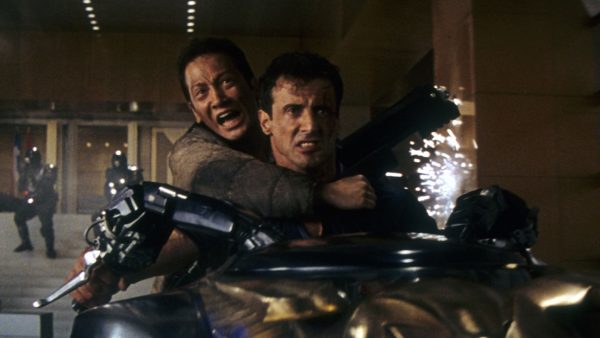
- Budget: Approximately $85 million (a substantial sum for a mid-1990s sci-fi action film).
- Box Office Gross: Roughly $113.5 million worldwide. While it was not the outright financial catastrophe of popular legend, its profitability was severely muted by high production and marketing costs.
- The Helmet Removal Milestone: Roughly sixteen minutes into the film, Dredd removes his helmet. In over two thousand issues of the comic strip, creators rigorously avoided revealing his face cleanly, utilizing censor bars or shadows when necessary. In the film, the helmet is discarded in the first act to satisfy star-driven marketing expectations.
- Narrative Additions: The script introduced a traditional emotional journey, including a framed conspiracy, a friend-turned-villain (Rico), a love interest, and a romantic kiss between Dredd and Judge Hershey in the closing moments—elements completely antithetical to the source material’s cold, bureaucratic bleakness.
Official Responses and Industry Aftermath
The fallout from Judge Dredd was swift, with key creators and the star himself openly expressing regret over the direction of the film.
Sylvester Stallone
Years after the film’s release, Stallone candidly acknowledged Judge Dredd as one of the biggest missteps of his career, admitting that the project suffered from a failure of tone and a misunderstanding of what fans wanted from the character.
John Wagner
Co-creator John Wagner delivered a measured verdict on the adaptation with the weary precision of a man who had decades to reflect on the experience. Wagner noted that the studio simply tried to tell too many competing stories and ultimately told none of them well, concluding bluntly: "Judge Dredd wasn’t really Judge Dredd."
The 2012 Course Correction (Dredd)
The ultimate referendum on the 1995 film arrived seventeen years later with the release of Dredd (2012), directed by Pete Travis and written by Alex Garland. Operating on a lean $30–$45 million budget, the production was designed as a deliberate course correction.
Karl Urban, cast in the title role, reportedly made a non-negotiable demand: the helmet would stay on for the entire runtime. There were no quips, no romantic subplots, no redemptive character arcs, and no unmasking. The subsequent generation of filmmakers looked at the wreckage of 1995 and correctly concluded that the primary failure of the original film was unchecked ego, and the necessary fix was strict structural discipline.
Implications: A Masterclass in Institutional Irony
The true tragedy of 1995’s Judge Dredd is not merely that it is a flawed film. Cinema is littered with bad movies that cause no metaphysical distress. The deeper significance lies in how the production’s behind-the-scenes reality mirrored its own thematic narrative.
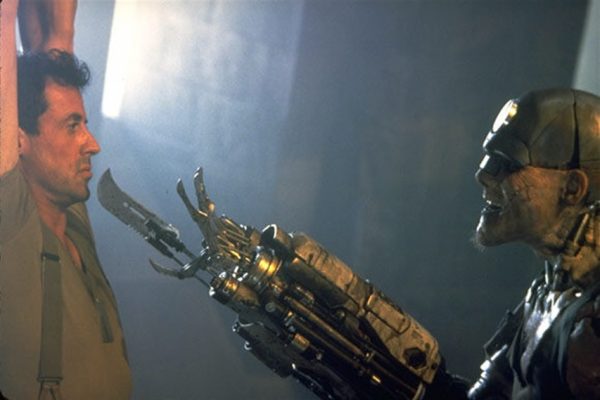
A satirical story warning about the total erosion of individual identity under institutional control was, ironically, dismantled by a single individual’s refusal to be controlled by the studio apparatus. Stallone wanted his face visible; the system—built to execute a coherent piece of satire—folded entirely. The individual ego did not bend to the system; it walked into the production office, looked around, and rewrote the rules.
In the end, Judge Dredd-the-character exists to depict a world where the institution crushes the individual until nothing remains but a badge. Conversely, Judge Dredd-the-production exists to show a world where one powerful individual crushes the institution until nothing remains but the star.
It was a masterclass in unintended irony. No one planned to make a mockery of the source material; it happened through a series of "reasonable" notes and contractual demands, one compromise at a time, until the helmet came off and the original vision was rendered unrecognizable. Dredd himself would have understood that systemic failure better than anyone. It is only a shame nobody let him keep his helmet on long enough to say so.
