
The Generative Pivot: How AI Platform Artlist’s Sci-Fi Series ‘The Arc’ Highlights the Promise and Pitfalls of Synthetic Filmmaking
Main Facts
The entertainment landscape is experiencing a profound and controversial structural shift as fully generative artificial intelligence projects move from experimental tech demos into serialized, platform-backed entertainment. At the center of this transition is Artlist, a company that has transitioned from a traditional stock music and sound-effects library into a comprehensive AI-first ecosystem.
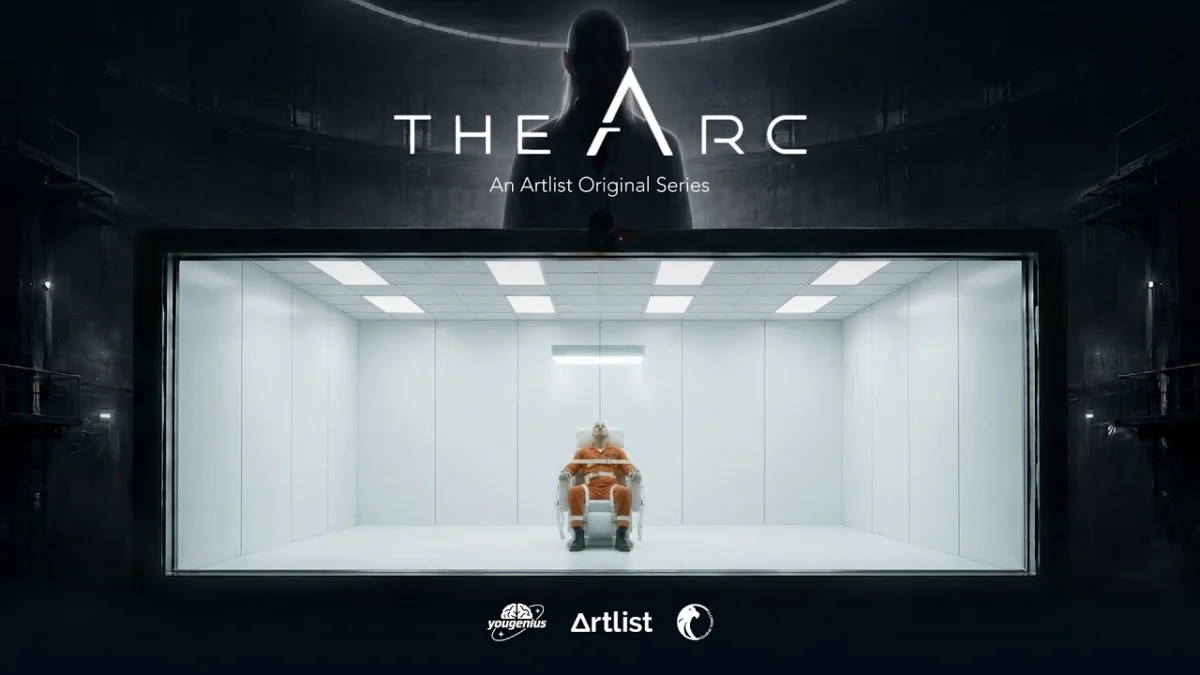
Artlist’s new sci-fi miniseries, The Arc, serves as a primary flagship project for this movement. Comprising five episodes, the series was produced using a total of $38,000 in promotional AI credits—roughly $7,600 per episode—provided by Artlist to showcase the commercial and creative capabilities of video-generation models such as Google’s Veo, Seedance, and Kling.
Directed by Darin Stewart and produced by Simone Ferretti, The Arc follows a desperate father trapped inside a sadistic future prison program who must survive a gauntlet of volatile historical battles to win a "cure" for his ailing son. While the creators have championed the project as a triumph of creative democratization—allowing indie filmmakers to bypass Hollywood gatekeepers and execute epic spectacles previously reserved for Christopher Nolan blockbusters—critics and cultural commentators have met the release with intense skepticism.
The project highlights a growing ideological battle in modern media: whether text-to-video tools represent the ultimate equalization of artistic opportunity or an existential threat to authentic human storytelling, visual artistry, and traditional crew employment.
Chronology of the Shift
1. From Stock Assets to Synthetic Ecosystems
For years, Artlist built its reputation as a reliable, high-tier resource for independent creators seeking licensed music, sound effects, and stock footage to elevate their digital productions, commercials, and podcasts. However, as the digital media landscape faced severe economic contractions and traditional asset-licensing markets saturated, Artlist executed a dramatic corporate pivot. The platform overhauled its business model to center entirely on generative artificial intelligence, rolling out tiered subscription plans—including an AI Creator tier priced at $500 annually—that grant users access to text, image, and video generation utilities.
2. The Development and Production of The Arc
To prove the viability of its new toolset, Artlist financed and hosted The Arc. According to interviews given by the production team, the writing process bypassed traditional script development in favor of rapid AI-assisted ideation. Creators engaged in roughly 10-minute verbal brain-dumps, feeding abstract narrative concepts, dialogue prompts, and scene outlines into large language models like Anthropic’s Claude to churn out scripts.

Visuals were subsequently rendered using a combination of image generation engines and video-generation models like Veo and Seedance. Although the production team emphasized that human participants were compensated with standard daily rates for their oversight, the core heavy lifting of asset creation, shot composition, and visual execution was delegated entirely to AI algorithms.
3. The Public Debut and Industry Backlash
As The Arc rolled out on Artlist’s newly minted streaming platform, it immediately drew sharp industry scrutiny. Rather than being embraced as a revolutionary indie breakthrough, the series reignited fiery debates concerning authorship, the ethical sourcing of training data, and the intrinsic value of human craft. The release coincided with broader industry milestones—such as the integration of generative tools into standard post-production workflows (including Adobe Premiere Pro) and the ongoing union battles over AI voice cloning and digital likeness rights—placing The Arc directly in the crosshairs of a larger cultural war over the soul of cinema.
Supporting Data and Financial Breakdown
To understand the economic mechanics behind The Arc, one must analyze the cost-to-output ratios of modern generative pipelines.
- Production Budget: The miniseries was executed on a total of $38,000 in platform credits, translating to a modest $7,600 per episode. In traditional television or serialized audio drama production (such as Audible’s original scripted series), this figure represents a fraction of standard baseline costs.
- Subscription Models: Artlist’s consumer-facing AI Creator subscription plan costs $500 annually and promises unlimited generations on select, often legacy text, image, and video models.
- API and Back-of-the-Napkin Math: Based on standard API pricing structures deployed by major AI developers (OpenAI, Google, and Anthropic), producing raw video content at scale has become remarkably cheap. Back-of-the-napkin calculations indicate that an independent creator could theoretically generate over 80 minutes of video content within a budget matching The Arc.
- Technological Limitations: Despite rapid advancements, generative video models still operate under strict technical constraints. Current prompt responses remain capped at short bursts—approximately eight seconds for Google Veo and up to 30 seconds for Seedance. Consequently, editors must stitch together numerous disjointed clips, leading to noticeable visual fragmentation and stylistic inconsistency across extended narratives.
Official Responses and Creative Rationales
The creators of The Arc maintain that their work is a visionary leap forward for independent artists who are routinely locked out of major studio funding.
"These generative models democratize filmmaking, giving any creator access to shoot things that would be impossible outside a Christopher Nolan epic," director Darin Stewart and producer Simone Ferretti stated in interviews with Business Insider.
The production team also defended their labor practices, noting that everyone involved in putting the project together received standard full-day rates commensurate with traditional physical sets. They argue that platforms like Artlist are providing a vital financial and technical runway for concepts that would otherwise die in development hell due to a lack of studio backing.

Conversely, critical industry voices have rejected these justifications. Aligning with legendary Studio Ghibli co-founder Hayao Miyazaki’s famous denunciation of artificial intelligence animation as an "insult to life itself," cultural critics argue that the series lacks any genuine artistic merit. Reviewers have pointed out that delegating shot selection and emotional beats to the "mushy midpoint of millions of stolen works" produces flat, lifeless results.
The characters—including digital avatars and rendered actors—suffer from dead, inexpressive framing that fails to convey genuine human stakes. Critics argue that the driving force behind The Arc is not a profound parental narrative about love within an oppressive system, but rather a superficial spectacle mimicking high-end video game cinematics and mainstream survival thrillers like Squid Game.
Implications for the Future of Entertainment
The arrival of The Arc and Artlist’s strategic pivot carry profound, long-term implications for the entertainment industry, labor markets, and the definition of authorship itself.
1. The Deskilling and Homogenization of Entertainment
While proponents frame generative AI as an equalizer that empowers everyday people to tell stories, critics warn of the exact opposite outcome: the mass deskilling of entertainment. When a project can be rushed to screen by a skeleton crew utilizing automated prompts and low-cost API credits, the traditional training grounds for below-the-line talent—such as grips, production assistants, storyboard artists, and junior visual effects workers—risk being entirely hollowed out. Rather than opening doors for a diverse array of new human voices from all walks of life, low-barrier AI tools may simply flood the market with derivative, algorithmically smoothed content controlled by tech conglomerates and the independently wealthy.
2. The Rise of "Un-Greenlightable" Content
As demonstrated by Artlist’s business model, generative platforms offer a direct route to bypass traditional studio gatekeepers. Scripts and concepts that traditional executives reject for lacking commercial viability can now be brought to life for a few thousand dollars in software credits. However, this raises a darker philosophical question posed by industry observers: If a project could not secure traditional financing, is it because of systemic gatekeeping, or simply because the creators had nothing truly interesting or original to say in the first place?
3. Redefining Artistic Value in the Streaming Age
Ultimately, The Arc functions as a cautionary tale wrapped in a marketing pitch. It proves that a small team can produce a multi-episode sci-fi miniseries for a fraction of a traditional budget. Yet, in doing so, it exposes the hollow core of synthetic cinema. As audiences are increasingly inundated with hyper-rendered, AI-generated spectacles, the true differentiator for future storytelling may not be the scale of the visual effects—which AI can now generate in seconds—but the messy, imperfect, and irreplaceable weight of genuine human experience.
