
The Lost Role: How a Tongue-Twister Cost Brent Spiner a Place in the Star Wars Universe
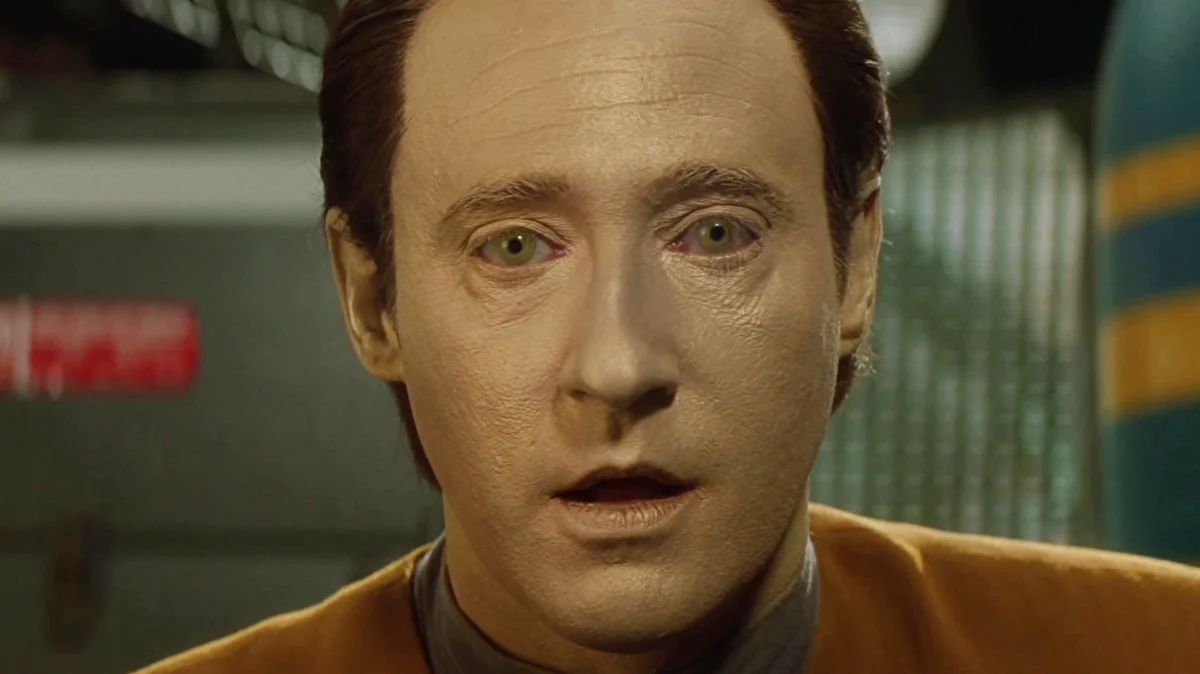
Before he became a household name as the beloved, positronic-brained Lieutenant Commander Data on Star Trek: The Next Generation, actor Brent Spiner’s career was a tapestry of small parts, regional theater, and the inevitable "near-misses" that define the early lives of working actors. Among those near-misses, however, lies a peculiar and humorous footnote: a brief, ill-fated stint within the Star Wars galaxy that ended abruptly, long before he stepped onto the bridge of the USS Enterprise.
In a recent candid revelation on the Dropping Names with Brent and Jonny podcast—a show he co-hosts with his longtime Trek colleague Jonathan Frakes—Spiner confessed to a career low that had remained under wraps for decades. As it turns out, the man who would eventually master the complex, staccato cadence of an android was once fired from a high-profile Star Wars production for a reason so simple it feels scripted: he couldn’t get the words "Millennium Falcon" out of his mouth without stumbling.
The Humbling Reality of the Radio Drama
The revelation came during an interview with Terry Matalas, the acclaimed showrunner behind Star Trek: Picard Season 3 and the Marvel series VisionQuest. When Matalas challenged the guests to share stories of being "fired from anything," Spiner initially played coy. He hemmed and hawed, clearly embarrassed by the memory, before finally pulling back the curtain on a forgotten piece of pop culture history: the National Public Radio (NPR) adaptations of the original Star Wars trilogy.
"I can’t tell that story. It’s a long story. It’s a very embarrassing story," Spiner told his hosts. "It was actually a radio show. But a big radio show. I was doing ‘Star Wars.’"
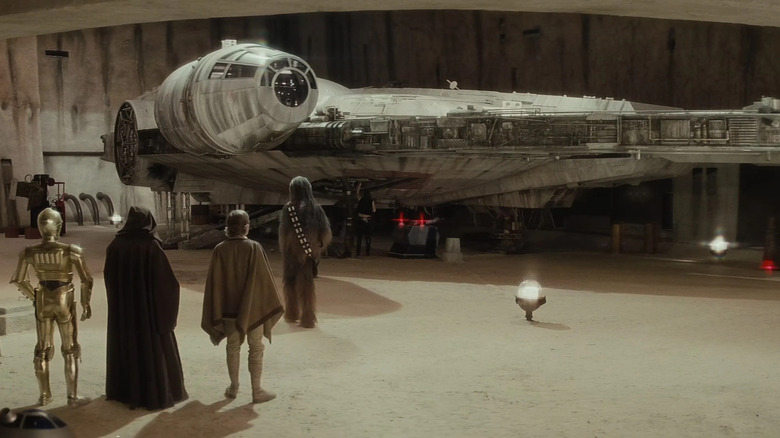
The project in question was one of the ultra-slick, ambitious radio dramas that brought George Lucas’ space opera to the airwaves in the early 1980s. Spiner, then an up-and-coming actor with credits in films like Stardust Memories and the TV drama Family, was cast in a minor role. His singular objective was to deliver a line that served as a transition for the audience: "Captain, the Millennium Falcon has landed."
Despite his preparation, the technical nature of the dialogue proved to be his undoing. Every time the recording light turned red, Spiner would find himself tongue-tied. The specific, rhythmic cadence of "Millennium Falcon" became an insurmountable hurdle. He stumbled over the phrase repeatedly, eventually leading to his dismissal from the production. In the world of high-stakes, time-sensitive professional recording, there was little room for an actor who couldn’t articulate the name of the most famous ship in the galaxy.
Chronology of a Cult Classic: The NPR Star Wars Dramas
To understand the gravity—and the absurdity—of Spiner’s exit, one must understand the prestige of the project he was involved in. These were not low-budget fan productions; they were high-fidelity, star-studded radio plays produced by KUSC-FM and broadcast nationally by NPR.
- 1981: The radio adaptation of Star Wars: Episode IV – A New Hope premiered, consisting of 13 episodes. It was a massive success, expanding on the lore of the film and utilizing the original score and sound effects.
- 1983: The Empire Strikes Back followed, spanning 10 episodes. It was during this period that Spiner’s unfortunate encounter occurred.
- 1996: The final installment, Return of the Jedi, was produced. Its delay was famously caused by the political and financial climate of the era. The Reagan administration’s push to slash funding for public broadcasting created a budgetary crisis at NPR, halting the project for over a decade.
Interestingly, these radio dramas are now remembered as a fascinating "lost" chapter of the Star Wars saga. George Lucas, in a move that seems unthinkable by today’s corporate standards, famously sold the radio rights to the Star Wars saga for a single dollar. He did so with the stipulation that the radio team could expand the story, provided they stayed true to the characters. The result was a production that featured a rotating cast of theater royalty and film icons.
Supporting Data: An All-Star Cast
The list of actors who participated in these radio dramas is staggering, which likely contributed to Spiner’s embarrassment regarding his early departure. The production featured key cast members reprising their film roles:
- Mark Hamill returned as Luke Skywalker.
- Anthony Daniels provided his iconic performance as C-3PO.
- Billy Dee Williams lent his voice to Lando Calrissian.
However, the supporting cast was equally impressive, featuring actors like John Lithgow (who famously voiced Yoda), Brock Peters (the Star Trek veteran who took on the mantle of Darth Vader), and Perry King as Han Solo. These productions were directed by John Madden, who would later gain worldwide acclaim for directing the Academy Award-winning film Shakespeare in Love.
Compared to this lineup, a young Brent Spiner felt like a minor player who had failed to meet the bar. At the time of his firing, he was still years away from his defining role on Star Trek: The Next Generation. He was working consistently in television, appearing on Night Court and various guest spots, but he was still searching for that breakout moment. Being let go from a project of this magnitude, regardless of the trivial reason, was a bitter pill to swallow for a burgeoning talent.
Official Responses and Reflections
Spiner’s admission on the podcast was met with roars of laughter from Frakes and Matalas. There is a certain poetic justice in the fact that the actor who would spend years playing a synthetic lifeform—a character defined by his precise, clinical, and perfect speech patterns—was once fired for a simple verbal slip.
When prompted to reflect on the incident, Spiner seemed to have made peace with the memory. He acknowledged that while it felt catastrophic at the time, it was ultimately just a blip in a career that would eventually include decades of iconic performances. The industry is rife with such stories; for every star who claims they were "destined" for greatness, there is a tale of a missed line, a forgotten cue, or an awkward audition that serves as a reminder of the human element behind the silver screen.
Implications: A Full Circle Moment
The story of the "Millennium Falcon" debacle highlights the volatile nature of show business, but it also serves as a reminder of how interconnected the worlds of Star Trek and Star Wars truly are. Despite the rivalry often projected by the fanbases of both franchises, the creative talent behind the scenes frequently overlaps.
Spiner did eventually find his way back to the Star Wars universe—and this time, he stayed. In the 2010s, he provided the voice for the character Gall Trayvis, a senator-in-exile, on the animated series Star Wars Rebels. By then, the tongue-twisting struggles of the early 1980s were long behind him. He had moved from a background radio player to a voice actor in a major franchise, proving that a momentary failure in one’s youth is rarely a permanent indicator of one’s future success.
In retrospect, the incident remains a quintessential "Hollywood" story. It captures the tension of the recording booth, the pressure of expectations, and the eventual, ironic triumph of an actor who—despite his early inability to speak the name of the ship—ultimately secured his place among the stars. Whether he was reading a script or navigating the Enterprise, Brent Spiner’s journey reminds us that even the most legendary performers have a history of stumbles, restarts, and the occasional, embarrassing lesson learned along the way.
