
The Seven-Day Sprint: Anatomy of a Hollywood Script Rewrite Crisis
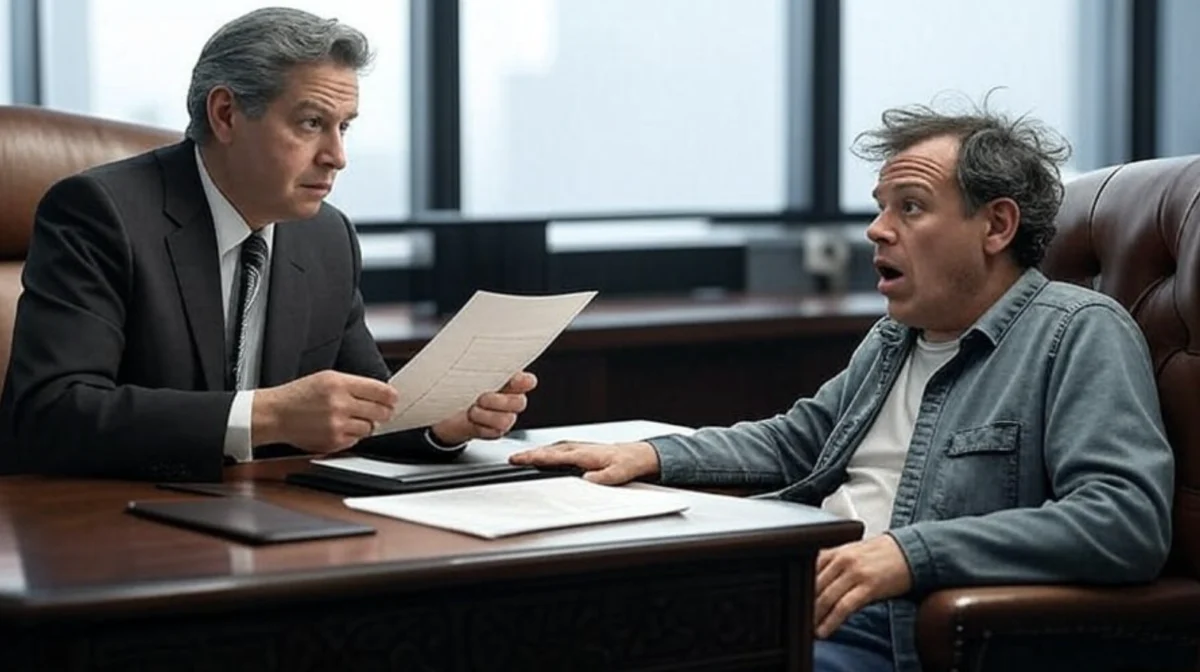
In the high-stakes ecosystem of Hollywood, where a single draft can represent the difference between a career-defining greenlight and professional obscurity, time is the ultimate commodity. For screenwriter Jake Suleman, the reality of this pressure recently materialized in a claustrophobic office overlooking Los Angeles, where the fate of his high-budget project, The Great Starlight Heist, hung by a thread.
What follows is an investigation into the psychological and logistical mechanics of a "crisis rewrite"—a common, albeit harrowing, phenomenon in the entertainment industry where writers are forced to overhaul entire narratives under near-impossible deadlines.
The Catalyst: A Breakdown in the Boardroom
The crisis began with a routine studio meeting that veered into confrontation. Producer Marty Kieffer, a veteran of the industry known for his uncompromising standards, made his dissatisfaction with Suleman’s latest draft clear. The critique was blunt: the second and third acts lacked the necessary narrative momentum to satisfy the film’s financial backers.
"The second and third acts are weak," Kieffer reportedly stated, tossing the manuscript onto his mahogany desk. "Fix it. One week. Or your name’s mud, and the backers will take a walk."
For Suleman, the stakes were existential. The Great Starlight Heist was intended to be his breakout feature, a project carrying a production budget that eclipsed the GDP of several small nations. With his reputation on the line, Suleman faced the "Hollywood shredder"—the industry’s tendency to discard talent the moment a script fails to perform under the scrutiny of investors.
Chronology of the Seven-Day Overhaul
To understand how a writer manages such a monumental task, one must look at the granular, day-by-day progression of the rewrite process.
Days 1-2: Containing the Panic
Initial reactions to extreme professional pressure often trigger a "fight or flight" response, which is antithetical to the cognitive demands of creative writing. Suleman’s initial strategy was physiological regulation. By employing breathing techniques to stabilize his heart rate and utilizing digital "gatekeepers"—applications designed to sever internet access—he created a vacuum where focus could exist. The objective was to dismantle the "mental spiral" of imposter syndrome by reframing the rewrite not as an insurmountable abyss, but as a series of manageable, 500-word increments.
Days 3-4: Breaking the Creative Deadlock
Mid-week, the "wall" inevitably appears. By the fourth day, Suleman reached a creative impasse regarding the climax of the film, which involved a confrontation between a rogue astronaut and a sophisticated Artificial Intelligence. The solution proved to be collaborative. Reaching out to peers—a common practice among working writers—Suleman utilized the "bad draft" method. By intentionally writing an absurd version of the scene (including the AI delivering knock-knock jokes), he successfully broke the psychological paralysis of perfectionism, allowing him to return later to refine the tone.
Days 5-7: The Final Marathon
The concluding days were characterized by extreme discipline. By treating the process as a rigorous day job—7:00 a.m. to 11:00 a.m. for drafting, afternoons for revision, and evenings for brainstorming—Suleman managed to stabilize the narrative. The final 24 hours saw the integration of a Hans Zimmer-scored environment and a total cessation of external communication, resulting in the successful delivery of the PDF file with a mere 30 minutes to spare before the deadline.
Supporting Data: The Science of High-Pressure Creativity
While the narrative of the "starving artist" is a trope, the reality of screenwriting under pressure is backed by organizational psychology. Studies on "forced constraints" suggest that when creators are given a limited amount of time, the brain is forced to bypass self-censorship, leading to a higher volume of output.
Industry benchmarks for script doctoring suggest that while a full feature rewrite typically takes 4–8 weeks, "emergency" revisions are frequent. Professional screenwriters often rely on three pillars to maintain quality under these conditions:
- Deconstruction: Breaking a 120-page script into 10-page segments to reduce cognitive load.
- Externalization: Seeking objective feedback from a trusted creative circle to identify "blind spots."
- Routine Maintenance: Maintaining rigid physical and temporal boundaries to combat the degradation of decision-making abilities.
Official Industry Perspectives on Script "Doctors"
In the broader context of the film industry, the practice of calling in specialized writers to perform emergency revisions is known as "script doctoring." Many of Hollywood’s most successful films have undergone such processes.
"The script is never finished, it is only abandoned," says an anonymous veteran script consultant. "When a producer sets a one-week deadline, they aren’t looking for a Pulitzer Prize; they are looking for a structural fix that satisfies the investors. The writer’s job is to protect the project’s viability."
However, this practice is not without its detractors. Critics argue that the commodification of screenwriting into "fix-it" tasks can strip a story of its unique authorial voice, turning creative endeavors into mere industrial products. Despite this, the demand for high-speed, high-quality script services continues to rise as studio cycles become increasingly compressed.
Implications for Future Production
The success of Suleman’s week-long sprint carries significant implications for independent and major studio productions alike. Firstly, it highlights the necessity of professional support networks. For writers who lack a deep bench of peers or the mental fortitude to endure such cycles, the industry has birthed a specialized sector of ghostwriting and emergency consultancy services.
Companies like Ghostwriters Central have emerged to fill this specific void. Since 2002, such firms have provided specialized script doctoring and priority rewrite services to producers who find themselves in the same position as Marty Kieffer—holding a project with immense potential but a failing script. These services provide a bridge for productions that would otherwise collapse under the weight of an unworkable second or third act.
Looking Ahead
For Suleman, the immediate aftermath of the delivery was characterized by a necessary period of decompression—a walk on the Venice Beach shoreline, a brief respite from the digital tether. While the long-term success of The Great Starlight Heist remains to be seen upon its release, the lesson remains: in the modern film industry, the ability to pivot under extreme duress is just as important as the ability to write a compelling opening scene.
As studios continue to prioritize speed-to-market, the role of the emergency script doctor and the capacity for individual writers to self-regulate under immense pressure will remain central to the survival of the Hollywood blockbuster.
If you are currently managing a production that has hit a narrative dead-end, professional intervention is often the most cost-effective path to completion. For those in need of urgent assistance, Ghostwriters Central offers comprehensive emergency priority screenwriting and script doctoring services to ensure your project meets its production milestones.
