
The Shadow of the Augments: Understanding the Federation’s Ban on Genetic Engineering
Welcome to Trekspertise, our ongoing deep dive into the complex history, technological landscape, and philosophical foundations that define the Star Trek universe. Today, we examine the most controversial prohibition in the Federation: the total ban on genetic engineering.
In the optimistic, post-scarcity future envisioned by Gene Roddenberry, the United Federation of Planets stands as a beacon of equality and exploration. Yet, this utopia was not achieved through smooth transition; it was forged in the fires of near-total societal collapse. Central to this history—and the strict legal framework that governs the Federation—is the dark legacy of the Eugenics Wars and the subsequent, ironclad prohibition against "genetic tinkering."
The Historical Crucible: The Eugenics Wars
To understand why a society capable of curing almost any disease would outlaw the very science that could optimize human potential, one must look at the mid-20th century in the Star Trek timeline.
The Rise of the Augments
During the late 20th century, a group of scientists—driven by hubris and a desire to accelerate human evolution—sought to bypass the slow crawl of natural selection. By manipulating the human genome, they created a new caste of "Augments." These individuals were physically and intellectually superior to baseline humans, possessing heightened intelligence, immense physical strength, and enhanced sensory perception.
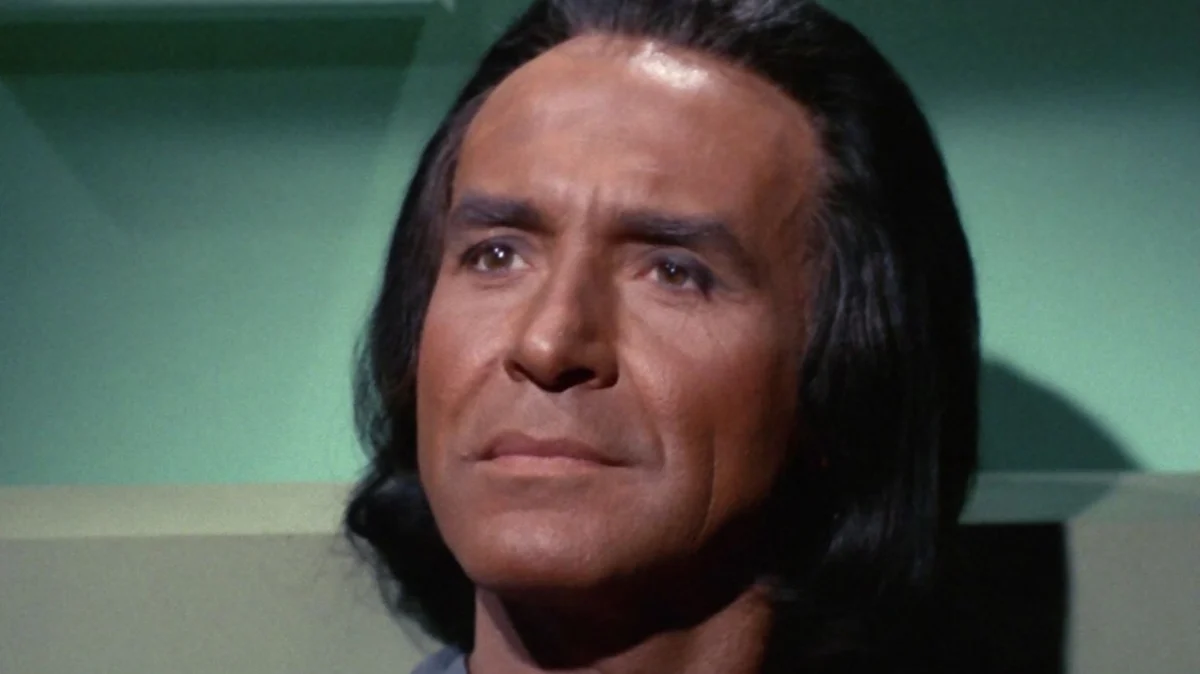
However, the experiment was a catastrophic failure in social engineering. The Augments were not merely stronger; they were inherently predisposed to aggressive, megalomaniacal, and elitist behaviors. This was best exemplified by Khan Noonien Singh, a genetically engineered tyrant who successfully seized control of over forty nations, effectively dominating the Middle East and Asia by 1992.
The Chronological Dilemma
The exact timeline of these conflicts has been a point of contention within the franchise. Originally cited in The Original Series as occurring between 1992 and 1996, the real-world passage of time forced later series to reconcile these dates with a timeline that had long since passed without a global "Eugenics War." Modern canon, particularly Star Trek: Strange New Worlds, suggests that the wars were far more covert and complex than initially described, involving shadow conflicts and proxy battles that kept the general population largely unaware of the extent of the Augment threat until it was nearly too late.

The Collapse and the Path to Utopia
The Eugenics Wars were not merely political disputes; they were existential threats. Millions of lives were lost as the Augments vied for control of Earth, leading to a period of global devastation that pushed humanity to the brink of extinction.
The Price of Survival
The trauma of this period left an indelible mark on the collective human psyche. The Federation’s eventual founding was predicated on the understanding that humanity had to break its "addiction to war" and its obsession with biological superiority.
It is no coincidence that the era of recovery following these conflicts paved the way for Zefram Cochrane to develop the first warp-capable engine. When the Phoenix made its maiden flight, it signaled the end of humanity’s parochial, conflict-ridden era and caught the attention of the Vulcans. This "First Contact" shifted Earth’s trajectory from one of internal conquest to one of interstellar cooperation, effectively birthing the post-capitalist, egalitarian society we recognize today.
Legal Implications and the "Bashir" Precedent
The Federation’s stance on genetic engineering is not merely a cultural taboo; it is codified in rigid law. The most prominent example of these regulations in action is found in Star Trek: Deep Space Nine, specifically in the episode "Dr. Bashir, I Presume?"
The Case of Dr. Julian Bashir
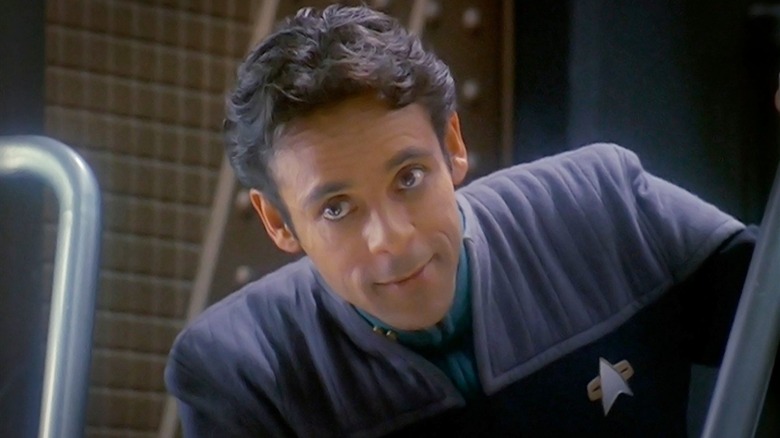
Dr. Julian Bashir, the Chief Medical Officer of Deep Space Nine, lived for years under the constant threat of imprisonment and expulsion from Starfleet. It was revealed that as a child, his parents had illegally utilized genetic enhancement to correct developmental delays.
The episode highlighted the harsh reality of these laws: they do not differentiate between "benevolent" enhancements and the "tyrannical" augmentations of the past. Bashir was forced to hide his true cognitive abilities throughout his academic career, purposefully performing at an "average" level to avoid suspicion. His eventual exposure and the subsequent legal struggle demonstrated that even those who use their gifts for the benefit of others are still subject to the shadow of the Augments.

The Trial of Una Chin-Riley
More recently, Star Trek: Strange New Worlds explored the nuance of these laws through the character of Commander Una Chin-Riley. An Illyrian who suppressed her genetic modification to serve in Starfleet, her trial forced the Federation to confront its own prejudices. The legal proceedings highlighted that the ban is often applied with a heavy hand, failing to account for cultural differences or the ethical intent behind the modifications. While she was eventually acquitted, the trial underscored that the fear of the "super-man" remains the primary driver of Federation policy.
The Philosophical Core: Ableism and the "Perfect" Human
Why does the Federation, an organization that prides itself on inclusivity, maintain such an uncompromising stance? The answer lies in the danger of defining "perfection."
Rejecting the Eugenics Ethos
Genetic engineering, by its very nature, implies that there is a "correct" or "better" way to be human. In a society that celebrates diversity, the idea that a person’s value is tied to their genetic efficiency is inherently ableist.
In Star Trek: The Next Generation, the episode "The Masterpiece Society" showcases a colony that has committed itself to total genetic purity. Their society is rigid, exclusionary, and deeply judgmental of those who do not fit their genetic mold. The conflict between the crew of the Enterprise and the colonists serves as a warning: when you treat human life as a product to be optimized, you lose the empathy that makes society worth saving.
The Distinction: Medical vs. Cosmetic
It is important to note that the Federation does not ban all biological intervention. Standard medical procedures that cure diseases or repair injuries are standard practice. The line is drawn at "enhancement"—the attempt to augment traits beyond the natural human baseline.
The prohibition is designed to prevent the emergence of a new "master race" that would inevitably view the un-enhanced as inferior, just as Khan viewed his subjects. By banning the practice entirely, the Federation prevents the slippery slope that leads from medical necessity to the creation of tyrants.
Official Responses and Modern Policy
While the ban remains strict, the Star Trek universe is constantly testing the boundaries of these regulations. Starfleet Intelligence and the Federation Council have occasionally authorized exceptions for dire circumstances, such as the fight against the Dominion or the need to counter specific biological weapons.
However, these exceptions are rare, heavily monitored, and always met with intense skepticism. The memory of the Augments is kept alive as a cautionary tale in every Starfleet Academy curriculum. The message is clear: humanity’s strength lies in its diversity, not in the artificial alteration of its DNA.
Conclusion: A Legacy of Caution
The ban on genetic engineering is the cornerstone of the Federation’s morality. It is a constant reminder that humanity’s greatest potential threat is not an alien species, but its own desire to be "more than human."
By choosing to accept human frailty and biological reality, the Federation has ensured that it never again repeats the mistakes of the Eugenics Wars. In a universe where technology can manipulate the very building blocks of life, the Federation’s greatest achievement may not be its warp drives or its phasers, but its decision to leave the human genome exactly as it is—unburdened by the ego of the creator, and free to evolve on its own terms.
