
The Shadow of the Doppelgänger: A Critical Examination of Rob Savage’s ‘Other Mommy’ (2026)
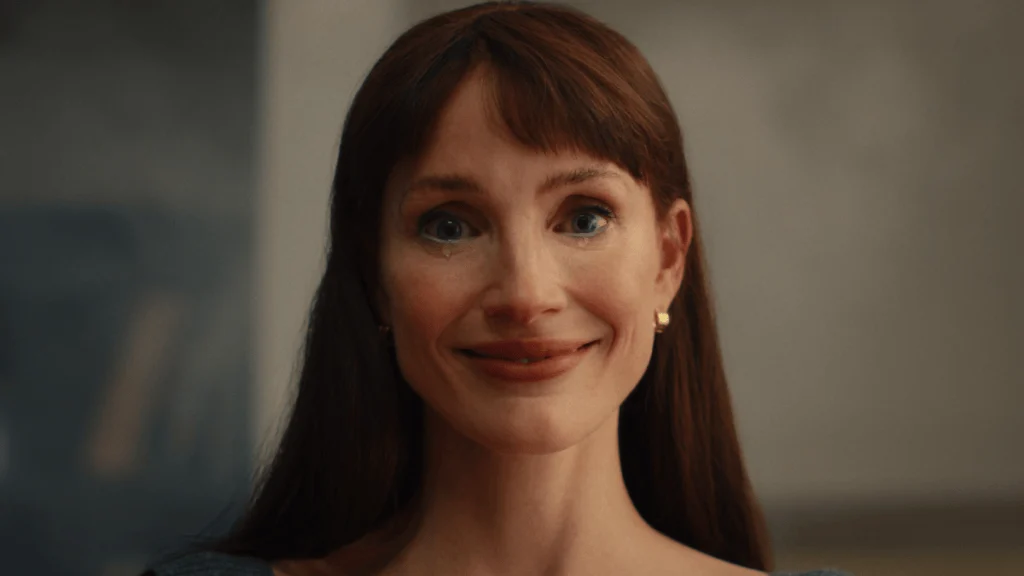
In the landscape of modern horror, the "shape-shifter" trope is a well-worn path, yet director Rob Savage’s latest offering, Other Mommy (2026), attempts to subvert the genre with a dual-performance tour de force from Jessica Chastain. Despite a high-concept premise that positions the Academy Award-winning actress as both a maternal figure and a malevolent, soul-hungry entity, the film arrives as a discordant experiment—one that oscillates between visceral dread and narrative aimlessness. With a critical reception that reflects its disjointed execution, Other Mommy stands as a testament to the limitations of star power in the face of flawed screenplay mechanics.
The Core Premise: A Dual Performance Lost in Translation
At the heart of Other Mommy is the dual performance of Jessica Chastain, who portrays both the protagonist, Ursula, and her nightmarish, supernatural counterpart, the "Other Mommy." The film’s narrative engine is built upon the psychological terror of domestic intrusion, as the demonic entity attempts to infiltrate the life of Ursula’s young daughter, Bela (Arabella Olivia Clark).
On paper, the premise is haunting. The sight of a mother figure, ostensibly the source of comfort, transforming into a source of existential horror is a classic psychological hook. However, the execution under director Rob Savage—known for his high-energy, claustrophobic thrillers—feels curiously lethargic in its character building. While Chastain delivers a performance that crackles with intent, the script, penned by Nathan Elston and Josh Malerman, fails to provide the necessary "scaffolding" to elevate her work into a career-defining turn. Instead of a layered exploration of motherhood and trauma, the audience is presented with a series of vignettes that feel disconnected, ultimately undermining the film’s potential to become a staple of the modern horror canon.
Chronology of Disconnect: From Trailers to the Silver Screen
The marketing campaign for Other Mommy heavily relied on a singular, terrifying sequence: the title character burning a pot of pasta while whispering a request to "be inside" the daughter’s heart. In the context of a two-minute trailer, the scene is jarring and effective. Within the film, however, it arrives with a lack of narrative momentum that renders it confusing rather than haunting.
The film’s pacing issues are evident early on. Following the introduction of the family unit—comprised of Ursula, her husband Russ (Jay Duplass), and young Bela—the plot accelerates toward its supernatural conflict without establishing the emotional stakes necessary for the audience to care about the outcome.
The Mid-Point Decay
As the narrative progresses, the film introduces a series of subplots that veer into the realm of the unnecessarily grotesque. The inclusion of Uncle Frank (Arian Moayed), a character who functions primarily as a victim-in-waiting for the demonic force, feels like a checkbox exercise in horror tropes. The tension between Ursula and her husband, Russ, is hinted at through suggestions of infidelity, but these threads are never woven into the main narrative effectively. Instead, they serve as distractions that complicate the film’s tone without adding depth to the characters.
The Climax and the "Great Pretender"
The film concludes with an ending that leans heavily on irony, using The Platters’ classic track, "The Great Pretender," over the final credits. While this adds a touch of grim humor, it also highlights the film’s inability to reconcile its own tone. The transition from the "brutal" horror of the previous ninety minutes to a lighthearted musical sign-off feels less like a stylistic choice and more like a concession to the film’s own lack of thematic cohesion.
Supporting Data: Cast, Crew, and Critical Reception
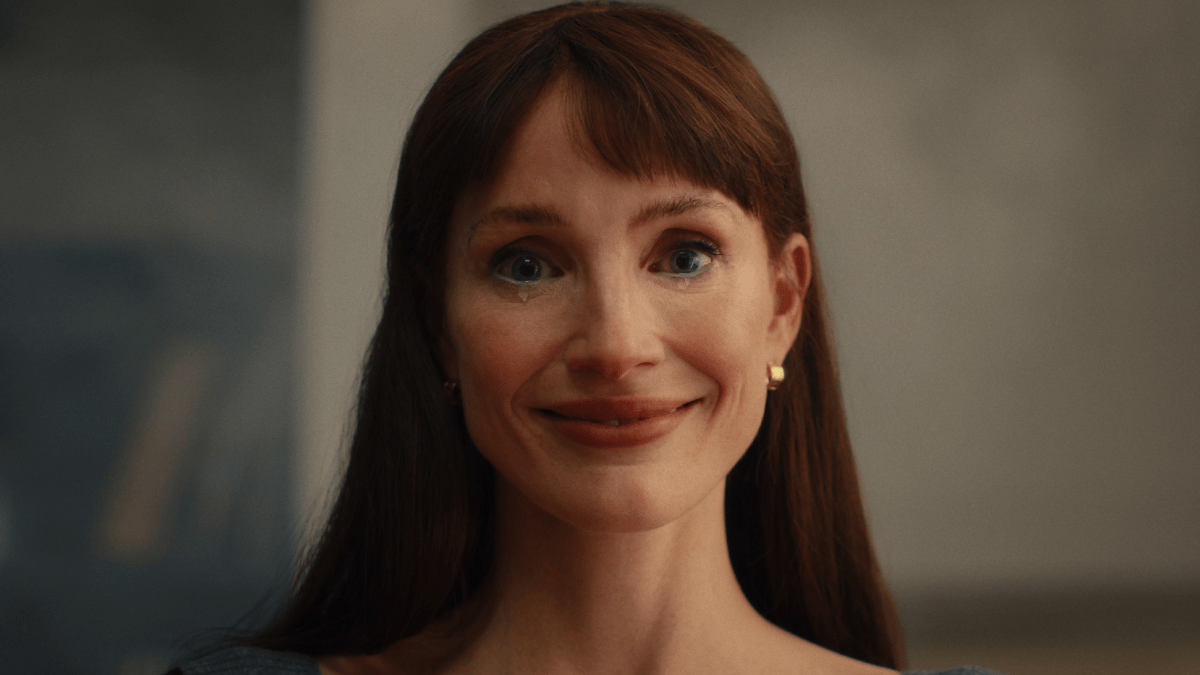
The production of Other Mommy boasts an impressive roster of talent, which makes its lackluster critical reception all the more glaring. Alongside Chastain and Duplass, the cast features Karen Allen as Grandma Ruth, as well as Arian Moayed, Dichen Lachman, and Sean Kaufman. Despite the presence of such seasoned performers, the character arcs remain remarkably thin.
- Director: Rob Savage
- Writers: Nathan Elston, Josh Malerman
- Key Cast: Jessica Chastain, Jay Duplass, Arabella Olivia Clark, Karen Allen, Arian Moayed
- Box Office Performance: Despite middling critical reviews, the film saw significant attendance during its opening weekend, proving the enduring drawing power of Jessica Chastain.
The film’s reliance on shock value—often through unnecessary displays of gore and physical trauma, such as the recurring motif of an "ugly scar"—suggests a struggle to maintain a coherent vision. The performance of young actress Arabella Olivia Clark, in particular, has been flagged by critics as a weak point, with many noting that the character’s emotional reactions feel uncoached or incongruous with the high-stakes terror surrounding her.
Official Responses and Industry Implications
While there has been no official statement from the production studio regarding the critical pushback, the box-office numbers suggest that the film has succeeded as a commercial product, even if it failed as an artistic one. This divergence between commercial success and critical dismissal is a recurring theme in the 2026 horror landscape, where "event-style" horror films are increasingly prioritized over character-driven narratives.
Industry analysts suggest that the success of Other Mommy may lead to a green-lit sequel. The ending, which leaves the door open for the "Other Mommy" entity to return, implies that the studio was planning a franchise from the outset. However, the question remains: can a sequel succeed where the original failed? If the franchise is to continue, producers will need to address the fundamental lack of "heart" that characterized this entry. The audience’s willingness to see a sequel may be high, but the longevity of the IP depends on the ability to move beyond the gimmickry that plagued this first installment.
The Verdict: A Pulse Without a Heart
At a rating of 4.5/10, Other Mommy serves as a cautionary tale of what happens when a horror film relies too heavily on the strength of its lead actor while neglecting the foundation of its story. Jessica Chastain’s commitment to the role is undeniable; she throws herself into the dual performance with a ferocity that demands attention. Yet, when the screen fades to black, the viewer is left with a sense of emptiness.
The film is "historically bizarre"—a phrase that captures the erratic nature of the storytelling—but it ultimately lacks the emotional resonance that makes classics of the genre, such as The Conjuring or Insidious, so effective. By focusing on surface-level scares and avoiding the necessary character development that would make us fear for the family, Other Mommy effectively sabotages its own potential.
In conclusion, Other Mommy is a film that "has a pulse, but not a heart." It is a technical exercise in fear that succeeds in moments but fails in its totality. For those looking for a masterclass in acting, Chastain provides enough to keep the film watchable; for those looking for a cohesive, frightening, and emotionally impactful horror experience, the search continues elsewhere. As the industry moves forward, this film will likely be remembered not for its scares, but for the question of what could have been if the direction and writing had matched the caliber of its star.
