Weaving the Threads of a Shattered Memory: Lana Daher on Do You Love Me and the Cinematic Archaeology of Lebanon
Main Facts: A Kaleidoscopic Portrait of Lebanese History
In her mesmerizing and deeply visceral debut feature, Do You Love Me (2026), Beirut-based multidisciplinary artist and filmmaker LanaDaher constructs a kaleidoscopic exploration of Lebanon’s cultural memory. Spanning 76 minutes, the documentary is a monumental act of cinematicarchaeology, stitching together 70 years of found footage, newsreels, independent cinema, and deeply personal home movies. Premiering to critical acclaim at Venice Days before securing runs at international showcases like CPH:DOX and New York’s Metrograph, Daher’s film purposefully collapses the boundaries between past and present, allowing decades of archival material to recontextualize one another in real-time.
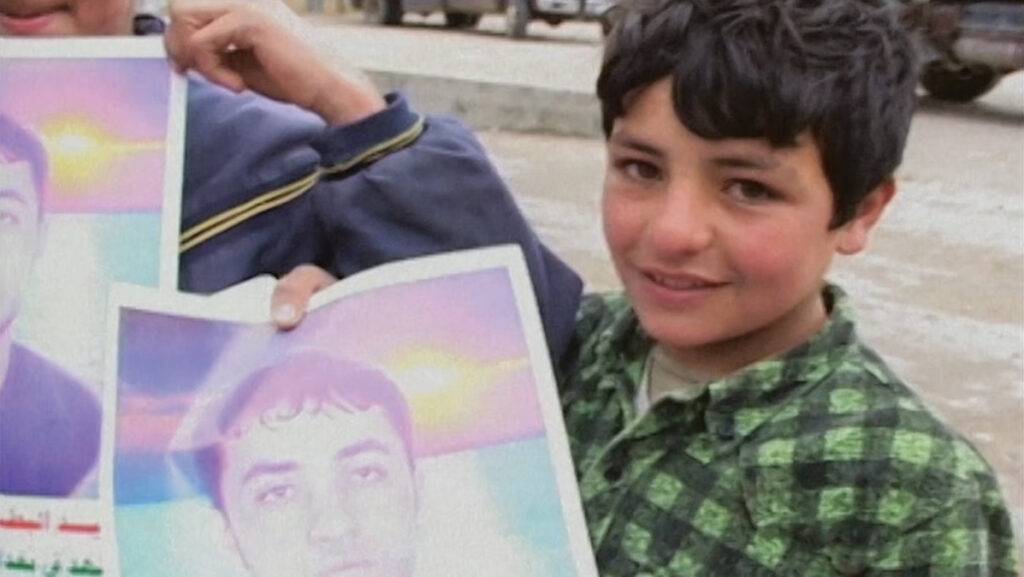
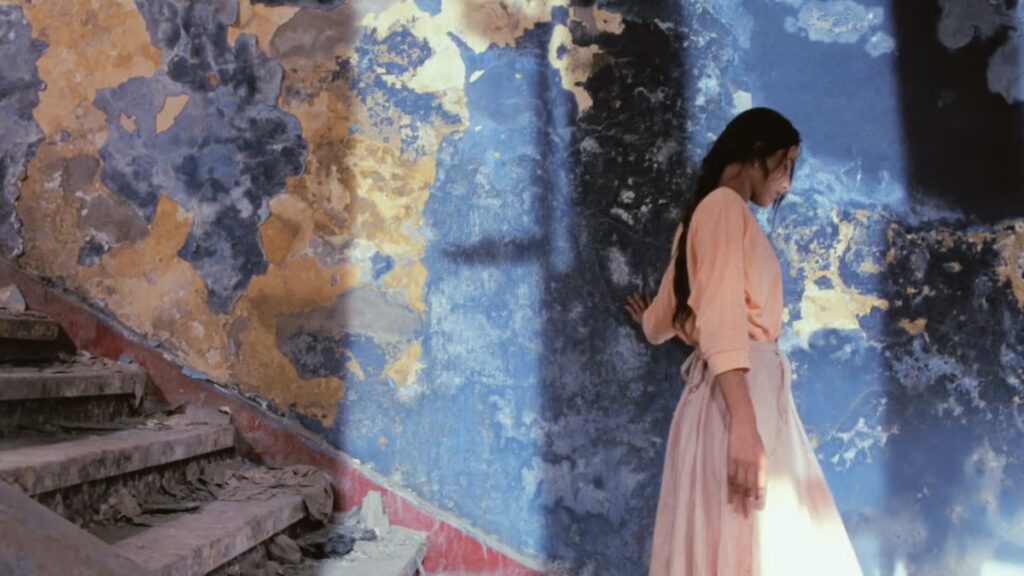
Rather than relying on a traditional narrative arc, voiceover narration, or a single central figure, Do You Love Me operates on an emotional and rhythmic logic. Daher cuts breathlessly between cinematic fiction and brutal journalistic footage of street violence in Beirut, deliberately blurring the line between staged drama and harrowing reality. Audiences witness everyday civilians and intellectuals wrestling with the ghosts of the Lebanese Civil War and the country’s entrenched political confessionalism, speaking in both Arabic and French. The soundscape is equally layered, transitioning fluidly from traditional Middle Eastern melodies to contemporary, high-energy hip-hop.
The film serves as an impassioned love letter to a city and a country trapped in permanent crisis, offering an intimate look at the human cost of geopolitical turmoil. By weaving together fragments of a history that has systematically lacked a unified national narrative, Daher creates a living, breathing archive for a society whose collective memory is perpetually under threat of erasure.
Chronology: From a Musical Research Project to a Monumental Archive
The genesis of Do You Love Me dates back to 2018, when Daher embarked on what she initially conceived as a modest research project examining the relationship between war and music—specifically how melodies carry memory and move through active conflict.
The Early Stages (2018–2023)
Initially, Daher focused her lens on the Bendaly Family, a beloved pop group whose song lent the film its evocative title. However, as she dove deeper into the audiovisual history of her homeland, the scope of the project organically shifted. Daher realized that her true subject was far more personal and universal: her own relationship with Beirut, her childhood trauma, and society’s complex, fractured attachment to history.
Working largely in isolation over a span of nearly five years, Daher amassed more than 20,000 audiovisual fragments scattered across multiple hard drives. Because Lebanon famously lacks a national archive or a unified history textbook, gathering this material was less a structured search and more an exhaustive hunt. Roughly half of the film’s source material was drawn from independent Lebanese cinema, encompassing clips from approximately 106 fiction and documentary features produced between 1958 and the present day. Alongside these cinematic touchstones, Daher incorporated journalistic broadcasts, podcasts, music videos, radio archives, abandoned reels, and rare home videos—with the oldest piece of footage dating back to a private family recording from 1928.
The Editing Phase and Collaboration
By the time Daher had assembled a four-hour rough cut, she brought on Paris-based Syrian editor Qutaiba Barhamji—celebrated for his work on Kaouther Ben Hania’s Four Daughters (2023) and The Voice of Hind Rajab (2025)—to serve as co-writer and editor. Rather than building upon the existing structure, the duo made the radical decision to start from scratch.
Daher deliberately sought out an editor who was not Lebanese, ensuring that the editorial decisions were guided by a search for universal human resonance rather than localized trauma. Together, they established strict aesthetic rules: no full scenes lifted wholesale from existing films, and zero appearances of Lebanese politicians on screen or via the soundtrack. Out of the 20,000 fragments evaluated, only about seven percent made it into the final cut, requiring the meticulous clearance of nearly 400 rights contracts.
Supporting Data: The Scale of Do You Love Me
To fully grasp the magnitude of Lana Daher’s achievement, it is helpful to look at the quantitative scale of the production:
Runtime: 76 minutes.
Archival Span: 70+ years of Lebanese history, ranging from a 1928 home video to contemporary footage.
Source Material Volume: Over 20,000 individual audiovisual fragments stored across multiple hard drives.
Cinema Representation: Approximately 106 independent Lebanese fiction and documentary features (spanning from 1958 onward) utilized.
Legal Clearance: Nearly 400 individual rights contracts successfully negotiated and cleared.
Final Inclusion Rate: Approximately 7% of all researched material made it into the final theatrical cut.
Editorial Journey: Nearly 5 years of solo research and rough-cutting before a collaborative rewrite and edit with Qutaiba Barhamji.
Official Responses and Creative Insights: Perspectives from the Director
In an exclusive interview, Lana Daher opened up about the philosophy, challenges, and emotional weight behind Do You Love Me. Discussing the lack of institutional preservation in Lebanon, she explained how the film mirrors the personal losses experienced by families across the country during decades of war and migration.
"Like many Lebanese families, mine lost most of its own archive across the wars and waves of migration," Daher noted. "So, growing up, I had limited access to my own family’s history and almost none to Lebanese cinema itself. That absence was part of why I wanted to build something from the inside, made of Lebanese people speaking about themselves in their own voices and seeing through their own eyes."
Daher also addressed the deliberate choice to abandon a linear chronology, mirroring the psychological reality of trauma and memory:
"I didn’t want a linear chronology precisely because memory isn’t linear and neither is trauma. What holds the film together instead is an emotional logic: the rhythm and the associations built through editing and sound design. ‘Disorientation is part of the journey’ to understanding my beloved homeland."
Furthermore, the film heavily incorporates the pioneering work of legendary Lebanese journalist and filmmaker Jocelyne Saab, whose 1975 documentary Lebanon in Turmoil serves as a vital touchstone. Coinciding with the theatrical release of Do You Love Me, Metrograph curated a companion screening series titled "Jocelyne Saab: Letters from Lebanon." Daher reflected on Saab’s profound influence on her artistic consciousness:
"Through her films, I understood what had happened, and why the world around me was the way it was. She’s so courageous. She filmed the horrors of that time as they were unfolding."
Daher emphasized the crucial role of women as the unspoken archivists of Lebanese society. Because official institutions failed to document daily life, women acted as the literal witnesses to history—holding, preserving, and passing down family photographs, home videos, and personal collections even when they were not behind the camera. Consequently, Do You Love Me naturally centers a powerful, underrepresented female gaze.
Implications: Collective Memory, Geopolitical Realities, and the Human Spirit
The release of Do You Love Me arrives at a perilous and deeply painful moment in modern Middle Eastern history, as Lebanon once again finds itself engulfed in devastating military conflict. When pressed on how current events intersect with the themes of her film, Daher strongly pushed back against reductive Western media frames that characterize Lebanon merely as a neutral space "caught in the crossfire" between Israel and Hezbollah.
"It’s impossible for me to put Israel and Hezbollah on the same level," Daher asserted. "They’re not equal, and nothing about this war is equal. The south of Lebanon has been devastated, with entire towns and villages erased. This history didn’t begin with Hezbollah. Israel first invaded Lebanon in 1978… and it has repeatedly invaded and occupied parts of the country over the past five decades."
Daher points out that the true tragedy of Lebanon extends beyond external aggressors to internal political fragmentation—a cycle of violence and displacement that repeats itself because historical truths are systematically obscured or suppressed. During the film’s premiere screenings in Beirut amidst ongoing conflict, the surreal convergence of reality and art became starkly apparent, with the buzzing sound of active Israeli drones bleeding into the auditorium’s sound design.
Ultimately, Do You Love Me transcends its status as a historical documentary to become a vital act of cultural defiance and psychological survival. By refusing to let Lebanese people be reduced to mere casualty statistics in international news broadcasts, Daher’s film reclaims their humanity, humor, tenderness, and enduring capacity for life.
As Daher herself summarizes, the ultimate goal of the project is simple yet profound: to hold space for a traumatized society’s feelings, ensuring that even when official institutions crumble and physical archives are turned to ash, the living memory of Lebanon’s people continues to resonate across generations.