When Sci-Fi Meets Snow: How A Biltmore Christmas Unified Hallmark Romance and Star Trek Lore
Main Facts
With an ever-expanding catalog boasting well over 300 holiday films—and 34 brand-new features slated for release in 2026 alone—the Hallmark Channel has long mastered the art of seasonal storytelling. However, maintaining creative momentum across hundreds of iterations requires continuous narrative innovation. To keep audiences engaged, writers increasingly experiment with high-concept tropes, occasionally crossing the threshold into science fiction.
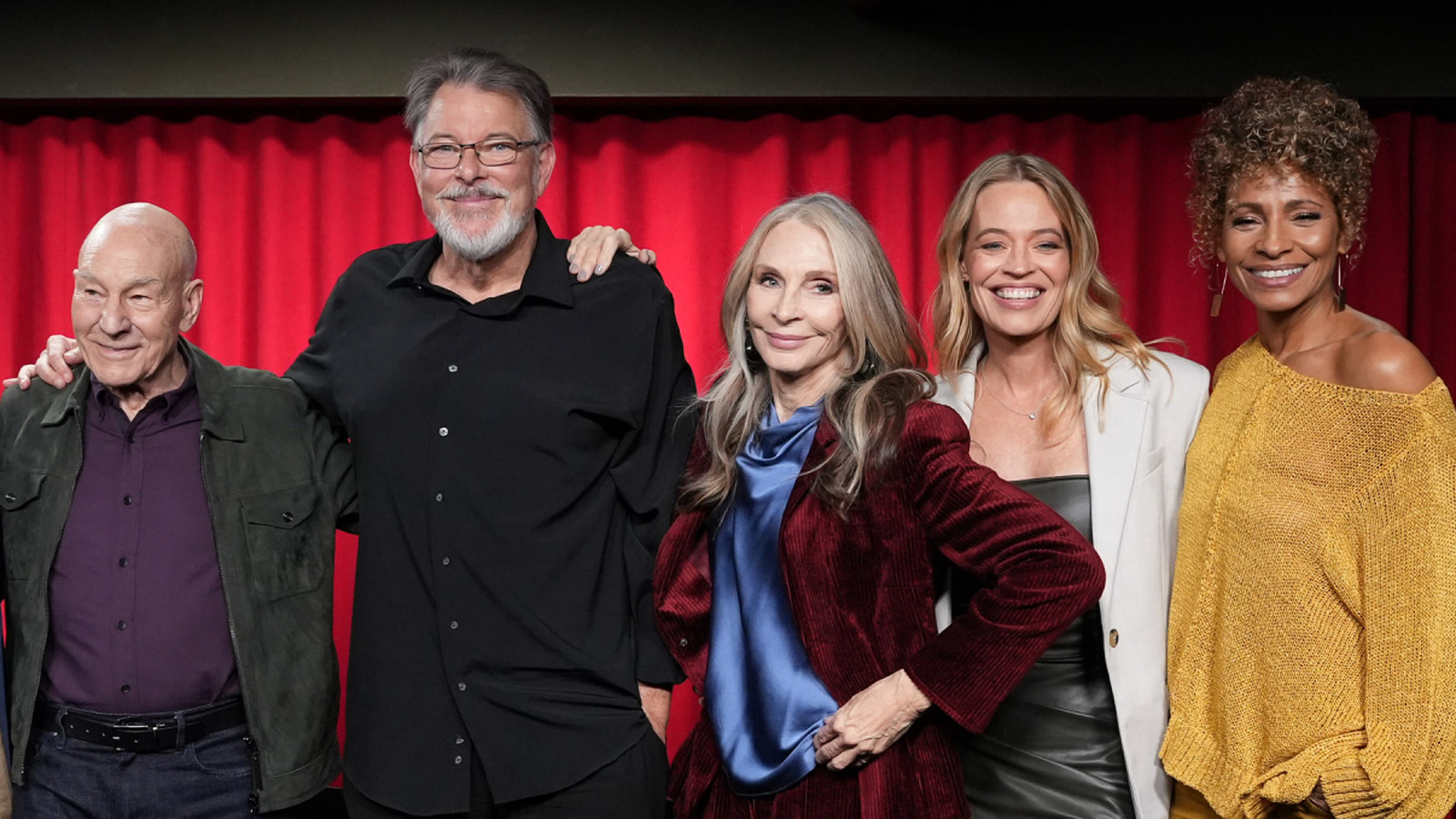
Chief among these genre-bending experiments is the 2023 fan-favorite A BiltmoreChristmas. Rather than relying strictly on the standard "big-city professional returns to a small-town farm" formula, the film introduces time travel, magical antiquities, and a distinct pedigree of speculative fiction royalty. The production famously recruited two beloved icons of the StarTrek franchise: Jonathan Frakes, immortalized as Commander William Riker in Star Trek: The Next Generation, and Robert Picardo, best known as the Emergency Medical Hologram (EMH) from Star Trek: Voyager.
By anchoring its fantastical time-slip premise in the historic, real-world setting of North Carolina’s Biltmore Estate, A Biltmore Christmas transcended traditional holiday fare. The film’s critical acclaim and high viewer retention have paved the way for a forthcoming sequel, A Grand Biltmore Christmas, scheduled to premiere on December 5 as part of the 2026 "Countdown to Christmas" programming block.
Chronology of Production and Plot Mechanics
The conceptual foundation of A Biltmore Christmas rests on a meta-narrative premise involving historical preservation, cinematic nostalgia, and temporal displacement.
The Setup
The story follows Lucy, a modern-day screenwriter struggling with writer’s block while tasked with penning a high-profile remake of a beloved 1947 holiday classic titled His Master’s Christmas. Seeking creative clarity, she travels to the sprawling, architecturally magnificent Biltmore Estate in Asheville, North Carolina—the very location where the original black-and-white film was shot.
During her tour of the grounds, Lucy encounters Winston, a knowledgeable estate historian and tour guide played by Jonathan Frakes. Through a combination of historical immersion and a mysterious, antique hourglass found on the property, Lucy is accidentally thrust backward through time. She awakens on the active 1947 film set of the very movie she was hired to modernize.
The 1947 Interlude
Stranded in the mid-20th century, Lucy must navigate the rigid social mores of the post-World War II era while interacting with the cast and crew of the original production. It is here that she encounters the head of the film studio, brought to life by Robert Picardo. As Lucy attempts to find her way back to the present without altering the timeline permanently, she inadvertently reshapes the creative direction of the classic film, leading to a race against the temporal clock before the hourglass runs out.
The Sequel’s Horizon
The narrative success of this time-travel mechanism proved pivotal for Hallmark’s executive slate. Building on the established lore of the Biltmore Estate and the time-slipping properties of its artifacts, the network greenlit a follow-up feature. A Grand Biltmore Christmas, slated for a December 5 release, will bring back Frakes to reprise his role, bridging the gap between holiday tradition and ongoing speculative world-building.
Supporting Data: The Star Trek and Hallmark Intersection
The casting of Frakes and Picardo was no casual coincidence; it served as a deliberate bridge between two culturally massive, yet traditionally disparate, fandoms.
Franchise Longevity and Statistics
Jonathan Frakes: Frakes holds a rare distinction in the annals of modern television history. As Commander William Riker, he was one of only two cast members to appear in every single episode of Star Trek: The Next Generation (1987–1994), spanning 178 episodes across seven seasons, in addition to multiple feature films and subsequent franchise appearances.
Robert Picardo: Picardo’s portrayal of the Doctor on Star Trek: Voyager (1995–2001) spanned 168 episodes, making him one of the most recognizable and enduring holographic characters in sci-fi history.
Hallmark Volume: Hallmark’s holiday engine produces immense viewership metrics. The network routinely dominates cable ratings during the fourth quarter, capturing millions of households eager for predictable emotional arcs, snow-dusted small towns, and themes of reconciliation.
Genre Convergence Data
Historically, the overlap between hard science fiction and cozy holiday romances has been statistically negligible. Hard science fiction relies on empirical world-building, technological extrapolation, and speculative physics (such as temporal mechanics and warp fields). Conversely, Hallmark holiday films rely on emotional realism, festive aesthetics, and moral transformation driven by holiday magic.
A Biltmore Christmas successfully synthesized these opposing paradigms by treating the time-travel element not with the hard-science rigor of Star Trek, but as an emotional catalyst—proving that genre conventions can bend when supported by strong character chemistry.
Official Responses and Creative Insights
The unusual blending of Star Trek lore with holiday sentimentality generated significant industry commentary upon the film’s release, with the actors themselves addressing the unique crossover.
Jonathan Frakes on Gene Roddenberry and Holiday Tropes
In interviews surrounding the release of A Biltmore Christmas, Jonathan Frakes reflected on why a project of this nature never materialized during his tenure on Star Trek. He pointed directly to the ideological framework established by franchise creator Gene Roddenberry.
"Gene Roddenberry was a card-carrying atheist," Frakes explained in an interview with CinemaBlend, "so Christmas was not big on his list of subject matters."
Despite the absence of terrestrial holiday celebrations aboard the USS Enterprise-D, Frakes argued that the underlying thematic DNA of Star Trek aligns seamlessly with the ethos of the Hallmark brand.
"I think there’s a loyalty to Star Trek, a family loyalty, that would appeal to the Hallmark family brand," Frakes noted. "Our ships were all families and these Hallmark stories are always based on family relationships. I think the connection, the dots, are not too distant."
Network Strategy and Creative Freedom
Hallmark executives have noted that bringing in veterans of speculative fiction adds a layer of prestige and cross-demographic appeal to seasonal lineups. By recruiting actors with deep genre credentials, the network successfully draws in viewers who might otherwise bypass traditional romance movies, effectively expanding its core audience base without alienating loyalists.
Implications for the Future of Holiday Programming
The success of A Biltmore Christmas and the subsequent greenlighting of A Grand Biltmore Christmas carry broader implications for how networks approach seasonal content development.
1. The Expansion of High-Concept Holiday Tropes
For decades, holiday movies operated within strict structural boundaries: mistaken identities, royal masquerades, inherited bakeries, and estranged high school sweethearts. The critical and commercial triumph of A Biltmore Christmas demonstrates that audiences are increasingly receptive to speculative elements—such as temporal displacement, parallel universes, and magical realism—when integrated into comfort-viewing frameworks. This paves the way for future holiday films to experiment further with fantasy and science fiction tropes.
2. Crossover Casting as a Marketing Lever
The inclusion of legacy actors from major sci-fi franchises proves that nostalgic casting can serve as a powerful promotional tool. By casting Frakes and Picardo, Hallmark generated widespread media coverage across entertainment outlets that rarely cover holiday romantic comedies. This cross-pollination of fandoms creates organic buzz, turning standard television movie premieres into major pop-culture events.
3. Sustainable Franchise Building
As networks face mounting pressure to continually scale their annual holiday offerings—highlighted by Hallmark’s ambitious 2026 slate of 34 new films—the traditional standalone movie model faces saturation risks. Developing interconnected sequels, such as the Biltmore franchise, offers a viable pathway toward serialized seasonal storytelling. By retaining key legacy cast members like Jonathan Frakes while maintaining the core blend of time travel and holiday warmth, Hallmark ensures that its cinematic universe remains fresh, extensible, and deeply appealing to multi-generational audiences.