
Beneath the Surface: Brad Caleb Kane on Reimagining the Horror of Crystal Lake
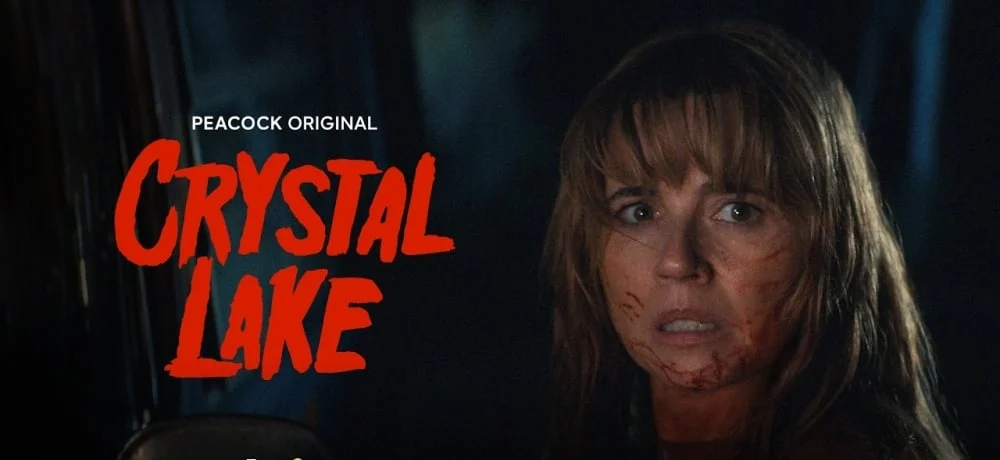
In the landscape of modern horror, few franchises carry the cultural weight and baggage of Friday the 13th. For decades, the name has been synonymous with summer camp slasher tropes, creative kills, and an unstoppable, machete-wielding icon in a hockey mask. However, the latest expansion of the mythos, Crystal Lake, is stripping away the veneer of simple B-movie thrills to expose the raw, pulsating nerves underneath.
Helmed by producer Brad Caleb Kane—a veteran of Stephen King’s Welcome to Derry—the series serves as a bold, character-driven examination of the Voorhees family. It is a show that balances visceral, practical-effect-heavy carnage with a somber, 1970s-infused exploration of institutional betrayal and maternal grief. In a wide-ranging interview, Kane discussed the philosophy behind his approach, the importance of historical context, and the necessity of taking "big swings" with iconic IP.
The Architect of Brutality: A New Direction for a Legacy Franchise
Brad Caleb Kane is no stranger to the daunting task of adapting "sacred" texts. Having navigated the terrifying world of Stephen King’s It with Welcome to Derry, he approached Crystal Lake not as a nostalgic exercise, but as a fresh narrative vessel. For Kane, the series is an attempt to answer the "why" behind the monster, focusing heavily on the emotional wreckage left in the wake of the Voorhees legacy.
Central to this exploration is the performance of Linda Cardellini as Pamela Voorhees. Throughout the series, Cardellini portrays Pamela not merely as a villain, but as a woman driven by a terrifyingly unwavering love for her son, Jason. Her journey—from a grieving mother to a force of nature capable of ruthless violence—serves as the emotional anchor of the series.
Chronology of a Nightmare: From Concept to Carnage
The development of Crystal Lake was governed by a desire to ground the supernatural elements of the Friday the 13th franchise in a tangible, relatable reality. Kane and his team spent months deconstructing the lore, attempting to reconcile the disparate tones of the various films in the franchise.
The Foundation of Fear
The series’ penultimate episode, which dives deep into the backstory of the Voorhees family, is perhaps the most ambitious segment of the show. Kane describes this episode as a collision of "Douglas Sirk meets David Cronenberg." By pulling from actual 1950s and 60s history—specifically the disturbing, documented instances of government-sanctioned medical testing on pregnant women—Kane transformed Jason’s origin from a simple curse into a result of patriarchal, institutional failure.
The Climax of Patricide
The finale’s most discussed sequence—a graphic eye-gouge and subsequent head collapse—was designed to be the ultimate expression of the show’s themes. Kane explains that the brutality was intentional: "I wanted the patricide to be as brutal as humanly possible." Working closely with VFX expert Dave Presto, the team focused on the physics of the kill to ensure it felt authentic. For Kane, this was not just about gore; it was about the symbolic purging of a father who valued money and success over the lives of his wife and son.
Supporting Data: The Craft Behind the Blood
The visual identity of Crystal Lake was a collaborative effort between Kane, the directors, the cinematography team, and composer Giosuè Greco. The goal was to evoke the aesthetic of 1970s paranoid thrillers—characterized by sun-dappled, slightly washed-out visuals that feel both nostalgic and deeply unsettling.
- Practical Effects: By prioritizing "old-school" practical effects alongside modern VFX, the production aimed to replicate the tactile, forbidden thrill of watching a slasher film in one’s youth.
- The "Jason Lives" Influence: Kane openly cites Friday the 13th Part VI: Jason Lives as his favorite entry in the franchise, noting that he sought to capture that same sense of wonder and shock.
- Tone Consistency: Rather than imitating any specific film, the series utilizes a consistent tone that mirrors the identity crisis of the early 1970s—a time of transition from the trust of the post-war era to the disillusionment of the Watergate and Vietnam generation.
Official Responses and Creative Philosophy
When asked about the challenge of balancing fan expectations with creative invention, Kane maintains a pragmatic, if uncompromising, stance.
"There’s only one sacred thing for me," Kane stated. "And that’s to make sure that certain aspects of the source material come through." However, he is quick to add that "nothing is sacred" when it comes to narrative structure. He believes that for an adaptation to justify its existence, it must provide something entirely new. If a series merely rehashes the beats of the original films, he argues, there is no reason for the audience to watch.
Kane’s philosophy regarding "fan service" is equally nuanced. He admits that he enjoys providing "dopamine hits" through shot-for-shot recreations of iconic scenes, but he recontextualizes these moments to fit the series’ deeper character arcs. "If you’re just going to do another one that’s just like those… you have to do something truly new and fresh," he says.
Implications: A Mirror to Modernity
Perhaps the most significant aspect of Crystal Lake is its attempt to reflect the current state of the world. Kane draws direct parallels between the 1970s identity crisis and the current cultural climate.
"This is a story about the mistrust of institutions," Kane explains. "We started off in the ’50s and ’60s trusting our government, trusting our institutions… then Nixon lied to us about everything. As a country, we went through a real identity crisis."
The series posits that the horror of the Voorhees family is not just a supernatural anomaly, but a byproduct of the same societal breakdown we are witnessing today. Pamela Voorhees’ arc, specifically, acts as a mirror for the viewer. As the masks of "polite society" fall away, both she and the nation are forced to confront a difficult question: If our old constructs and institutions are gone, who are we going to become?
The Legacy of the "Big Swing"
The controversial nature of the series’ backstory is something Kane welcomes. He notes that throughout his life, he has never watched a Friday the 13th movie in a theater without hearing someone complain about the direction the film took. By leaning into these "big swings," Kane hopes to prove that the franchise is robust enough to handle deep, psychological experimentation without losing its identity as a slasher staple.
Conclusion
Crystal Lake stands as a testament to the idea that horror is at its best when it functions as a societal mirror. By elevating the Friday the 13th brand from a series of jump-scares to a character-rich, politically charged, and emotionally resonant drama, Brad Caleb Kane has challenged the boundaries of what a legacy franchise can achieve.
Whether fans will fully embrace this radical re-imagining remains to be seen, but as the final credits roll, the message is clear: the horror of the lake was never just about a masked killer in the woods. It was about the sins of the past, the trauma of the present, and the terrifying, unpredictable nature of what happens when the people we trust fail us. In Crystal Lake, the blood runs deep, but the grief—and the consequences—run deeper.
