James Gray’s ‘Paper Tiger’ Set to Make North American Premiere in 35mm at the New York Film Festival
NEW YORK — Acclaimed filmmaker JamesGray is returning to familiar territory with a renewed commitment to celluloid preservation. His latest gritty family crime saga, PaperTiger, is slated to make its highly anticipated NorthAmericanpremiere as the opening night film of the New York Film Festival (NYFF). In an era dominated by digital projection and streaming optimization, distributor Neon has announced a rare treat for cinephiles: every single opening night screening of the film will be presented in gorgeous, tactile 35mm film.
The decision to showcase the film exclusively on photochemical prints underscores both Gray’s passionate advocacy for analog filmmaking and Neon’s ongoing commitment to theatrical presentation traditions. For audiences attending the festival’s opening night on Friday, September 25, the screenings at Lincoln Center will offer a sensory experience that modern digital formats simply cannot replicate.
Main Facts: A Celluloid Showcase for an Ambitious Crime Saga
The North American premiere of Paper Tiger marks one of the major cinematic events of the fall festival season. Neon’s rollout strategy for the NYFF opening night guarantees that the film will be experienced in its purest, intended physical form across the festival’s premier venues.
The official NYFF 35mm screening schedule for Paper Tiger on Friday, September 25, is as follows:
6:00 p.m. – Alice Tully Hall
6:30 p.m. – Walter Reade Theatre
9:00 p.m. – Alice Tully Hall
9:30 p.m. – Walter Reade Theatre
Following its high-profile festival debut, Neon has scheduled a wide theatrical release for Paper Tiger starting on Friday, November 13, bringing the gritty New York drama to mainstream audiences nationwide.
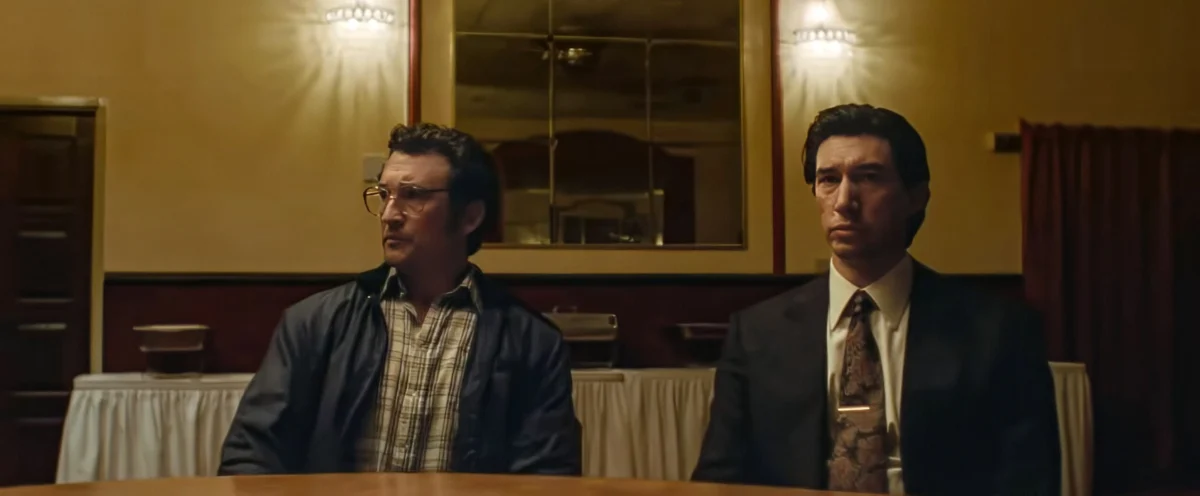
The film boasts a powerhouse ensemble cast anchored by Adam Driver, Miles Teller, and Scarlett Johansson. In Paper Tiger, Driver stars as former police officer Gary Pearl, who drags his brother Irwin (played by Teller) into a high-stakes business deal that quickly spirals out of control. The venture entangles the brothers with ruthless Russian mobsters operating out of New York City’s historic docks. Meanwhile, Johansson portrays Hester, a woman harboring a dangerous secret that is further suppressed by her family’s fracturing relationships. True to Gray’s filmography, the narrative explores the high cost of impulsive decisions driven by the elusive pursuit of the American dream.
Chronology of Events: From Production to the Festival Stage
The journey of Paper Tiger to the opening night of the New York Film Festival represents the culmination of years of meticulous planning, shooting, and post-production by James Gray and his longtime collaborators.
Pre-Production and Principal Photography: Gray teamed up with director of photography Joaquin Baca-Asay and production designer Happy Massee to capture the gritty, authentic texture of working-class New York and its waterfronts. Choosing to shoot on 35mm film rather than digital cameras, the production team prioritized the organic look, grain, and warmth inherent to photochemical stock.
Early 2025 – Festival Buzz and Distribution Acquisition: Following the completion of the film, Neon secured distribution rights, recognizing the project’s prestigious awards potential and commercial appeal, bolstered by its star-studded cast.
Late Summer 2025 – Critical Reception: Ahead of its North American arrival, early reviews began circulating following international screenings, solidifying Gray’s reputation as a master chronicler of flawed familial dynamics and institutional corruption.
September 25, 2025 – NYFF Opening Night:Paper Tiger makes its landmark North American premiere across four simultaneous 35mm screenings at Alice Tully Hall and the Walter Reade Theatre.
October 22, 2025 – Virginia Film Festival Honor: James Gray is scheduled to travel to the Virginia Film Festival, where he will receive the organization’s prestigious directing award. The appearance will also feature a live-recorded Q&A hosted by IndieWire’s Screen Talk co-hosts Anne Thompson and Ryan Lattanzio.
November 13, 2025 – Nationwide Theatrical Release: Neon officially opens Paper Tiger to the general public in theaters across North America, inviting audiences to experience the crime drama on the big screen.
Supporting Data: The Case for Celluloid in the Digital Age
The decision to premiere Paper Tiger entirely on 35mm is not merely a nostalgic gimmick; it is part of a broader ideological crusade led by Gray to protect the physical integrity of motion pictures. In recent interviews, the director has been vocal about the artistic necessity of film stock, comparing the current cultural shift toward digital projection to the historical trajectory of music formats.
"We went all digital in the ’80s and early ’90s, and all of a sudden people heard a vinyl record and went, ‘Wait a minute, that sounds better,’ because it’s a continuous signal," Gray explained in a recent interview with IndieWire. "The needle goes into the record, and the signal is continuous, and digital, of course, breaks it up into zeros and ones. That imperfection, the warmth, is what reminds us of who we are."
This philosophy directly informs the visual language of Paper Tiger. By utilizing physical film stock, Baca-Asay’s cinematography captures the natural play of light and shadow, grain structure, and color depth that digital sensors—despite their high resolutions—often render too clinical or sterile. The data shows a persistent, albeit niche, resurgence in analog formats among auteur filmmakers who argue that physical media creates a deeper emotional bond between the viewer and the projected image.
Furthermore, the production budget and distribution logistics required to strike and ship multiple 35mm prints for simultaneous festival screenings highlight Neon’s willingness to invest heavily in theatrical eventizing, separating high-end cinematic releases from standard content delivery models.
Official Responses: Director and Distributor Statements
The filmmaking community and studio executives have rallied around the 35mm launch of Paper Tiger, framing it as a vital cultural statement about the health of theatrical exhibition.
In an official statement provided exclusively to IndieWire, James Gray expressed profound gratitude for the collaborative effort required to bring his vision to the silver screen in its native format:
"There are many ways to watch a film today, and many can be beautiful. But a 35mm print, projected right, has that thing we call ‘the magic of the silver screen.’ There is just nothing else like it," Gray stated. "A dream come to life, and I couldn’t be happier that my own work will be shown this way at NYFF. My director of photography, Joaquin Baca-Asay, my production designer, Happy Massee, and the rest of my wonderful crew deserve to have their work seen in this silky, indelible format. It reminds us that cinema is still unparalleled."
Distributor Neon has similarly championed the release strategy, positioning Paper Tiger as a premier prestige title that rewards theatrical audiences who seek out authentic movie-going experiences. By leaning into the exclusivity of the 35mm prints for opening night, Neon has successfully generated intense early buzz and elevated the cultural discourse surrounding the film’s premiere.
Implications: What Paper Tiger Means for the Future of Cinema
The rollout of Paper Tiger carries significant implications for the broader film industry, touching on everything from exhibition standards to the ongoing debate over the survival of celluloid in an automated, digital-first world.
1. The Revival of Analog Formats
As major studios increasingly rely on digital acquisition, post-conversion, and streaming-first distribution models, filmmakers like James Gray, Christopher Nolan, and Paul Thomas Anderson continue to fight for the survival of photochemical film. The strong institutional backing from organizations like the Film Society of Lincoln Center (NYFF) and independent powerhouses like Neon demonstrates that there remains a robust, paying audience—and critical establishment—that values the unique aesthetic qualities of 35mm and 70mm projections.
2. Redefining the Theatrical "Event"
In an era where box office success is heavily front-loaded and competing with at-home viewing options, distributors are forced to find innovative ways to make theatrical attendance mandatory. By offering a format that cannot be replicated on a home television or a standard digital multiplex screen, Neon is transforming standard festival screenings into unmissable cultural events. This strategy could pave the way for more specialized, format-exclusive theatrical runs for prestige auteur projects.
3. Auteur Control and Studio Partnerships
The collaboration between Gray and Neon on Paper Tiger highlights a healthy symbiotic relationship between visionary directors and daring distributors. While risk-averse major studios often push for standardized digital deliverables to cut costs, independent-leaning distributors like Neon understand that artistic integrity and bespoke exhibition strategies are powerful marketing tools that attract top-tier talent and critical acclaim.
As Paper Tiger prepares to light up the screens at Alice Tully Hall and the Walter Reade Theatre, it stands not only as a compelling cinematic exploration of crime, family, and betrayal, but also as a triumphant reminder of the enduring power of the silver screen.