
Challenging the Throne: Vivo’s X500 Pro Signals a Paradigm Shift in Mobile Cinematography
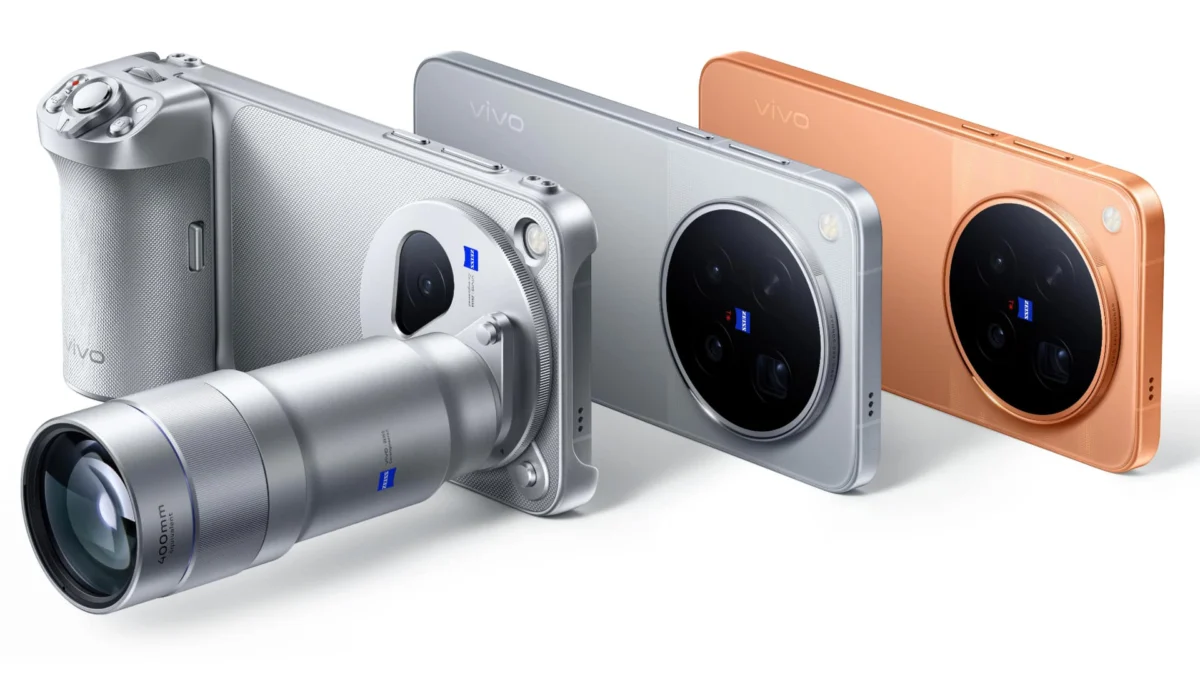
For years, the mobile videography landscape has been dominated by a singular narrative: if you are serious about shooting video on a smartphone, you buy an iPhone. Apple’s integration of hardware and software, coupled with its dominance in post-production workflows like ProRes, has long cemented its status as the industry standard. However, the hegemony of Cupertino is facing an increasingly sophisticated challenge from the East.
Vivo, a company that has steadily refined its imaging prowess through strategic partnerships and aggressive R&D, has officially unveiled the X500 Pro series. With specs that read more like a mirrorless hybrid camera than a consumer handheld, the X500 Pro is not just another flagship; it is a direct assault on the professional video market. Scheduled for a European release on October 27, the X500 series represents a pivotal moment in the evolution of computational photography and videography.
The Core Specifications: A Professional Workflow in Your Pocket
The headline features of the Vivo X500 Pro are staggering, effectively pushing the boundaries of what is thermally and computationally possible in a mobile form factor. At the heart of the device is the new 50 MP Sony LYTIA L910 main sensor (1/1.28 inch), which Vivo claims delivers an industry-leading 17 stops of dynamic range.
For the professional cinematographer, the numbers are equally compelling. The device offers 4K recording at up to 240 fps for high-speed slow motion, 4K at 120 fps with full autofocus tracking, and 8K resolution at 30 fps. Perhaps most importantly for the prosumer segment, the X500 Pro supports 10-bit 4:2:2 Log recording and full ACES (Academy Color Encoding System) color management.
The DaVinci Resolve Integration
One of the most significant barriers to entry for Log-based smartphone footage has been the cumbersome post-production process. Users are typically forced to rely on community-made LUTs that often produce inconsistent results. Vivo is breaking this cycle by providing an official DaVinci Resolve color transform. This allows professionals to ingest X500 Pro footage directly into their professional grading suites with the confidence that the color science is accurately mapped. This hardware-assisted pipeline operates at 4K120, ensuring that high-frame-rate, high-bitrate footage is processed without stuttering or data loss.
Chronology: From Concept to Global Launch
The journey of the X500 series reflects Vivo’s iterative approach to hardware development.
- Late September: Vivo officially unveils the X500 series in China, creating a buzz among tech enthusiasts and photography circles for its bold sensor claims and advanced lens system.
- Early October: Initial technical benchmarks emerge, confirming the efficiency of the MediaTek Dimensity 9600 Pro chipset in handling the heavy computational load of 4K120 Log recording.
- October 27: The official European launch event. This date marks the first time the global market will get hands-on access to the device, outside of the Chinese domestic sphere.
- November 5: Retail availability commences. While the initial launch is focused on the European continent, the global tech community is watching closely to see if this launch strategy signals a broader move into international retail expansion.
Supporting Data: Hardware, Optics, and Ergonomics
The X500 Pro is a marvel of miniaturization. Measuring just 151.8 x 71.9 x 8.1 mm and weighing under 200 grams, the device manages to pack an incredible amount of glass and silicon into a pocketable frame.
The Lens Ecosystem
The optical setup is designed to cover the full range of a filmmaker’s standard kit:
- Ultra-Wide: 15mm equivalent.
- Main: 24mm equivalent with Zeiss T* coating to minimize flare and ghosting.
- Telephoto: 85mm equivalent periscope lens, utilizing a 64 MP sensor.
For those who require even more reach, Vivo has introduced the Zeiss Telephoto Extender Gen 2 Ultra. This modular accessory effectively extends the reach to a 400mm equivalent, a focal length rarely seen in mobile photography.
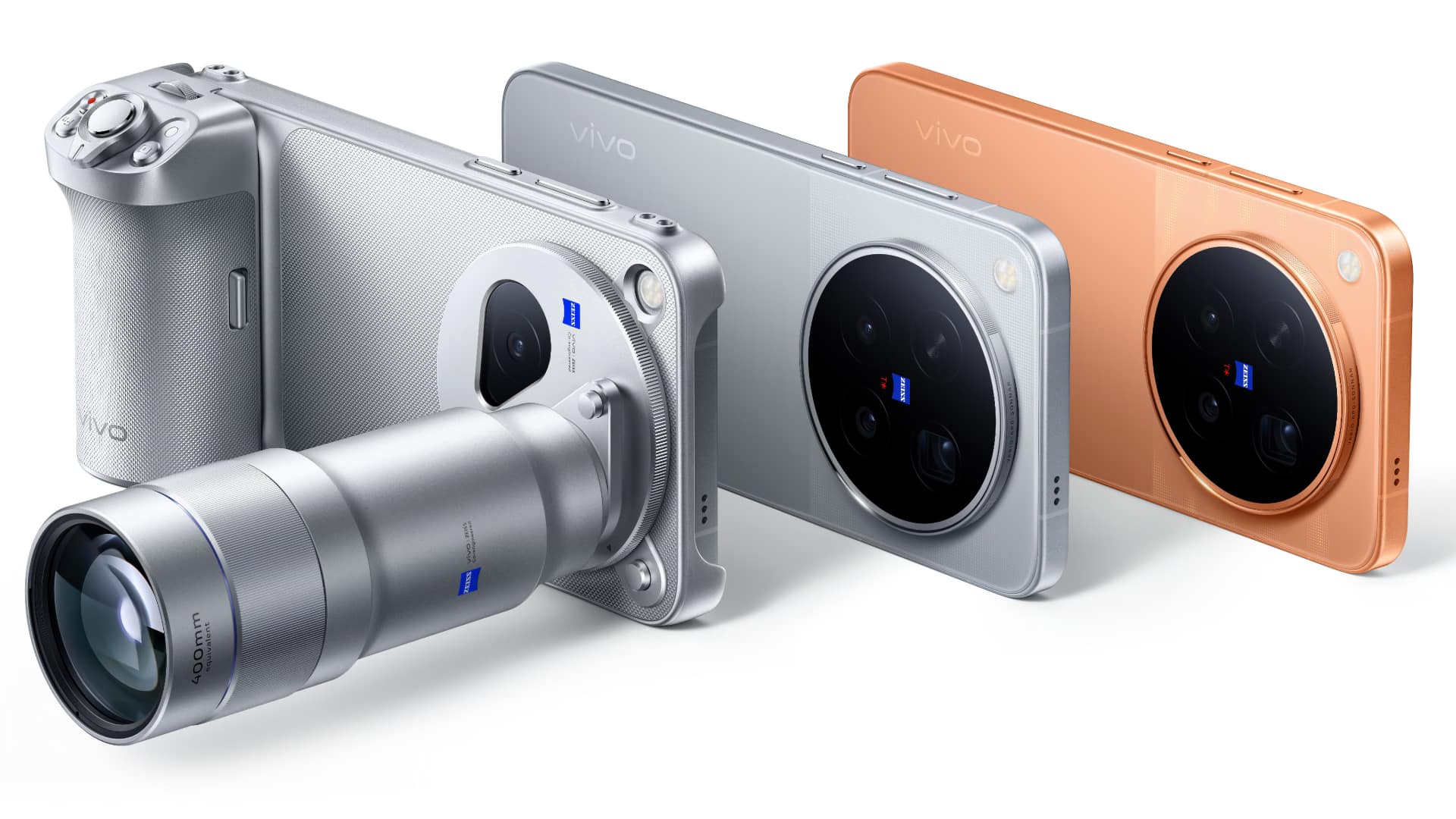
The X500 Pro Max: The Power User’s Choice
For a premium of approximately $75 (CNY 500), users can opt for the X500 Pro Max. This version upgrades the telephoto experience to a massive 200 MP sensor and integrates a three-degree gimbal-style stabilization system on the main camera. Given the minor price difference, analysts expect the "Max" variant to capture a significant share of the enthusiast market.
Technical Foundations
- Display: 6.36-inch LTPO AMOLED with a 144 Hz refresh rate, ensuring that what you see on the screen matches the professional quality of the capture.
- Battery & Charging: A 6510 mAh cell powers the device, supported by 90 W wired and 40 W wireless charging, essential for sustaining the power-hungry 4K120 recording sessions.
- Protection: The device maintains an IP68 and IP69 rating, ensuring it can handle the rugged environments often associated with professional field production.
The Innovation: The Vivo Camera Screen
Perhaps the most inventive accessory launched alongside the X500 series is the new Bluetooth monitoring screen. Measuring 5.65 mm in thickness and weighing only 68 grams, this 3.92-inch AMOLED touchscreen (419 PPI) serves as an external production monitor.
By attaching magnetically or operating via Bluetooth, the screen allows the user to mirror the phone’s camera app. This essentially turns the X500 Pro into a professional vlogging or self-production rig. Instead of guessing your framing or checking your exposure on the small phone screen while shooting from the back, you can now have a dedicated, high-resolution monitor attached to the side or back of the device. At a price point of CNY 699 (approx. $105), it is an accessible tool that bridges the gap between consumer smartphones and cinema-grade mirrorless rigs.
Official Responses and Strategic Implications
Vivo has remained tight-lipped regarding specific regional pricing for Europe, leading to widespread speculation. However, the company’s intent is clear: they are positioning the X500 Pro as a tool for creators, not just a lifestyle device for social media users.
The Implications for the Industry
The shift toward professional-grade features in Chinese flagships like the X500 Pro has profound implications for the mobile market.
- Democratization of Log Workflow: By providing a direct DaVinci Resolve color transform, Vivo is lowering the barrier to entry for mobile color grading. This move forces competitors—including Apple and Samsung—to reconsider their "walled garden" approaches to proprietary color formats.
- Hardware-Software Synergy: The use of MediaTek’s Dimensity 9600 Pro to facilitate a "hardware-assisted pipeline" suggests that the future of mobile videography lies in dedicated silicon for color processing, rather than relying purely on software post-processing.
- The "Pro" Designation: For years, "Pro" in the mobile world simply meant a better battery or a slightly sharper screen. With the X500 Pro, the label finally aligns with the creative professional’s definition. The inclusion of ACES support and gimbal-stabilized telephoto lenses suggests that Vivo is targeting the production houses that utilize smartphones as "C-cams" or "crash cams" on professional sets.
The "Gray Market" Reality
Despite the excitement, a significant hurdle remains: the lack of official distribution in the United States. Vivo has traditionally restricted its flagship X-series to Asian and select European markets. For the US consumer, the X500 Pro remains a "gray import" device—technically superior but lacking warranty support and optimized network band compatibility. While this preserves the status quo for the time being, the rapid pace of Vivo’s innovation suggests that if they do decide to enter the US market in full force, the established giants will have a very difficult time justifying their market dominance based on hardware specifications alone.
Conclusion: A New Era of Mobile Production
The Vivo X500 Pro is more than just a smartphone; it is an endorsement of the idea that professional cinema tools are no longer reserved for bulky camera bodies. By prioritizing dynamic range, native Log recording, and seamless integration with industry-standard editing software, Vivo has laid down a marker that cannot be ignored.
Whether the X500 Pro will successfully displace the iPhone in the hearts of professional creators remains to be seen. However, by providing the tools that professionals actually ask for—such as the external Bluetooth monitor, the official DaVinci Resolve transforms, and the 4K120 Log pipeline—Vivo has signaled that they are not interested in playing by the old rules. They are writing their own, and the rest of the industry is now playing catch-up. As October 27 approaches, the European market is set to be the primary theater for what promises to be one of the most interesting technological shifts in recent smartphone history.
