
The Battle for the Backlot: California Democrats Push for Federal Film Incentives to Stem Industry Flight
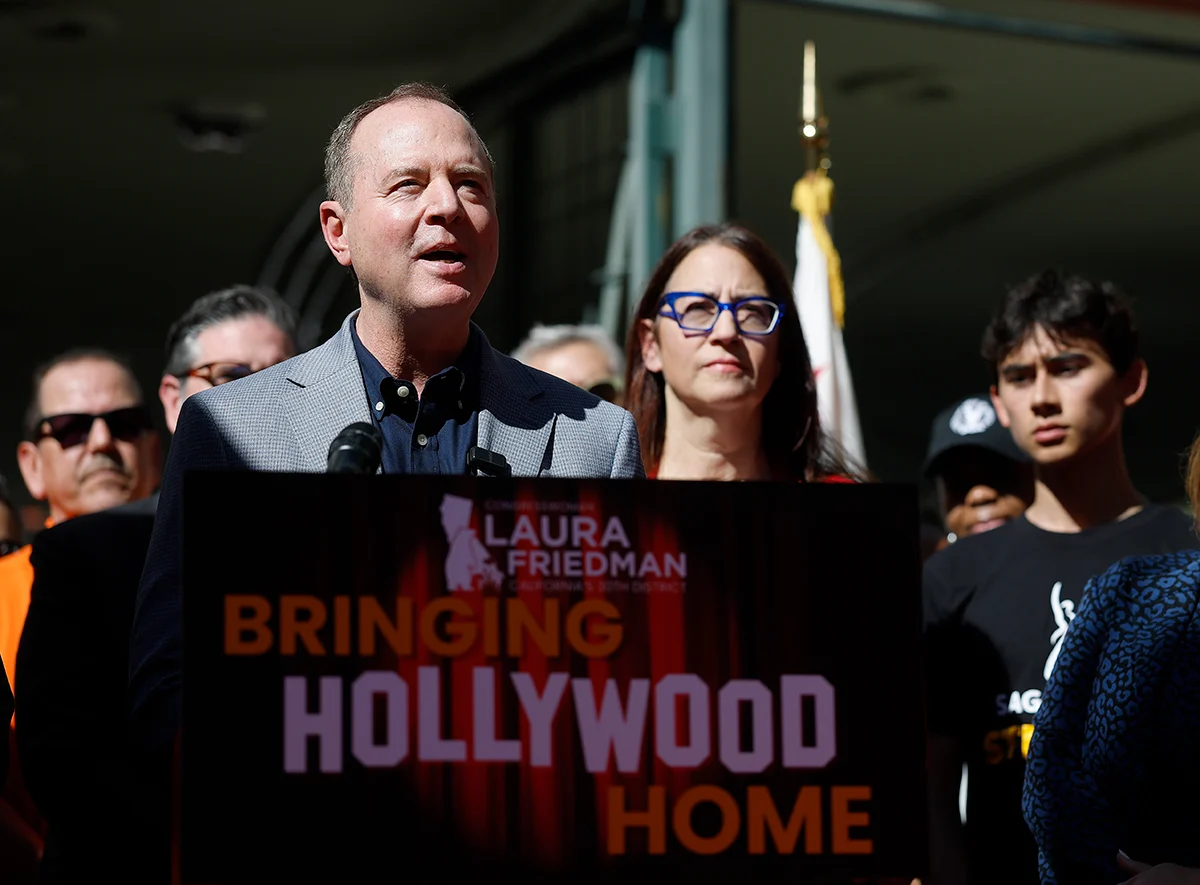
In a high-stakes legislative push during the final weeks of the calendar year, a powerful coalition of California Democrats, labor unions, and entertainment industry stakeholders is rallying to secure a landmark federal tax incentive for film and television production. Standing in the sweltering 100-degree heat outside the historic Alex Theatre in Glendale, California, Sen. Adam Schiff and a delegation of Southern California representatives delivered a clear ultimatum: the United States must act now to reclaim its dominance in the global entertainment economy or face the irreversible erosion of its production infrastructure.
The proposed legislation, which would establish a 20% to 30% transferable tax credit on domestic labor costs for film and television productions, represents the most significant attempt in recent memory to address "runaway production"—the phenomenon of U.S. film projects relocating to foreign jurisdictions that offer aggressive subsidies. As the legislative window narrows to a five-week "lame-duck" session following the November elections, supporters are treating this bill not merely as a policy preference, but as a critical economic lifeline for hundreds of thousands of industry workers.
The Legislative Roadmap: A Bipartisan Strategy
The urgency of the moment is underscored by the structural decline of U.S.-based production. Last month, lawmakers introduced the bill, which is designed to be folded into a broader end-of-year tax package. Sen. Schiff, a key architect of the push, revealed that the bill has already secured a rare degree of bipartisan cooperation. Currently, 12 senators—six Democrats and six Republicans—have committed to the measure. Notably, Sens. Thom Tillis (R-N.C.) and Chris Coons (D-Del.) have joined as cosponsors, signaling that the issue resonates across state lines, moving beyond the traditional "Hollywood" narrative to a national economic imperative.
Rep. Laura Friedman, who spearheaded the organization of Tuesday’s press conference, expressed a sense of "guarded optimism." For Friedman, the path forward is clear: the bill must reach the President’s desk by mid-December. "This has been almost two years of constant work," Friedman noted. "It started out as an idea, and we just kept building and building. It’s been a snowball effect, and we feel we have the momentum to see it through."
Chronology of a Crisis: How We Got Here
The current legislative effort is the culmination of years of mounting concern regarding the competitive landscape of global filmmaking. For decades, the United States has watched as international rivals—ranging from Canada and the United Kingdom to emerging production hubs in Eastern Europe and Southeast Asia—have utilized state-funded subsidies to undercut American labor costs.
The Erosion of Market Share
A report released on Monday by a coalition of industry unions provided the statistical backbone for the lawmakers’ arguments. The data is sobering: over the past 25 years, the U.S. share of global production spending has plummeted. In film, the U.S. share dropped from 74% to 42%. In television, the decline was from 94% to 64%. While the total volume of content produced globally has grown, the U.S. share of that growth has been stunted by the aggressive tax policies of foreign nations.
The Political Shift
The issue has transcended traditional party lines. Interestingly, the push for federal support has even received backing from the highest levels of the opposition. In August, President Donald Trump publicly urged Congress to pass an incentive, characterizing the current state of the industry as a "complete and total disaster." This convergence of support—from progressive Democrats in California to conservative voices—has created a unique legislative opening that proponents are desperate to exploit before the next Congress is sworn in.
Supporting Data: Why Incentives Matter
The proposed bill is structured to do more than just match foreign tax credits; it is designed to stimulate regional economies across the U.S. The core of the bill is a 20% to 30% transferable credit on U.S. labor costs. To incentivize filming in specific regions, the bill includes a 5% "bonus" for productions located in disaster areas—a provision that would apply to all of Los Angeles County through January 2030, in direct response to the devastating wildfires of the past year.
Furthermore, the proposal includes additional incentives for independent films and production in rural "opportunity zones." When combined with existing state-level incentives in hubs like California, New York, Georgia, and New Mexico, the total tax benefit for a production could potentially exceed 50%. Proponents argue that this level of support would not only stop the outflow of work but actually reverse the trend, making the U.S. the most cost-effective place in the world to produce high-quality content.
Official Responses and Stakeholder Perspectives
The industry response to the bill has been one of cautious advocacy. The Motion Picture Association (MPA), which represents the major film studios, has been vocal about the bill’s potential to benefit all 50 states, not just the traditional coastal production centers. However, the MPA has been more measured regarding the timeline, emphasizing the need to "get it right" rather than simply rushing to pass legislation.
Labor leaders, however, argue that the industry is beyond the point of patience. Duncan Crabtree-Ireland, the executive director of SAG-AFTRA, was blunt in his assessment of the global competition. "It is fair to say that these other countries recognize the quality of these jobs—that’s why they put these measures in place," he said. "They are eating not only our lunch but our breakfast and our dinner as well. We have to change that."
Mike Miller, the vice president of the International Alliance of Theatrical Stage Employees (IATSE), echoed this sentiment, emphasizing that the human cost of the delay is mounting. "When this passes in this lame-duck session, it will immediately impact production in 2027," Miller explained. "Hundreds of thousands of entertainment industry workers are counting on it. We don’t have the luxury of waiting."
Implications: A New Era for American Production?
The implications of passing this bill would be profound. If successful, the legislation would likely trigger a massive reinvestment in domestic studio infrastructure, post-production facilities, and technical labor forces. By leveling the playing field, the bill aims to prevent the "brain drain" of skilled technicians, editors, and craftspeople who have been forced to move abroad to find steady employment.
However, the path to passage remains fraught with political obstacles. The "lame-duck" session is notoriously unpredictable, often dominated by broader fiscal debates and the looming specter of government funding deadlines. For the delegation of California Democrats, the goal is to ensure that the film incentive is viewed as a "must-pass" component of the larger tax package.
As the political maneuvering intensifies in Washington, the mood in Hollywood remains one of nervous anticipation. The industry, which has survived strikes, technological shifts, and the upheaval of the streaming revolution, now faces its most significant challenge from the regulatory environment. Whether the federal government will choose to protect one of America’s most iconic exports—and the hundreds of thousands of middle-class jobs attached to it—remains the central question of the closing weeks of the year.
"It just can’t wait," Sen. Schiff reiterated during the rally. "The losses so far have been too extraordinary." With the clock ticking toward mid-December, the fate of the American film industry’s future may very well be decided in the halls of Congress before the year is out.
