
DJ Jazzy Jeff & the Fresh Prince Series in the Works from Will Smith’s Westbrook Studios
Main Facts
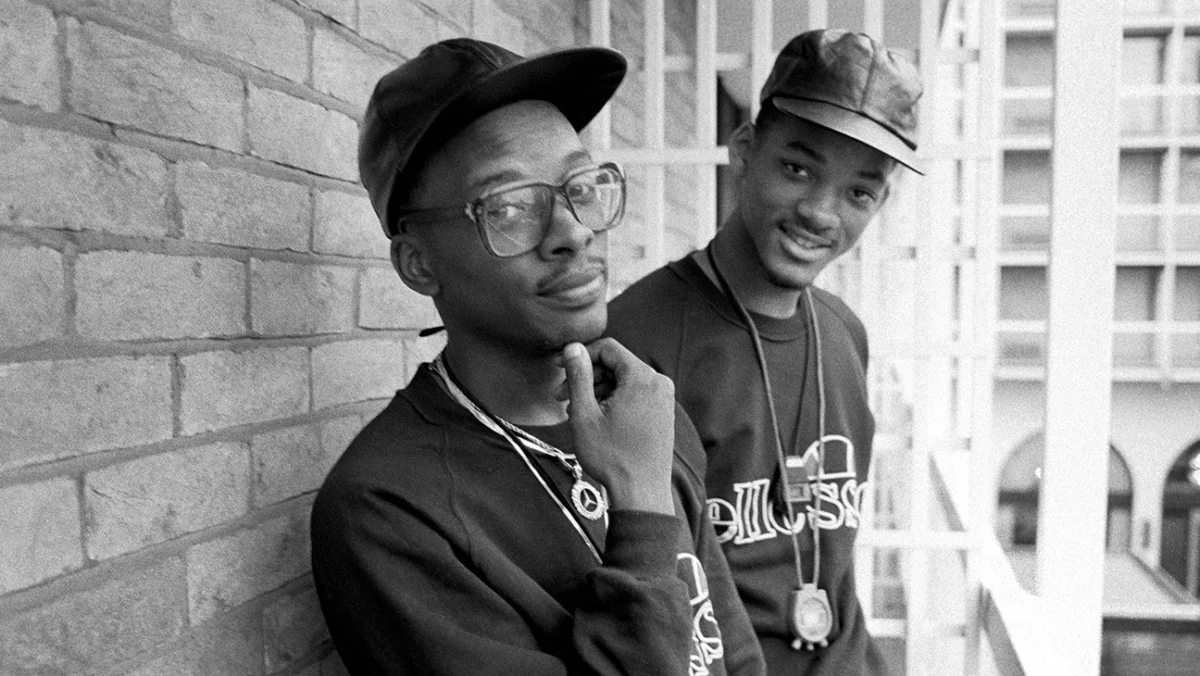
The mythos of The Fresh Prince is getting a profound and grounded prequel treatment. Westbrook Studios, the multimedia production company co-founded by global superstar Will Smith, is officially developing 215, a scripted television series chronicling the true-life origins and meteoric rise of the iconic 1980s hip-hop duo DJ Jazzy Jeff & the Fresh Prince—comprising Jeff Townes and Will Smith.
The project represents a major milestone for Westbrook Studios, serving as the inaugural title in a newly minted multi-project partnership with the private equity firm The Malar Group. Under this new alliance, Westbrook and The Malar Group will co-develop a robust, curated slate of feature films and television series designed to highlight character-driven narratives with distinct cultural points of view.
Titled after the area code of their native Philadelphia, 215 will pull back the curtain on the formative years of Townes and Smith before television immortality found them. Set against the vibrant, high-stakes backdrop of the late-1980s and early-1990s urban American music scene, the series will explore how two young men from Philadelphia navigated the treacherous waters of the nascent hip-hop industry, chasing record deals, financial survival, and ultimately, a permanent cultural legacy.
As of reporting, a showrunner or head writer has yet to be officially attached to the project, as the development phase remains in its early stages. However, the creative ambition behind the venture is already drawing significant industry attention, positioning 215 as one of the most anticipated biographical television packages in recent development history.
Chronology: Tracing the Path from the Germantown Avenue to Global Stardom
To understand the narrative weight of 215, one must trace the timeline of how two distinct musical paths converged in Philadelphia to form a Grammy Award-winning powerhouse.
In the mid-1980s, the hip-hop landscape was largely dominated by New York City artists. Philadelphia, while possessing a rich and distinct musical heritage of soul, R&B, and local street culture, was still fighting to carve out its definitive voice on the national rap map. It was within this environment that a young Will Smith—then known simply by his childhood moniker "Prince"—was making waves in the local party circuit as a charismatic, humorous battle MC with a knack for storytelling rhymes.
The pivotal intersection occurred in 1985 at a house party in West Philadelphia. Townes, already renowned in the local DJ community for his cutting-edge technical wizardry and revolutionary scratching techniques (including his signature "transformer scratch"), was playing a set when his primary hype man failed to show up. Smith stepped up to the microphone to fill the void, and an undeniable chemistry instantly sparked between the rapid-fire wordsmith and the virtuoso turntablist.
By 1986, DJ Jazzy Jeff & the Fresh Prince officially formed. Their initial breakthrough came with the release of their debut single, "Girls Ain’t Nothing But Trouble," in 1986, which caught the attention of Jive Records. The duo achieved mainstream history in 1988 with their sophomore double-album He’s the DJ, I’m the Rapper, which featured the crossover smash hit "Parents Just Don’t Understand." The track earned hip-hop its very first Grammy Award for Best Rap Performance in 1989—a watershed moment for the genre.
Despite their early musical triumphs, the road was fraught with the turbulence of sudden fame, shifting artistic identities, and the immense pressure of maintaining hometown authenticity while stepping onto the global stage. It is precisely this volatile, high-stakes era of trial, error, and triumph that 215 aims to capture, documenting the years just prior to Smith’s transition into television stardom with The Fresh Prince of Bel-Air in 1990.
Supporting Data: Westbrook’s Track Record and The Malar Group Alliance
The announcement of 215 is not an isolated creative endeavor; it is part of a calculated expansion strategy by Westbrook Studios to dominate both premium television and commercial feature filmmaking.
Westbrook, which manages the entertainment and digital media interests of Will Smith and Jada Pinkett Smith, has built a formidable reputation for producing high-profile, critically acclaimed, and commercially viable content across multiple platforms. On the television front, Westbrook’s portfolio includes:
- Bel-Air: The dramatic, serialized reimagining of The Fresh Prince of Bel-Air that premiered on Peacock to massive streaming numbers, proving that audiences have an insatiable appetite for deeper, grittier explorations of the Smith mythos.
- Cobra Kai: The massively successful martial arts comedy-drama streaming series that capitalized on legacy nostalgia while reinventing a cinematic universe for modern audiences.
- Women of the Movement: The critically acclaimed ABC historical drama anthology miniseries that shed light on the civil rights movement through the eyes of Mamie Till-Mobley.
On the feature film side, Westbrook’s upcoming slate features high-profile studio projects, including a contemporary remake of the horror classic Night of the Living Dead, Netflix’s action-thriller Fast & Loose, and the long-awaited sequel I Am Legend 2.
The partnership with The Malar Group injects fresh institutional and private equity backing into Westbrook’s development pipeline. Led by CEO Sayan Navaratnam, The Malar Group brings substantial financial muscle and strategic global positioning to the table. By pairing Westbrook’s unmatched creative pedigree with The Malar Group’s financial infrastructure, the collaboration is explicitly structured to bypass traditional studio bottlenecks, allowing both entities to greenlight and develop original, auteur-driven content with speed and precision.
Official Responses and Executive Perspectives
Industry leaders from both partnering organizations have expressed profound enthusiasm regarding the cultural and commercial significance of 215, emphasizing that the project serves as the ideal foundational stone for their broader alliance.
Terence Carter, President of Television for Westbrook Studios, highlighted the deep personal and geographic connection the studio has to the material.
"Westbrook has always been focused on developing stories with strong characters, distinctive worlds, and a clear point of view," Carter stated. "215 is especially meaningful to us because it draws from the rise of DJ Jazzy Jeff & the Fresh Prince and celebrates Philadelphia during such a defining era in the city’s late ’80s/early ’90s hip-hop scene. The Malar Group shares our approach to storytelling, and this partnership gives us the opportunity to build a slate together with intention, beginning with a project rooted in friendship, ambition, and the integrity of this specific time and place."
Echoing these sentiments, Sayan Navaratnam, CEO of The Malar Group, emphasized the universal thematic resonance driving the series forward beyond mere biographical nostalgia.
"We’re excited to partner with Westbrook Studios on a slate of film and television projects driven by distinctive creative vision and exceptional storytelling," said Navaratnam. "215 caught our attention immediately. It’s the untold origin story of a show that audiences around the world have connected with for decades, but at its heart, it’s about two people who believed in each other, overcame extraordinary odds, and built something that endured. 215 marks the start of a broader collaboration with Westbrook Studios, and we look forward to this project and the stories still to come."
Implications: What 215 Means for the Nostalgia Economy and Musical Biopics
The greenlighting of 215 carries significant implications for the contemporary entertainment landscape, particularly within the realms of biographical dramas and the thriving "nostalgia economy."
In recent years, the entertainment industry has witnessed an unprecedented boom in musical biopics and origin stories—ranging from theatrical blockbusters like Straight Outta Compton and Bohemian Rhapsody to prestige television series chronicling the lives of musical legends. However, 215 operates under a unique structural advantage: it is being developed and authorized by the primary subjects themselves, granting the creative team an authentic blueprint of events that standard unauthorized biopics often lack.
Furthermore, the project signals a strategic shift in how studios monetize intellectual property. Rather than simply executing a straightforward reboot or sequel, Westbrook is successfully mining its own historical footprint to create meta-prequels. Just as Bel-Air proved that audiences are willing to accept a dramatic, prestige-television reinterpretation of a lighthearted 1990s sitcom, 215 promises to inject gritty realism and historical contextualization into the birth of American hip-hop royalty.
For the city of Philadelphia, the series represents a major cultural victory. Long overshadowed by the cultural machinery of New York and Los Angeles, Philadelphia’s contributions to early hip-hop history—often encapsulated by the rhythmic genius of Jazzy Jeff’s turntablism and Smith’s accessible yet technically brilliant cadence—will finally receive a definitive, long-form dramatic examination on a global stage.
As 215 moves deeper into development, casting announcements and showrunner attachments will undoubtedly generate intense media scrutiny. If Westbrook Studios and The Malar Group successfully execute their vision, 215 may well establish a new gold standard for how intellectual property, personal biography, and musical history intersect in modern prestige television.
