
The Final Act: Andrew Scott Transforms into Ian Charleson in Simon Stone’s Elsinore
By Editorial Staff
October 7, 2026
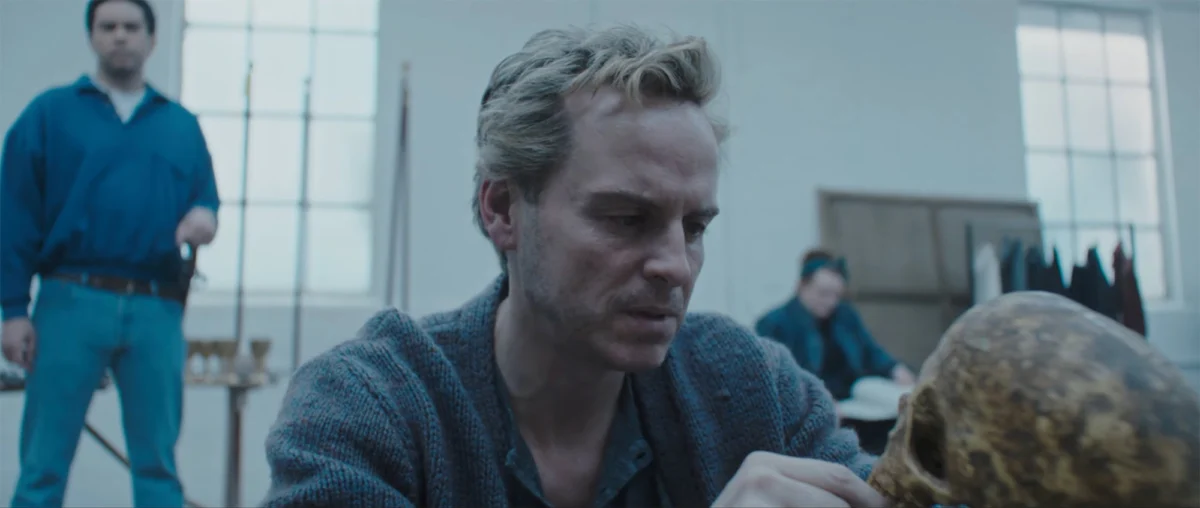
The intersection of art and mortality has long been the crucible in which the greatest performances are forged. In Simon Stone’s upcoming biographical drama Elsinore, this intersection is not merely a theme—it is the very heartbeat of the narrative. As Studiocanal unveils a new, emotionally charged UK trailer for the film, the cinematic world is turning its eyes toward a performance already being hailed as a career-defining turn for Andrew Scott.
Following a triumphant festival run that began at the 2026 Telluride Film Festival and continued through the Toronto International Film Festival (TIFF), Elsinore is poised to be one of the most significant cultural touchstones of the year. The film chronicles the final, defiant months of the late Scottish actor Ian Charleson, capturing his internal struggle as he prepares for the role of his lifetime—Hamlet at the National Theatre—while grappling with an AIDS diagnosis in the late 1980s.
The Main Facts: A Portrait of Resilience
Elsinore is a profound examination of the human condition, directed by the acclaimed Australian filmmaker Simon Stone, known for his ability to excavate raw, interior truths in films like The Daughter and The Dig. The film’s screenplay, penned by Stephen Beresford and based on an original concept by Ethan Silverman, focuses on the specific, harrowing period when Charleson was offered the role of Hamlet at the National Theatre.
The film is anchored by Andrew Scott, who inhabits Charleson with a vulnerability that critics are already calling "visceral." The story mirrors the tragedy of the Danish Prince with the real-world tragedy of a man facing the sunset of his life. As the TIFF program notes, the film "wondrously celebrates both Charleson and Hamlet on screen." Through Scott’s nuanced portrayal, the audience is forced to confront the same question Shakespeare posed centuries ago: To be, or not to be? In the context of Charleson’s life, the answer is a resounding, defiant "To be."

Chronology of a Legacy: From ‘Chariots’ to the National
To understand the weight of Elsinore, one must understand the man it honors. Ian Charleson was a luminary of the British stage and screen, achieving international stardom as Eric Liddell in the 1981 classic Chariots of Fire. However, the film explores the friction between that global fame and his true calling: the theatre.
The Rise of a Star
Charleson’s career was defined by his extraordinary range. While the public recognized him as the Olympic sprinter from Chariots of Fire, his heart remained anchored in the proscenium arch. He found the trappings of Hollywood ephemeral, preferring the rigorous, communal, and transformative power of live performance.
The Collision of Dream and Nightmare
The narrative tension of Elsinore peaks when Charleson is offered the lead in Richard Eyre’s 1989 production of Hamlet at the National Theatre. It was the role every classical actor dreams of, yet it arrived simultaneously with a diagnosis of AIDS—a death sentence in that era. The film dramatizes the "dream and nightmare" collision: the necessity of physical stamina required to perform Shakespeare’s longest play, contrasted against the rapid physical decline brought on by his illness.
The Festival Circuit
Following its world premiere at Telluride, the film has become the subject of intense awards-season buzz. Its subsequent screenings at TIFF and its upcoming appearances at the London, Mill Valley, Montclair, and Chicago Film Festivals demonstrate its universal appeal. It is not merely a biopic; it is a meditation on the power of performance to provide meaning even in the face of annihilation.
Supporting Data: An Ensemble of Excellence
While Andrew Scott is the magnetic center of the film, he is surrounded by a stellar ensemble cast that brings the vibrant, high-stakes world of 1980s British theatre to life.

- The Cast: The film features an array of heavyweights, including Olivia Colman, Billie Piper, Johnny Flynn, Joe Locke, Peter Mullan, Charles Edwards, and Juliet Stevenson. Each performance serves as a pillar supporting the central narrative, depicting the colleagues, lovers, and friends who bore witness to Charleson’s final, magnificent act.
- Production Pedigree: The film is produced by a consortium of industry leaders, including Andrea Occhipinti, Gabrielle Tana, Pete Shilaimon, Mickey Liddell, Stefano Massenzi, and Carolyn Marks Blackwood. With production backing from Studiocanal, LD Entertainment, Lucky Red, and Magnolia Mae Films, the visual language of the film promises to be as rich as its thematic content.
- Release Schedule: The film is set for a staggered global rollout. Focus Features will bring the film to US theaters on November 20, 2026, targeting the peak of the awards season. UK audiences will be able to experience the film early next year, with a wide release scheduled for January 29, 2027.
Official Responses and Critical Reception
The critical consensus emerging from the festival circuit is unanimous: Elsinore is an essential work of art.
The new UK trailer released by Studiocanal—which many critics have cited as even more evocative than the US version—offers a glimpse into the film’s visual and emotional register. One particular line of dialogue featured in the trailer encapsulates the film’s spirit: "If you’re going to play this part, there is to be no more talk of death." The reply—"That might be tricky…"—sets the stage for the film’s central conflict.
Critics at TIFF have noted that the film succeeds by avoiding the tropes of the "medical drama." Instead, it focuses on the internal life of the actor. "Through Scott, each real and fictional man’s confrontation with death becomes visceral, profoundly moving," noted one reviewer. The film does not shy away from the pain of Charleson’s decline, but it frames it within the context of his "glorious" commitment to his craft.
Implications: The Cultural Impact of ‘Elsinore’
The release of Elsinore comes at a time when the industry is increasingly interested in the intersection of queer history and artistic legacy. By bringing Ian Charleson’s story to a wider, modern audience, Simon Stone is doing more than documenting a life; he is correcting a historical record.
Re-evaluating the AIDS Crisis
For a generation that did not live through the height of the AIDS epidemic, Elsinore serves as a vital bridge. It contextualizes the terror and the societal stigma of the 1980s while highlighting the resilience of the LGBTQ+ community during one of its darkest chapters. It frames the theater as a sanctuary—a place where one can disappear into a character to escape the reality of a crumbling body.

Andrew Scott’s Trajectory
For Andrew Scott, Elsinore marks a significant pivot point in an already storied career. Known for his ability to play complex, often enigmatic characters, his performance as Charleson requires a level of vulnerability that may secure his place as one of the definitive actors of his generation. The film suggests that Scott is not just performing a role; he is channeling a ghost, and in doing so, he is creating a new vessel for the enduring power of Ian Charleson’s spirit.
The Future of Biopic Filmmaking
Finally, Elsinore raises the bar for the biopic genre. By focusing on a specific, high-stakes window of time rather than attempting a cradle-to-grave retelling, the film achieves a narrative focus that feels both intimate and expansive. It proves that the most powerful stories are not found in the breadth of a lifetime, but in the intensity of a final performance.
Conclusion: A Call to Witness
As the November release date approaches, the anticipation surrounding Elsinore continues to build. It is a rare film that demands to be seen not only for its technical mastery but for the profound emotional inquiry it conducts into the nature of existence.
Whether you are an admirer of the works of Shakespeare, a follower of Andrew Scott’s evolving craft, or someone interested in the intersection of queer identity and historical struggle, Elsinore promises to be a transformative experience. As the trailer reminds us, Ian Charleson’s life was a testament to the fact that even when the curtain is closing, there is always time to give the performance of a lifetime.
Elsinore is not just a film about an actor; it is a film about the courage required to live authentically in the face of an inevitable end. It is a cinematic triumph that ensures the name Ian Charleson will continue to resonate for generations to come.
