
Elevating the Soundscape: Sony Launches the ECM-AX10 for Immersive Mobile Filmmaking
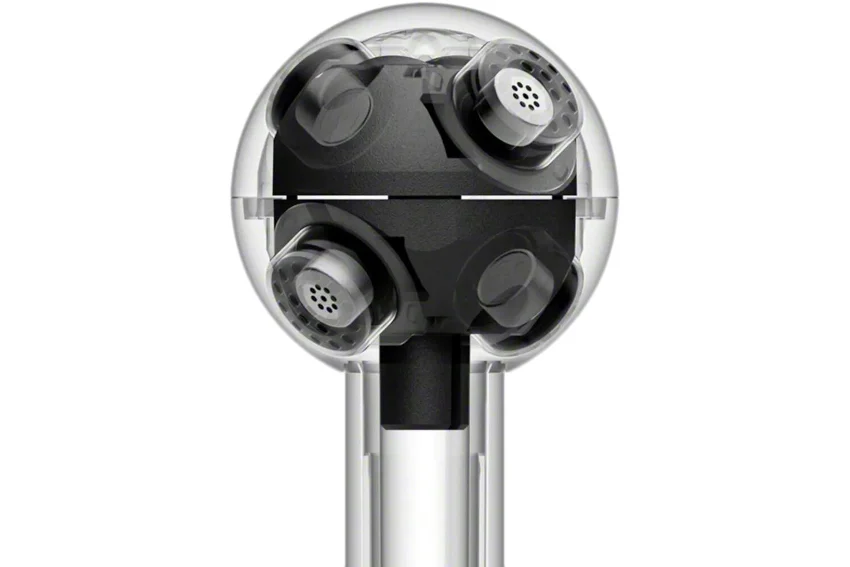
Capturing the essence of a location has long been the "holy grail" of documentary and travel filmmaking. While high-resolution 4K and 8K cameras have made it trivial to capture crisp, lifelike visuals, the auditory experience often remains tethered to flat, two-dimensional stereo. Sony is looking to bridge this sensory divide with the newly announced ECM-AX10, a compact, USB-C-powered microphone designed to bring sophisticated spatial audio recording directly to the modern smartphone workflow.
By leveraging the power of Eclipsa Audio—an open-source technology based on the Immersive Audio Model and Format (IAMF) specification—the ECM-AX10 promises to democratize professional-grade immersive sound for content creators, mobile journalists, and event videographers.
The Core Innovation: Spatial Audio in Your Pocket
The ECM-AX10 is not just another shotgun mic; it is a specialized piece of hardware engineered to capture the acoustic fingerprint of a room or landscape. At the heart of the device lie four omnidirectional microphone capsules arranged in a specific array to capture sound from every direction.
The Power of Ambisonics
The primary technical achievement of the ECM-AX10 is its ability to record in Ambisonics. Unlike standard stereo, which records left and right channels, Ambisonics captures a full 360-degree sphere of sound. This "spatial information" is crucial for modern media platforms like YouTube, which support immersive, head-tracking audio. When a viewer watches a video with spatial audio, they can experience the sound field shifting as they move their device or rotate their camera, creating a sense of "presence" that traditional audio simply cannot match.
Three Modes for Versatile Storytelling
Sony has integrated three distinct recording modes into the ECM-AX10, ensuring that creators have the right tool for any given scenario:
- Ambisonics: The gold standard for immersive projects. This mode preserves the full spatial data of the environment, allowing for professional-grade 360-degree audio workflows.
- Binaural Recording: Designed specifically for headphone listeners, this mode mimics human hearing by placing sounds in a 3D space, providing an incredibly intimate and realistic listening experience.
- Stereo: A reliable, high-fidelity fallback for traditional projects that do not require complex spatial metadata.
A New Era of Mobile Workflow: Chronology and Integration
The arrival of the ECM-AX10 marks a significant shift in Sony’s mobile strategy. For years, the gap between "prosumer" smartphone footage and high-end cinema production was the necessity of bulky external recorders and complex audio interfaces.
The Development Timeline
- Early Development: Sony identified a growing trend in mobile content creation—creators were using high-end smartphones for primary production but were forced to rely on internal mono or stereo microphones that lacked spatial depth.
- The Announcement: Following months of industry speculation regarding mobile-centric immersive tools, Sony officially unveiled the ECM-AX10 in October 2026.
- The Software Bridge: Recognizing that hardware is only as good as the software driving it, Sony developed the Spatial Audio Video Tool app. This app acts as the command center, handling everything from video capture and audio monitoring to the complex task of exporting Ambisonics data for YouTube.
- Future Roadmap: Sony has confirmed that a major update scheduled for December 2026 will bring native 4K video recording support directly within the Spatial Audio Video Tool app, further reducing the need for third-party camera software.
Technical Specifications and Field Utility
Weighing in at just 24 grams, the ECM-AX10 is designed for the "run-and-gun" creator. Its USB-C interface ensures a digital, low-latency connection to modern Android and iOS devices, bypassing the analog-to-digital conversion noise often associated with older headphone-jack microphones.

Practical Field Features
- Accelerometer-Based Alignment: One of the most intelligent features of the ECM-AX10 is its built-in accelerometer. It automatically detects the orientation of the smartphone and adjusts the audio processing to ensure the "front" of the sound field always aligns with the camera’s perspective.
- Real-Time Monitoring: A dedicated 3.5mm headphone jack is included, allowing creators to monitor their audio levels and spatial positioning in real-time, which is essential when recording in unpredictable environments.
- Digital Noise Reduction: Advanced onboard processing helps filter out common field disturbances, such as wind noise or ambient hums, before the audio is even committed to the file.
- Comprehensive Accessory Kit: Sony includes a cold-shoe mount, a high-quality windscreen, and an extension cable, ensuring that the unit is ready for use right out of the box, whether mounted on a gimbal, a tripod, or held handheld.
Official Stance and Market Positioning
Sony representatives have framed the ECM-AX10 as an "entry point" into the immersive ecosystem. During the product launch, the company emphasized that while the device is not intended to replace high-end studio shotgun mics—which are essential for dialogue-heavy narrative films—it fills the void for "environmental storytelling."
"The ECM-AX10 is about capturing the air, the space, and the energy of a location," said a Sony spokesperson. "We wanted to provide a tool that allows a travel blogger or a documentary filmmaker to transport their audience directly into the scene."
The Role of Eclipsa Audio
The inclusion of Eclipsa Audio is a strategic move by Sony to standardize how immersive audio is handled. By utilizing the IAMF specification, Sony is aligning itself with an open-source movement that aims to make immersive audio as accessible and widely supported as MP3 or AAC. This ensures that content created today with the ECM-AX10 has a higher likelihood of remaining compatible with future playback systems and social media algorithms.
Implications for the Industry
The release of the ECM-AX10 carries several significant implications for the future of mobile content creation.
1. The Death of the "Static" Soundscape
As creators adopt spatial audio tools, the expectation for high-quality audio will rise. Platforms like YouTube and TikTok are already pushing for immersive content; hardware like the ECM-AX10 provides the necessary bridge to help creators meet these platform requirements without requiring a desktop workstation.
2. A Shift in Journalism
For mobile journalists, this technology is a game-changer. Being able to record the atmosphere of a protest, a concert, or a city street in 3D audio allows viewers to feel the "weight" of the situation. It provides a deeper layer of truth that is harder to achieve with standard stereo audio.
3. Workflow Consolidation
By consolidating capture, monitoring, and exporting into the Spatial Audio Video Tool app, Sony is pushing the industry toward a "single-device" philosophy. For many creators, the smartphone is becoming the only tool they need, provided the audio hardware can keep pace with the optics.

4. Limitations and Realities
Despite its strengths, the device has clear boundaries. It is not a replacement for a lavalier microphone in a controlled interview, nor is it a substitute for an external field recorder when multi-track recording is required. Users must be aware that the quality of the "spatial" effect is heavily dependent on the recording environment; placing the microphone in a dead, padded room will yield less "spatial" results than a lively, reflective architectural space.
Price, Availability, and Final Verdict
The Sony ECM-AX10 is currently available for pre-order with a suggested retail price of $249.99 (approx. €199 in Europe).
Final Thoughts
The ECM-AX10 is a bold, forward-thinking piece of hardware. It represents a rare moment where a major manufacturer has decided to focus on the "feeling" of audio rather than just the "clarity." While it is not a universal solution for every audio need, it is an essential tool for any creator whose work relies on a sense of place.
As we move toward a future of VR, AR, and immersive video, the ability to record the world as we hear it—in three dimensions—will transition from a luxury feature to a standard requirement. With the ECM-AX10, Sony has ensured that mobile creators are not left behind in this sonic evolution. Before investing, potential buyers should cross-reference their smartphone model with Sony’s compatibility list to ensure full functionality, particularly regarding the app’s advanced features and the upcoming 4K support.
In a world where visual content is becoming increasingly saturated, the "sound of the space" may well be the differentiator that keeps audiences engaged, immersed, and coming back for more.
Disclaimer: As an affiliate partner, we may earn a small commission from qualifying purchases made through the links in this article, which helps support our in-depth technical coverage.
