
From 500 Million Friends to an Algorithmic Aftermath: Why ‘The Social Reckoning’ Missed the Cultural Moment
Main Facts
Fifteen years after redefining modern cinema with The Social Network, Hollywood’s attempt to capture the subsequent chapter of tech-industry fallout has stumbled both commercially and critically. The Social Reckoning, directed by Aaron Sorkin—who stepped behind the camera after David Fincher declined to return—grossed a disappointing $5.5 million in its domestic opening weekend. The figure stands in stark contrast to the $22.1 million debut of its 2010 predecessor, which ultimately grossed $225 million globally and is frequently hailed as one of the defining films of the 21st century.
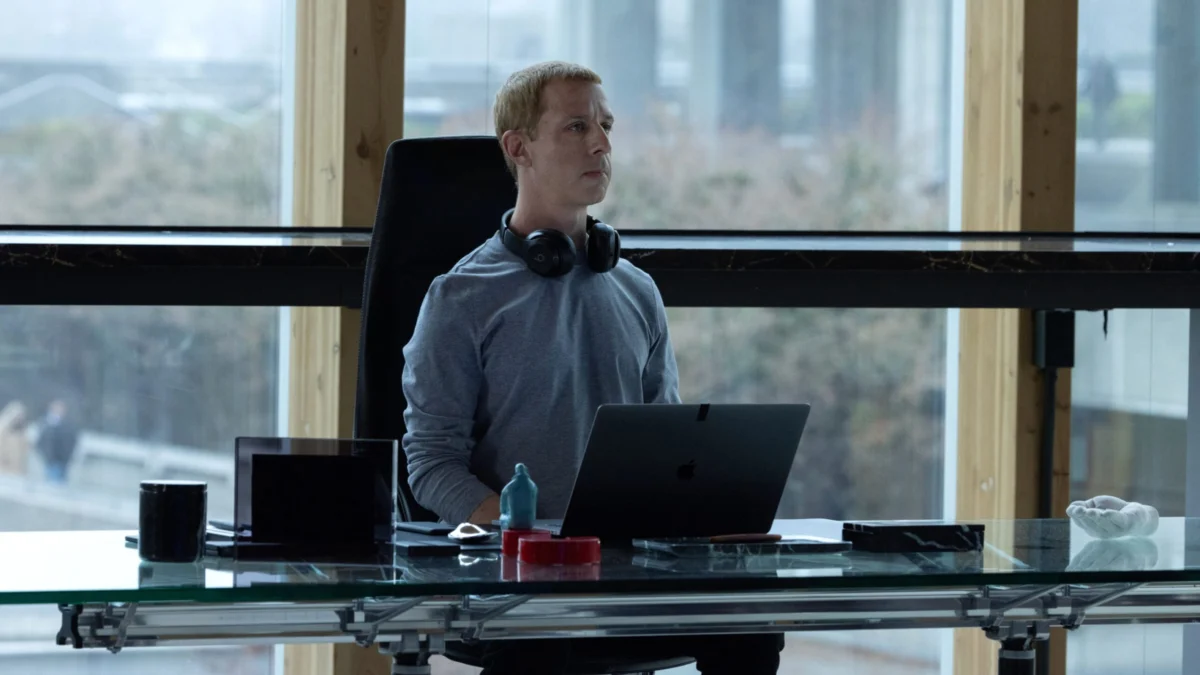
Compounding the box-office struggle, The Social Reckoning faced a barrage of blistering reviews. Critics lamented the absence of Fincher’s icy, cinematic precision, alongside the recasting of Mark Zuckerberg. Jesse Eisenberg, who earned an Oscar nomination for his portrayal of the Facebook founder in the original film, opted not to return over concerns about glamorizing the tech mogul. Jeremy Strong stepped into the role, leaving Sony Pictures to carefully navigate a marketing campaign that utilized subtle nods to the original film’s DNA—including fonts, teasers, and musical cues from Trent Reznor and Atticus Ross—without explicitly selling the movie as a direct sequel.
Instead of focusing squarely on Zuckerberg, The Social Reckoning shifts its narrative lens to data engineer Frances Haugen and her high-profile whistleblowing regarding Facebook’s algorithmic amplification of political polarization, teen mental health crises, and rampant bullying. Yet, the film arrives at a time when public anxiety over Silicon Valley has shifted dramatically: artificial intelligence has usurped social media as society’s primary technological bogeyman.
Chronology: The Evolution of Tech Cinema
To understand the trajectory that led to The Social Reckoning, one must trace the timeline of how Hollywood and Silicon Valley collided over the past two decades:
- October 2010: The Social Network hits theaters amid a burgeoning era of social media expansion, capturing Twitter’s rise, YouTube’s disruption, and Facebook’s consolidation of power. Directed by David Fincher and written by Aaron Sorkin, it becomes a critical and commercial darling.
- Late 2021: Whistleblower Frances Haugen leaks internal documents to the U.S. Securities and Exchange Commission and testifies before Congress, detailing how Facebook prioritizes engagement over safety. The event sparks temporary outrage but yields little lasting legislative reform.
- 2023–2025: Generative artificial intelligence explodes into public consciousness. Concerns shift from algorithmic radicalization to economic displacement, job replacement, and existential threats posed by autonomous machine intelligence.
- Late 2026: The Social Reckoning premieres in theaters, facing critical backlash, a weak $5.5 million opening, and an audience indifferent to a cinematic post-mortem on a 2021 scandal.
- Late 2026: Simultaneously, new cinematic entries focusing on modern tech titans—such as the four-hour documentary Musk and the Sam Altman/OpenAI drama Artificial—begin generating awards buzz and controversy, signaling that the cultural conversation has officially moved on.
Supporting Data and Box-Office Metrics
The financial and critical disparity between the 2010 masterpiece and its 2026 follow-up illustrates a volatile shift in how audiences consume stories about technology:
- Opening Weekend Comparison: The Social Network pulled in $22.1 million in its 2010 debut; The Social Reckoning managed just $5.5 million.
- Total Gross: The Social Network finished its global theatrical run at $225 million. Industry analysts project The Social Reckoning will fall well short of profitability thresholds, though Sony Pictures mitigated severe losses by keeping the production budget capped at a modest $30 million.
- The AI Contenders: Musk, a sweeping four-hour documentary exploring the world’s richest man, opened in a limited four-theater run with $22,000, positioning itself as an awards-season contender. Meanwhile, Artificial—a dramatized look at Sam Altman and OpenAI—was famously dropped by Amazon MGM Studios shortly after Amazon inked a multi-billion-dollar deal with OpenAI, only to be snapped up by Neon for a Christmas theatrical release.
Official Responses and Industry Reactions
The bumpy road to release for both The Social Reckoning and its thematic successors has prompted pointed commentary from filmmakers, critics, and studio executives.
Aaron Sorkin has long defended his approach to writing about technology, emphasizing that his stories rely on universal, classical tropes rather than the code itself. In a previous interview with the Writers Guild of America, Sorkin noted, "The invention itself is as modern as it gets, but the story is as old as storytelling; the themes of friendship, loyalty, jealousy, class, and power."

However, critics argued that without Fincher directing, those themes fell flat. Writing for The New Yorker, critic Richard Brody noted that "Sorkin doesn’t look beyond the words on the page, and the film itself appears made with heads down."
The behind-the-scenes drama surrounding Jesse Eisenberg’s refusal to reprise his role further complicated the production. Eisenberg reportedly felt alienated by fans quoting lines like "I’m the CEO, bitch" or asking him to sign memorabilia, fearing the role had inadvertently turned a cold corporate strategist into an antihero icon.
On the streaming and distribution front, Amazon MGM Studios’ abrupt decision to drop Artificial—sparked by conflicts of interest following a massive enterprise deal with OpenAI—highlighted the corporate anxieties that arise when Hollywood attempts to critique its most lucrative new business partners. Neon’s subsequent acquisition of the project ensured it a holiday platform, instantly turning the film into forbidden fruit for audiences eager to peek behind the curtain of generative AI.
Implications: Why the Public Has Moved On
The failure of The Social Reckoning to ignite a cultural firestorm points to a deeper societal fatigue. When The Social Network debuted, social media was still viewed as a novel, boundary-pushing frontier. Audiences were fascinated by the psychological makeup of the young geniuses building a digital panopticon.
Today, that digital panopticon is simply daily life, and the whistleblowing events dramatized in The Social Reckoning feel like ancient history. As IndieWire’s Ryan Lattanzio observed in his review: “‘The Social Reckoning’ argues that the aftermath of their whistleblowing is still somehow felt today. In actuality, living as we do in 2026, it pretty much feels like… no one cared, and nothing changed?”
Furthermore, the federal government’s hands-off regulatory approach to misinformation, combined with an ongoing political climate that treats tech guardrails as an afterthought, has left citizens feeling helpless against digital manipulation. When daily headlines are dominated by existential warnings about artificial intelligence taking over white-collar labor systems or slipping past human control entirely, a retrospective drama about Facebook algorithms feels less like an urgent warning and more like a history lesson nobody asked for.
Ultimately, whether audiences will embrace upcoming examinations of modern tech—such as the unflinching documentary Musk or the censorship-flirting drama Artificial—remains to be seen. It is entirely possible that as the real-world implications of AI and billionaire-driven technology grow increasingly terrifying, moviegoers will prefer escapism over cinema that mirrors their digital anxieties, choosing to unplug rather than watch Hollywood struggle to make sense of a runaway technological age.
