
The Future of Retail Unboxed: Inside Groceryshop 2026’s Immersive Show Floor and Paradigm-Shifting Trends
LAS VEGAS — For three high-energy days from September 22 to 24, the Mandalay Bay Convention Center transformed into the beating heart of the global retail ecosystem. Groceryshop 2026 drew more than 4,000 top-tier retail executives, brand innovators, and technology pioneers to the Las Vegas Strip. Far more than a traditional trade exhibition, the event served as an incubator for the next generation of commerce, balancing high-level discourse on artificial intelligence and shifting consumer habits with jaw-dropping, tactile brand activations on the show floor.
Against a backdrop of macro-economic pressures and technological disruption, Groceryshop 2026 proved that while the future of shopping may be guided by algorithms, the future of brand engagement remains deeply human, experiential, and delicious.
Main Facts: The Anatomy of Groceryshop 2026
- Event Dates: September 22–24, 2026
- Location: Mandalay Bay Convention Center, Las Vegas, Nevada
- Attendance: Over 4,000 retail leaders, executives, and innovators.
- Networking Scale: The event’s signature "Meetup" program facilitated an astonishing 30,000+ co-matched, hyper-targeted business meetings.
- Core Drivers: Artificial intelligence as the primary consumer shopping interface, redefined value metrics driven by economic constraints and health trends (such as GLP-1 medications), and the maturation of retail media networks.
- Organized By: The Hyve Group, with content direction spearheaded by Vice President of Content Rocquan Lucas.
Chronology: Three Days of Transformation at Mandalay Bay
Day One: Setting the Stage and the Power of First Impressions
The convention kicked off with a palpable sense of anticipation. Attendees entering the Mandalay Bay exhibition hall were immediately met with an avant-garde sensory experience. Rejecting standard pipe-and-drape conventions, Groceryshop set a high design bar with elaborate, narrative-driven entrances.
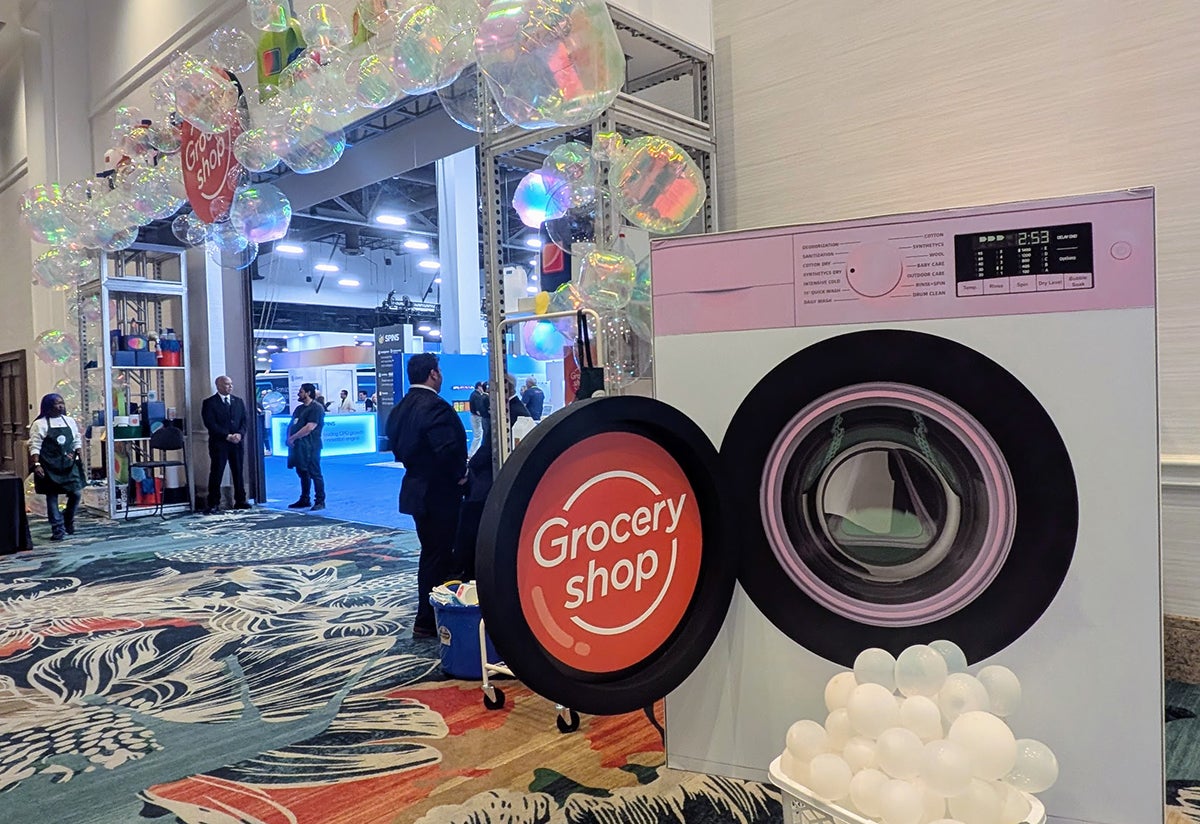
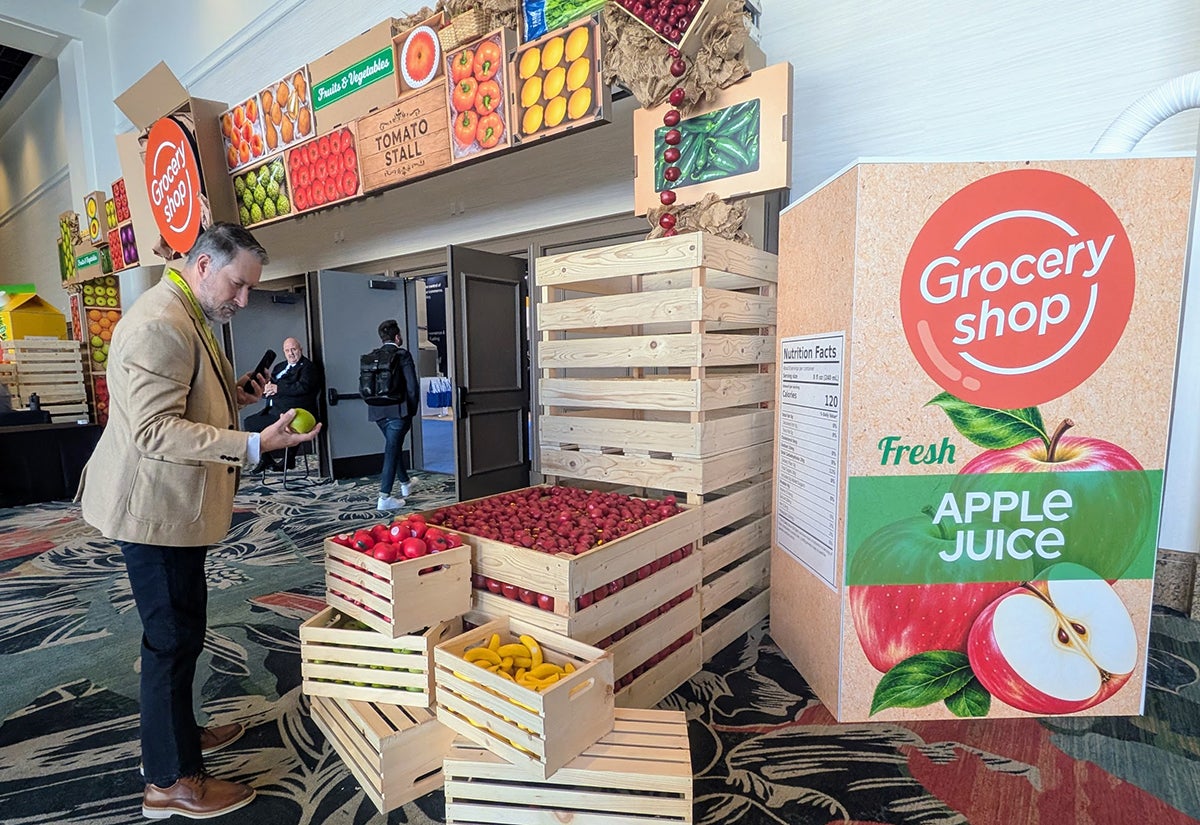
The first entry point immersed visitors in fresh produce themes, complete with interactive, fruit-and-vegetable-shaped "swag squishies" that doubled as stress relievers and tactile brand reminders. The second major entrance played with scale and surrealism, featuring an oversized washing machine installation surrounded by a mesmerizing "bubble moment" that commanded floor-wide attention and endless social media shares.
As the exhibition doors opened, the expanded "Meetup" networking engine roared to life, driving thousands of pre-scheduled, 15-minute B2B appointments that formed the commercial backbone of the conference.
Day Two: Deconstructing the Future Cart
The second day shifted focus squarely to the macro-trends altering the modern grocery cart. Keynote sessions and panel discussions unpacked the rapid adoption of AI shopping assistants and the cascading impacts of GLP-1 weight-loss medications on consumer diets and purchasing volumes.
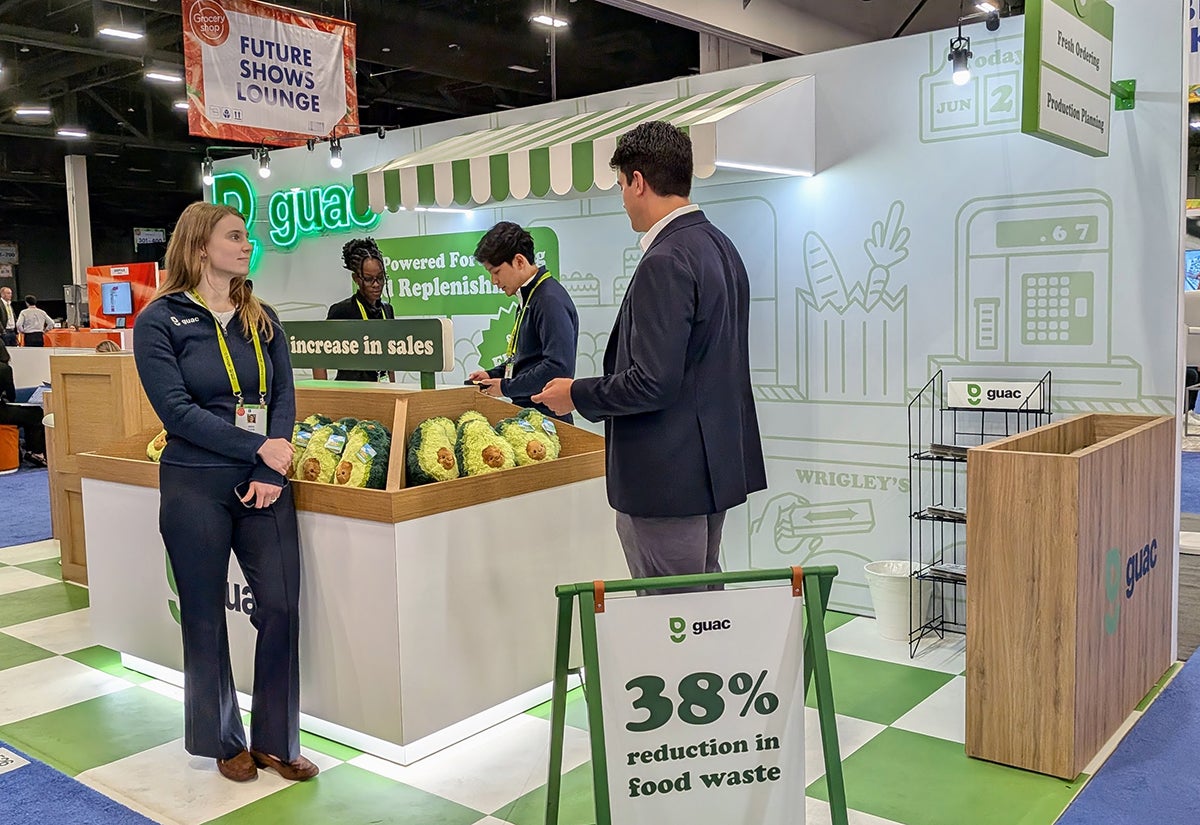
On the exhibition floor, brands leaned into clever, attention-grabbing tactics to cut through the sensory overload. Exhibitors traded lengthy corporate spiels for hyper-digestible data points. For instance, Guac, an AI-powered replenishment platform, utilized classic flip-signs to instantly communicate a critical metric: a 38% reduction in food waste. Meanwhile, Bazaarvoice utilized stark white booth backgrounds accented by elevated, tactile product buttons, proving that minimalist design choices often command maximum attention in chaotic environments.
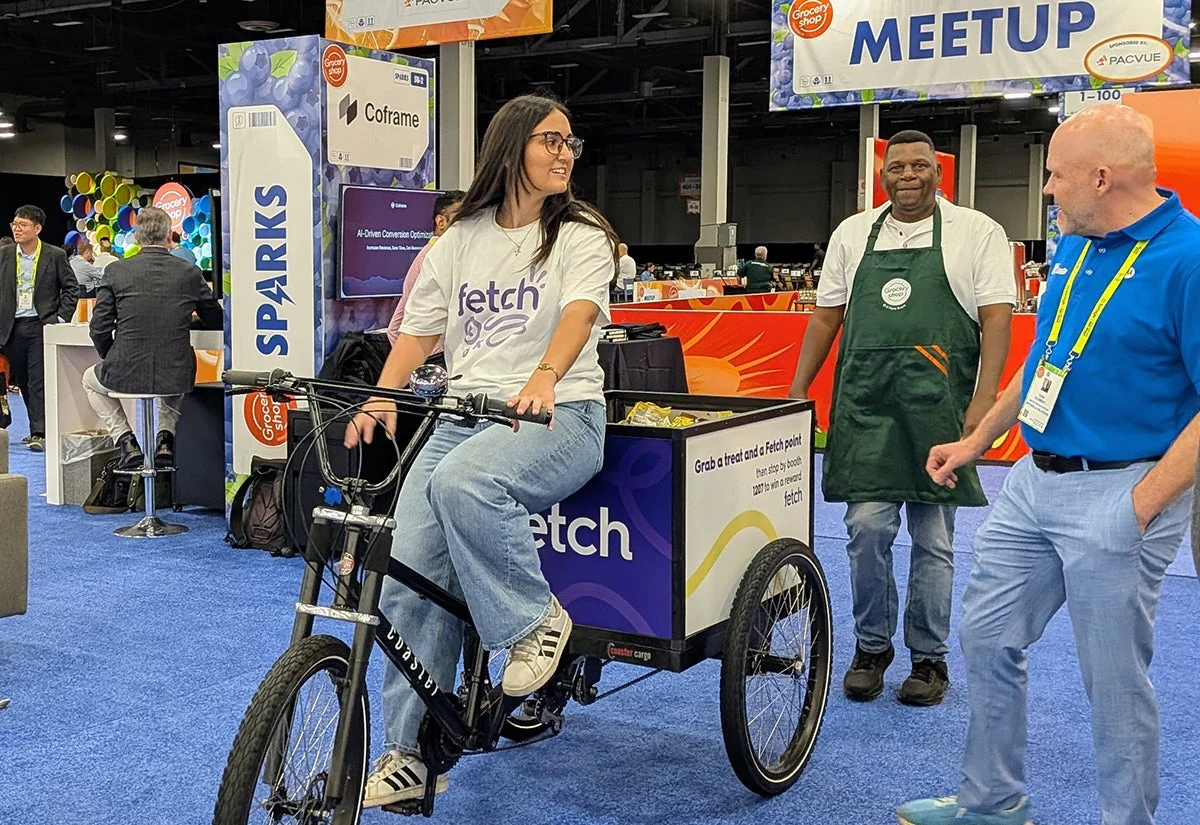
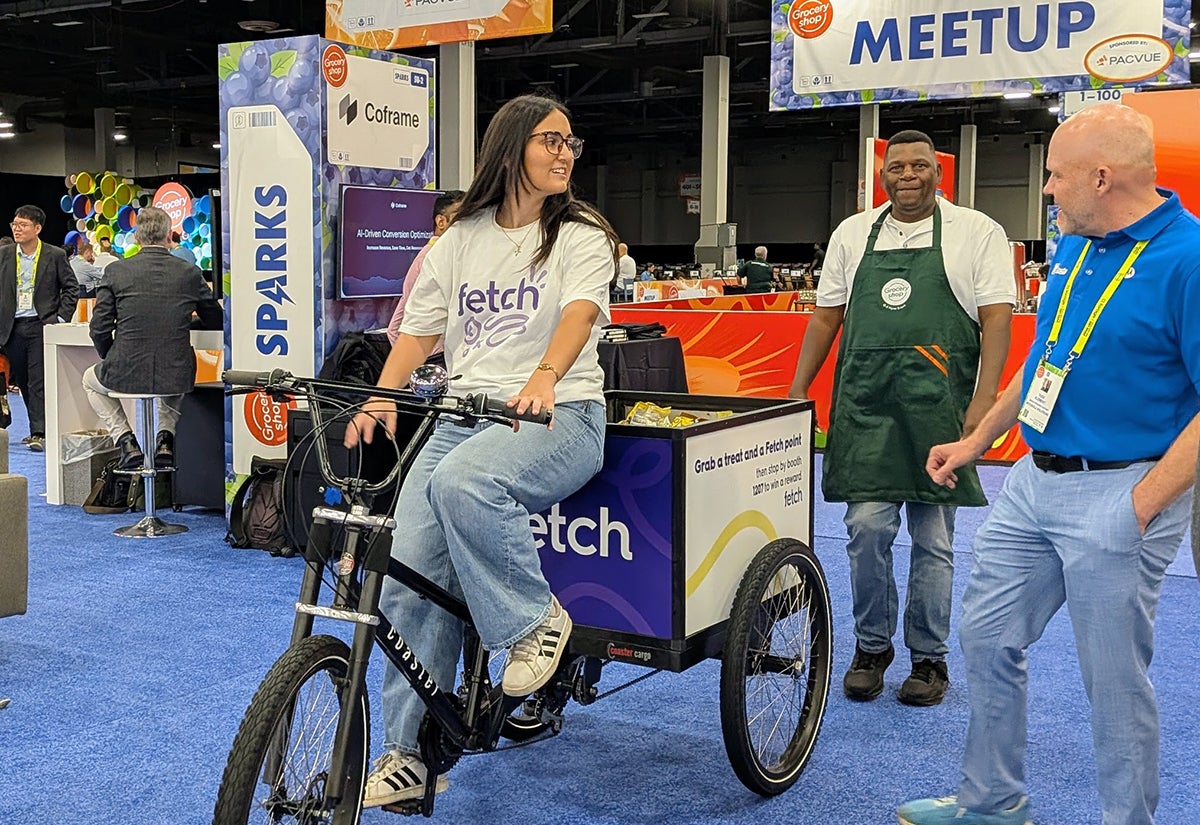
Mobility also defined Day Two. Fetch, a prominent tech and rewards platform, deployed branded bicycles equipped with cargo trunks filled with free snacks that navigated the aisles, driving unexpected micro-interactions and rewarding attendees who tracked down their physical booth.
Day Three: F&B Tech, Feedback Loops, and Future Horizons
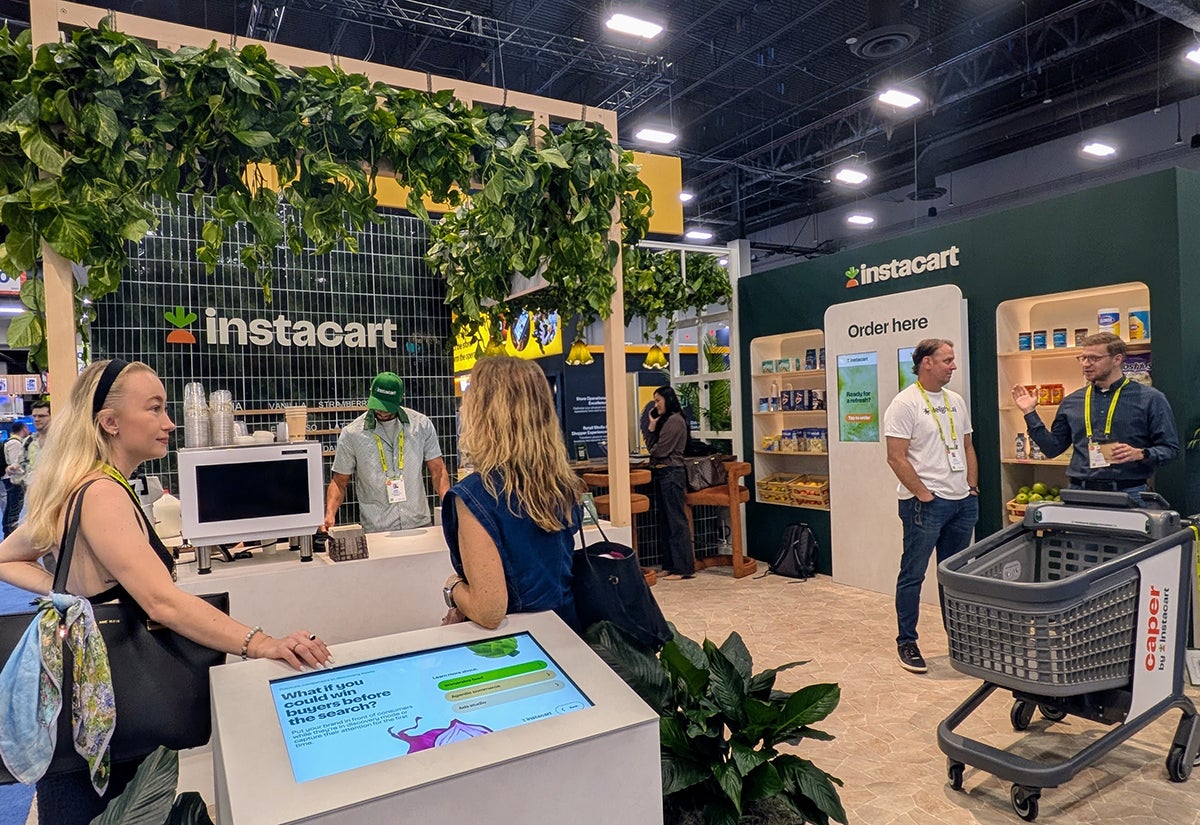
The final day of Groceryshop 2026 focused on the intersection of culinary arts and enterprise technology. Instacart dominated traffic with "The Growth Bar," a fully functioning activation built in partnership with MoonLab Productions. Attendees used touchscreen interfaces to order customized matchas and coffees featuring Foodstorm ordering technology, picking up their beverages at a sleek, real-world café counter.
While sipping their customized drinks, attendees were nudged to participate in real-time event surveys—a masterclass in feedback collection orchestrated by event owner The Hyve Group. By integrating brief, frictionless surveys directly into high-traffic queues, the organizers secured vital data to refine future iterations of the event.
Supporting Data: The Forces Reshaping the Grocery Cart
The narrative of Groceryshop 2026 was underpinned by profound shifts in consumer behavior and retail architecture. According to event organizers and industry insights shared on-site, three dominant pillars defined the discourse:
- AI as the Consumer’s Concierge: Artificial intelligence is rapidly evolving from a backend supply chain tool into the consumer’s primary shopping companion. AI assistants are increasingly dictating meal planning, recipe generation, and automated cart-building before a consumer ever visits a physical store or ecommerce site.
- Redefined Value and Health Metrics: Stretched household budgets continue to force selective spending. Simultaneously, the widespread adoption of GLP-1 medications is fundamentally altering caloric intake and nutritional priorities, forcing brands to rethink packaging sizes, nutritional profiles, and product assortments.
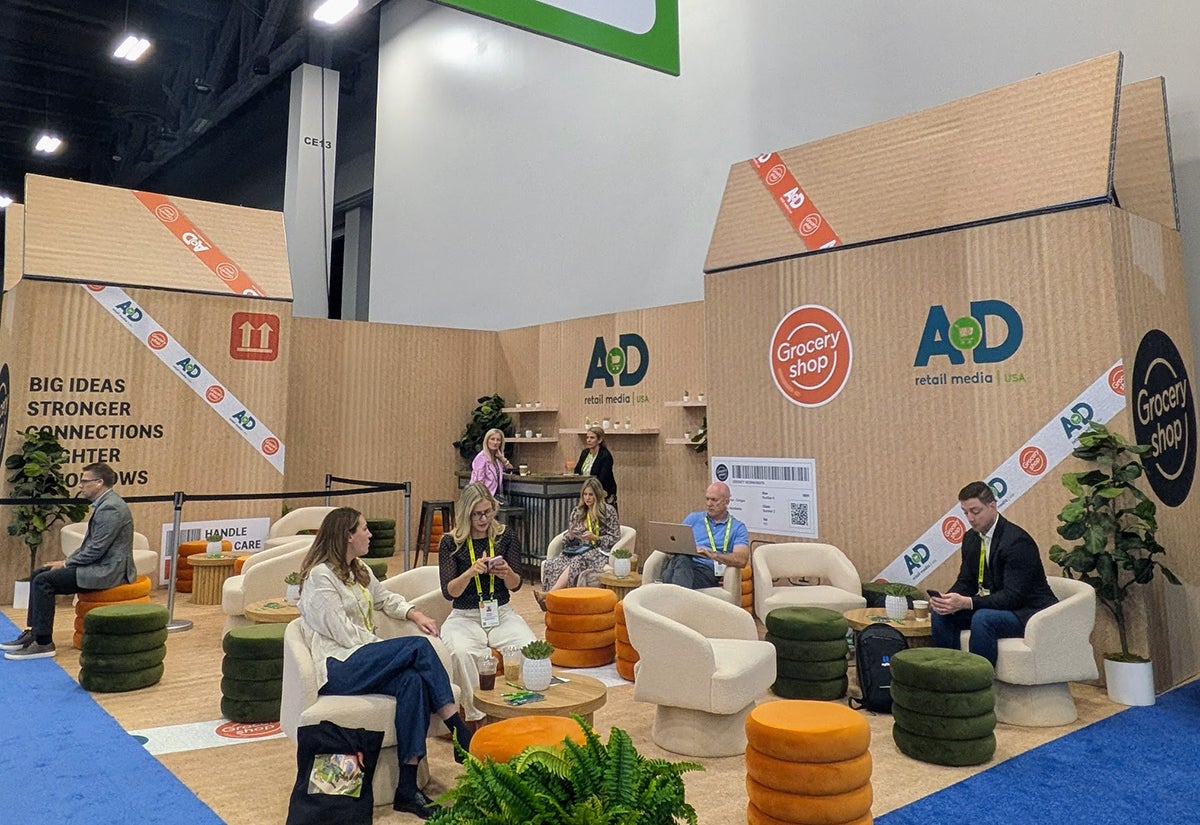
- Retail Media Evolution: Retail media has officially graduated from a simple advertising side-hustle to a core pillar of the broader retail ecosystem. Brands are investing heavily in dedicated off-floor spaces, such as the AD Retail Media "Unpacked Lounge"—which notably bought out a local wedding chapel—to foster deeper ecosystem partnerships and brand recognition.
Official Responses and Perspectives
Industry leaders on-site emphasized the urgent operational adjustments required to survive the coming retail revolution.
Rocquan Lucas, Vice President of Content at Groceryshop, captured the urgency of the moment in his address to attendees:
"What we heard at Groceryshop 2026 is that the average grocery shopping cart is about to change more in the next few years than it has in decades as shoppers lean on AI assistants to support their meal planning and cart building, become more selective with their purchases, and, with the rise of GLP-1 adoption, shift what and how much they consume."
Lucas further underscored the technical hurdles facing consumer packaged goods (CPG) brands and retailers:
"That puts real pressure on grocers and brands to make their product data machine-readable and deliver the right product and assortment for an evolving consumer."
Exhibitors and experiential designers echoed these sentiments, noting that the traditional playbook for trade show engagement—reliant on passive product displays and static literature—is entirely obsolete. Brands must now offer tactile, tech-enabled, and frictionless interactions that mirror the speed and convenience consumers demand in their daily lives.
Implications for the Retail and Events Industries
The success and strategic focus of Groceryshop 2026 offer clear takeaways for both the retail sector and the broader B2B trade show industry:
For Retailers and CPG Brands:
- The Machine-Readable Imperative: If product data is not structured for AI consumption, brands risk invisibility. As AI shopping assistants dictate more of the consumer journey, optimization for machine readability is just as critical as traditional shelf-space positioning.
- Agility in Assortment: The combined pressures of economic value-seeking and GLP-1 health trends mean fixed product lines are a liability. Agility in portion sizing, nutritional transparency, and value communication will separate market leaders from laggards.
- Retail Media Maturation: As demonstrated by high-investment activations like the Unpacked Lounge, brands must treat retail media networks as immersive, physical environments rather than purely digital ad placements.
For Trade Show Organizers and Exhibitors:
- Combating Sensory Overload: With attendee attention spans shrinking, successful exhibitors are relying on radical simplicity—distilling complex value propositions into single, powerful data points displayed via tactile mediums (such as flip-signs and minimalist product buttons).
- Experiential F&B: Integrating functional, high-demand food and beverage technology—like Instacart’s touchscreen-driven matcha bar—turns the exhibition booth into a destination rather than a waypoint.
- Frictionless Feedback: Modern event organizers must embrace real-time, embedded feedback loops. Gathering actionable attendee insights during organic moments of downtime (such as coffee queues) ensures that future events continuously adapt to audience needs.
As the curtains closed on Mandalay Bay, Groceryshop 2026 left an indelible mark on the retail landscape. The message to the industry was unequivocal: adapt to the AI-driven, health-conscious consumer today, or risk being left out of tomorrow’s shopping cart.
